Happy Wednesday, everyone! Woah! Just like that, we are nearly done with the ninth month of the year. How time flies! I hope the year has been kind and great to everyone. I know life isn’t a walk in the park, but it is my fervent prayer that everyone’s year is going well. I hope that the coming months will usher in blessings and positive news for everyone. I hope the rest of the workweek goes smoothly.
That said, the middle of the week also brings a fresh WWW Wednesday update. WWW Wednesday is a bookish meme originally hosted by SAM@TAKING ON A WORLD OF WORDS.
The mechanics for WWW Wednesday are quite simple: you just have to answer three questions:
- What are you currently reading?
- What have you finished reading?
- What will you read next?

What are you currently reading?

It’s already the middle of the week, which means we have only two more days until the weekend. I hope everyone makes it through the workweek. After a couple of damp weeks, the sun is finally shining here in the northern part of the Philippines. Reading-wise, I am currently in the midst of a foray into the works of American writers. American literature has always been a staple of my annual literary journey. With American literature being one of the most readily available, I guess one can never escape it. I also realized that I have several works of American literature in my ongoing reading challenges. This reminds me that we are already in the final stretch of the year, and I still have quite a lot of books to read for my reading challenges. I guess it is time to lock in to avoid cramming during the last month of the year.
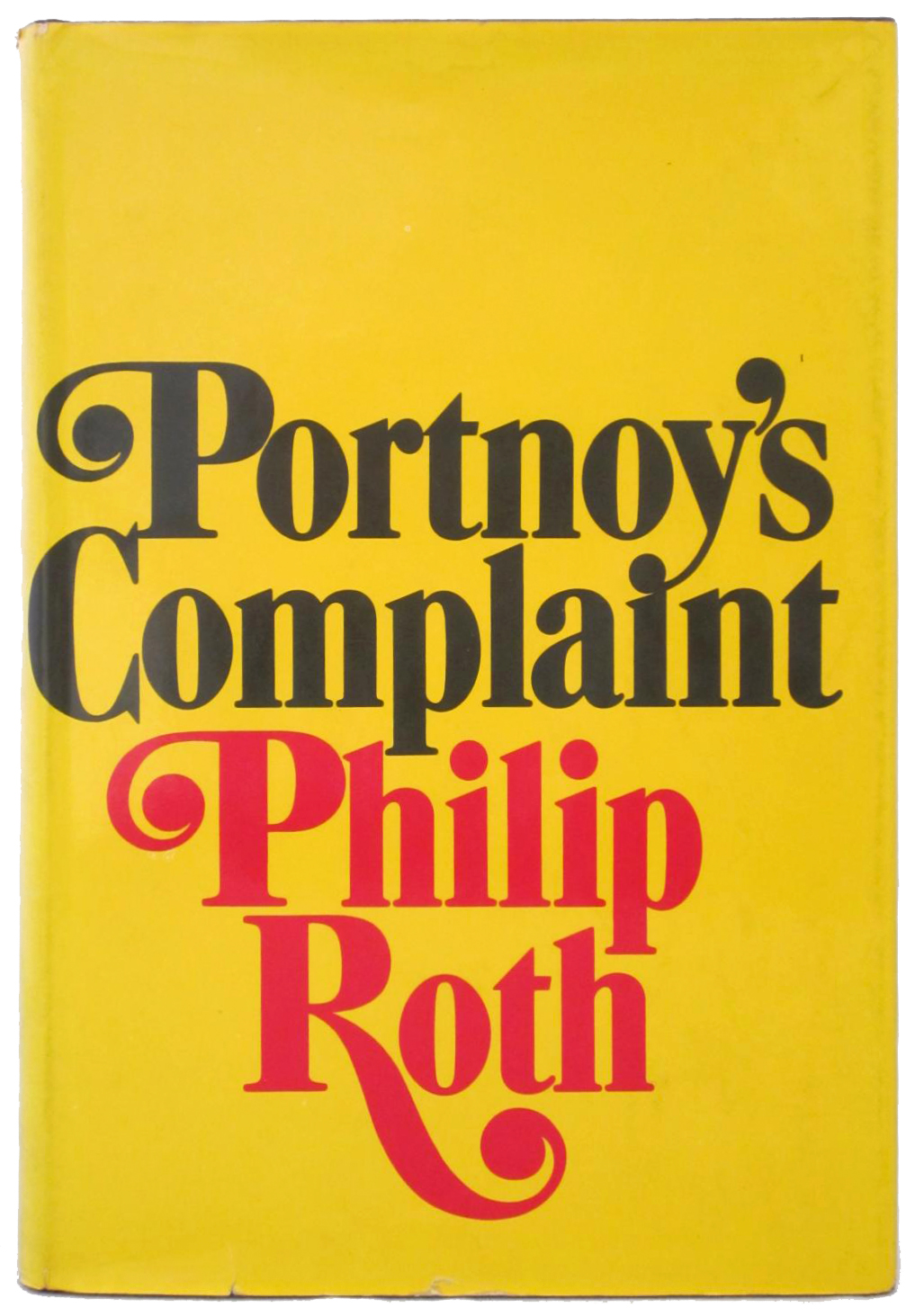
Among the books that are part of my reading challenges is Marion Zimmer Bradley’s The Mists of Avalon, a book I first encountered through must-read lists. However, I was reluctant to read it because it is not my usual literary genre. Still, I secured a copy of the book in 2019, but it was left to gather dust on my bookshelf. This prompted me to include it on my 2026 Top 26 Reading List. Originally published in 1983, the novel is Zimmer Bradley’s retelling of the renowned Arthurian legends. It begins with the birth of Morgaine (Morgan le Fay), the daughter of Igraine, younger half-sister of Viviane, and older sister of Morgause. Igraine was married at fifteen to the much older Duke Gorlois of Cornwall. She later married King Uther Pendragon after Gorlois died in battle against Uther. Before Igraine learned of Gorlois’s death, Uther consulted with Merlin. The wizard made Uther appear as Gorlois, allowing him to gain access to Igraine at Tintagel and conceive Arthur.
Uther ascended to the throne of Caerleon after his predecessor, Ambrosius, died. When Morgaine is eleven years old and Arthur is six, there is an attempt to murder Arthur. Viviane advised Uther to have Arthur fostered far away from the court for his own safety. Meanwhile, Morgaine was taken by her aunt to Avalon, where she was trained as a priestess of the Mother Goddess. During her training, Morgaine learned about the escalating tension between the old Pagan religion and the new Christian faith. After seven years of training, Morgaine was initiated as a priestess of the Mother. She was also being groomed to become the next Lady of Avalon. When Viviane’s son Lancelet visited Avalon, Morgaine fell in love with him. Her happiness, however, was short-lived when Lancelet fell in love with Gwenhwyfar, a lost woman they found in the mist. Morgaine was then given in a fertility rite to the future High King of Britain. Their union was more symbolic than personal: it represented the wedding between the king and the land he was to defend.
Arthur claimed the throne when Uther died fighting the Saxon invaders, despite questions about his paternity. To help her nephew defend Britain against the Saxons, Viviane gave him the sacred sword Excalibur. She also had Morgaine make him an enchanted scabbard that would prevent him from losing blood. With the combined forces of Avalon and Caerleon, Arthur repelled the invaders, brought peace to the land, and married Gwenhwyfar. Adventures and misadventures abound throughout the novel. Love and ambition are at its forefront, although Paganism and Christianity are also pitted against each other. Gwenhwyfar was raised a Christian, while Arthur was indoctrinated in the teachings of his aunt and the traditions of the land. The book is rather hefty, but I am already halfway through it. This means that there are still a lot of adventures to look forward to. I am looking forward to seeing how the story unfolds. By the end of it, I surmise I will be full.
What have you finished reading?

Despite September being an American literature month, I made one exception—and it is for a special case. Yáng Shuāng-zǐ’s Taiwan Travelogue was recently awarded the International Booker Prize, making her the first Taiwanese writer to win the prestigious literary prize. I actually first came across the novel a year ago. The book piqued my interest, but for some reason, I held back. I guess I believed it was a memoir or a work of nonfiction. A year later, I came across the book again when it was nominated for the International Booker Prize. It became imperative for me to secure a copy and read it. The urge to read it became even stronger when it won the prize. Thankfully, my Taiwanese friend gifted me a copy of the book as a sort of welcome-back gift. Without further ado, I immersed myself in the book.
Originally published in 2020 as 臺灣漫遊錄 (Táiwān Mànyóu Lù), the novel is framed as an autofiction written by a Japanese author, Aoyama Chizuko (青山千鶴子). Chizuko is a celebrated young novelist whose book A Record of Youth was recently adapted into a popular film. Her story, however, transports us to Japanese-occupied Taiwan. In May 1938, she traveled to the Japanese colony at the joint invitation of the colonial Government-General and the Nisshinkai, a Japanese women’s organization. The invitation was intended to serve the interests of propaganda, with Chizuko expected to write essays about her travels and give lectures. Chizuko, however, had other things in mind. She was less interested in promoting the Empire’s agenda than in experiencing authentic Taiwanese life. Upon arriving in Taichū (the Japanese name for Taichung), Chizuko was overwhelmed by the sights and sounds of the market. There, she struggled to buy a pineapple. A petite Taiwanese woman intervened, speaking flawless Japanese. This left an impression on her, as Chizuko was looking forward to experiencing Taiwanese life through its cuisine. For this reason, she was disappointed when her assigned government guide, Mishima, repeatedly deflected her requests for local cuisine. Even her host, Madame Takada of the Nisshinkai, served her meals tailored to Japanese tastes. Madame Takada then arranged for a Taiwanese interpreter named Ō Chizuru, a former schoolteacher preparing for marriage, to accompany Chizuko. Chizuko immediately recognized her as the woman from the market. Chizuru, however, was more than just an interpreter. She possessed an extraordinary knowledge of Taiwan’s geography, history, ethnic groups, and cuisines. Above all, Chizuru was a good cook.
It was a serendipitous arrangement, as Chizuru provided Chizuko with the window of opportunity she had been yearning for. She then arranged for Chizuko to taste the authentic local delicacies she craved. The visitor gradually became attached to her guide, even privately giving her the affectionate nickname “Chi-chan.” What started as a professional relationship gradually deepened through shared meals and travels along Taiwan’s western railway. They even played sleuths while investigating a dispute between two students at a girls’ school. Chizuru’s erudition also fascinated and astonished Chizuko. Not only was she fluent in Japanese, but she also spoke some French. Her knowledge far exceeded what her background would suggest. She was also a good cook. However, despite their easy companionship and growing affection, it was apparent that Chi-chan was deliberately keeping her distance, piquing Chizuko’s curiosity. She wanted to learn more about her interpreter’s past. After Chizuko repeatedly made advances and invited Chizuru to abandon her impending marriage and move to Japan with her, Chizuru resigned as her interpreter. Only later did Chizuko come to understand how Chizuru may have felt about her.
Yáng has certainly provided a vicarious experience. The food that permeates the story seduces both the olfactory and gustatory senses. This makes the novel a delightful treat, although the minutiae of food can sometimes feel pervasive. Still, the historical details and contexts enrich the story. However, the novel’s overarching theme is identity. Taiwanese identity is projected through its cuisine, hence Chizuko’s eagerness to taste authentic Taiwanese food. Chizuko herself is also beginning to learn more about herself during her stay in Taiwan. It also starts to dawn on her how colonialism has affected the lives of the locals, impacting both their culture and identity. Beyond identity, the novel explores the nature of language and translation. The book, after all, is framed as a work translated from Japanese into Chinese by Yáng before being translated into English by King. King and Yáng have even added individual footnotes. Above all, the novel is a story of friendship and love that transcends both language and physical boundaries. Overall, Taiwan Travelogue is a thought-provoking story about identity, memory, colonialism, and food.
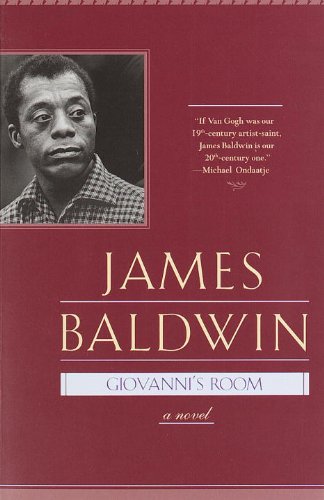
My next read, while the work of an American writer, is also not part of any of my ongoing reading challenges. Technically, it is. Still, James Baldwin’s Giovanni’s Room is listed among the 1,001 Books You Must Read Before You Die, technically making it part of one of my ongoing challenges. It has been my goal to read at least twenty books from the list annually. Interestingly, it was must-read lists that introduced me to the highly esteemed American writer. During the first year of the pandemic, I obtained copies of his works Go Tell It on the Mountain and Giovanni’s Room. I have already read the former, but the latter was left to gather dust on my bookshelf. This made me reconsider including Giovanni’s Room in my ongoing literary adventure.
Originally published in 1956, Giovanni’s Room is narrated by a man named David. As he peers out the window of the house he rented with his fiancée, Hella, in the south of France, he contemplates their relationship. He gets inebriated while staring out into the darkness. He begins to realize that he never truly loved Hella. As the alcohol muddies his memory, he drifts back to his memories of the titular Giovanni. Giovanni is an Italian man David fell in love with while living in Paris. David still harbors strong feelings for Giovanni. However, he laments his inability to embrace and express these feelings. As David boards a train for Paris, he reminisces about his past. His first sexual encounter with another man occurred when he was still a teenager. His initial bond with Joey transformed into a sexual encounter during a sleepover. However, the next day, David left, upset about how things had unfolded even though he had enjoyed the experience. He then tried to avoid Joey, thinking that his attraction to men would threaten his masculine identity. He worried about how it would break his father’s heart. To feel like a “real man,” he got drunk with friends and started bullying Joey. While out drinking one night, David crashed his car, prompting his father to ask him what he wanted to do with his life. Hoping to make his father happy, David joined the Army, where he had a secret affair with another soldier, who was discharged after he was discovered to be gay. After returning from the Army, David traveled to Paris to create some distance between himself and his father’s expectations of him to be a certain kind of man.
In Paris, he met Hella. To contemplate his proposal, Hella traveled to Spain. However, while waiting for her return, David was kicked out of his hotel. Jacques, an older gay acquaintance, rescued him. While they were dining at Guillaume’s gay bar, they noticed the new server, Giovanni. David is instantly attracted to him, even though he tries to hide it. He pretends to be heterosexual. David and Giovanni become friends. With nowhere else to go, David moves in with Giovanni. In Giovanni’s small maid’s room, their relationship further blossoms. David busies himself while Giovanni is at work, tidying up the dirty room. But this only makes him resentful of his growing feminine role. He then secretly writes to his father for money to move out of the room. His father, however, refuses. David also worries about what Hella would feel if she found out about his relationship with Giovanni. This prompts him to become emotionally distant from Giovanni. When he receives a letter announcing Hella’s imminent return, David tries to reassert his attraction to women through a one-night stand with an acquaintance. However, David can only think of Giovanni, making him even more frightened of what the future might hold.
At its heart, Giovanni’s Room is a love story. However, something has always held David back from fully embracing what he feels for Giovanni. He is constantly confused by his attraction to men, and this becomes even more pronounced as his relationship with Giovanni grows. Identity and sexuality are therefore two of the novel’s prevalent themes. In David’s case, his denial of his sexuality is particularly compelling. His internalized homophobia provides another dimension to the story. His denial creates a chasm between him and Giovanni, as he begins to resent people like Giovanni, whom he loves but cannot bring himself to fully embrace. David’s story also highlights societal and familial expectations. Conventional gender norms often interfere with a person’s sense of self. From a young age, ideas about what masculinity means have been inculcated into David’s mind. Because he associates manhood with heterosexuality, he feels that his attraction to Giovanni indicates his failure as a man. This makes Giovanni’s Room an interesting and thought-provoking read. Despite being deceptively slender, it packs a lot.
What will you read next?