Happy Wednesday, everyone! Woah! Just like that, we are already done with the ninth month of the year. How time flies! I hope the year has been kind and great to everyone. I know life isn’t a walk in the park, but it is my fervent prayer that everyone’s year is going well. I hope that the coming months will usher in blessings and positive news for everyone. I hope the rest of the workweek goes smoothly.
That said, the middle of the week also brings a fresh WWW Wednesday update. WWW Wednesday is a bookish meme originally hosted by SAM@TAKING ON A WORLD OF WORDS.
The mechanics for WWW Wednesday are quite simple: you just have to answer three questions:
- What are you currently reading?
- What have you finished reading?
- What will you read next?

What are you currently reading?

It’s already the middle of the week, which means we have only two more days until the weekend. I hope everyone makes it through the workweek. After a couple of damp weeks, the sun is finally shining here in the northern part of the Philippines. But this seems to be an ominous sign. The super El Niño phenomenon threatens the country. Still, I am fervently hoping that it will not be as devastating as forecast. Reading-wise, I am currently in the midst of a foray into the works of American writers. American literature has always been a staple of my annual literary journey. With American literature being one of the most readily available bodies of literature, I guess one can never escape it. I also realized that I have several works of American literature in my ongoing reading challenges. This reminds me that we are already in the final stretch of the year, and I still have quite a lot of books to read for my reading challenges. I guess it is time to lock in to avoid cramming during the last month of the year.
My current read, or at least the book that I am about to read, is not part of any of my reading challenges. It was during the pandemic that I learned about Kiley Reid and her novel, Such a Fun Age. The novel was ubiquitous, naturally piquing my interest. It was also longlisted for the Booker Prize. However, it took some time before I was convinced to take a chance on the book. Even after I acquired a copy, it took some time before I finally read it; it was left to gather dust on my bookshelf. Apparently, Such a Fun Age was Reid’s debut novel. The novel opens with Emira Tucker, a 25-year-old African American college graduate who is with her friends late one Saturday night. Suddenly, Alix Chamberlain, the woman Emira babysits for, calls her and begs her to watch Briar, Alix’s two-year-old child. Alix, a wealthy influencer, blogger, and public speaker in her early thirties, has a family emergency and doesn’t want Briar around. In need of money, Emira reluctantly agrees.
Assisted by her friend Zara, Emira arrives at the Chamberlains’ residence, where she notices a hole in one of their windows. Apparently, their residence was egged during the night. Alix’s husband, Peter, received backlash for making a racist remark on-air, though he insists the comment was thoughtless. Per Alix’s recommendation, they go to Market Depot, a nearby upscale supermarket, to kill some time. There, they have an impromptu dance party in one of the aisles. After Zara leaves, though, a security guard accuses Emira of kidnapping Briar and refuses to believe that Emira is Briar’s babysitter. I just started reading the book, but the story already has my attention. I will be sharing more of my impressions of the book in this week’s First Impression Friday update.
What have you finished reading?

The past week was rather hectic, especially as I had to deal with concerns at work. Despite this, I managed to sneak in two books. Still, it is a decent number. More importantly, reading both books made a dent in my ongoing reading challenges. It was must-read lists that first introduced me to Marion Zimmer Bradley and her novel, The Mists of Avalon. I was initially reluctant to read the book because it belongs to a genre I rarely venture into. I eventually relented, curious about what the book had in store. I secured a copy in 2019, but it sat gathering dust on my bookshelf. This prompted me to include it on my 2026 Top 26 Reading List and 2026 Beat the Backlist Challenge. I am essentially hitting two birds with one stone. At nearly 900 pages long, The Mists of Avalon is one of my longest reads this year.
Originally published in 1983, the novel is Bradley’s retelling of the renowned Arthurian legends, told from the perspective of the female characters, particularly Morgaine (Morgan Le Fay). Morgaine is the daughter of Igraine, younger half-sister of Viviane, and older sister of Morgause. Igraine was married at fifteen to the much older Duke Gorlois of Cornwall. She later married King Uther Pendragon after Gorlois died in battle against Uther. However, before Igraine learned of Gorlois’s death, Uther consulted with Merlin, who made Uther appear as Gorlois, allowing him to gain access to Igraine at Tintagel and conceive Gwydion. When Morgaine was eleven and her half-brother was six, there was an attempt to murder Gwydion. Viviane then advised that Gwydion be fostered far away from the court, while Morgaine was taken by her aunt to Avalon, where she was trained as a priestess of the Mother Goddess. Morgaine’s natural gift for magic made her the obvious choice to become the next Lady of the Lake. It was also foretold that she would play a pivotal role in uniting Britain under a new High King. After seven years of training, Morgaine was initiated as a priestess of the Mother. When Viviane’s son, Lancelet, visited Avalon, Morgaine fell in love with him. Her happiness, however, was short-lived when Lancelet fell in love with Gwenhwyfar, a lost woman they found in the mist. Morgaine was then given in a fertility rite, the Great Marriage, to the future High King of Britain. Tradition has it that for Avalon to accept the new High King, he must participate in the ritual, which involves having sex with a virgin priestess to form a covenant with the land that he is to defend. This will turn him into the King Stag, who gives his life for the land and its people. Morgaine completed this ritual with the future king. However, she was horrified to learn afterward that she had unwittingly slept with Gwydion, who now goes by the name Arthur. Morgaine was naturally upset by how the Goddess had humiliated her. Despite questions about his paternity, Arthur eventually claimed the throne when his father died fighting the Saxon invaders. To help her nephew defend Britain against the Saxons, Viviane gave him the sacred sword Excalibur. She also had Morgaine make him an enchanted scabbard that would prevent him from losing blood. With the combined forces of Avalon and Caerleon, Arthur repelled the invaders, brought peace to the land, and married Gwenhwyfar. To her dismay, Morgaine discovers that she is pregnant with Arthur’s child. Angry with Viviane, Morgaine renounces Avalon and has her son, Gwydion, at the court of her aunt Morgause. Morgause and her husband, Lot, openly desire the throne of Britain, and Gwydion allows them to pursue it. Eventually, Morgaine decides to return to Caerleon, where she serves as a lady-in-waiting to Gwenhwyfar, who is extremely anxious and deeply pious.
Because of her position as a priestess of Avalon, Morgaine often argues with Gwenhwyfar about matters of religion; Gwenhwyfar is a pious Christian. During her training, Morgaine learned about the escalating tension between the old pagan religion (Druidism) and the new Christian faith. The two women also fight for the affections of Lancelet, who has risen through the ranks to become Arthur’s most esteemed knight. Ironically, Gwenhwyfar believes that her adulterous love for Lancelet is preventing her from carrying a pregnancy to term. She then tortures herself over her feelings, even performing penance for them. Arthur, however, has noticed her feelings for Lancelet. He even tells her that if she has a child with him, he will adopt it as his own. This makes her consider participating in a pagan fertility ritual out of desperation. To pacify her, Morgaine tells Gwenhwyfar that Arthur has a bastard son living in the court of King Lot, swearing her to secrecy. Morgaine is also worried that Gwenhwyfar will bring shame to King Arthur’s court, prompting her to enchant Lancelet into sleeping with Elaine.
Adventures and misadventures abound throughout the novel, although women are at the forefront of the story. Love and ambition are its driving forces, as portrayed through the stories of Morgaine, Morgause, Viviane, and Gwenhwyfar. Arthur, on the other hand, is mainly a spectator, although his presence remains prevalent throughout the story. Meanwhile, Paganism and Christianity are also pitted against each other, capturing a society on the cusp of breaking from tradition. Will Arthur uphold the traditions he grew up with to appease his people, or will he relent to the pressures he receives from his wife and the Saxons? The friction between Druidism and Christianity brings forth the broader subject of modernization. Ultimately, The Mists of Avalon is a meditation on how women’s voices are often muted by history and their roles reduced. Riddled with magic, history, and folklore, it is a compelling read.
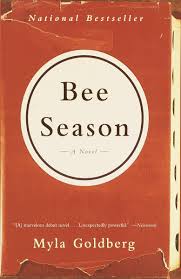
From the magical and mystical past, my next read brought me to the contemporary period. It was in early 2019 when I first came across Myla Goldberg. Her latest novel, Feast Your Eyes, was among the books scheduled to be released that year that everyone was looking forward to. Unfortunately, I was unable to obtain a copy of the book. Nevertheless, I was able to obtain a different work. During a random venture into a local bookstore, I came across Bee Season. Due to the recency of my encounter with her, I immediately recognized Goldberg’s name, prompting me to purchase a copy of the book. However, the book was left to suffer the same fate as most of my books. This prompted me to include it in my 2026 Beat the Backlist Challenge. I then made it part of my venture into American literature.
Originally published in 2000, Bee Season is Goldberg’s debut novel. At the heart of the story is Eliza Naumann, an ordinary girl who was often overlooked by her parents and teachers. At nine, stuck in a remedial fifth-grade class, she recognized that she was a “student from whom great things should not be expected.” Her life started to look up after a previously unrecognized ability was discovered. She surprises everyone, including herself, when she correctly spells words like “raspberry”; she wins her class bee with the word “weird.” Gathering momentum, she wins her school spelling bee and advances to the district level. Her unexpected success, although initially overlooked, eventually prompts her father, Saul, a Jewish scholar and cantor at the Beth Amicha Synagogue with a deep interest in the Kabbalah, to take her under his tutelage. Before his daughter’s success, Saul was looking after Aaron, his favored sixteen-year-old son. With his attention now focused on his daughter, Saul no longer has time to continue his son’s Torah study and guitar lessons. Unlike Aaron, Eliza, or Elly, is disconnected from the Hebrew services. Basically ignored at home, Aaron seeks solace with the Hare Krishnas. A Hare Krishna devotee, Chali, introduces him to the International Society for Krishna Consciousness (ISKCON). Meanwhile, Miriam, their mother, is a brilliant but distant lawyer. She barely pays attention to the events unfolding in her own household. She is too busy leading a double life that keeps her barely hanging on to the edge of sanity. The story then flashes back to the past. Miriam grew up isolated. It is also revealed that her marriage to Saul was based on a sense of mutual utility. She saw him as a househusband who would enable her career. On the other hand, he saw her as a means to a lifestyle conducive to his mystical studies. In the present, the family attends the area finals at the Philadelphia Spectrum. While preparing for the competition, Eliza studies on her own and develops a deep, personal connection to language. During the competition, Saul begins to view Eliza’s spelling technique as connected to mystical practice. She possesses a gift with words that runs much deeper than her ability to spell. It is a potential to reach the ultimate heights of Jewish mysticism, an accomplishment he has found, to his frustration, that he is unable to achieve. Meanwhile, Miriam recognizes her own girlhood intensity. This makes her feel a pang of regret over her emotional distance. After the victory, Miriam gives Eliza her treasured childhood kaleidoscope, but Eliza fails to grasp its significance, which disappoints her mother.
I have to admit that when I first came across Bee Season, I thought it was about bees, the animals. It was only when I started reading the book that I realized the titular “bee” referred to a spelling bee. On the surface, the novel chronicles Eliza’s intellectual awakening. When she finally obtains her father’s attention and admiration, she is thrilled. This also prompts her to study the patterns in letters and words. She enters a state of awareness in which words reveal themselves to her on a deep, spiritual level. She can envision a word dividing into all the other words contained within it. Her father’s coaching also makes her obsess over following the ancient Kabbalist teachings. The novel is thus also about her spiritual awakening. All the while, her family begins to unravel. Aaron becomes increasingly detached from them as he finds companionship with the Hare Krishnas. The emotionally detached matriarch also secretly struggles with her own concerns. Eliza’s spelling success ironically exposes the fault lines lying underneath. Bee Season vividly portrays a family falling apart through neglect and a lack of communication. In many ways, the novel functions as a character study of Eliza and Aaron, two children pursuing diverging paths, raised by two seemingly empty adults.
What will you read next?