Happy Wednesday, everyone! Woah! Just like that, we are already in the last quarter of the year. How time flies! I hope the year has been kind and great to everyone. I know life isn’t a walk in the park, but it is my fervent prayer that everyone’s year is going well. I hope that the coming months will usher in blessings and positive news for everyone. I hope the rest of the workweek goes smoothly.
That said, the middle of the week also brings a fresh WWW Wednesday update. WWW Wednesday is a bookish meme originally hosted by SAM@TAKING ON A WORLD OF WORDS.
The mechanics for WWW Wednesday are quite simple: you just have to answer three questions:
- What are you currently reading?
- What have you finished reading?
- What will you read next?

What are you currently reading?

It’s already the middle of the week, which means we have only two more days until the weekend. I hope everyone makes it through the workweek. After a couple of damp weeks, the sun is finally shining here in the northern part of the Philippines. But this seems to be an ominous sign. The super El Niño phenomenon threatens the country. Still, I fervently hope it will not be as devastating as forecast. Reading-wise, I am currently in the midst of a foray into the works of American writers. American literature has always been a staple of my annual literary journey. With American literature being one of the most readily available bodies of literature, I guess one can never escape it. I also realized that I have several works of American literature in my ongoing reading challenges. Still, I have some works by American writers in these challenges that I have yet to read. As such, this journey, which commenced in September, has spilled into October.
Among the books that are part of my reading challenges is Bret Easton Ellis’s Less Than Zero. It was through must-read lists that I first came across the American writer, although this is the first time I am reading one of his works. Interestingly, it was during the pandemic that I secured a copy of Less Than Zero. However, it sat gathering dust on my bookshelf, prompting me to reconsider including the book in my 2026 Top 26 Reading List. Originally published in 1985, Less Than Zero is Ellis’s debut novel. Set in Los Angeles in the 1980s, the novel introduces Clay, a college student studying liberal arts who returns to his hometown for the holidays. His girlfriend, Blair, picks him up from the airport, but he finds her irritating. Evidently, Clay’s family is wealthy, as they reside in an affluent neighborhood. However, nobody is home when he arrives, prompting him to retreat to his bedroom, which has remained the same since before he left for college.
Like any young man, he immediately tries to get in touch with his friends. However, his longtime friend Julian does not respond to his calls. As the story moves forward, it becomes evident that Clay and his generation are a generation of drifters living a hedonistic life. They consume cocaine and party hard. They all seem lost. After all, the novel markets itself as the “shocking novel of the new lost generation.” Ernest Hemingway’s The Sun Also Rises comes to mind. Flashbacks provide Clay’s backstory, but in the present, he spends his holidays partying or getting high. Each chapter sees Clay attending a party. Anyway, the book is rather a quick read, but it still packs a lot. I am looking forward to seeing how Clay’s story unfolds.
What have you finished reading?

The past week was rather hectic, especially as I had to deal with concerns at work. Further, it was month-end, which is often among the busiest periods in any accountant’s life. Still, I am glad I was able to successfully oversee my first month-end closing with my new company. In between, I was able to sneak in two books, which is a decent number. While I have been focusing on books on my reading lists, the first of the two books I read in the past week is not part of any of these reading challenges. It was during the pandemic that I learned about Kiley Reid and her novel, Such a Fun Age. The novel was ubiquitous, naturally piquing my interest. It was also longlisted for the Booker Prize. Apparently, Such a Fun Age was Reid’s debut novel. However, it took some time before I was convinced to take a chance on the book.
Originally published in 2019, Such a Fun Age opens with Emira Tucker, a 25-year-old African American college graduate. While out with her friends late one Saturday night, she receives a call from Alix Chamberlain, the woman she babysits for. Alix begs Emira to watch Briar, her two-year-old daughter. Alix, a wealthy influencer, lifestyle blogger, and public speaker in her early thirties, has built a brand known as “LetHer Speak.” The brand advocates writing old-fashioned letters to businesses in exchange for free product samples. It also encourages women to be more assertive. Alix and her family are originally from New York City but have moved to Philadelphia for her husband Peter’s job as a television anchor. Meanwhile, Alix has hit a slump as she tries to balance work with her personal life. A “family emergency” prompts Alix to call Emira that Saturday evening. Emira arrives at the Chamberlains’ residence, where she notices a hole in one of their windows. Their residence has been egged during the night. Peter has received backlash for making a racist remark on air, though he insists the comment was thoughtless. Alix asks Emira to take Briar to a nearby upscale supermarket to kill some time. However, a security guard accuses Emira of kidnapping Briar and refuses to believe that she is the child’s babysitter. Peter’s arrival clears up the issue. During the altercation, a bystander named Kelley Copeland records the incident. Later, Emira runs into Kelley on the subway. Kelley urges Emira to post the video online, but Emira refuses. Emira eventually relents and allows him to at least forward the video to her. This interaction, however, leads to something deeper and more intimate. Alix also recalls the details of her life that led to this point. Before becoming Alix, she was Alex Murphy. While studying in college, she started writing letters to companies, which then sent her free products. She posted her reviews on her blog, which gradually gained a respectable following. She then met Peter, who supported her business endeavors. Despite becoming pregnant, Alix was encouraged by the success of her business and refused to quit just yet. Catherine’s birth prompted them to return to Philadelphia to settle down and raise their family. While Catherine was mild-mannered, Briar was unpredictable, leading to Emira’s hiring.
Shocked by the incident at the supermarket, Alix tries to treat Emira better and cultivate a deeper relationship with her. Emira, however, simply regards Alix as her employer. Such a Fun Age grapples with both contemporary and classic subjects. The racial profiling Emira experiences at the supermarket is an experience shared by many African Americans. They have become so accustomed to such forms of aggression that they would rather let them pass than allow them to escalate. On the other hand, Alix’s resolve to gain Emira’s allyship captures white saviorism and its complicity. Alix’s initial attempts to befriend Emira after the incident appear well-intentioned. However, her subsequent actions suggest otherwise. The rise of social media has made it increasingly challenging to discern what is authentic and what is artificial. The growing relevance of social media has also given rise to performative activism, as social media influencers chase clout. Overall, Such a Fun Age is a timely meditation on social media, race, and humanity.
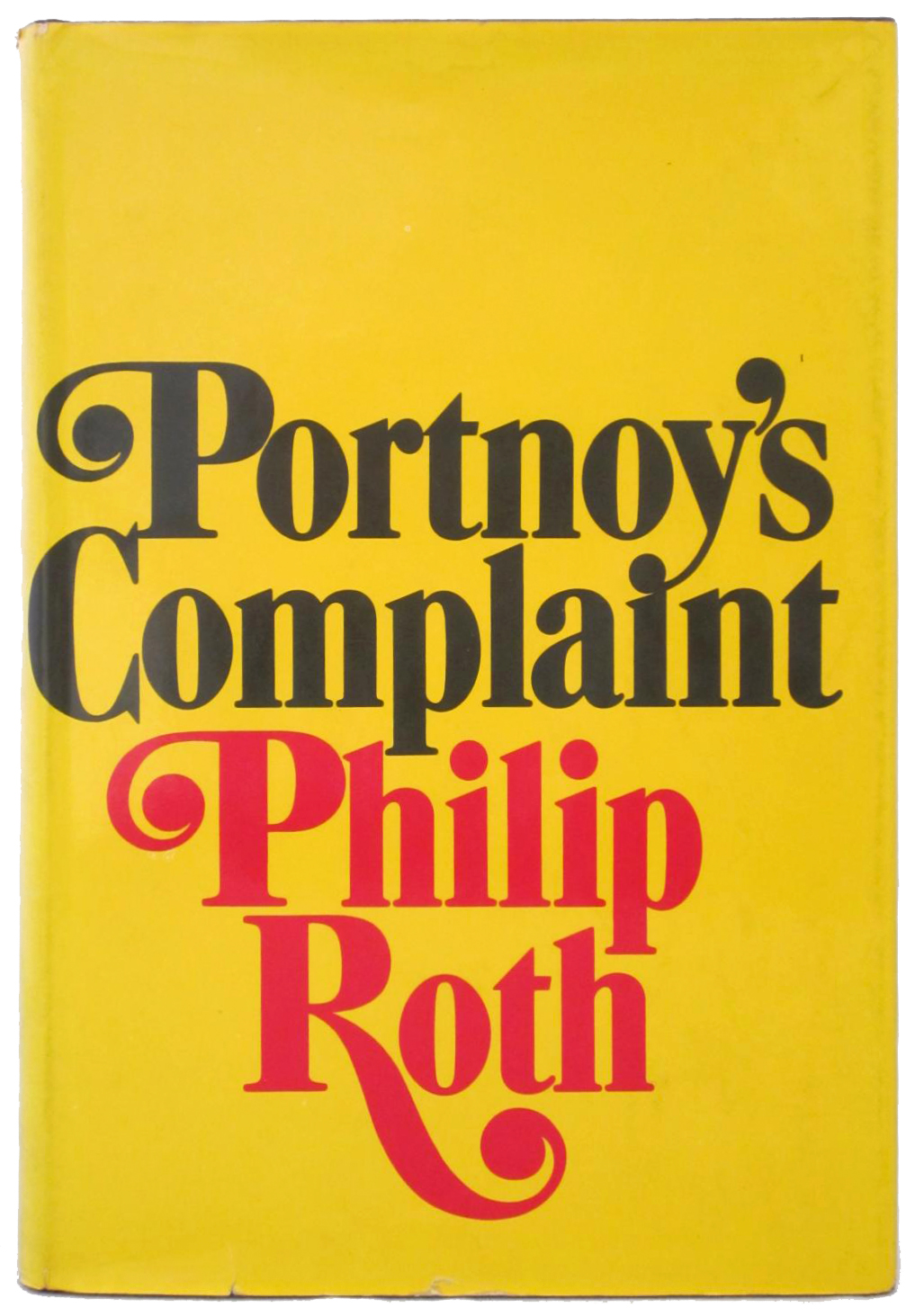
From a new-to-me writer to another new-to-me writer. It was must-read lists that first introduced me to Philip Roth. These lists have helped broaden my reading horizons, as they introduced me to writers and titles I would not have encountered otherwise. Philip Roth and his works are familiar presences on such lists. Among his books is Portnoy’s Complaint. I secured a copy of the book during the pandemic, but it was left to suffer the same fate as most of my books. It sat on my bookshelf, gathering dust. At the start of the year, this made me reconsider including the book in my 2026 Top 26 Reading List. After all, Portnoy’s Complaint is also listed among the 1,001 Books You Must Read Before You Die.
Originally published in 1969, the novel is structurally framed as a continuous monologue by the titular Portnoy. Alexander Portnoy is a deeply neurotic young Jewish man. As an adult, he confesses to his therapist that he blames his overbearing and authoritarian mother, Sophie, for his sexual digressions, misgivings, and obsessions. He also criticizes his soft-spoken and perpetually constipated father, Jack, for his failure to help him. He then proceeds to talk about his “complaint”: a constant internal battle between his strong sexual urges and the moral rules instilled by his Jewish upbringing. This started during his childhood in Newark, New Jersey. From a young age, Alexander feels trapped by his parents’ expectations and the constant scrutiny of his family and community. The central motif of Alex’s complaint, however, is sex. He recalls early instances of sexual curiosity and self-exploration. At a young age, he develops a constant and compulsive urge to masturbate. Due to their conservative household, he has to hide his urges to the point that his mother suspects he suffers from diarrhea. His mother imposes strange punishments. Still, this does not hinder Alex from fulfilling his solitary sexual urges; he also has the sense of constantly being watched. As Alexander gets older, his sexual urges grow stronger, manifesting in different “perversities” that he obsessively details to Dr. Spielvogel. His elaborate masturbatory fantasies, ironically, often involved non-Jewish girls. He becomes increasingly bold in his attempts to explore his sexuality, including experimenting with food as sexual props. As a teenager, his first experiences with sex are equally confusing. Still, his growing sexuality constantly clashes with the strict moral code his parents have instilled in him, especially his mother. He keeps seeing his mother’s influence in everything he does. Her suffocating presence haunts him, making him feel as though she is constantly watching him. This causes him deep guilt over his desires. Alex’s monologues are interspersed with his parents’ beliefs and advice. As an adult, he is employed in New York City as the Assistant Commissioner of Human Opportunity. Still, his sexual exploits have not slowed down despite his entering adulthood. Specific memories of specific women form key narrative anchors amid the surging emotion and memory. However, his single most defining relationship is with a woman he refers to as the Monkey. The Monkey is the non-Jewish Southern girl whose nickname comes from her story involving a peculiar sexual act with a banana. During their relationship, Alex and the Monkey take a trip to Europe.
Due to its explicit content, Portnoy’s Complaint was subjected to widespread censorship shortly after its release. It sparked outrage. However, over time, it started to achieve classic status. Readers are compelled to confront the intersections of humor, sexuality, and cultural identity. Still, the novel is Portnoy’s own coming-of-age story. It captures his quest for identity, or rather, his struggle against a given identity. He was raised by his mother to be a “nice Jewish boy.” This came with its own expectations. His sexual acts are then his means of rebelling against the identity imposed upon him by his upbringing. However, he simply cannot escape his ingrained neuroses. His personal act of rebellion is also driven by self-loathing, guilt, and shame. Alex Portnoy’s story also captures sexual repression, bodily autonomy, and liberation. His sexual repression is driven by his strict upbringing and the moral codes of his community. His desire for sexual encounters with non-Jewish women can then be seen as his attempt to break free from these chains. Overall, Portnoy’s Complaint is an insightful and interesting read.
What will you read next?