Happy Wednesday, everyone! Woah! Just like that, we are nearly through the tenth month of the year. How time flies! 2026 is slowly drawing its curtain. Still, I hope the year has been kind and great to everyone. I know life isn’t a walk in the park, but I pray that everyone’s year is going well. I hope that the coming months will usher in blessings and positive news for everyone. I hope the rest of the workweek goes smoothly.
That said, the middle of the week also brings a fresh WWW Wednesday update. WWW Wednesday is a bookish meme originally hosted by SAM@TAKING ON A WORLD OF WORDS.
The mechanics for WWW Wednesday are quite simple: you just have to answer three questions:
- What are you currently reading?
- What have you finished reading?
- What will you read next?

What are you currently reading?
It’s already the middle of the week, which means we have only two more days until the weekend. I hope everyone makes it through the workweek. After a couple of damp weeks, the sun is finally shining here in the northern part of the Philippines. But this seems to be an ominous sign. The super El Niño phenomenon threatens the country. Still, I fervently hope it will not be as devastating as forecasted. Reading-wise, I am wrapping up my October reading journey. In the first half of the month, I completed all works of American writers in my ongoing reading challenges. I’ve since adopted a more freestyle literary journey, although it’s shaping up to be about catching up on the most recent releases. At the start of the year, I usually churn out a list of new releases I’m looking forward to. However, my recent reads haven’t been part of this list. On the other hand, it’s been a while since I last read a new release. I believe I hadn’t read a newly released book this year until this month.
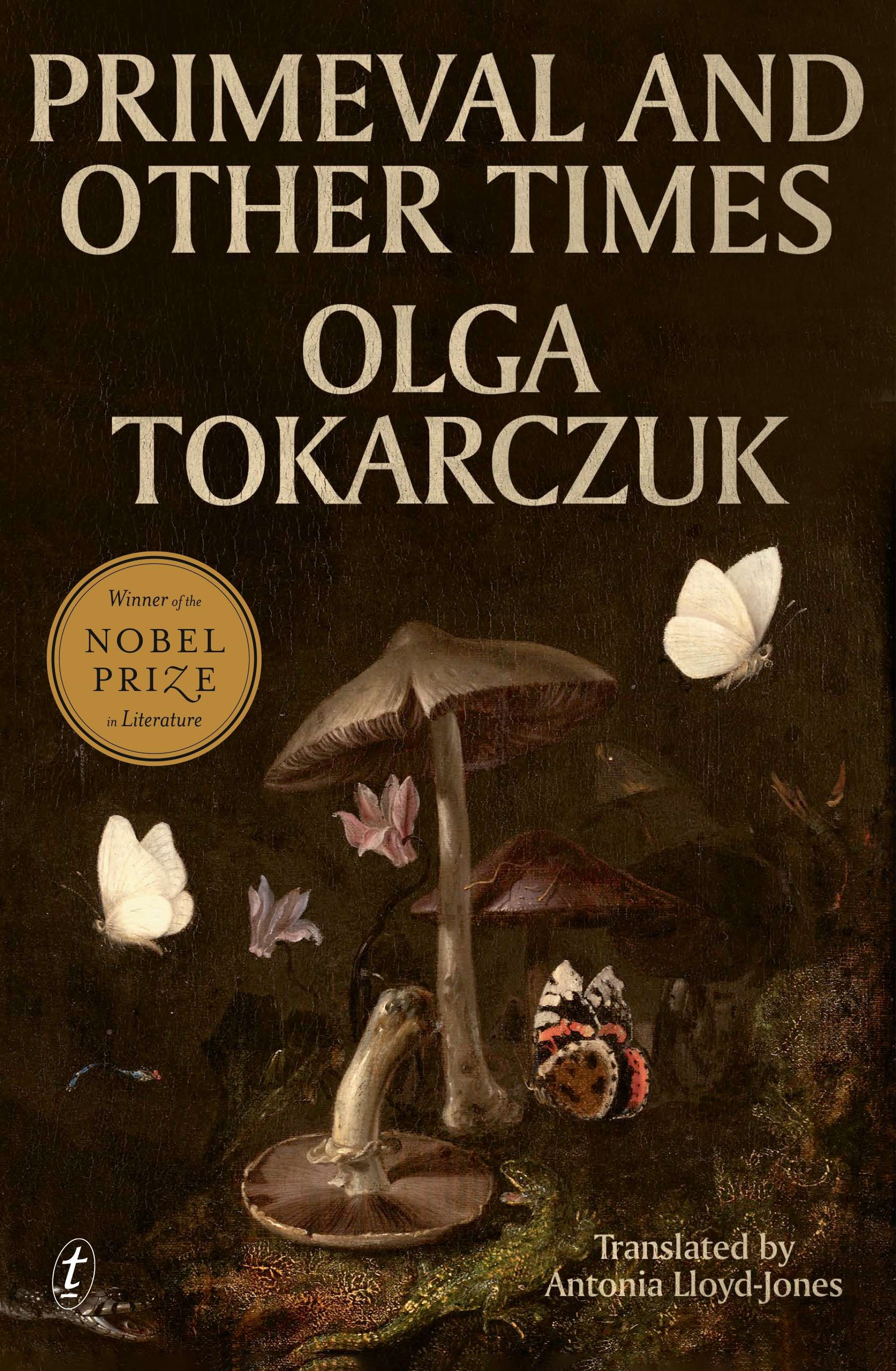
This brings me to my current read. I believe it was midway through the year when I learned about the re-release of Olga Tokarczuk’s novel, Primeval and Other Times, in English. At first, I thought it was a collection of short stories, which made me a little apprehensive about reading the book. When I learned it was a novel, it became imperative for me to read the book. The Polish writer has earned a fan in me ever since I first encountered her in 2019, when she was awarded the Nobel Prize in Literature. Originally published in 1996 in Polish as Prawiek i inne czasy, it was Tokarczuk’s third novel and was first translated into English in 2010. Like her other works, the novel transports the readers to the Polish countryside, to the fictional titular town of Primeval. It is believed that the town was inspired by the village of Zagrody, located in the Kielce region, where Tokarczuk spent her childhood holidays.
The narrative unfolds in short bursts termed “Times”; this is also similar to her other works, as Tokarczuk endeavors to capture the ephemeral nature of life. The story starts in the early 20th century and centers on the fate of the Niebieski family (Michał, Genowefa, Misia Boska, and Izydor). They existed in a tumultuous period defined by war and occupation. Each Time then conveys the story of a different character or locale—human, animal, vegetable, mineral, and spirit. Due to its unique structure, the novel is fragmented. Still, some of the Times are interconnected. Like the case of the Niebieski family, some of the connections are closely peripheral. Among those who stands out is Cornspike, a witch-healer who lives in the forest with her daughter Ruta. There is something folklore-ish to the story, something that I expect. This is Tokarczuk territory after all. I am looking forward to how the rest of the story unfolds.
What have you finished reading?
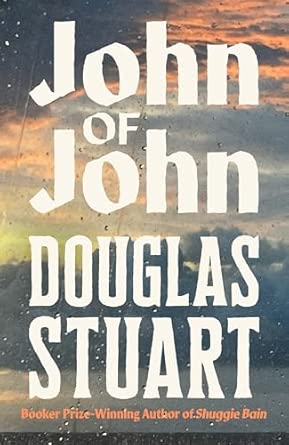
After completing three books the week before, the past week has been quite a slow one for reading. I was able to complete just one book. Technically, I have completed three. It just so happened that, due to my hectic week, I completed the previous WWW Wednesday update two days late. I have already shared my brief insights into Rebecca Perry’s debut novel, May We Feed the King. Like May We Feed the King, the only book I completed for this update is also shortlisted for the Booker Prize. Interestingly, it was also the Booker Prize that first introduced me to Scottish writer Douglas Stuart. During the height of the pandemic, his debut novel, Shuggie Bain, was ubiquitous, especially after it won the prestigious Booker Prize. Not a shabby achievement for an initial venture into full-length prose. I have also read his sophomore novel, Young Mungo. Reading his latest novel, John of John, was therefore imperative; I actually listed it as one of the books I was looking forward to this year.
The novel transports us to the remote Isle of Harris in Scotland’s Outer Hebrides. At the heart of the story is John-Calum “Cal” Macleod, a recent art school graduate who was living in Edinburgh, where he struggled to find a permanent address and earned a meagre income from a demeaning cleaning job. He also maintained a fragile connection to his home through weekly phone calls with his father, John, a sheep farmer and weaver. During one of their calls, his father informed him that his maternal grandmother, Ella Morrison, was ailing and coaxed his son into returning home to Falabay to look after her. Cal reluctantly agreed, although he dreaded returning home. Cal’s reunion with his father is immediately difficult, with John quickly criticising his son’s bleached ginger hair and second-hand clothes, even comparing Cal’s appearance to that of a ceard (a vagrant). John also serves as a deacon in the local Presbyterian church, a strict Calvinist congregation that still disciplines its members in public shaming sessions. Cal, however, refuses to embrace his father’s austere faith. Apparently, his father exaggerated his grandmother’s condition to lure him home. Trapped and in debt from student loans, Cal is left with no recourse but to stay home, where he deflects his father’s pressure for him to work secretly at the family loom. This is a violation of the weavers’ code that would allow them to increase their output. Cal then attempts to find alternative work at the local inn. However, his efforts are futile. He subsequently tries reconnecting with his childhood friend, Doll Macdonald. Their interactions reveal a bitter, resentful young man struggling with alcohol addiction and a sense of being left behind.
Meanwhile, the tension in the Macleod home culminates in a vicious argument at the dinner table. John berates Ella for not learning Gaelic; Ella is Glaswegian and clings to her profanity-laced English. This prompts Cal to storm out and seek an escape. He responds to a lonely-hearts ad from a man named William in Inverness. However, his hopeful and revealing letter is met with rejection. Cal’s sexuality is slowly revealed. Queerness, after all, has been a staple of Stuart’s works, so this revelation was expected. In Edinburgh, Cal has been sleeping with men. But there is more to the story than just the sexuality Cal has concealed from his family. As the story progresses, it becomes clear that it is not only Cal who is concealing a secret. Secrets and resentments permeate the Macleod household. John himself is keeping a secret from his family. His devoutness, it seems, was used to conceal this secret and keep the public’s eyes from prying into his personal life. He uses religious dogma to deflect social judgement.
After all, rural life can be stifling. Secrets and rumours spread like wildfire. The locals’ judgemental glances do not escape Cal’s notice, even though they try to keep their suspicions quiet. Tradition also subtly factors into their lives, with John standing for conservatism and the past, while his son is a symbol of the present and a more liberal way of life. The intricacies of sexuality, identity, and family dynamics are also vividly examined in the story. Like Stuart’s earlier works, John of John also explores how economic decline—the Outer Hebrides is a community that relied heavily on its weavers—can expose the fractures hidden beneath the pretence of communal life. John of John is an interesting and thought-provoking read. I expect nothing less from Stuart. He vividly examines a plethora of timely subjects. His atmospheric writing also evokes nostalgia for both small-town life and the laid-back life of the 1990s. It is yet another wonderful literary work from a writer who is slowly growing on me.
What will you read next?