Happy Wednesday, everyone! Woah! Just like that, we are just a couple of weeks away from welcoming a new year. How time flies! 2026 is slowly drawing its curtain. Still, I hope the year has been kind and great to everyone. I know life isn’t a walk in the park, but I pray that everyone’s year is going well. I hope that the coming months will usher in blessings and positive news for everyone. I hope the rest of the workweek goes smoothly.
That said, the middle of the week also brings a fresh WWW Wednesday update. WWW Wednesday is a bookish meme originally hosted by SAM@TAKING ON A WORLD OF WORDS.
The mechanics for WWW Wednesday are quite simple: you just have to answer three questions:
- What are you currently reading?
- What have you finished reading?
- What will you read next?

What are you currently reading?
It’s already the middle of the week, which means we have only two more days until the weekend. I hope everyone makes it through the workweek. The heat has been ominous here in the Philippines, as the super El Niño phenomenon threatens the country. Some provinces are forecast to experience drought by the end of this month. Still, I fervently hope it will not be as devastating as forecast. Reading-wise, I have resumed a more liberal reading journey. I am nearly done with all the books in my ongoing reading challenges, well, except for my 2026 Books I Look Forward To List. This is a good sign going into the final stretch of the year, as I won’t have to cram, which is something of a common occurrence. Still, I have a couple of books from my reading list to complete, all of which are works by African writers. The number five is more manageable, allowing me to venture into other literary territories.
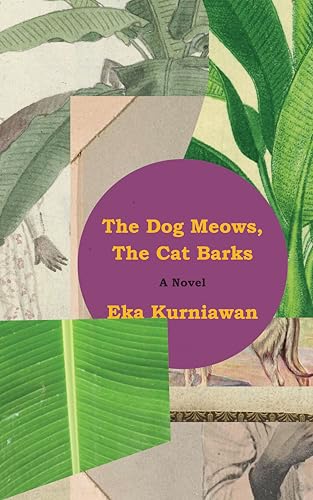
This brings me to my current read. Midway through the year, I learned about the translation of one of Eka Kurniawan’s works. The Indonesian writer earned quite the reputation during the pandemic, when his novel, Beauty Is a Wound, made waves across the world. His debut novel was also the first of his novels I read. This makes The Dog Meows, the Cat Barks the third novel of his that I have read. Originally published in 2024 in Indonesian as Anjing Mengeong, Kucing Menggonggong, the novel follows the coming-of-age of Sato Reang. Sato Reang is a mischievous boy growing up in a small Indonesian town. He is on the cusp of entering puberty, which means that his life is about to change drastically. Childhood pranks are about to be replaced by piety, especially after the loss of his foreskin. When he is circumcised, he loses his sense of normalcy. After the circumcision, Sato’s father also becomes unbearably strict.
Interestingly, Sato Reang opens the story with the announcement of his rebellion: “I stopped going to mosque. I no longer joined in worship. I never said my prayers before bed.” It is a straightforward declaration. As he awaits lightning to strike him for his irreverence, religion then begins to look less like truth and more like a set of exaggerated warnings. This irreverence deepens in his interactions with Jamal, the pious boy. The book is rather slim, and I am about to complete it. Still, I find the story compelling. It is amazing what Kurniawan achieves with limited words. The details of life in the Indonesian countryside do remind me of Man Tiger, although sans the elements of magical realism. I am looking forward to how the story unfolds, particularly how Sato Reang’s friendship with Jamal evolves.
What have you finished reading?
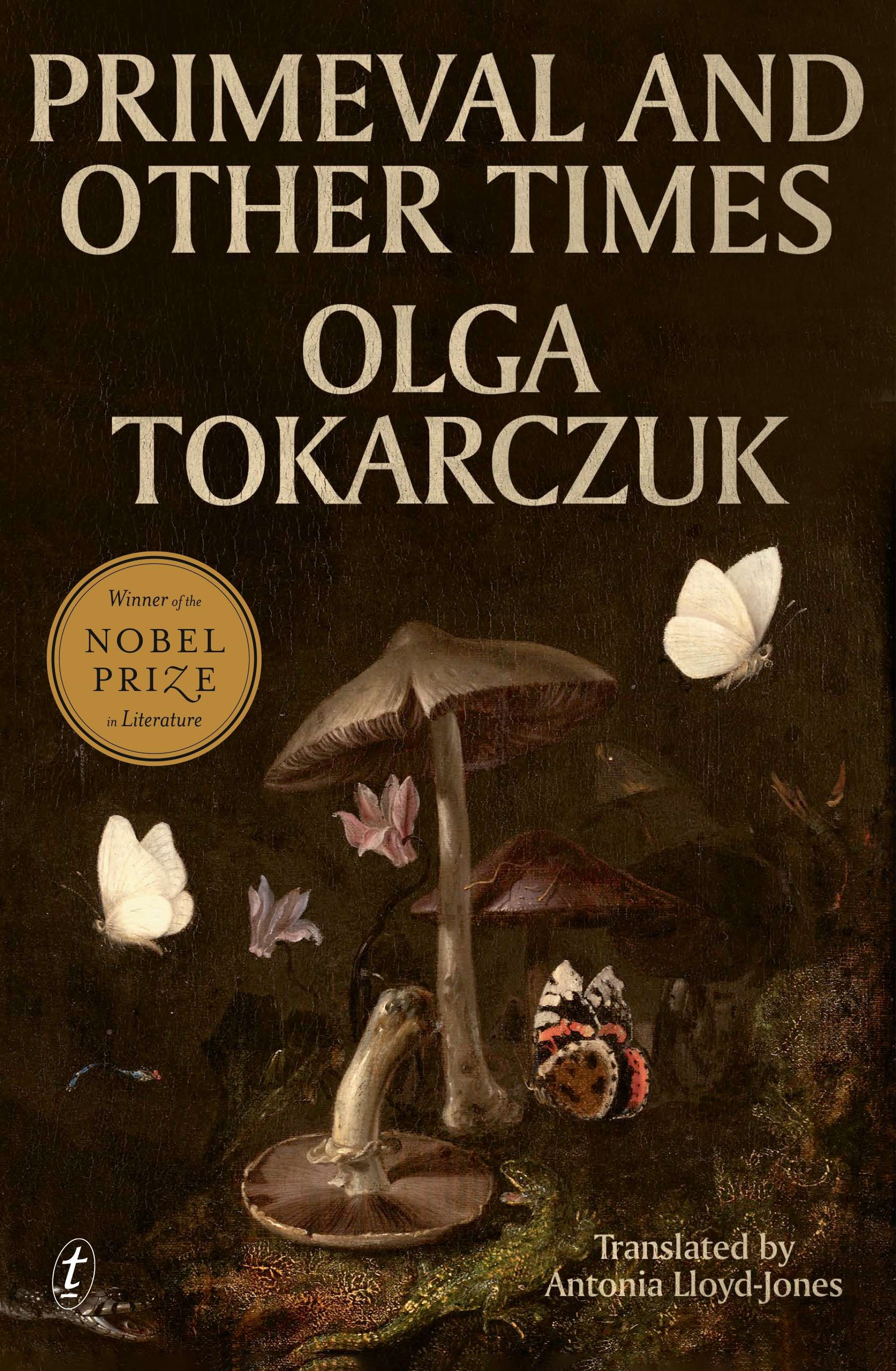
The past week was rather hectic, even though we had a long weekend. For one, it was the month-end closing. Then it was also Halloween season. Still, I was able to complete two books, which is a good number, all things considered. Like The Dog Meows, the Cat Barks, it was midway through the year when I learned about the reissue of one of Olga Tokarczuk’s earlier novels. It was in 2010 that Prawiek i inne czasy was first translated into English as Primeval and Other Times. Originally published in 1996, it was the Nobel Laureate in Literature’s third novel. Interestingly, I initially thought it was a collection of short stories, which made me a little apprehensive about reading the book. When I learned it was a novel, it became imperative for me to read it. The Polish writer has earned a fan in me ever since I first encountered her in 2019, when she was awarded the Nobel Prize in Literature. Primeval and Other Times is the sixth novel by her that I have read.
Like her other works, the novel transports readers to the Polish countryside, to the fictional titular town of Primeval. It is believed that the town was inspired by the village of Zagrody, located in the Kielce region, where Tokarczuk spent her childhood holidays. She described the village as “the place at the centre of the universe,” bounded by two rivers. The narrative unfolds through a series of short episodes called “Times,” a structural device reminiscent of Tokarczuk’s other works. The novel chronicles the fortunes and misfortunes of the Niebieski family, beginning in the early twentieth century. At its heart is Genowefa, the miller’s wife, whose husband, Michał, is conscripted into the Tsar’s army while she is pregnant with their first child, Misia. The narrative subsequently follows the family’s experiences across three generations. As an adult, Misia marries Paweł Boski, the ambitious son of a roofer who dreams of shaping the future. Together, they have four children. Meanwhile, her brother Izydor is portrayed as a kind of idiot savant.
Each “Time” conveys the story of a different character, place, or aspect of existence—human, animal, vegetable, mineral, or spiritual. The family lives through a tumultuous period marked by wars, occupations, and political upheavals. Although the narrative is fragmented, many of these episodes are interconnected, with some connections more apparent than others. Among the memorable characters are Cornspike, a witch and healer who can tame snakes and predict the future but cannot save her daughter, Ruta; Florentynka, a madwoman who curses at the moon; and Squire Popielski, the local landowner who loses himself in a mysterious board game. Meanwhile, four archangels guard the village, yet even their presence cannot protect it from the invading forces and upheavals of history. Historical contexts abound in the story. The Second World War brings the outside world violently into Primeval. The denizens experience occupation, displacement, violence, and the destruction of the familiar world. The war is followed by a new era under communist rule, which allows the villagers to rebuild their lives, but modernization and political change gradually transform the village.
The novel’s folkloric quality is unsurprising, as it bears many of the hallmarks of Tokarczuk’s distinctive prose. Her blending of magical realism and profound philosophical themes captures the resilience of the human spirit amid periods of extraordinary upheaval. The characters endure physical and emotional trauma, yet somehow find ways to survive. The sixty “Times” also capture how the passage of time shapes individual lives and reverberates across generations. The passage of time, memory, and forgetting then emerge as integral themes and subjects. Meanwhile, the forest inhabited by Cornspike becomes both a refuge and a haunting presence, illustrating the tension between the beauty of nature and its indifference to human suffering. This also adds further mythical elements to the story. Ultimately, Primeval and Other Times is a thought-provoking exploration of the transience of life, the persistence of memory, and humanity’s place within the vastness of existence.
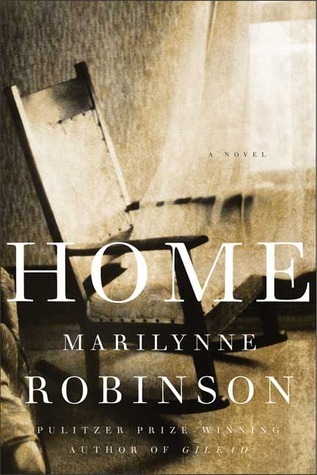
The second book I completed in the past week is technically still a part of my ongoing reading challenges. It was must-read lists that first introduced me to Marilynne Robinson. The American writer is a prominent presence on such lists, immediately piquing my interest. This growing curiosity prompted me to acquire some of her works. However, they were left to gather dust on my bookshelf. I am not sure why, but I reconsidered reading her novel, Home, to close out my two-month venture into American literature. This is although it is not part of any of my ongoing reading challenges. I guess this decision was driven by its inclusion in the 1,001 Books You Must Read Before You Die list. It has been my goal to read at least twenty books from the list annually. Home is actually the sixteenth book from this list that I have read this year.
Originally published in 2008, Home is Robinson’s third novel and the second novel in a series of four that began with Gilead. However, Home can be read independently of its predecessor. The story commences with thirty-eight-year-old Glory Boughton returning to Gilead, Iowa, her childhood home. The youngest of eight children, she has returned to look after her ailing and aging father, Robert, who served as the Presbyterian minister in Gilead for many years before retiring. A former English teacher, Glory is also recovering from the collapse of her five-year engagement to a married man. She initially struggles to adapt to life in Gilead, taking weeks before she and her father settle into a comfortable routine. One day, they receive a letter from Glory’s long-estranged brother, Jack. Jack has not been home for two decades, but their father has been eagerly awaiting his return. John Ames, as he was baptized, was the beloved but troubled son, the proverbial prodigal son who caused the family much worry and pain. When he finally arrives, Glory initially mistrusts her brother’s intentions. Their initial conversations are strained. However, Glory eventually overcomes her mistrust, especially after they spend time together working in the garden. They grow closer and begin sharing personal details from their past. They even discuss their father’s strong faith and his often-unrealistic expectations, especially for Jack. Through their talks, the unspoken truths and long-held secrets of the Boughton family slowly emerge.
Still, there are some secrets that Jack tries to keep from his sister. He sends mysterious daily letters while anxiously waiting for the mail. All the while, memories of the past begin to overwhelm Glory as well. A particular childhood memory involves Jack’s impregnating a young local girl whom he abandoned. Glory was the only one among the siblings who knew about this, but her father requested that she keep her brother’s indiscretion a secret. Slowly, Jack confesses to his sister the reason for his two-decade absence. He is married to a Black woman from Memphis named Della Miles, with whom he has a son. However, they face societal prejudices and legal difficulties in the Jim Crow South. This kept him from bringing his family to Gilead. For all his failings, Reverend Boughton still loves his son unconditionally.
The premise is not uncommon, yet Robinson is able to reel me in. The novel grapples with the intricacies of family and the unconditional love that holds it together. Religion and faith are central themes, as they heavily influence the Boughtons’ lives. Jack’s struggles repeatedly raise questions about sin, salvation, grace, and God’s forgiveness. The tension between human judgment and divine grace is at the core of the novel. Memories and the past are also integral to the story, as both brother and sister try to rebuild what was once lost while confronting memories and secrets from their childhood. Ultimately, the novel captures the essence of home. More than being a physical place, home is a safe haven that one can always return to. One of the central yet subtle conflicts captures how the home that Glory and Jack grew up in has changed, just as they have. Home is a heartwarming and heart-wrenching meditation on family, home, and the search for belonging in a troubled world.
What will you read next?