Happy Wednesday, everyone! Woah! Just like that, we are just a couple of weeks away from welcoming a new year. How time flies! 2026 is slowly drawing its curtain. Still, I hope the year has been kind and great to everyone. I know life isn’t a walk in the park, but I pray that everyone’s year is going well. I hope that the coming months will usher in blessings and positive news for everyone. I hope the rest of the workweek goes smoothly.
That said, the middle of the week also brings a fresh WWW Wednesday update. WWW Wednesday is a bookish meme originally hosted by SAM@TAKING ON A WORLD OF WORDS.
The mechanics for WWW Wednesday are quite simple: you just have to answer three questions:
- What are you currently reading?
- What have you finished reading?
- What will you read next?

What are you currently reading?
It’s already the middle of the week, which means we have only two more days until the weekend. I hope everyone makes it through the workweek. The heat has been ominous here in the Philippines, as the super El Niño phenomenon threatens the country. Some provinces are forecast to experience drought by the end of this month, although the past few days have been waxing hot and cold. Still, I fervently hope it will not be as devastating as forecast. Reading-wise, I have resumed a more liberal reading journey. I am nearly done with all the books in my ongoing reading challenges, well, except for my 2026 Books I Look Forward To List. This is a good sign going into the final stretch of the year, as I won’t have to cram, which is something of a common occurrence. Still, I have a couple of books from my reading list to complete, all of which are works by African writers. The number five is more manageable, allowing me to venture into other literary territories.
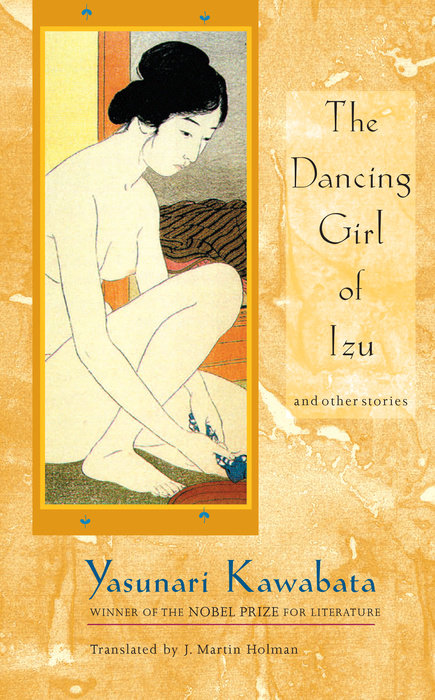
This brings me to my current read. Ever since encountering Kawabata through various must-read lists, I have resolved to explore his works. Interestingly, when I first came across his name, I barely had an inkling of the significance and prestige of the Nobel Prize in Literature. Since then, I have read about six of his novels, beginning with Snow Country, which I read back in 2015, and continuing, more recently, with The Rainbow. I have also been curious about the works cited by the Swedish Academy in its laudation of Kawabata’s literary achievements. Among them is The Dancing Girl of Izu, a short story that, owing to its length, is sometimes classified as a novella. Although it was not explicitly named in the formal Nobel citation, it was discussed in the presentation speech, which naturally piqued the interest of readers around the world. I have continued to encounter the work, not only on must-read lists but also in numerous paeans to Kawabata’s literary genius.
The featured novella was originally published in 1926 as 伊豆の踊子 (Izu no Odoriko). At the heart of the novella is an unnamed narrator. A twenty-year-old student from Tokyo, he travels to the Izu Peninsula during the last days of the summer holidays. There, he repeatedly comes across a troupe of five travelling musicians—one man and four women—while heading toward the Mount Amagi tunnel. The youngest-looking woman in the troupe immediately piques his interest. He later learns that her name is Kaoru, the fourteen-year-old sister of Eikichi, the troupe’s male leader. It was a brief story, which I had hoped would be longer. The book was divided into two parts. The first part is composed primarily of substantially longer stories that deal with death, loss, and grief. The second part features shorter stories that come across as mere snapshots. Unlike those in the first part, the stories in the second part feel a little ephemeral. I am looking forward to completing the short stories.
What have you finished reading?
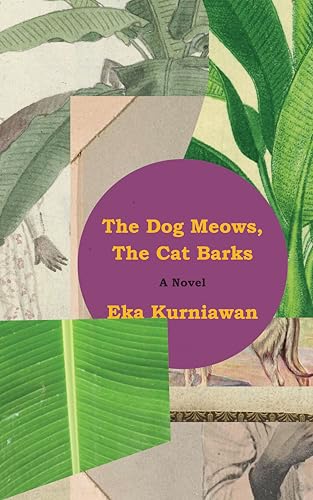
Although the previous week was rather slow in terms of reading, I was nevertheless able to complete two books. The first one was written by another Asian writer. It was during the pandemic that I first came across the Indonesian writer. He earned quite a reputation and gained considerable attention after his debut novel was translated into English as Beauty Is a Wound. It was also the first novel of his that I would read. Opinions about the book were divided, but I must say that I was impressed. The integration of magical realism with folklore and history made it an interesting read. Besides, it was the first Indonesian novel I had read. This led me to read his second translated novel, Man Tiger, which is significantly shorter than Beauty Is a Wound. Still, it was a compelling read. Midway through the year, I learned about the translation of one of Eka Kurniawan’s works. This makes The Dog Meows, the Cat Barks the third novel of his that I have read.
Originally published in 2024 in Indonesian as Anjing Mengeong, Kucing Menggonggong, the novel follows the coming-of-age of Sato Reang, a mischievous boy growing up in a small Indonesian town. He is on the cusp of entering puberty, which means that his life is about to change drastically. His sense of normalcy is about to end; childhood pranks are about to be replaced by piety. When he is circumcised, he loses his sense of normalcy. He initially greets the event with excitement. Little does he realize that the loss of his foreskin will also be accompanied by a metaphorical loss of his individuality. After the circumcision, Sato’s father also becomes unbearably strict, even embarrassing him in front of his friends and forcing him to stay at the mosque for hours. Interestingly, Sato Reang opens the story with the announcement of his rebellion: “I stopped going to mosque. I no longer joined in worship. I never said my prayers before bed.” It is a straightforward declaration. As he awaits lightning to strike him for his irreverence, religion begins to look less like truth and more like a set of exaggerated warnings. He also begins to realize that all of this is a small part of a larger project his father has for him: his devout, domineering father’s fixation on moulding him into a pious boy. The world, he believes, has come to resemble a never-ending nag, where “adults love to talk and talk, and their lives are like the words that come out of their mouths, drawn-out waste of time.” Sato would rather spend his time swimming in the streams by the rice fields, watching horse dancers spin into a trance at a party, or pilfering fruit from passing trucks.
And then Sato’s father dies. His irreverence, however, does not end. It only deepens in his interactions with the world around him. With his father gone, Sato strays further from the path designed for him. He runs wild. He urinates on trucks and crates of fruit and even sets fire to the town’s theater. He wants to defy norms. Most of all, he wants to turn Jamal, the most pious boy in school, evil. Interestingly, when his father was alive, he pushed Sato to befriend Jamal. Sato then pushes Jamal to perform acts that are seen as not only irreverent but also evil. However, while he is defying the rules laid down for him, Sato does not feel that he is being exceptional in any way. He feels that he is only doing what must be done for his own sake.
In many ways, The Dog Meows, the Cat Barks is a vivid and nostalgic portrait of childhood. It is a time brimming with curiosity, mischief, desire, and even startling savagery. Humor sustains the first part, especially in the situations Sato finds himself in. His childish perspective on the events taking place around him provides the story with a layer of innocence. This innocence, however, is slowly shed, and Kurniawan incisively captures the factors that cause this. The rigid and perplexing rules imposed by adults often stifle a child’s sense of freedom. Their ridiculous rules and beliefs force children to transition into puberty earlier. While the novel is deceptively slim, it is fascinating to see what Kurniawan achieves with so few words. The details of life in the Indonesian countryside remind me of Man Tiger, albeit without the elements of magical realism. Overall, The Dog Meows, the Cat Barks is an intense yet humorous examination of boyhood and the rite of passage into puberty.

The second book I completed in the past week is officially the first work by an African writer that I have read this year. It was in 2022 that I first came across Nigerian writer Eloghosa Osunde. Like their countrywoman Akwaeke Emezi, they are nonbinary. Osunde’s debut novel, Vagabonds!, immediately piqued my interest when I first encountered it during a random venture into a bookstore. It was also a serendipitous encounter, as I had been expanding my exploration of the works of Nigerian and African writers. Overall, it was an interesting novel that explores the plight of queer people in the former Nigerian capital, Lagos. It effectively commanded my attention and tickled my imagination. When news of the release of their sophomore novel reached me, it was imperative that I read it.
Originally released in 2025, Necessary Fiction was a book I was actually looking forward to, but it was only recently that I was able to secure a copy. Necessary Fiction echoes many of the same elements as its predecessor. The novel transports readers to contemporary Lagos, where we are introduced to a plethora of queer characters. At the center of the story are Ziz and Maro, whose friendship forms one of the novel’s most important relationships. We learn that Ziz moved to Lagos to leave behind a judgmental and rejecting family. He also wanted to earn money, establish himself, and prove his father, “Popsy,” wrong. He is a serial entrepreneur with schemes that are both absurd and brilliant, including actors-for-hire and fake travel souvenirs. He has learned to survive through self-invention and reinvention. He has also experienced several rejections, yet he has developed a deep attachment to his friends. In his circle of friends, he has found acceptance. Maro is among his closest friends. Unlike Ziz, who is trying to prove himself to his father, Maro is grieving the loss of his own. Raised by his single father, he is also mourning his father’s complex legacy. His father’s best friend, Uncle Hassan, has been teased about being his father’s wife. His father’s loss deeply affects him. It grips and haunts him, taking his breath and sanity from his lungs and head. Still, like his friend, he has to learn how to keep living. Relationships, sex, and love slowly emerge as means of coping with grief and loss. The novel’s first part vividly captures the stories of the two main characters. The title, Family Album, aptly encapsulates the central conflicts of Ziz and Maro. Ironically, Ziz’s escape from gushing family wounds is the antithesis of Maro’s deep connection with his own.
Toward the end of the last chapter of the first part, readers are invited into the Truth Circle. The Truth Circle is a communal gathering where Vagabonds can be candid about themselves without facing judgment. In their first novel, Osunde implied that vagabonds pertain to those who behave in socially and morally unacceptable ways, such as the queers inhabiting their second novel. Each gathering ends with a chant that subsequently animates the rest of the novel. Meanwhile, Akin is a quiet musician. His emotional range is conveyed through sound rather than speech. He also hosts the Truth Circle and eventually becomes a refuge for Maro. Interestingly, he was born as a gateway to other realms. This element of magical realism provides a different dimension to the story, enriching it. Akin then carries messages for Maro into the realm of the dead to find the person Maro has lost and bring back a message from them.
As the story moves forward, one of the novel’s central ideas slowly emerges. Biological family is contrasted with found and chosen families. Is blood really thicker than water? Osunde digresses. In the former, one cannot always find the love and acceptance that we yearn for. This makes us turn to the latter, as it is a human need to find connection. Sexuality and identity are also fundamental to the story and serve as the foundation upon which the stories of Ziz, Maro, and the other members of the Truth Circle are built. The meaning of the book’s title then slowly unravels. “Necessary fiction” pertains to the stories and disguises people construct in order to survive. In a society where queerness is often frowned upon and discriminated against, the characters create lies about who they are, whom they love, or what they want. Queer people, after all, often face family rejection, social stigma, and danger simply for existing and being themselves. While they cannot change the families they were born into, the characters can create communities in which they can find acceptance.
What will you read next?