
First Impression Friday will be a meme where you talk about a book that you JUST STARTED! Maybe you’re only a chapter or two in, maybe a little farther. Based on this sampling of your current read, give a few impressions and predict what you’ll think by the end.
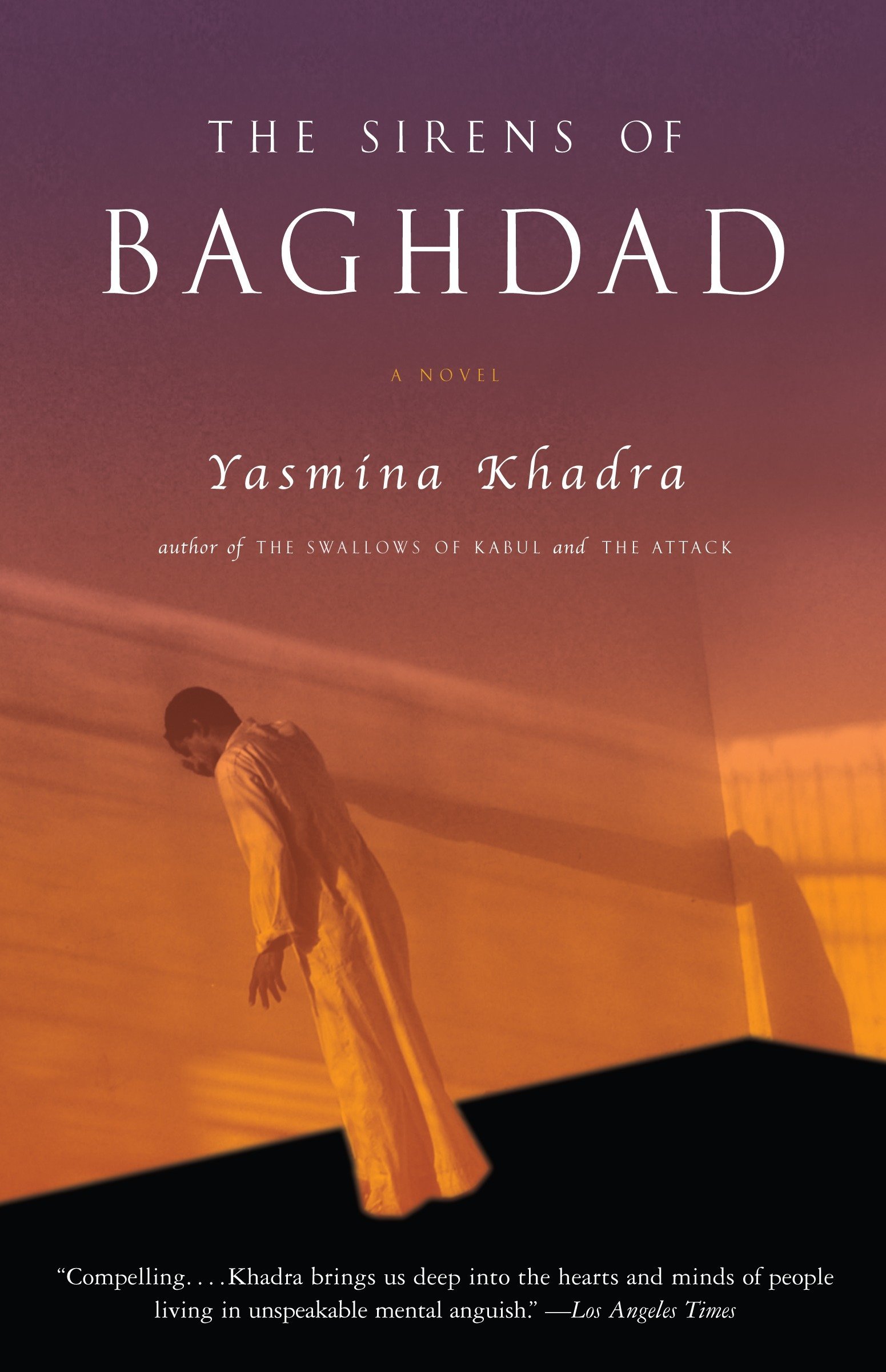
Synopsis:
The third novel in Yasmina Khadra’s bestselling trilogy about Islamic fundamentalism has the most compelling backdrop of any of his novels: Iraq in the wake of the American invasion. A young Iraqi student, unable to attend college because of the war, sees American soldiers leave a trail of humiliation and grief in his small village. Bent on revenge, he flees to the chaotic streets of Baghdad where insurgents soon realize they can make use of his anger. Eventually he is groomed for a secret terrorist mission meant to dwarf the attacks of September 11, only to find himself struggling with moral qualms. The Sirens of Baghdad is a powerful look at the effects of violence on ordinary people, showing what can turn a decent human being into a weapon, and how the good in human nature can resist.
It’s the end of the workweek—yay! I hope the week has been kind to everyone and that you’re all ending it on a high note. Just like that, November is two-thirds done. After a couple of challenging months, things have been looking up in the past few months. I have joined a new company and, for the first time since I started working, I am the head of my own unit. I am still integrating into my new work environment, and I am also looking for ways to improve the current processes. But this is less hectic than my previous company. How time flies! Time takes its natural course, with little regard for any of us. This also means that we will be welcoming a new year in a couple of weeks. As the year approaches its inevitable close, I hope everyone is rewarded for their hard work and showered with blessings and good news. With the weekend finally here, I hope everyone has a great one. It’s time to dress down and spend the weekend resting from the rigours of a demanding career, pursuing your passions, completing household chores, spending time with loved ones, or simply relaxing.
The weather has been fine these past few weeks, although it has been uncharacteristically stifling this late in the year. The Philippines should be experiencing breezier days, but with El Niño threatening the Philippines, the days remain hot. Some parts of the country are starting to experience droughts. Forecasts suggest that conditions could worsen over the coming months. I hope these forecasts are off the mark, as such conditions could adversely affect the livelihoods and even the health of many. While the days are stifling, nights and early mornings are starting to become colder. The collision of these contrasting weather phenomena exposes us to various health concerns. Flu has become more prevalent in the past few weeks. Nevertheless, regardless of where you are in the Philippines or elsewhere in the world, I hope you’re all doing well—physically, mentally, and emotionally. Anyway, with the end of the workweek comes a fresh First Impression Friday update.
After concluding my journey across the extensive American literary landscape in mid-October, I have commenced a more liberal reading journey. However, the focus remains on the books that are part of my ongoing challenges. Interestingly, excluding my 2026 Books I Look Forward To list, I am now down to the last five books in my reading challenges. All of them are works by African writers. As such, my current literary journey is going to be influenced by African writers. Among the books that I have listed in these challenges is Yasmina Khadra’s The Sirens of Baghdad. It was during the height of the COVID-19 pandemic that I first encountered the Algerian writer and his novel through an online bookseller. The book immediately piqued my interest, and I believed it was written by an Iraqi writer. Unfortunately, the book suffered the same fate as most of my books. It was left to gather dust on my bookshelf. This prompted me to include the book in my 2026 Top 26 Reading List, making it the 25th book on the list that I have read.
Today, I learned that Yasmina Khadra is the pseudonym of Mohammed Moulessehoul. Before pursuing a full-time career in writing, Khadra served in the military. He has since had a very prolific literary career that has produced almost forty novels. Among his novels is The Sirens of Baghdad, which was originally published in 2006 in French as Les Sirènes de Bagdad. At the heart of the story—and its primary narrator as well—is an anonymous young man. He is a Bedouin who lives in Kafr Karam, a village in the Iraqi desert described as a “place so discreet that it often dissolves in mirages, only to emerge at sunset.” He is ambitious, determined to become more educated than his illiterate well-digging father. He has a twin sister, Bahia, who had to drop out of school due to an arranged engagement. He then attended a university in Baghdad, where he initially thrived academically. However, his education was disrupted by war.
Shortly after the Americans invaded Afghanistan, they set their sights on Iraq, intending to topple Saddam Hussein’s reign of terror. With the American invasion, the university was vandalized and closed down. “Wild-eyed and distraught,” the unnamed narrator was forced to return home to Kafr Karam, a prospect he was not looking forward to. Back in his parents’ house, living on the roof in a remodelled laundry room, he settles back into village life, feeling far removed from the troubles in the capital. Khadra vividly paints a portrait of village life. The carefree enthusiasm of local boys playing lively soccer is a stark dichotomy to the tension simmering in their war-torn surroundings. Khadra introduces the villagers, including the blacksmith, who has a mentally challenged son named Sulayman. At the local barbershop, village elders converge and engage in charged conversations about Saddam’s overthrow and the arrival of American forces.
The barbershop conversations capture the various perspectives on Saddam’s overthrow. Tensions escalate as the villagers debate whether they should celebrate their liberation from tyranny or lament the loss of autonomy. Doc Jabir, a former philosophy professor, even delivers a powerful speech about American motives that leaves the men stunned into silence. However, the war soon finds its way into the village through a series of violent incidents involving American soldiers. One such incident occurs when Sulayman gets involved in a tragic accident. His father and the narrator then try to bring him to the clinic. Such a journey involves getting through an American military checkpoint. Tension escalates when the soldiers misconstrue the situation, and the group is subjected to intense scrutiny. Overwhelmed and distraught, Sulayman runs from the car, resulting in a tragic incident.
Insofar as the story is concerned, the premise is what I expected. Actually, the American invasion of Iraq and the downfall of Saddam Hussein were the first things that came to my mind when I encountered the book. The story then provides intimate glimpses into what transpired during the invasion. Among the interesting facets of the story is its provision of a different perspective vis-à-vis Saddam Hussein’s regime. Some of the locals agree that he is evil, but he is their type of evil. I just started reading the book today, but I suspect that the tension and the action will gradually build up. Violence is about to become ubiquitous, as the invasion also enters the village. This highlights how far-reaching the war’s impact is. In the news, the focus is often on the war’s impact on the big cities. The countryside is often forgotten. The voices of the victims are also often muted. I am looking forward to how the story develops.
How about you, fellow readers? What are you reading this weekend? I hope you’re enjoying your current book. Have a great weekend ahead!

