
Trouble in Paradise
Scott Fitzgerald has developed quite the reputation as the master storyteller of the Jazz era. His magnum opus, The Great Gatsby, is one of today’s most recognized titles. It was so popular it was so popular it was adapted to the big screen starring Hollywood‘s crème-ala-crème. The success he had with The Great Gatsby set him up for literary greatness. Unfortunately, this success cast a shadow over his other works, which were equally brilliant. One such work is Tender is the Night, one of the 20 books I chose to be part of My 2018 Top 20 Reading List.
Set in the 1920s, Tender is the Night relates the story of Dick Diver. While on vacation in the French Riviera, he met Rosemary Hoyt, a fledgling Hollywood actress, with whom he instantly fell for. But just like any love story, theirs had stumbling blocks. Dick Diver is married to a socialite, Nicole Warren. Dick’s affair exposed the rift between her and her husband, who has long been estranged from each other. Rosemary’s presence made the marriage’s past secrets rise to the surface. Tender is the Night is the story of an illicit affair but is also the story of the author himself.
One writes of scars healed, a loose parallel to the pathology of the skin, but there is no such thing in the life of an individual. There are open wounds, shrunk sometimes to the size of a pin-prick but wounds still. The marks of suffering are more comparable to the loss of a finger, or of the sight of an eye. We may not miss them, either, for one minute in a year, but if we should there is nothing to be done about it.
~ F. Scott Fitzgerald, Tender is the Night
Tender is the Night is F. Scott Fitzgerald’s fourth and last novel, personally calling it his best work, eclipsing the ever-popular The Great Gatsby. In this work, Fitzgerald poured in every inspiration he could muster to concoct what is to be the work of his lifetime. Amongst his works, it is the most autobiographical and it mirrors several aspects of his personal life, especially his stormy relationship with his wife, Zelda. This personal touch gives the story a different complexion, making it a very interesting one.
To start with, the book is a complex read. The elements Fitzgerald worked with are very close to his heart, and reading them with an objective eye could be a challenge. The dichotomy between the author’s life and the book’s story is obscured by the story’s intricate details. The convergence of these two worlds makes understanding the story a challenge. Thankfully, its rhythm and beat matched that of his previous works, The Great Gatsby and This Side of the Paradise. This assuaged my understanding and appreciation of the book.
The book is a toast of its time, portraying the high society lifestyle of the Jazz era. Fitzgerald wrote it in phases – starting with the glitz and glamour before transitioning to the darker facets of the period being depicted. Right there, Fitzgerald’s mastery of his era shines through in his words. He has this virtual scale where he can find the perfect equilibrium in his stories. Entering a Fitzgerald narrative is like entering the domed area of the Titanic, full of bedazzling wonder.
One of the book’s subtlest yet most important aspects is its take on morality. Fitzgerald depicted the unglamorous side of high society, which hinged on marital affairs. On the other side, it also highlighted subjects on the patient-doctor relationship, hypocrisy, and substance abuse, particularly alcoholism. The convergence of such subjects makes the book an engaging read. Moreover, these dark themes were dealt with in a very offhanded manner; hence, it is not too preachy.
They were still in the happier stage of love. They were full of brave illusions about each other, tremendous illusions, so that the communion of self with self seemed to be on a plane where no other human relations mattered. They both seemed to have arrived there with an extraordinary innocence as though a series of pure accidents had driven them together, so many accidents that at last they were forced to conclude that they were for each other. They had arrived with clean hands, or so it seemed, after no traffic with the merely curious and clandestine.
~ F. Scott Fitzgerald, Tender is the Night
Fitzgerald’s personal touch made the story delve a lot into introspection. Through Dick Diver, Fitzgerald channeled his personal frustrations, his travesties, and even his ideals, skewed or not. Dick’s frustration stemmed from many sides – his failed love affair with Rosemary, for instance, and his inability to convince his wife to divorce him. All of these frustrations led to his unusual relationship with the bottle, something that F. Scott Fitzgerald knows a thing or two about.
In the book, Fitzgerald’s writing shone brightly. He made a very efficient machine that delivered a wonderful literary experience to readers. His writing matched his era, but its timelessness makes his works last for years. It is very distinct, and his voice is palpable over the hundreds of pages he poured his heart into. Despite his stormy personal life, Fitzgerald demonstrated what he was truly capable of as a writer by writing powerful and meaningful prose.
And this extreme personality was most ostentatiously demonstrated in Tender is the Night. Dick Diver, although he has fallen to wicked means, is a relatable character because he is not the typical perfect character reads about in fictional books. His flaws and downtrodden nature give him a whiff of humanness. However, some might find Dick’s flaws jarring. He is a character you would love to the but nevertheless feel sorry for because he mirrors the ordinary person’s nature: I don’t ask you to love me always like this, but I ask you to remember. Somewhere inside me there’ll always be the person I am to-night.
She had somehow given over the thinking to him, and in his absences her every action seemed automatically governed by what he would like, so that now she felt inadequate to match her intentions against his. Yet think she must; she knew at last the number on the dreadful door of fantasy, the threshold to the escape that was no escape; she knew that for her greatest sin now and in the future was to delude herself. It had been a long lesson but she had learned it. Either you think—or else others have to think for you and take power from you, pervert and discipline your natural tastes, civilize and sterilize you.
~ F. Scott Fitzgerald, Tender is the Night
No read goes without any challenges, and Tender is the Night is no exception. First of all, it was a challenge getting the perspectives straight. The narrative jumped from one perspective to another, and at times it gets frustrating. The abrupt shifts impair one’s understanding of the character. This led to a disjointed narrative. Moreover, although the primary characters were well-developed, most of the secondary characters were sketchy.
Tender is the Night weaved an overwhelming sense of frustration and regret into the prose. On the contrary, it is because of these elements that it is a once-in-a-lifetime book. The story, in the guise of a romance story, seemed simple enough, but the curves and spins Fitzgerald made gave the story an altogether different flair. In the end, one can’t help but pity Dick Diver because of his misfortune. His actions may be abominable and capricious, but in the end, he tried to mend his ways, and that is what is more important.
No, he didn’t — he just invented mass butchery. This kind of battle was invented by Lewis Carroll and Jules Verne and whoever wrote Undine, and country deacons bowling and marraines in Marseilles and girls seduced in the back lanes of Wurtemburg and Westphalia. Why, this was a love battle — there was a century of middle-class love spent here. This was the last love battle.
~ F. Scott Fitzgerald, Tender is the Night
Ratings

Recommended for readers who like works about the Jazz Era, those who like F. Scott Fitzgerald’s works, those who enjoy classical works, those who are into works that make them reflect on themselves, those who like reading works about the glamorous lives of the rich, and those who like autobiographical works.
Not recommended for Zelda/Nicole Warren, those who have a hard time dealing with their personal circumstances, those who dislike works about dark subjects or works with dark atmosphere, those who dislike books with multiple perspective,s and those who are into pleasurable works.
Book Specs
Author: F. Scott Fitzgerald
Publisher: Arcturus Publishing Limited
Publishing Date: 2016
Number of Pages: 302
Genre: Romance, Classic
Synopsis
The French Riviera of the mid-1920s is the new playground for rich Americans, among them elegant heiress Nicole Warren and her husband, ambitious psychiatrist Dick Diver. The Divers’ renowned hospitality brings celebrities and socialites flocking to their villa, but when a starlet called Rosemary Hoyt finds her way into their charmed circle, the consequences are devastating.
Naïve and inexperienced, Rosemary sparks the decline in a relationship already destabilized by a dark secret and undermined by destructive illusions.
About the Author
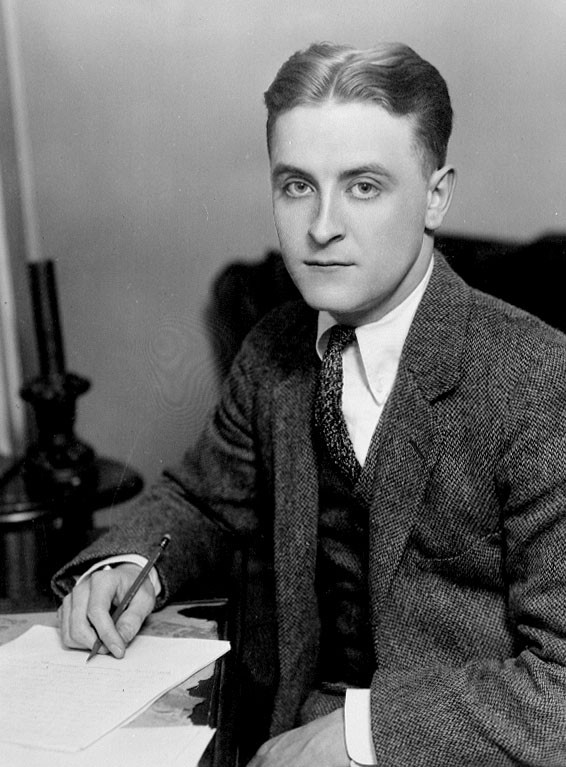
(Photo by Wikipedia)F. Scott Fitzgerald. Who has never heard of him? The immense popularity of his works made him a household name, and his works are studied and discussed.
Francis Scott Fitzgerald was born on September 24, 1986, in Saint Paul, Minnesota. He spent his childhood in New York and West Virginia before going back to Minnesota when his father was fired from Procter & Gamble. When he was 15, he was sent to study at Newman School in New Jersey, where he graduated in 1913. He continued his studies at Princeton University to hone his artistic abilities. While studying, he wrote for numerous magazines and literary outlets, all the while improving his skills.
In 1917, he dropped out of the university and joined the army. While he was stationed at Montgomery, Alabama, he met Zelda Sayre, whom he would marry and sire one daughter with. His storied career is marred by his alcoholism, from which arose numerous health issues. On December 21, 1940, Fitzgerald passed away.
In 1920, Fitzgerald published his first novel, This Side of Paradise. This was later followed by The Beautiful and the Damned (1922) and perhaps his most popular work, The Great Gatsby (1925). His last complete work is Tender is the Night (1934). The Last Tycoon (1941) was unfinished when Fitzgerald died but was later published posthumously. Aside from novels, he also wrote novellas and short story collections.
 The Pine-Scented Chronicles