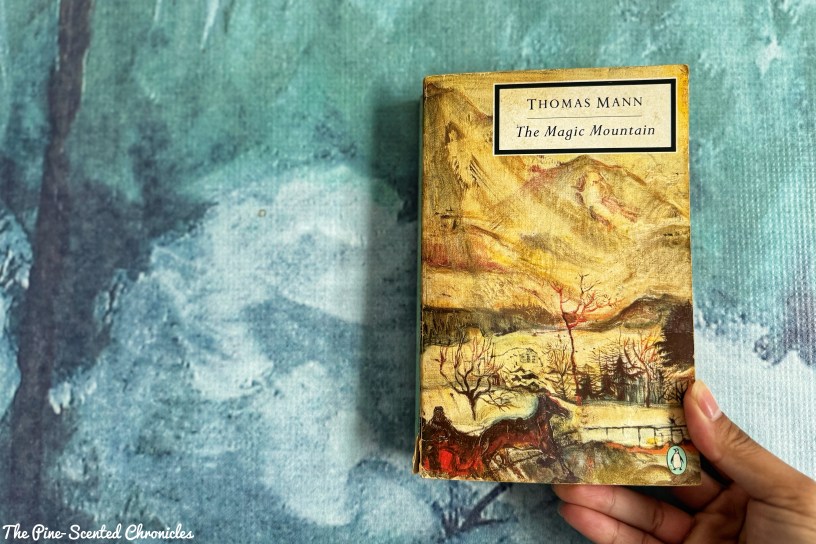
Life, Death, and Time
In the ambit of literature, German literature has established quite a reputation. Producing Nobel Laureates in Literature such as Hermann Hesse, Nelly Sachs, Heinrich Böll, and Günter Grass, the influence of German literature cannot be underestimated. On top of these revered names, Germany has also gifted the world with equally talented writers such as Erich Maria Remarque, Patrick Süskind, and Alfred Döblin. They have written some of the most revered and studied titles such as Hesse’s Siddhartha, Grass’s The Tin Drum, Remarque’s All Quiet on the Western Front, and Süskind’s Perfume. These are works that have transcended time and remain a seminal part of literary discourses in the contemporary. To provide a better picture of the influence of German literature on modern storytelling, one can just look at today’s modern fairy tales which took roots from brothers Jacob and Wilhelm Grimm’s Fairy Tales.
Germany, without a doubt, has a long tradition of producing top-notch writers whose works have swept the world over. Another prominent name in German literature is Paul Thomas Mann. Born on June 6, 1875, Mann was born into a family with rich literary roots; his older brother Heinrich was a radical writer while three of Thomas’ children – Erika, Klaus, and Mann – eventually established themselves as significant writers in German literary circles. Mann’s path to success, however, was rarely straightforward. Before becoming a full-time writer, Mann worked a perfunctory job in an insurance company. Mann’s writing career started in journalism, writing for the satirical magazine Simplicissimus. During the 1890s, he wrote short stories, and in 1898, he published his first short story collection, Little Mr Friedemann (Der Kleine Herr Friedemann).
In 1901, Mann published his first novel, Buddenbrooks, a satire of his family; he was born into a bourgeois family in Lübeck. When he started working on it in late 1897, Mann initially intended Buddenbrooks to be a novella; throughout his career, Mann published novellas such as Buddenbrooks (1912; Death in Venice). While the novel was published in 1901, it was the book’s second edition published in 1903 that made it a literary sensation. It was a seminal juncture in Mann’s career as it was not only his first novel. When the Swedish Academy awarded Mann the 1929 Nobel Prize in Literature, they specifically cited Buddenbrooks “which has won steadily increased recognition as one of the classic works of contemporary literature” as the primary motivation for the recognition.
“Consciousness of self was an inherent function of matter once it was organized as life, and if that function was enhanced it turned against the organism that bore it, strove to fathom and explain the very phenomenon that produced it, a hope-filled and hopeless striving of life to comprehend itself, as if nature were rummaging to find itself in itself – ultimately to no avail, since nature cannot be reduced to comprehension, nor in the end can life listen to itself.”
~ Thomas Mann, The Magic Mountain
The Other Great Work
Had Mann had it his way, he would rather have his entire body of work cited by the Swedish Academy rather than a singular representative work. The impact of Buddenbrooks cannot be denied; it elevated Mann to global recognition. However, post-Buddenbrooks, Mann has built an oeuvre that can be the envy of the rest of the literary world. One such title that stands out in his body of work is The Magic Mountain. Originally published in German in November 1924 as Der Zauberberg, the book was originally conceived by Mann in the 1910s but the outbreak of the First World War prompted Mann to halt his work. Upon its publication, it was an immediate literary sensation, gaining Mann global recognition especially after it was made available to Anglophone readers in 1927. It is a literary classic that transcended time and is a familiar presence in most must-read lists.
Set in the decade immediately following the First World War, the novel charted the fortunes of Hans Castorp the only son born to a Hamburg merchant family. After losing his parents when he was young, he was looked after by his grandfather, and, following his grandfather’s death, by his maternal uncle James Tienappel. When the story commenced, he was a young adult studying for a career in shipbuilding. The first few pages of the novel establish Hans’ profile. He was described as the representative of the German middle class who was “neither a genius nor an idiot.” The crux of the story was when he decided to pay a visit to his cousin, Joachim Ziemssen an officer in training suffering from tuberculosis and was convalescing in the International Sanatorium Berghof located in the Swiss Alps, near the town of Davos.
There was something special about the air in the high altitudes that immediately appealed to Hans. His new environment, surrounded by dense forests and snowcapped peaks, was a source of awe to Hans. It also didn’t take long for Hans to get used to the rhythm of routines at Berghof. Hans’ stay was originally three weeks. However, his stay got extended because his departure was repeatedly delayed by his frail health. It manifested as a minor bronchial infection with a slight fever. However, his case was eventually confirmed to be tuberculosis by Berghof’s director, Hofrat Behrens. His X-ray showed a “moist spot.” Hans was unsure of the diagnosis but he was eventually convinced by Behrens to stay at the sanatorium to recover.
A Microcosm of Pre-War Europe
What was meant to be a three-week stay got extended into months. Before he realized it, Hans stayed at Berghof for years. Slowly and initially with ambivalence, Hans started abandoning his normal life. He got swept into the heart of the daily activities at the sanatorium. He dropped his studies in engineering to pursue human anatomy. During his extended stay, Hans got more immersed in the world of the titular “magic mountain.” At the magic mountain converged an eclectic cast of characters that originated from different parts of Europe. The only similarity they shared was their illness and their ability to pay for their stay at the sanatorium. The cure that Berghof presents its patients entails lavish meals, daily rest cures, and free time to learn about different fields, among others. Berghof, for all that “magic” it holds, was a world detached from the rigors of the world beyond.
“And waiting means hurrying on ahead, it means regarding time and the present moment not as a boon, but an obstruction; it means making their actual content null and void, by mentally overleaping them. Waiting, we say, is long. We might just as well—or more accurately—say it is short, since it consumes whole spaces of time without our living them or making any use of them as such. We may compare him who lives on expectation to a greedy man, whose digestive apparatus works through quantities of food without converting it into anything of value or nourishment to his system. We might almost go so far as to say that, as undigested food makes man no stronger, so time spent in waiting makes him no older. But in practice, of course, there is hardly such a thing as pure and unadulterated waiting.”
~ Thomas Mann, The Magic Mountain
In a way, the diverse ensemble that converged at Berghof was a microcosm of pre-war Europe. During his stay at Berghof, Hans got acquainted with some of the denizens of the sanatorium. Among those who left an impression on Hans was Ludovico Settembrini. He was a self-described freethinker from Italy. He was also an encyclopedist and a student of Giosuè Carducci. Settembrini extolled the ideals of Western civilization, the Renaissance, and the Enlightenment. He would also be one of Hans’ two prominent mentors at the sanatorium. Through their dialogues and talks, he indoctrinated Hans about the nature of reason, individual liberty, democracy, tolerance, and humanism; the novel brimmed with philosophical discourses.
Hans’ second mentor and among his several father figures was Leo Naphta. Of Jewish-Polish provenance and the product of the Spanish Jesuit educational system, Naphta was the antithesis of everything that Settembrini stood up for. While Settembrini championed humanism, Naphta advocated for radicalism. Naphta indoctrinated Hans with the ideals of religious violence. He built a case for the Inquisition and even rationalized the authoritarian aspects of Catholicism and communism. Settembrini’s teachings pointed toward a materialist path while Naphta’s factored in the inevitability of chaos. The clashing ideals resulted in several debates and discourses between Naphta and Settembrini.
Amidst these intellectual discourses was a layer of romance and longing. This came in the form of Clavdia Chauchat, a Russian woman, who captivated Hans. She was the personification of temptation, love, and lust but not in a positive light. Her proclivity for passivity and irrationality made her naturally dislike Naphta and Settembrini. To Hans’ two mentors, Chauchat was a distraction, a temptress who can waylay the book’s hero. But Chauchat not only stood for lust and temptation. She was also the personification of Mann’s definition of Eastern ideals. This was further underlined when, after leaving the sanatorium for a while, Chauchat returned with Mynheer Peeperkorn, a Dutchman, in tow. Peeperkorn was an imposing character who stood for the values that Settembrini and Naphta extolled.
Intellectuality and Introspection
The intersection of these different characters was a lush tapestry that would be seminal in Hans’ coming-of-age. From a lad from the “flatlands,” his intellectual profile was slowly shaped by his interactions with the denizens of the sanatorium. Hans was not about to rest his laurels simply because he was living at the sanatorium. Being surrounded by different intellects provided Hans an opportunity to gain knowledge from which he could understand and appreciate the nuances of society and life in general. These also provided a layer of intellectuality to the story. Dense paragraphs were dedicated to discussions on a plethora of subjects such as music, botany, and art, underlining Hans’ ascension to becoming a well-rounded member of society. Even the characters’ emotions were processed and dealt with from an intellectual perspective.
“The diaries of opium-eaters record how, during the brief period of ecstasy, the drugged person’s dreams have a temporal scope of ten, thirty, sometimes sixty years or even surpass all limits of man’s ability to experience time – dreams, that is, whose imaginary time span vastly exceeds their actual duration and which are characterized by an incredible diminishment of the experience of time, with images thronging past so swiftly that, as one hashish-smoke puts it, the intoxicated user’s brain seems “to have something removed, like the mainspring from a broken watch.”
~ Thomas Mann, The Magic Mountain
The debates and discourses between Hans’ two primary teachers occupied a hefty portion of the book. The glaring dichotomies between the philosophical and political ideologies that surrounded Hans were seminal in his growth and development as a character. This also makes it a ripe intersection for deep questions such as the pursuit of the meaning of life and even the notions of honor. The two contrasting schools of thought espoused by Hans’ two primary mentors provide room for introspection, not only for Hans but also for the readers. It is from these introspections that the book derives its power and beauty. While the novel was bereft of a robust plot or action, it was lush with intersections for contemplation.
Disease and death were also leitmotifs in the story. They were explored from an allegorical perspective. For Mann, the disease pertains not only to the individual but to an entire age. It was romanticized, bestowing those who were sick with incurable tuberculosis – the cure for it was not discovered until the Second World War – with a level of wisdom that distinguishes them from ordinary men. The sanatorium’s location and isolation were subtle reiterations of the elevation of those who were ill. It was also symbolic of the pre-First World War European society. Death, meanwhile, permeated the story. Patients died from tuberculosis; it was inevitable in worse cases. Some characters took their own lives and some were about to perish in the ensuing war. The discourses between Settembrini and Naphta extensively explored death.
Time was another seminal subject incorporated into the story. At the onset, Joachim warned his cousin that time at Berghof was fluid which initially appalled Hans. It was subjective and refused to conform to anyone’s expectations. With death and illness pervading the atmosphere at Berghof, time becomes valuable for most, especially those who yearn for life. However, those who were swept into the routines of the sanatorium and have lost their zest for life have also started losing value for time. Ironically, time moves quicker for the former while time moves slowly for the latter. Time, in the novel, can zoom past the characters in a matter of sentences but can also drag for pages. An interesting element of the story was its preoccupation with temperature and thermometer readings.
A Literary Classic
For all the grimness that hovered above it, The Magic Mountain is a novel lush with humor and wit. The passage of time has not dimmed its luster, continuing to tickle the imagination of readers the world over. It was, however, not an easy read. It was character-driven and was bereft of a robust plot. With its philosophical digressions, it is a book that challenges the reader’s notion of the different facets of life. Death, illness, and time are central subjects. Knowledge of diverse subjects, political ideologies, and contrasting schools of thought created a lush tapestry juxtaposed with the towering and snowy peaks of the Swiss Alps. It is also a coming-of-age story that intricately explores the conditions of the human spirit. Transcending time, The Magic Mountain has ascended to become a literary classic.
“And life? Life itself? Was it perhaps only an infection, a sickening of matter? Was that which one might call the original procreation of matter only a disease, a growth produced by morbid stimulation of the immaterial? The first step toward evil, toward desire and death, was taken precisely then, when there took place that first increase in the density of the spiritual, that pathologically luxuriant morbid growth, produced by the irritant of some unknown infiltration; this, in part pleasurable, in part a motion of self-defense, was the primeval stage of matter, the transition from the insubstantial to the substance. This was the Fall.”
~ Thomas Mann, The Magic Mountain
Book Specs
Author: Thomas Mann
Translator (from German): H.T. Lowe-Porter
Publisher: Penguin Books
Publishing Date: 1960 (1924)
Number of Pages: 716
Genre: Literary, Coming-of-age
Synopsis
A spectacular novel of ideas, The Magic Mountain is one of Germany’s most formative contributions to modern European literature, both for the themes it discusses and for its highly sophisticated structure.
Young, naive, and impressionable, Hans Castorp arrives at a sanatorium high in the Swiss Alps to find himself surrounded by exponents of widely differing political and philosophical attitudes. Amid sickness and decay he is forced to explore both the meaning of love and death and the relationship of one to the other. As he does so, the pattern that emerges from his discussions with his companions, and from his own musings, becomes a symbol of the forces below – forces that would culminate in the First World War and the destruction of pre-1914 civilization.
About the Author
Paul Thomas Mann was born on June 6, 1875, in Lübeck, Germany, the second son born to a bourgeois family. His father Thomas Johann Heinrich Mann was a senator and a grain merchant while his mother Júlia da Silva Bruhns was a Brazilian woman of German, Portuguese, and Native Brazilian ancestry. Following his father’s death in 1891, Mann’s family moved to Munich, a center of art and literature, where he lived until 1933. Mann first studied science at a Lübeck Gymnasium (secondary school), then attended the Ludwig Maximillians University of Munich. In preparation for a career in journalism, Mann studied history, economics, art history, and literature at the Technical University of Munich.
Post-university, Mann worked at an insurance company whose director was a friend of Mann’s father. His writing career started with being on the editorial staff of Simplicissimus, a satirical weekly. In the sly, he wrote short stories which appeared in various literary magazines and publications. His earlier works were then collectively published in 1898 as Der kleine Herr Friedemann, making it his first book. In 1901, he published his first novel, Buddenbrooks which he originally intended to be a novella. The novel elevated Mann to local popularity. He would follow it up with novellas such as Tristan (1903), Der Tod in Venedig (1912, Death in Venice), and Die Betrogene: Erzählung (1954, The Black Swan). Among his popular novels are Königliche Hoheit (1909, Royal Highness), Der Zauberberg (1924, The Magic Mountain), and Doktor Faustus (1947). Mann’s extensive literary oeuvre included plays, poems, and essays. In 1929, Mann was awarded the Nobel Prize in Literature, with Buddenbrooks extensively cited as the main driver for his recognition.
Mann was not only known for his literary endeavors but also for his political endeavors. He was widely recognized for his “anti-nationalistic” attitudes, especially after starting to concern himself with the maladies of his time. In his essays and lecture tours across the continent, Mann was vocal in his opposition to fascism and the ascent of the Nazi party while expressing sympathy for socialism and communism. After Hitler became the chancellor, Mann and his family were warned not to return; this was while they were on a holiday in Switzerland. In 1936, his German citizenship was revoked. In the same year, the University of Bonn stripped him of the honorary doctorate it had bestowed in 1919 (it was restored in 1949). From 1936 to 1944 Mann was a citizen of Czechoslovakia and in 1944, he became a U.S. citizen.
Mann married Katja Pringsheim in 1905. The couple had six children. He passed away on August 12, 1955.

