
It’s the second day of the week! It’s also time for a Top 5 Tuesday update. Top 5 Tuesdays was initially created by Shanah @ the Bionic Bookworm but is now currently being hosted by Meeghan @ Meeghan Reads.
This week’s topic: Top 5 translated stories
I assume translated stories also include novels because this is the concentration of translated literature I have read so far. And I have quite a lot of translated works I loved. Nevertheless, here are some that I relished. Happy Tuesday, everyone!

If On A Winter’s Night a Traveler by Italo Calvino
Original Language: Italian
Snippet from my review: If on a winter’s night a traveler is a marvelous reading experience. It is a book about books, albeit fictional, and nothing could be more interesting than that. It is also a profound book about reading, writing, reading experiences and even ventures into the world of translation and publication. Although complex, it’s primary aim of taking the reader into a reading adventure is well-achieved. The biggest surprise though comes in the end. It is there that the essence of the ten novels can be fully grasped. But that is something for you to discover.

The Three Musketeers by Alexandre Dumas
Original Language: French
Snippet from my review: Tous pour un, un pour tous (All for one, and one for all) is a motto that perfectly encapsulates what the friendship between Athos, Porthos, Aramis, and d’Artagnan. It is also a motto for which The Three Musketeers has become renowned. Their adventures and misadventures, chronicled in this timeless literary classic, have tickled the imaginations of many across generations. However, The Three Musketeers does not reduce itself to a mere story about friendship, adventures, and honor. As one navigates through the seas of adventures, one can see how Dumas skillfully wove into the novel’s rich tapestry germane subjects prevalent during the time. Beyond the overtones of romance, adventures, and loyalties, the novel is a subtly scathing critique of the insatiable appetite for power and how the caprice of monarchies adversely impacts the lives of ordinary denizens. The Three Musketeers, without a doubt, is a literary classic that transcends and will transcend time and physical boundaries.

Anxious People by Fredrik Backman
Original Language: Swedish
Snippet from my review: Doused in humor prevalent in Backman’s works, Anxious People, however, was more than just a novelty act. In his latest work, the Swedish writer has again demonstrated why he is a writer to look forward to. His lenses magnify our human tendencies. He vividly captures who we are and what we are. The humor belies his deep insights but both elements shine through. His insights make the reader reflect on himself or herself, without being preachy or pushy. Backman plays to his strongest card, and that is the keen understanding of what it is to be a human being. In Anxious People, Backman has crafted a timely, relevant, and rewarding read that mirrors the concerns of our time.

Umrao Jan Ada by Mirza Muhammad Hadi Ruswa
Original Language: Urdu
Snippet from my review: Earning the distinction of being the first Urdu novel, Umrao Jan Ada has to live up to many expectations. It had fine elements capably woven together by Ruswa. There was a boldness in Ruswa’s attempt to paint the picture of a courtesan at a period when such a subject was viewed with a certain level of disdain. His daring was anything short of admirable. While there were some weak parts, the novel underscored Ruswa’s libertarian ideas. This was despite the backlash that such an unusual work of fiction might arouse amongst the general reading public. Nonplussed, he adopted a pen-name, Ruswa, that means “The Disgraced”. Interestingly, the existence of Umrao Jan Ada has been the subject of dispute amongst scholars. But whether she was based on a character or simply a figment of the author’s imagination is a credit to the persuasive quality of Ruswa’s storytelling.
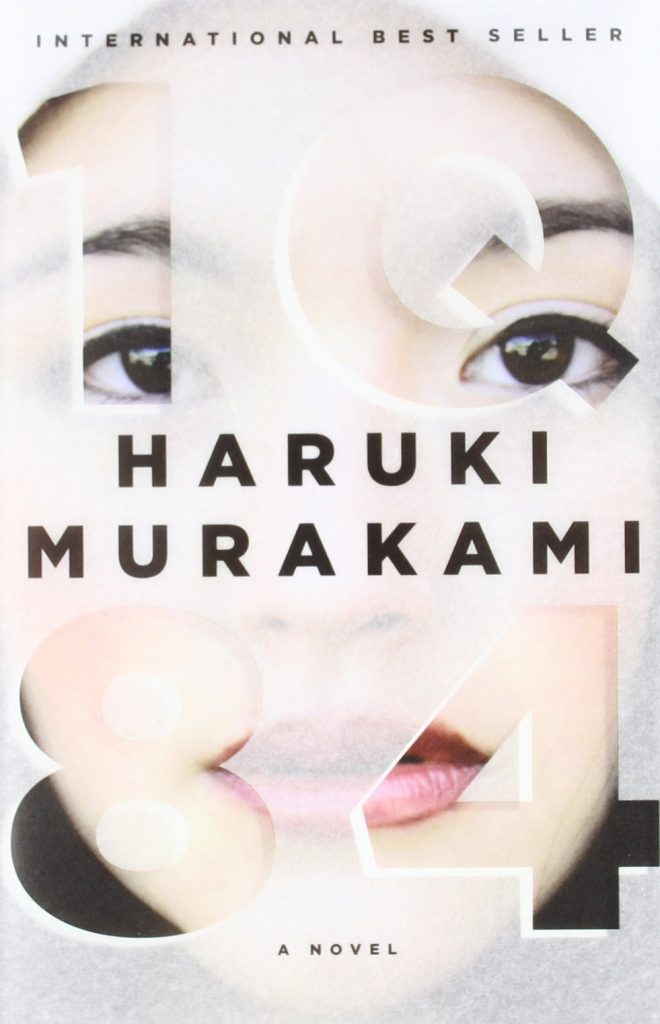
1Q84 by Haruki Murakami
Original Language: Japanese
Snippet from my review: Reading 1Q84 is like ingesting a food that is unfamiliar to one’s palate. Its blend of fantasy, religion, sex, hope, loneliness, and romance is bizarre, leaving a different yet impressionable aftertaste. It was seasoned with a healthy dose of surrealism and was sprinkled with a serving of fantasy. These ingredients were masterfully and tastefully mixed and cooked by Murakami’s capable hands into a scrumptious literary delicacy. It is rare and only a master chef like Murakami is capable of dishing out such delicate handcrafted menu. In this instance, 1Q84, is not just about reading, it is about, tasting, rather, experiencing something new, a unique moment that lingers.

The Magic Mountain by Thomas Mann
Original Language: German
Snippet from my review: For all the grimness that hovered above it, The Magic Mountain is a novel lush with humor and wit. The passage of time has not dimmed its luster, continuing to tickle the imagination of readers the world over. It was, however, not an easy read. It was character-driven and was bereft of a robust plot. With its philosophical digressions, it is a book that challenges the reader’s notion of the different facets of life. Death, illness, and time are central subjects. Knowledge of diverse subjects, political ideologies, and contrasting schools of thought created a lush tapestry juxtaposed with the towering and snowy peaks of the Swiss Alps. It is also a coming-of-age story that intricately explores the conditions of the human spirit. Transcending time, The Magic Mountain has ascended to become a literary classic.
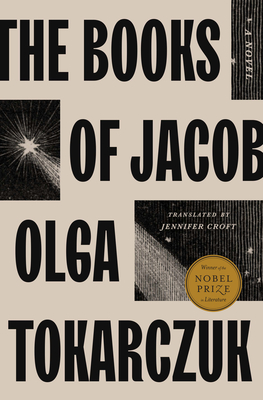
The Books of Jacob by Olga Tokarczuk
Original Language: Polish
Snippet from my review: It was the very same work she was criticized for in her homeland that she was lauded for by the rest of the world. Her willingness to study her nation’s history made The Books of Jacob a stellar work of historical fiction. By chronicling the story of a Messiah, Tokarczuk conjured a world that was hopelessly clinging to certainty. But as The Books of Jacob, and even history itself, has underscored, nothing is ever fixed, including identities, religious dogmas, and physical boundaries. We inhabit a world that continuously shifts. This makes the novel resonate in the contemporary. Limits, whether physical or intellectual, existed to be breached and breach them Tokarczuk did by weaving a rich tapestry that was brimming with vivid details of diverse cultures, religions, and ideas. The Books of Jacob was lush and complex but at the same time remarkable and highly immersive.

Tomb of Sand by Geetanjali Shree
Original Language: Hindi
Snippet from my review: While the novel covered a vast territory of subjects, the novel was also a homage to storytelling and writing. Details of the nature of the narrative were woven into the rich tapestry of the novel. This was also apparent in the plethora of literary devices Shree utilized. The novel was a convergence of a plethora of plot devices. Stream of consciousness converged with anthropomorphism, satire, and elements of magical realism. Shree’s writing flowed, although she had the compunction to string several words consecutively in one sentence. Nevertheless, her descriptive and poetic prose complemented the different plot devices she employed. With her writing, she managed to draw different images. Inanimate objects, such as doors, canes, and even dust, became animated. The perspective of crows and partridges rendered the story a distinct complexion.

Devils by Fyodor Dostoevsky
Original Language: Russian
Snippet from my review: The novel’s lush political discourses characterized it. However, it does not reduce itself to a mere political novel. Rather, it was also a novel about a man caught in the crossfire. When he was younger, Stavrogin embraced and eventually cast off, different ideologies. These ideologies were then adopted by other intellectuals who were drawn to Stavrogin. Stavrogin was a man of paradoxes. Because of his social standing, he was self-assured. However, his demeanor showed distractedness. Stavrogin lived a life of decadence and was even involved in crime, may it be in Moscow or abroad. Even in his spirituality, Stavrogin exhibited polar opposites. One side careened to rationality, intellect, and even egoism. The other side was pegged on spiritual longing inculcated into him Stepan.
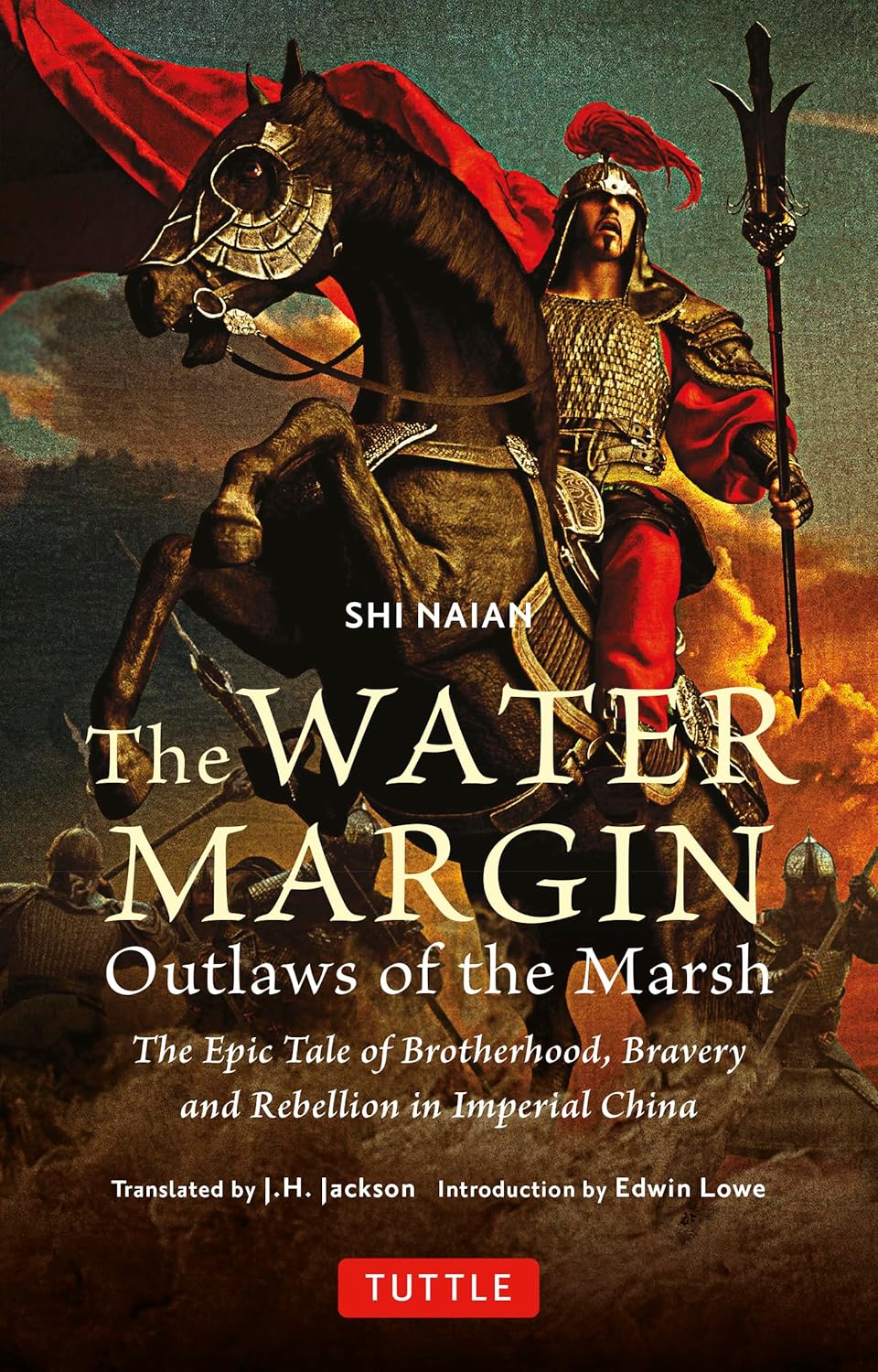
The Water Margin by Shi Naian
Original Language: Chinese
Snippet from my review: Despite its flaws, The Water Margin remains a vivid and powerful depiction of a society on the brink of collapse. It examines the systemic forces, such as corruption, abuse of power, and injustice, that undermined the Song Dynasty. The 108 Stars of Destiny become vessels through which these societal ills are explored, representing ordinary citizens turned rebels in a bid to reclaim dignity and justice. The outlaws themselves are fascinating character studies. Their depth adds nuance to a novel that otherwise brims with violence and chaos. But the message of The Water Margin transcends its era. Corruption persists today. The powerful still abuse their positions. Misgovernance and discontent remain widespread. That enduring relevance makes The Water Margin, despite its flaws, a deserving member of the Four Great Classical Novels of Chinese literature.
 The Pine-Scented Chronicles