
Happy Tuesday everyone! As it is Tuesday, it is time for a Top Ten Tuesday update. Top Ten Tuesday is an original blog meme created by The Broke and the Bookish and is currently hosted by That Artsy Reader Girl.
This week’s given topic: Books I Wish I Could Read Again for the First Time
Personally, there are scores of books I want to read again for the first time. This is for different reasons. Some books I want read again for the first time to be reminded of the sensations the made me feel. For some, I want to read them again because I have since gained insights, which could have helped me appreciate the novel better. Whatever the reason maybe, here are some books I want to read again for the first time.


Murder on the Orient Express by Agatha Christie
Snippet from my review: But don’t get me wrong – the novel was great from the onset, which is a rarity. It was consistent all through out and for that, props up to Agatha Christie for an amazing job. Overall, if one is to ruminate, he might glean the absurdity of plot but it is this impossibility that made the detective story all the more interesting and fun. It was through this novel as well that I got to appreciate Hercule Poirot and his wit, including his problem-solving process. Post Poirot, I would encounter other great fictional detectives like Miss Marple and Conan Doyle’s Sherlock Holmes. I personally refer to them as the Holy Trinity of detective fiction.

Crime and Punishment by Fyodor Dostoyevsky
Snippet from my review: Crime and Punishment is a shining example of what makes Russian literature tower above the its contemporaries. It is a complex work that deals with very dark subjects but all elements were woven perfectly into a cohesive story about human nature. Dostoyevsky is his masterful self in conjuring a plot as magnificent as Crime and Punishment. He navigated through the blurred lines of what is morally right and wrong with gusto and authority.

War and Peace by Leo Tolstoy
Snippet from my review: Numerous allegories can be picked up from the narrative. Symbolically, French and Russian language were used. The former represented superficiality while the latter represented the opposite. One can most certainly feel the shade that Tolstoy is throwing towards the French (could be factual or could be purely literary). Tolstoy’s prejudice is one of the digressions in the novel that disrupted the flow of the narrative; the deviation to military tactics and even Napoleon’s intelligence is fascinating but both barely did anything to make the story move forward. The story’s epilogue was a dampener as well, although, honestly, the events preceding the epilogue were a foreshadowing to the unsatisfactory conclusion of the novel.
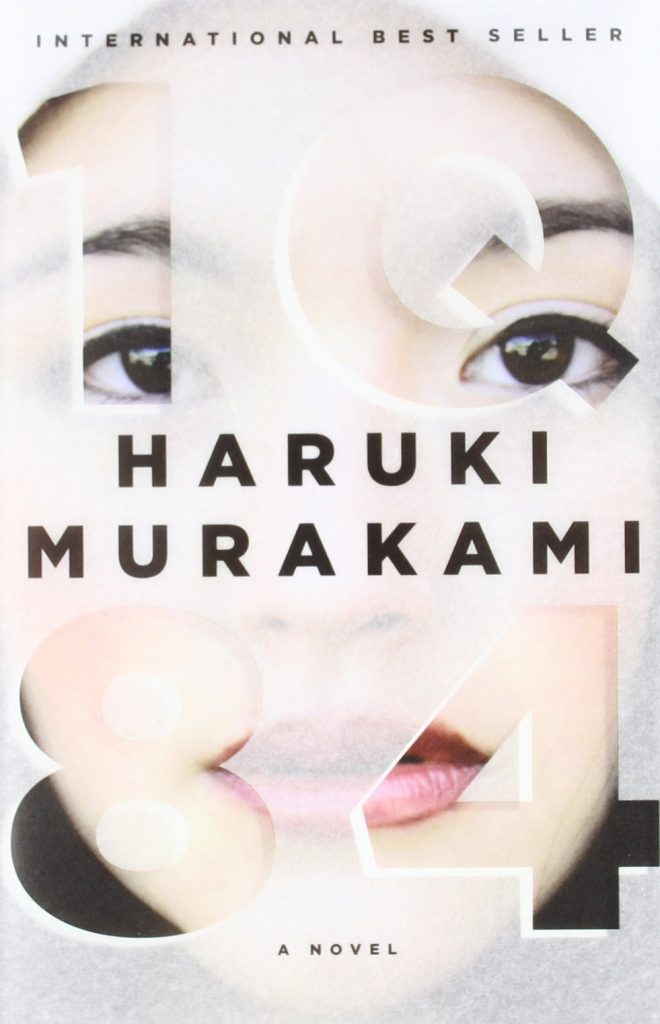
1Q84 by Haruki Murakami
Snippet from my review: Reading 1Q84 is like ingesting a food that is unfamiliar to one’s palate. Its blend of fantasy, religion, sex, hope, loneliness, and romance is bizarre, leaving a different yet impressionable aftertaste. It was seasoned with a healthy dose of surrealism and was sprinkled with a serving of fantasy. These ingredients were masterfully and tastefully mixed and cooked by Murakami’s capable hands into a scrumptious literary delicacy. It is rare and only a master chef like Murakami is capable of dishing out such delicate handcrafted menu. In this instance, 1Q84, is not just about reading, it is about, tasting, rather, experiencing something new, a unique moment that lingers.
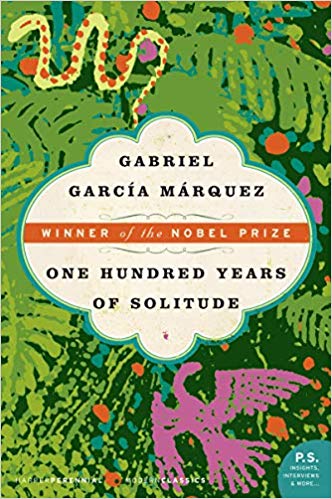
One Hundred Years of Solitude by Gabriel García Márquez
Snippet from my review: The parallels between the history of Macondo and the history of Latin America are too ostentatious not to notice. The story of Macondo is a subtle reflection of the history and culture of Latin America. These are represented carefully through metaphors that abound in the narrative. In a manner of speaking, the narrative is a crossroad where the historic meets the fantastic. In this collision of history and myths, the Buendias are haunted by different ghosts. These ghosts of the past are allusions to how the past shaped Macondo’s future.

Cloud Atlas by David Mitchell
Snippet from my review: Cloud Atlas is a challenging book, with its genre-bending and mind-boggling themes, which can easily make casual readers close it within its first few pages. Don’t despair as it is one that is always worth one’s time. For all the challenges it presents, it is brimming with majestic storytelling that one rarely encounters. It is, for me, a testament to the power of writing to influence and entertain. It showed that storytelling must not necessarily conform to the norms; there is more than one way to make one’s voice be heard through the tumult. The novel’s profound message is fundamental to our pursuit for a better future. If only one is willing to let the narrative unravel before one’s very eyes.
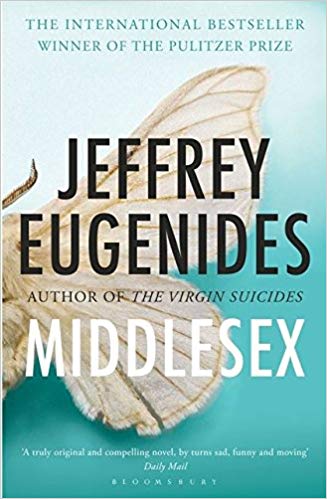
Middlesex by Jeffrey Eugenides
Snippet from my review: Middlesex realistically portrayed the discrimination towards individuals who are viewed as different. They are called names. They are abused. They are viewed as monstrosities. They are also ridiculed and mocked in public. One of the worst is the circus treatment they get for looking different, as when Calliope and her fellow “freaks” were showcased in private shows to earn money. When laymen look at them, they instantly see an opportunity to earn. It is sad to say that our current society hasn’t moved on yet from such archaic behavior.

Midnight’s Children by Salman Rushdie
Snippet from my review: As always, Rushdie’s depiction of his home country is admirable. India is a colorful country filled with numerous stories, and Midnight’s Children is just among them. Rushdie knows how to pay tribute to his roots like no other author does. He didn’t mince a word in describing its political system, its history, its social diversity and its prevailing social issues. But in spite of its growth, superstitious beliefs and tradition are still prominent. Rushdie’s fortitude in bringing all these things to light is truly astounding.
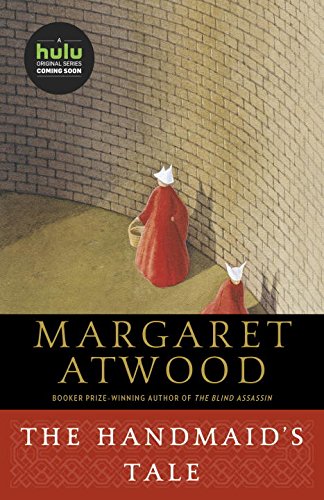
The Handmaid’s Tale by Margaret Atwood
Snippet from my review: The true gem in the story is Margaret Atwood’s writing she told the story as it is without it going awry. The storytelling is packed with heavy punches but it was not overbearing and overwhelming. It is straightforward and the reader can immediately distinguish what the story is about without having to exert very much effort. The writing wasn’t poetic put it possesses a certain ring to it that makes it engaging from the start until the end. It is also filled with prophetic but wonderful quotes.

The Savage Detectives by Roberto Bolaño
Snippet from my review: Amidst the maelstrom of their bohemian lifestyle, the story starts to settle. The lack of details on several seemingly seminal facets of the novel was made to underline one of its messages: the beauty and glory of youth. The visceral realists’ youth and their relative lack of experience in the realities of life made them fight for their convictions, willfully challenging norms. Youth emboldens. It is their fervent conviction that in order for them to make an impact on the literary scene, they have to dismantle the old institutions and establish new ones. At times, they think that they are on the verge of fame. It was also their youth that supplied them with the energy to live a vagabond existence across Europe. But with the passage of time, they grow and soon they realize how their ideals don’t apply in the general scheme of things. One’s youth quickly passes by and, in its stead, reality hits.

Thousand Cranes by Yasunari Kawabata
Snippet from my review: Thousand Cranes places the proverbial microscope on young men growing up in a fast changing Japan. The country, while anchoring itself on its traditions, is slowly moving towards the western mindset. The book appeals to the subconscious in a nostalgic manner by playing around with emotions to capture the imagination. Kawabata’s Japan is different from what laymen perceive it to be. In a manner of speaking, he is painting a more “humanized” Japan through his works. But Thousand Cranes appeal to the general reading public because it mirrors the imperfections of human nature, something that we all know something about.

The Covenant of Water by Abraham Verghese
Snippet from my review: The Covenant of Water is, without a doubt, a modern masterpiece. It is a literary accomplishment that soars with its vast coverage. The stories of Mariamma, Digby, and Rune, and their forebears intersected to produce a labyrinthine yet memorable read. Spanning seven decades, the novel casts a wide net over a plethora of subjects. In its distinct way, the novel was a window into the beauty of India, its colorful history, and the diversity of its people and culture. Its practices and traditions were woven into the novel’s rich tapestry. Superstitions and curses formed the mantle of the condition. This was exacerbated by the complications of the caste system and arranged marriages, and the legacy of colonialism. The social upheavals that riddled modern Indian history also formed an evocative backdrop for the story.
 The Pine-Scented Chronicles