
Happy Tuesday, everyone! Whoa, we are nearly midway through the fourth month of the year. How has the year been so far? I hope that the year is going in everyone’s favor. As it is a Tuesday, it is time for a Top 5 Tuesday update. Top 5 Tuesday was originally created by Shanah @ the Bionic Bookworm, but is now being hosted by Meeghan @ Meeghan Reads.
This week’s topic: Top 5 books about religion
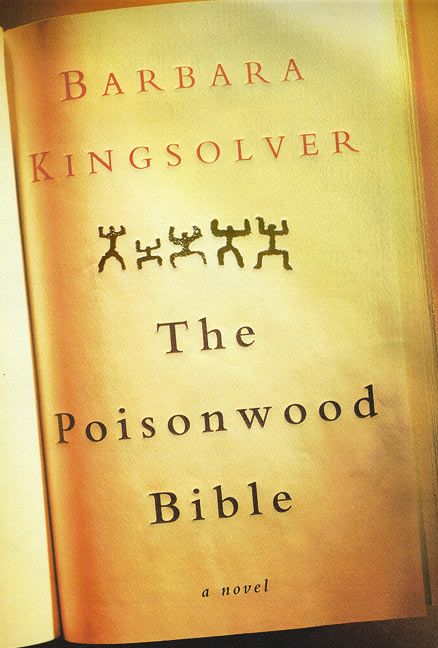
The Poisonwood Bible by Barbara Kingsolver
Snippet from my review: The Poisonwood Bible’s narrative form was one of its more brilliant facets. Kingsolver’s writing repertoire was on display from the onset. With her captivating language, she was able to cast a spell. Her portrayal of over three decades in the collective lives of the Price family was vivid, imaginative, and, often, powerful. In the process, she conjured a tale that reverberates with the sounds of Africa, its people, its diverse colors, and its stormy political atmosphere.

Life of Pi by Yann Martel
Snippet from my review: However, Life of Pi doesn’t reduce itself into a mere story of survival. Martel, with his degree in philosophy, realizes this. Survival, on the surface, is the great blanket that shrouds the story. Underneath this surface are deeper and profound messages. Martel craftily wove many seminal philosophical points in the narrative. The biggest of which pertain to harmony, of seamlessly merging with our environment. Despite Richard Parker’s daunting presence, Pi made sure that he is properly fed. Every food he caught, he shared with Richard Parker. He learned to live in harmony with the thing that daunted him the most. There was a stark dichotomy between the two remaining denizens of the lifeboat but, ironically or perhaps philosophically, they both relied on each other to survive.
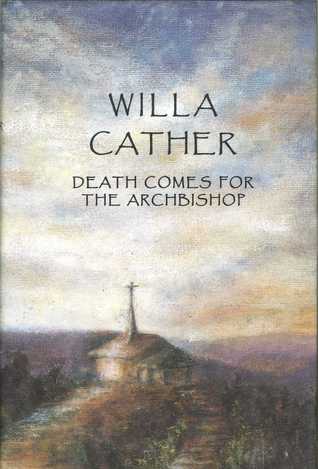
Death Comes for the Archbishop by Willa Cather
Snippet from my review: Cather had a modern progressive attitude as demonstrated by her sympathy for the plight of the Native Americans. She was also able to capture the subtle spiritual relationship the Native Americans had with their land. What is lacking, however, is a deeper perspective and exploration of the impact the subjugators had on the Natives. Despite its flaws and what it lacked, Death Comes for the Archbishop was a memorable read that provided me with my first glimpses into the work of one of the most prominent American writers of the first half of the 20th century.

Go Tell It On the Mountain by James Baldwin
Snippet from my review: Baldwin vividly portrayed how the Pentecostal Church figured in the lives of African Americans. It is a major driving force, knitting the community together. It beaconed amidst the sea of suffering and helplessness. It provided a ray of hope and has established quite a reputation for its upbeat Sunday gatherings and powerful sermons from its ministers. However, lurking behind the facade of animated homilies are the darker shades of the Church. Greed and moral corruption abounded. Pastors use their power and influence not only to gather huge crowds and rejoice in the words of the Lord but also to reap pecuniary benefits from their most devout followers. Sadly, it is a reality that remains prevalent in the contemporary and their followers are none the wiser.
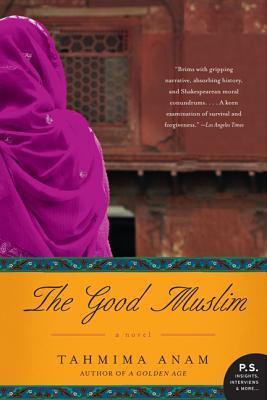
The Good Muslim by Tahmima Anam
Snippet from my review: Still, the overarching theme is religion. Anam explores the dichotomy between religious fundamentalism and secularism through Sohail and Maya. She emphasizes how religion provides reprieve in times of hardship, guiding individuals through dark moments. However, religious extremism can also be pervasive, as seen in Sohail. It drives a wedge between him and his family, especially his sister. Drawn by his faith, he creates another rift—this time between himself and his son. He is adamant that his son receive a traditional Muslim education, sending him to a madrasa in Chandpur in the belief that it will offer better guidance. Maya, however, views this as a form of abandonment. This tension highlights the novel’s exploration of family dynamics shaped by contrasting ideologies. Anam underscores how personal beliefs influence both individual identity and relationships. In many ways, the siblings embody the clash between tradition and progressive ideals in modern Bangladesh.
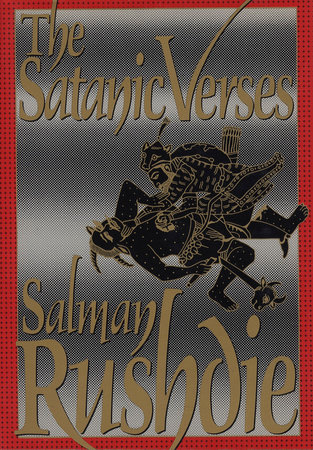
The Satanic Verses by Salman Rushdie
Snippet from my review: The Satanic Verses is a rich narrative that packs a lot of punch. The narrative is wrapped up in many complex layers. In all these layers, what prevails is Rushdie’s provocation of the reader’s mind. Deeply embedded in the migrant narrative are the themes of compromise and conformity. On the grander narrative, the novel is asking us who we are, or in the terms of the narrative, “what kind of idea are you?”. The biggest allegory in the novel is the story itself. It is permeated with various ideas that touch on a bevy of subjects like religion, immigration, mental health, and even love and romance.

Silence by Shūsaku Endō
Snippet from my review: Father Rodrigues’ story is a reflection of the life of the faithful. We live in a world where violence, immorality, and plain evil are ubiquitous. Terrible things happen to everyone, making one ask, “Is there a God out there? If there is, how come He lets pandemonium reign, and evil things happen?” In dark and troubling times, we resort to our faith. Most of the time, however, our prayers are left unanswered or are answered in ways that we don’t expect. Bereft of an answer or guidance, we start questioning our faith and the presence or the absence of a God.

