Happy Wednesday, everyone! Woah! Just like that, we are already halfway through the fourth month of the year. I hope the first quarter of the year has been kind and great to everyone. I know life isn’t a walk in the park, but it is my fervent prayer that everyone’s year is going well. Regardless, I hope the rest of the workweek goes smoothly.
That said, the middle of the week also brings a fresh WWW Wednesday update. WWW Wednesday is a bookish meme hosted originally by SAM@TAKING ON A WORLD OF WORDS.
The mechanics for WWW Wednesday are quite simple: you just have to answer three questions:
- What are you currently reading?
- What have you finished reading?
- What will you read next?

What are you currently reading?
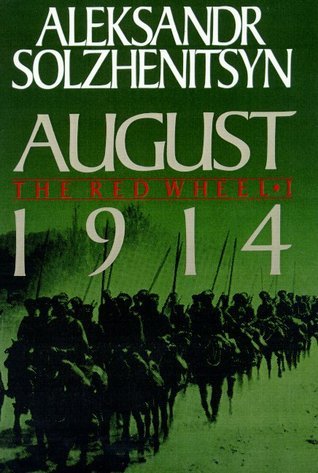
It’s already the middle of the week, which means we have only two more days until the weekend. I hope everyone makes it through the workweek. Anyway, my 2026 reading journey is going as planned. After spending the first two months of the year reading works by Latin American and Caribbean writers, I am now in the midst of a European literary adventure. While I had not originally planned to commence a journey across European literature this early in the year, the realization that I had listed several works by European writers in my reading challenges prompted me to pivot toward them in March. Because of the number of European works in my reading challenges, I am extending the journey into this month. This pivot has reintroduced me to familiar names while also introducing me to writers whose oeuvres I have yet to explore. My current read has taken me to a familiar name, although it has been some time since I last read any of his works.
It was must-read lists that first introduced me to Aleksandr Solzhenitsyn. I later learned that he is a Nobel Laureate in Literature. In 2025, I read his novel One Day in the Life of Ivan Denisovich. It took over a decade for me to secure a copy of another of the Russian writer’s works. Although I was not originally planning to read it, I included August 1914 in my ongoing venture into European literature; Russian literature has become one of my favorite parts of the literary world. First published in 1971 as Август четырнадцатого, the novel takes us to the early 20th century—a time of great political and social upheaval in Russia. Solzhenitsyn brings us to the front lines as Russia enters the First World War, although Tsar Nicholas II was initially apprehensive about joining it. His trusted adviser, Prime Minister Pyotr Stolypin, had been murdered at a performance at the Kyiv Opera House by the police agent and secret assassin Dmitri Bogrov.
At the front lines, we meet Colonel Vorotyntsev, the novel’s main character. He is a General Staff officer sent from the Grand Duke’s headquarters (the supreme command of the Russian Army) to the Russian Second Army, which is invading East Prussia under the command of General Alexander Samsonov. The colonel is tasked with finding out what is happening with the Second Army; another General Staff colonel is sent to the First Army with the same mission. Meanwhile, Colonel Vorotyntsev and his friend Arseny Blagodaryov find themselves surrounded by advancing German troops. Solzhenitsyn carefully and vividly captures scenes from the battle lines. Reading the novel, however, is no easy task. At over eight hundred pages long, it requires utmost attention. Nevertheless, I am slowly finding my footing in the story. I will be sharing more of my impressions of the book in this week’s First Impression Friday update.
What have you finished reading?
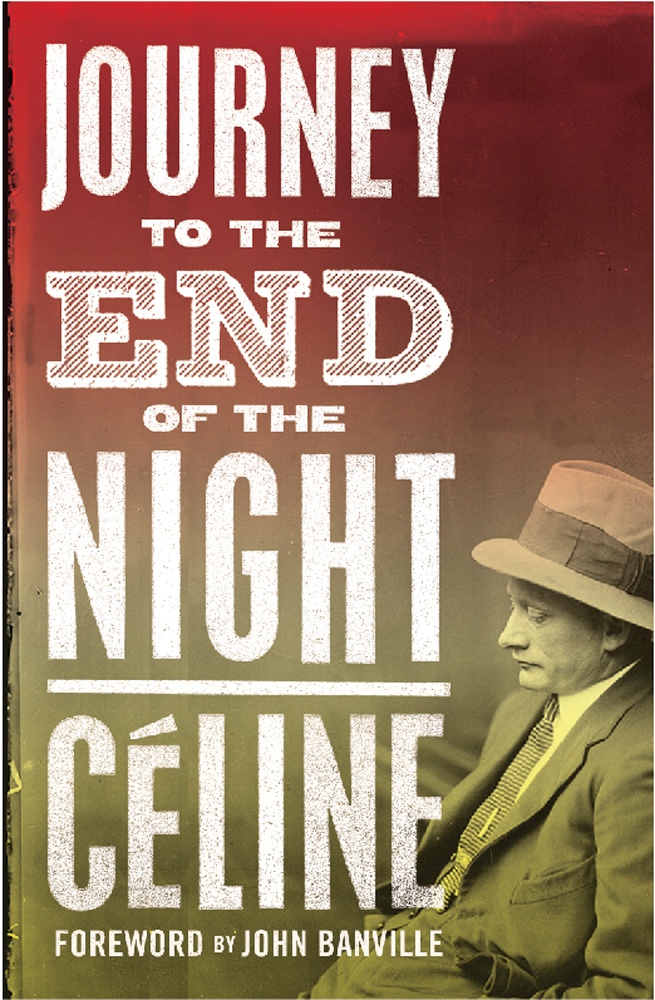
The previous week was a rather slow reading week. This is mainly because the books I have read and am currently reading are either hefty or require careful attention. The only book I was able to complete last week was Louis-Ferdinand Céline’s Journey to the End of the Night. It was through must-read lists that I was first introduced to the French writer, and Journey to the End of the Night was a prominent presence on them. It was even included in 1,001 Books You Must Read Before You Die. These are all good reasons for me to read the book, even though I did not include it in any of my ongoing reading challenges. Nevertheless, I had been looking forward to reading it. I even contemplated including it in my annual Top 20+ Reading List. But then again, there are simply too many good books out there.
Journey to the End of the Night is Céline’s debut novel, originally published in 1932 as Voyage au bout de la nuit. The novel charts the fortunes of Ferdinand Bardamu, whom we first meet as a medical student in Paris. The year is 1914, and the First World War is just over the horizon. Military parades are in vogue, and during one such parade, Bardamu is moved by its pageantry despite his political ideologies. A sense of heroism seizes him, prompting him to volunteer for the French Army at the outbreak of the war. At the front lines, he is soon disillusioned by the realities of war. Its horrors and absurdities strip him of his youthful enthusiasm and fleeting sense of nationalism. He finds the war and its ubiquitous violence pointless. Faced with the Germans, he cannot make sense of the conflict. Confronting enemies he has never met before, he begins to question his purpose and intentions. His body refuses to adhere to the commands of his officers. Why must he shoot at men who have not harmed him? He also realizes that his ambivalence makes him a coward in the eyes of his countrymen. He is later given a reconnaissance mission, during which he meets a fellow soldier—another “coward”—named Léon Robinson. Robinson is looking for a way to desert the army, and together they plot an escape. However, their efforts fail. When Bardamu is wounded, he returns to Paris, where he receives treatment and is awarded a military medal. During his recovery, he meets Lola, an American volunteer nurse, with whom he has an affair. When Lola realizes that Bardamu is avoiding a return to active duty, she leaves him. Her departure sends Bardamu spiraling downward. He experiences a mental health crisis and is transferred between a series of psychiatric hospitals. Eventually declared in good health but unfit for duty, he is released. However, he cannot seem to escape the shadows of war. He then travels to French West Africa, where he takes up a position at a rubber trading post. It turns out to be nothing more than a solitary hut in the middle of the African bush. There, he replaces a mysterious trader—whom he soon realizes is none other than Robinson. Taking Robinson’s place, Bardamu is confronted with the unbearable heat and boredom of colonial life, as well as the blatant exploitation of the natives. He falls ill again and becomes delirious with fever. In his delirium, he sets fire to the hut and deserts it. Thus commences yet another adventure.
In many ways, Journey to the End of the Night is not an easy read. It is highly eventful, and before I realized it, the story had taken me across different places. It becomes apparent that it is a picaresque novel, with Bardamu alternating between adventures and misadventures. His story develops into a futile pilgrimage in his pursuit of self-knowledge. Bardamu himself is an interesting and complex character who, over the course of the narrative, undergoes a kind of reverse character development: his enthusiasm dissolves, replaced by disdain and resentment. The novel is semi-autobiographical, which helps explain its raw, cutthroat, and often pessimistic tone. Céline’s writing is incisive, yet it allows for moments of reflection. Layers of existentialism shape Bardamu’s search for meaning in a tumultuous world, exacerbated by his inner conflicts. The absurdities he witnesses invite disillusionment, eroding his sense of self. Alienation emerges as a recurring theme in his life. Still, his picaresque journey offers him a fleeting sense of being. Overall, Journey to the End of the Night is an insightful read, deserving of its place among the world’s literary canon.
What will you read next?