Happy Wednesday, everyone! Woah! Just like that, we are nearly through with the fourth month of the year. I hope the year has been kind and great to everyone. I know life isn’t a walk in the park, but it is my fervent prayer that everyone’s year is going well. Regardless, I hope the rest of the workweek goes smoothly.
That said, the middle of the week also brings a fresh WWW Wednesday update. WWW Wednesday is a bookish meme hosted originally by SAM@TAKING ON A WORLD OF WORDS.
The mechanics for WWW Wednesday are quite simple: you just have to answer three questions:
- What are you currently reading?
- What have you finished reading?
- What will you read next?

What are you currently reading?
It’s already the middle of the week, which means we have only two more days until the weekend. I hope everyone makes it through the workweek. Anyway, my 2026 reading journey is going as planned. After spending the first two months of the year reading works by Latin American and Caribbean writers, I am now in the midst of a European literary adventure. While I had not originally planned to embark on a journey across European literature this early in the year, the realization that I had listed several works by European writers in my reading challenges prompted me to pivot toward them in March. Because of the number of European works in my reading challenges, I am extending the journey into this month. This shift has reintroduced me to familiar names while also introducing me to writers whose oeuvres I have yet to explore. My current read has taken me to a familiar name.
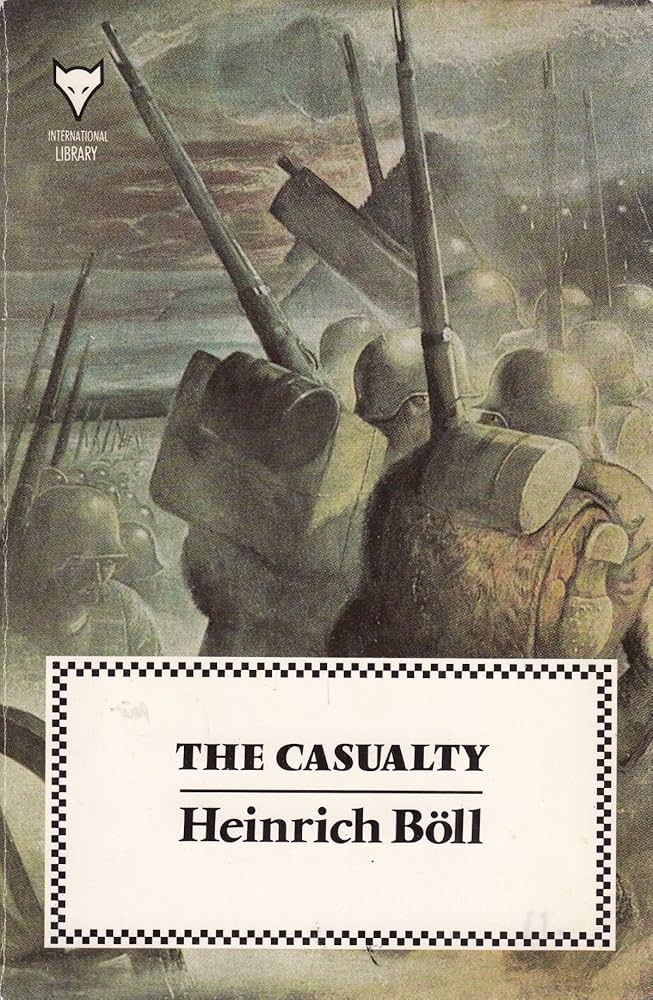
It was must-read lists that first introduced me to Heinrich Theodor Böll; his works were regularly featured in such lists, including the 1001 Books You Must Read Before You Die list. I later learned that he is a Nobel laureate in Literature. Last year, I read my first Böll novel, The Silent Angel. Less than a year later, I am reading my second. Interestingly, I had no intention of reading The Casualty. However, since I unintentionally began a Nobel Prize in Literature reading binge, I decided to pick up the book. I later learned that it is a collection of short stories; I am not particularly fond of the form. Still, since I started reading it, I feel compelled to continue; I rarely DNF a book. The book is composed of short stories written by Böll between 1946 and 1952. However, it was only in 1983 that they were published together in a single volume as Die Verwundung und andere frühe Erzählungen.
The Casualty takes readers to the battlefields of the Second World War. The Silent Angel also grappled with the legacy of the war. The short stories explore familiar themes, not only within the ambit of Böll’s oeuvre but also within the broader literary landscape. Some of the stories depict the reluctance of German soldiers, who had no choice but to take part in a war they had no desire to join. They were trapped, both by duty and by their enemies. Other stories capture not only the dire situations on the battlefield but also the human capacity for survival. I am midway through the book, yet there still seems to be a lot of ground to cover. On the other hand, I am slowly starting to appreciate the beauty of short stories.
What have you finished reading?
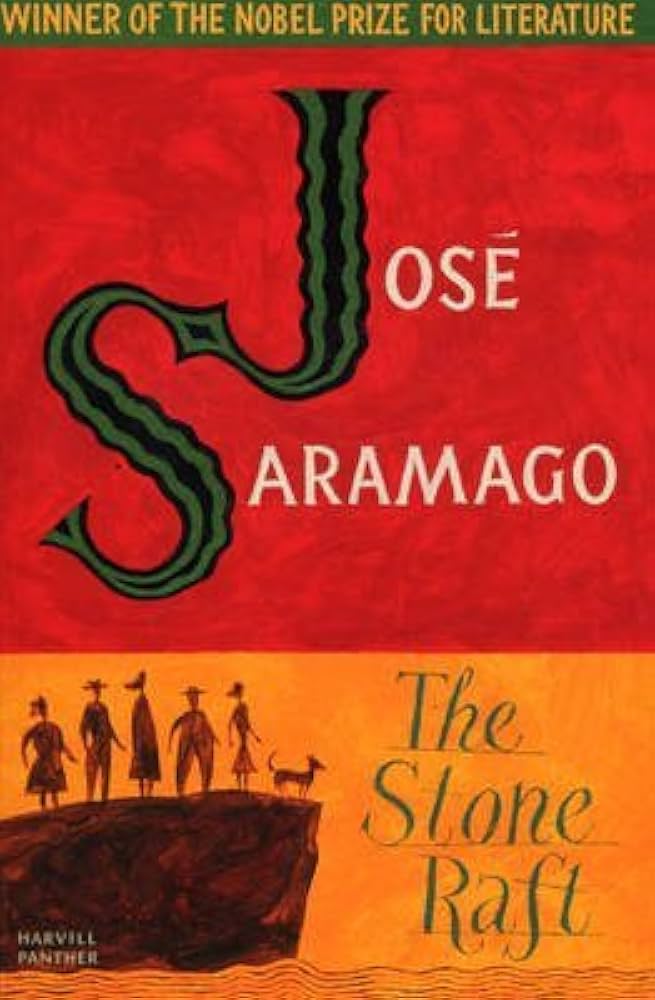
After having a rather slow reading week two weeks ago, I am slowly regaining much-needed reading momentum as we transition into the fifth month of the year. Over the past week, I was able to finish two books, both written by Nobel laureates in Literature. After beginning a Nobel Prize in Literature reading journey with Russian writer Aleksandr Solzhenitsyn’s August 1914, I continued it with Portuguese Nobel laureate José Saramago’s The Stone Raft. It was actually must-read lists that first introduced me to both writers—this was before I learned that they were Nobel laureates. Some of their works were even included in the 1001 Books You Must Read Before You Die list. While August 1914 was only my second Solzhenitsyn novel, The Stone Raft was already my sixth Saramago novel. Ironically, I read my first Solzhenitsyn novel even before I read my first by the Portuguese laureate.
I was not originally planning to read The Stone Raft, which was first published in 1986 as A Jangada de Pedra. In many ways, it is a departure from the typical Saramago works I have read so far, though its vision and imagination are akin to those of Blindness. The Stone Raft begins intriguingly, referencing the mythological creature Cerberus, the three-headed dog that guards the gates of hell. The peculiar town of Cerbère, where the story begins, closely resembles the creature’s name. When Joana Carda scratches the ground with an elm branch, the town’s silent dogs are roused from their torpor. They begin to bark inexplicably, sparking a wave of panic across the town. The villagers believe that the dogs’ barking signifies the end of the world. To ward off these omens, they resort to old remedies, such as poisoned meat pies, to silence the dogs. However, all their precautions prove futile. As the story unfolds, Saramago introduces the various characters who form the backbone of the narrative. On a beach, Joaquim Sassa, a bank clerk from Oporto, finds a mysterious stone. It is heavy and irregular, yet he somehow manages to throw it far out into the sea—much to his bewilderment. Meanwhile, Pedro Orce, an elderly Portuguese pharmacist, experiences a tremor as he rises from a chair. José Anaiço, a middle-aged bachelor and low-ranking government employee, finds himself walking along a secluded path, accompanied by a flock of starlings that seem to follow him wherever he goes. Maria Guavaira, living on a farm on the northern Spanish coast, becomes absorbed in unraveling an old blue sock in her attic. At first, there appears to be little connection among them—until fate brings them together. Meanwhile, the narrative shifts to the Alberes Mountains, where an even more ominous sign manifests: a crack appears in a massive stone slab. Another rupture emerges across the Pyrenees near Roncevalles, creating bureaucratic tension between Spain and France. Eventually, the Iberian Peninsula dramatically breaks away from the rest of Europe—this is the crux of the story. The event leaves its inhabitants in shock, and chaos and panic ensue. As the peninsula drifts away from the continent, the novel’s title begins to make perfect sense.
As the peninsula erupts in chaos, the paths of the five characters converge. The three men arrange to meet after learning about one another through the media and begin traveling in Sassa’s Deux Chevaux, an eccentric car with a canvas roof. They are later joined by Joana, Maria, and even a mysterious mastiff—dogs are a recurring presence throughout the story. As the narrative progresses, the dog appears to have been “sent to guide them” on their journey. But what journey are they truly embarking on? As the Iberian Peninsula drifts across the Atlantic, it becomes clear that the novel is less about cataclysm and more an exploration of the human condition—much like Blindness. Geopolitics initially figures prominently, as the story confronts the historical, social, and political connections between the peninsula and the rest of Europe. The novel critiques bureaucracy, but beyond politics, it examines human solidarity and connection in the midst of crisis. More importantly, The Stone Raft evolves into a story of self-discovery in a world inching toward chaos, with the characters redefining who they are beyond familiar paradigms. Overall, The Stone Raft is another compelling read from Saramago.
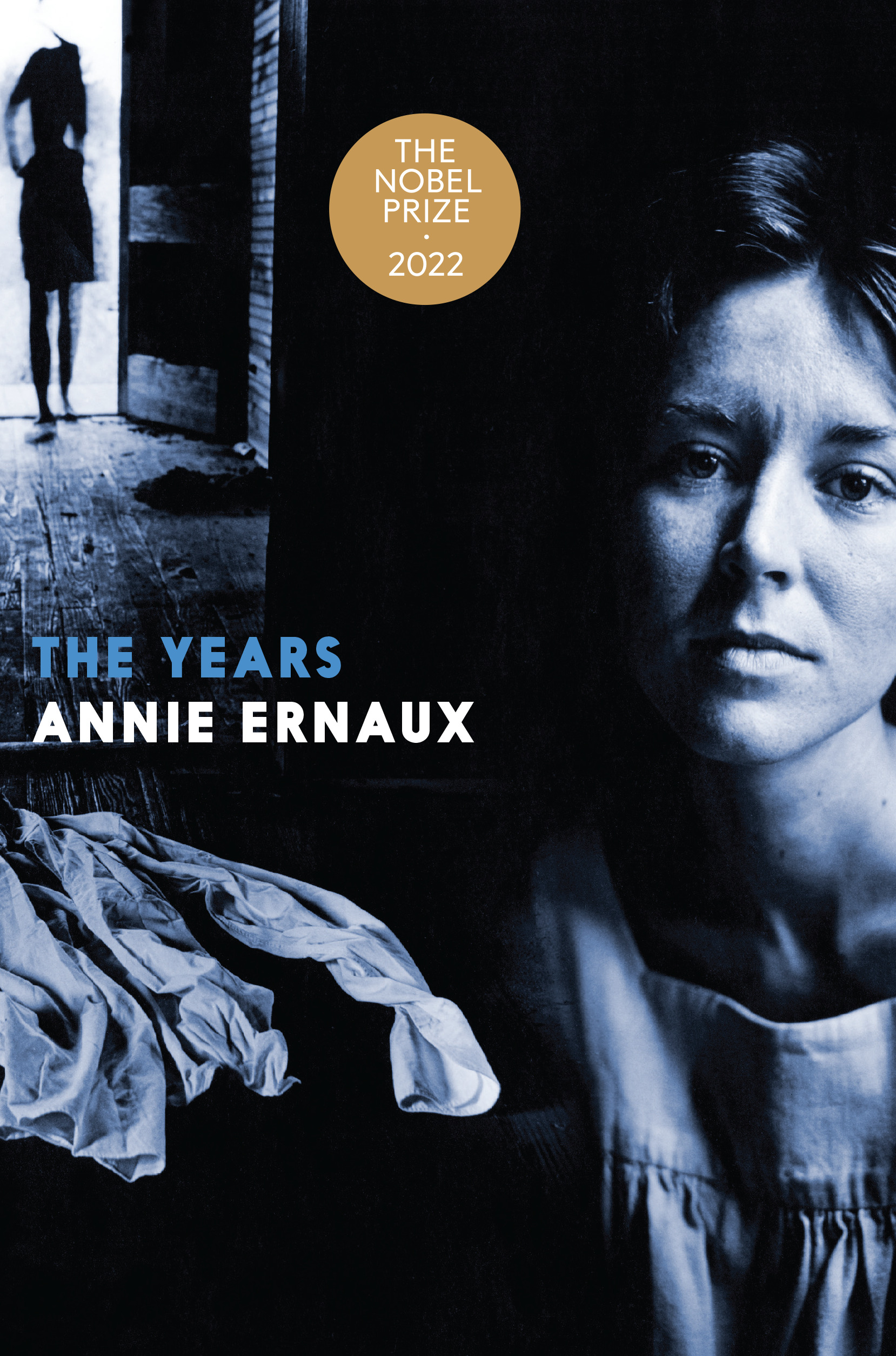
Ironically, the Swedish Academy has long taken heat for its male-centric (and, well, Eurocentric) choices—deservedly so. Men have dominated the Nobel Prize in Literature since its inception. This makes it even more striking that, in 2022, the Prize was awarded to Annie Ernaux. What adds to the irony is that French writers are the most awarded, with sixteen laureates; however, Ernaux was the first French woman to be recognized by the Swedish Academy. Nevertheless, I am happy about her recognition. She had seemed like a shoo-in for the Prize for years, finally making the roll call in 2022. In 2023, I read my first book by Ernaux, A Girl’s Story; it was a no-brainer for me to explore her work. She certainly has a distinct approach to writing. It is not conventional prose, which I typically prefer, yet there is still something magical about it. This made me reflect on the kind of vision female writers must possess to be recognized—not only by the Swedish Academy but also by their peers.
As part of my venture into European literature, I decided to read another Ernaux book, The Years. This is my first nonfiction read in a while. Originally published in 2008 as Les Années, The Years is often considered her magnum opus; in fact, it was one of the three works mentioned by the Swedish Academy in its citation. The book is, in a way, a hybrid memoir. Ernaux has been recognized—by the Academy and critics alike—for revolutionizing the memoir as a literary genre. As in A Girl’s Story, she uses impersonal pronouns and a collective “we” to tell her story. The narrative is sparked by a series of photographs, and later home movies, which prompt a woman to reflect on her era. She takes us back to her childhood in the 1940s in a provincial town in France. During postwar holiday meals, adults often constructed a collective narrative of wartime experience, recounting hunger, bombardments, and even mass exoduses to evade German invasion. While the children, including the narrator, seemed not to listen closely, they remembered every detail. The narrator paints a portrait of a poor but generally happy family. The story broadens as it enters the 1950s, a time when people lived with a scarcity of objects, images, and explanations. Children died from diphtheria and other sudden illnesses. Gender segregation also emerges as a prominent theme: at school, boys and girls are kept strictly apart, and the narrator’s generation struggles to understand the opposite sex. As the narrator enters adolescence, she is given the freedom to attend university away from home. Her experiences beyond her hometown deepen her awareness of her family’s social standing. It is also during this time that she begins exploring her sexuality—echoing themes from A Girl’s Story. In many ways, this forms her coming-of-age. As the years pass, we see the girl transform into a young woman who, in the 1970s, witnesses the rise of the Women’s Liberation Movement.
However, The Years does not reduce itself to mere personal reflection. Alongside the narrator’s growth, we witness sweeping changes in France and, more broadly, across the world. The rise of the Women’s Liberation Movement is just one example. Other social changes include the legalization of abortion and the advent of the birth control pill. The memoir also captures political shifts that shaped the era—in France, the rise of Charles de Gaulle and the upheaval of the 1968 student protests. Time and memory serve as central elements throughout the work. Photographs, songs, and even consumer brands function as tools to evoke both nostalgia and collective memory. At the same time, the book grapples with consumerism, the shift toward a capitalist society, and the broader modernization of life. The Years charts the landscape of the postwar world. It is, quite literally, about the passage of time. Spanning seven decades, it offers a panoramic view not only of a woman’s life but also of a nation.
What will you read next?