
Just like that, we are waving goodbye to the fourth month of 2026. With four months down, I hope everyone is already back on track. However, it was unfortunate how global geopolitical tensions quickly escalated in March. I sincerely hope that tensions will de-escalate, if not be fully resolved, soon. Anyway, I hope the first quarter of the year has been brimming with blessings, good news, and answered prayers. Personally, I am still trying to pace myself in my new company. It has been rather hectic and challenging. In many ways, it feels like a fresh start. I hope everyone else is also finding their footing. I wish everyone well on their individual journeys. For those whose goal is simply to move from one point to another, know that that is perfectly fine, too. I am proud of you and your resilience. In times like these, with so much turmoil surrounding us, silencing the noise can be a challenge. I hope that 2026 will be kinder to you. Above all, I hope everyone stays healthy—in mind, body, and spirit.
After spending the first two months of the year reading works of Latin American and Caribbean literature, I have since crossed the Atlantic to venture into works by European writers. Interestingly, I was not planning to read European writers so early in the year. However, realizing that I have several works by European authors in my ongoing reading challenges made me re-evaluate this choice. In March, I focused on the works of European women writers; March is Women’s History Month, with International Women’s Day celebrated on March 8. Meanwhile, in April, I commenced a venture into the works of European Nobel Laureates in Literature. It was also without design. Still, both are memorable journeys—introducing me to new names while reacquainting me with familiar ones. Without further ado, here is how my foray into their works, and my second month into European literature, unfolded.

Embers by Sándor Márai
My April reading month, however, started not with the work of a Nobel Laureate in Literature. Instead, it started with a part of the literary world that is starting to grow on me. During the lead-up to the announcement of the 2018 Nobel Prize in Literature laureate, I came across Hungarian writers Péter Nádas and László Krasznahorkai. Both were highly touted for the prestigious prize, although neither was recognized by the Swedish Academy at the time. Nevertheless, this introduced me to the wonders of Hungarian literature. It also introduced me to other Hungarian writers, such as Sándor Márai, whom I first discovered through an online bargain bookseller. His novel Embers immediately piqued my interest. While Márai had a prolific literary career, most of his writings remain untranslated. Embers was originally published in 1942 in Hungarian as A gyertyák csonkig égnek. At the heart of the novel are two old friends. A septuagenarian general invites his former military school companion to dinner in his secluded woodland castle. Konrad was once his closest friend, yet they have not seen each other in forty-one years. Konrad had disappeared under circumstances that are gradually revealed as the story unfolds. The novel unfolds over the course of the dinner. The two men exchanged increasingly barbed words, as both harbor long-standing grievances. In many ways, their interaction resembles a courtroom drama, with the general as the interrogator and Konrad as the accused. As the night deepens, their dialogue reveals not only personal grievances but also deeper existential reflections. The narrative repeatedly returned to the past, where the truth ultimately resides. They revisit even the most mundane moments. Central to their shared memory is the general’s beautiful, long-deceased wife, Krisztina. As recollections of a hunt gone awry resurface, regret begins to intertwine with nostalgia. The general confronts Konrad with questions that have haunted him for decades. The dynamics of friendship form the novel’s overarching theme, but memory—and its burdens—emerges as its primary driving force. Memory becomes a poignant motif, with both characters haunted by the ghosts of their past. Fragments of long-buried emotions and resentments surface, revealing how deeply these experiences have shaped their lives. What ultimately elevates the novel, however, is its philosophical depth. The conversation between the two men meanders through reflections on familiar themes of loyalty, love, betrayal, and morality. Yet Márai’s treatment of these ideas gives them renewed resonance. His writing deftly captures an atmosphere that is perfectly attuned to the novel’s concerns. Overall, Embers is a pleasant surprise. I did not approach it with high expectations, but its storytelling and the quality of its prose proved deeply engaging.
Goodreads Rating:

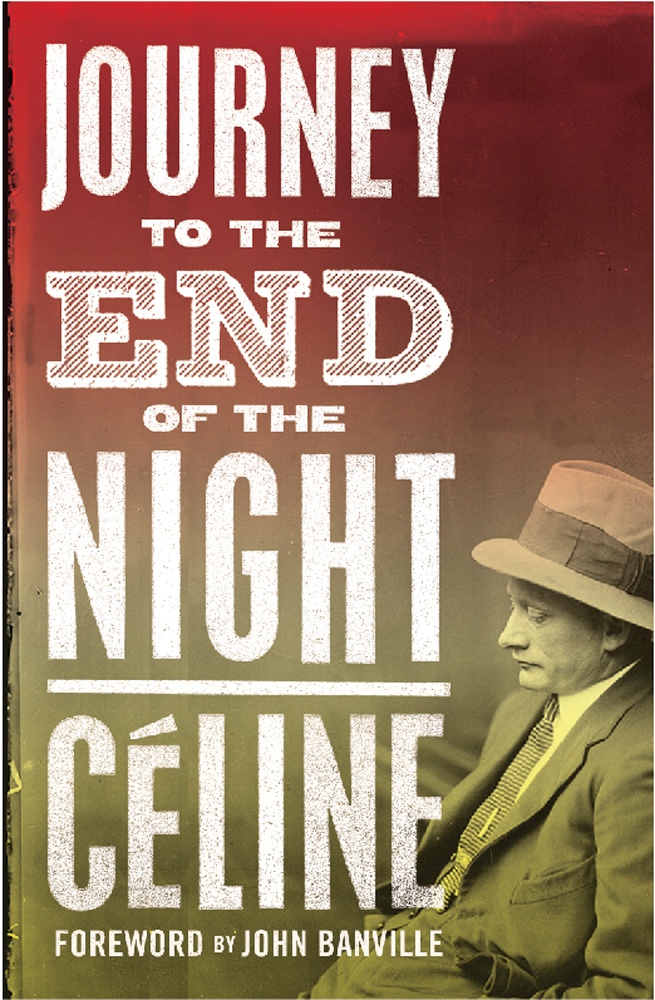
Journey to the End of the Night by Louis-Ferdinand Céline
From Hungary, my literary journey next took me to a more familiar literary territory, French literature. It was through must-read lists that I was first introduced to Louis-Ferdinand Céline, and Journey to the End of the Night was a prominent presence on them. It was even included in 1,001 Books You Must Read Before You Die. These are all good reasons for me to read the book, even though I did not include it in any of my ongoing reading challenges. Journey to the End of the Night is Céline’s debut novel, originally published in 1932 as Voyage au bout de la nuit. It charts the fortunes of Ferdinand Bardamu, whom we first meet as a medical student in 1914 Paris. The First World War is just over the horizon, and military parades were in vogue. One such parade moved Bardamu despite his political ideologies. A sense of heroism seizes him, prompting him to volunteer for the French Army at the outbreak of the war. He was soon disillusioned by the realities of war. Confronting enemies he had never met before made him question his purpose and intentions. During a reconnaissance mission, he met a fellow soldier—another “coward”—named Léon Robinson. Together they plotted an escape, but their efforts failed. When Bardamu was wounded, he returned to Paris, where he received treatment and was awarded a military medal. An affair with Lola, an American volunteer nurse, ended on a sour note, sending Bardamu spiraling downward. He was referred to a series of psychiatric hospitals before he was eventually declared in good health but unfit for duty. However, he cannot seem to escape the shadows of war. He then traveled to French West Africa, where he took up a position at a rubber trading post, which turned out to be a solitary hut in the middle of the African bush. There, Bardamu was confronted with the unbearable heat and boredom of colonial life, as well as the blatant exploitation of the natives. When he fell ill and became delirious, he set fire to the hut and deserted it, commencing yet another adventure. Journey to the End of the Night is a highly eventful story. After all, it is a picaresque novel, with Bardamu alternating between adventures and misadventures. His story is a futile pilgrimage in the pursuit of self-knowledge. Ironically, Bardamu experienced a reverse character development: his youthful enthusiasm was replaced by disdain and resentment. The novel is semi-autobiographical, which helps explain its raw, cutthroat, and often pessimistic tone. Céline’s writing is incisive, yet it allows for moments of reflection. The absurdities he witnesses invite disillusionment, eroding his sense of self. Alienation emerges as a recurring theme in his life. Still, his picaresque journey offers him a fleeting sense of being. Overall, Journey to the End of the Night is an insightful read, deserving of its place among the world’s literary canon.
Goodreads Rating:

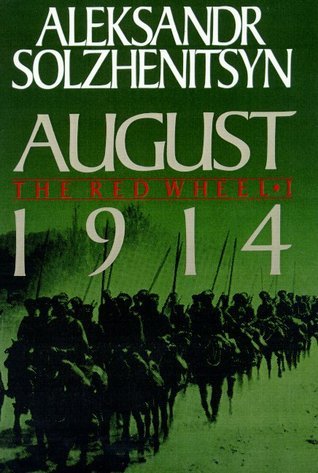
August 1914 by Aleksandr Solzhenitsyn
My venture into the works of European Nobel Laureates in Literature officially commenced with a name that I haven’t encountered for quite some time. I believe it was in 2015 when I read my first novel by Russian writer Aleksandr Solzhenitsyn, One Day in the Life of Ivan Denisovich. I have since been trying to secure a copy of his other works, but it was only this year that I was able to acquire one, August 1914. Without ado, I made it part of my ongoing reading journey. First published in 1971 as Август четырнадцатого, the novel takes us to the early 20th century—a time of great political and social upheaval in Russia. The story opens with Sanya, a young university student who boarded a train bound for Moscow, planning to enlist in the army after Russia joined World War I. Tsar Nicholas II’s resolute declaration inspired Sanya. His newfound sense of patriotism made him reject his pacifism. On the train to Moscow, Sanya ran into his former girlfriend, Varya, who questioned his patriotism, challenging his desire to join the army, even accusing him of denying support for the common people’s revolution. Interestingly, the tsar was apprehensive about joining the war, but was pressured by his generals to mobilize the Russian army. His trusted adviser, Prime Minister Pyotr Stolypin, had been murdered at the Kyiv Opera House by a police agent and assassin, Dmitri Bogrov. The tsar heavily relied on Stolypin’s wisdom; had he been alive, he would have known what was best for Russia. The story then shifts to the battle lines at the Battle of Tannenberg. Colonel Vorotyntsev, a General Staff officer, was sent from the Grand Duke’s headquarters to the Russian Second Army, which is invading East Prussia under the command of General Alexander Samsonov. He was tasked to document the conditions at the front and report back. However, the chaos at the Russian-German battle lines was worse than initially thought. Colonel Vorotyntsev was forced to abandon his original mission and instead bring order to the battle line. With his friend Arseny Blagodaryov, they managed to rally the soldiers. While it was a small victory, it was enough to boost the Russian Army’s morale. However, the victory was fleeting, undermined by the incompetence of General Samsonov. The version of the novel I read contained an extension. From the battle lines, the narrative returns to Russia. These chapters focus on Prime Minister Pyotr Stolypin, emphasizing how he rose through the ranks to become the tsar’s most trusted adviser. The background and personality of Stolypin’s murderer, Dmitri Bogrov, are also explored. While there was a sense of disconnect between the two halves of the novel, I was still engrossed by the historical context woven into its rich fabric. Interestingly, it explores a familiar theme: the Russia of the old and the Russia of the new—a tension that would eventually culminate in the Bolshevik Revolution, which dismantled the Russian monarchy. Overall, August 1914 is an insightful examination of history, leadership, and a nation at a crossroads.
Goodreads Rating:
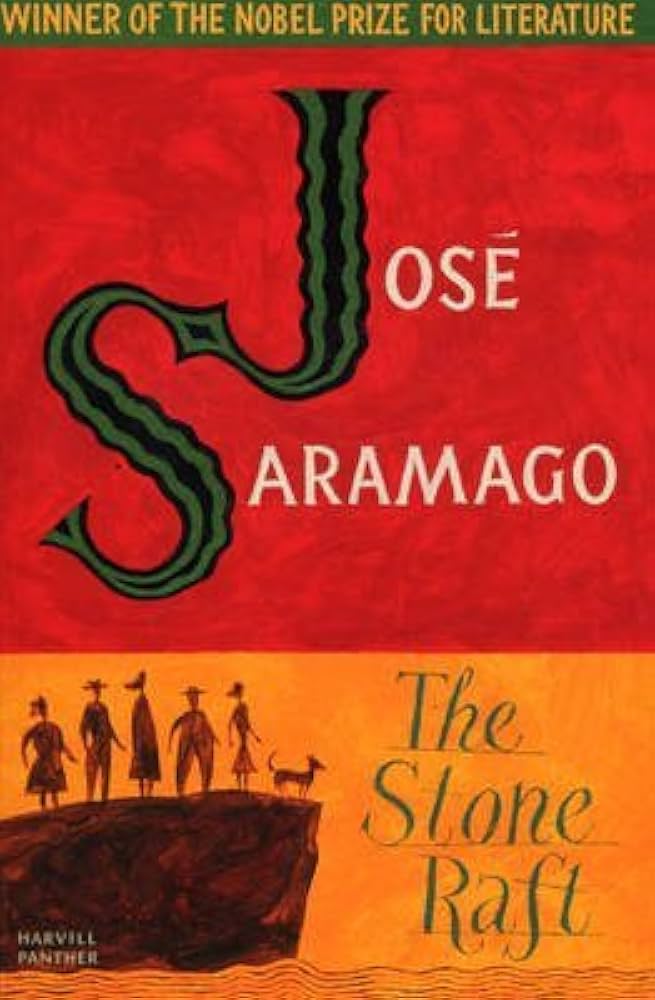
The Stone Raft by José Saramago
Interestingly, I read my first Solzhenitsyn novel even before I read my first novel by the Portuguese Nobel Laureate in Literature, José Saramago. However, by the time I read my second Solzhenitsyn novel, I had already read five Saramago novels. This makes The Stone Raft my sixth by Saramago. I was not originally planning to read The Stone Raft, which was first published in 1986 as A Jangada de Pedra. The Stone Raft begins intriguingly, referencing the mythological creature Cerberus, the three-headed dog that guards the gates of hell. In the peculiar town of Cerbère, Joana Carda scratches the ground with an elm branch. This set the town’s silent dogs into a frenzy as they began to bark inexplicably. This sparked a wave of panic across the town, as the villagers believed that the dogs’ barking signified the end of the world. To ward off these omens, they resort to old remedies to silence the dogs. However, all their precautions prove futile. Over at the Alberes Mountains, a crack appeared in a massive stone slab. A similar rupture emerged across the Pyrenees near Roncevalle. Eventually, the Iberian Peninsula dramatically breaks away from the rest of Europe—this is the crux of the story. This created chaos and panic among the inhabitants. As the peninsula drifts away from the continent, the novel’s title begins to make perfect sense. As the peninsula erupts in chaos, a group of unlikely individuals converged. On a beach, Joaquim Sassa, a bank clerk from Oporto, finds a mysterious stone. It is heavy and irregular, yet he somehow manages to throw it far out into the sea—much to his bewilderment. Meanwhile, Pedro Orce, an elderly Portuguese pharmacist, experiences a tremor as he rises from a chair. José Anaiço, a middle-aged bachelor and low-ranking government employee, finds himself walking along a secluded path, accompanied by a flock of starlings that seem to follow him wherever he goes. Maria Guavaira, living on a farm on the northern Spanish coast, becomes absorbed in unraveling an old blue sock in her attic. At first, there appears to be little connection among them—until fate brings them together. The three men arranged to meet after learning about one another through the media. They were later joined by Joana, Maria, and even a mysterious mastiff who appeared to have been “sent to guide them” on their journey. As the Iberian Peninsula drifts across the Atlantic, it becomes clear that the novel is an exploration of the human condition. Geopolitics initially figured prominently, as the story confronts the historical, social, and political connections between the peninsula and the rest of Europe. The novel critiqued bureaucracy but also examined human solidarity and connection in the midst of crisis. More importantly, The Stone Raft evolves into a story of self-discovery in a world inching toward chaos, with the characters redefining who they are beyond familiar paradigms. Overall, The Stone Raft is another compelling read from Saramago.
Goodreads Rating:
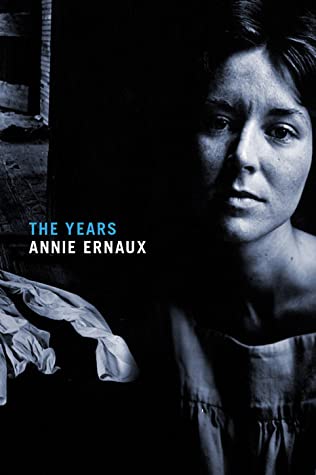
The Years by Annie Ernaux
Ironically, the Swedish Academy has long taken heat for its male-centric (and, well, Eurocentric) choices—deservedly so. Men have dominated the Nobel Prize in Literature since its inception. This makes it even more striking that, in 2022, the Prize was awarded to Annie Ernaux. What adds to the irony is that French writers are the most awarded, with sixteen laureates; however, Ernaux was the first French woman to be recognized by the Swedish Academy. Nevertheless, I am happy about her recognition. She had seemed like a shoo-in for the Prize for years, finally making the roll call in 2022. In 2023, I read my first book by Ernaux, A Girl’s Story; it was a no-brainer for me to explore her work. As part of my venture into European literature, I decided to read another Ernaux book, The Years. This is my first nonfiction read in a while. Originally published in 2008 as Les Années, The Years is often considered her magnum opus; in fact. The book is, in a way, a hybrid memoir. Ernaux has been recognized—by the Academy and critics alike—for revolutionizing the memoir as a literary genre. As in A Girl’s Story, she uses impersonal pronouns and a collective “we” to tell her story. The narrative is sparked by a series of photographs and later home movies, which prompt a woman to reflect on her era. She takes us back to her childhood in the 1940s in a provincial town in France. The narrator paints a portrait of a poor but generally happy family, where dinners consisted of conversations about wartime experiences. The story broadens as it enters the 1950s. Children died from diphtheria and other sudden illnesses. Gender segregation also emerges as a prominent theme: at school, boys and girls are kept strictly apart, and the narrator’s generation struggles to understand the opposite sex. As the narrator enters adolescence, she is given the freedom to attend university away from home. Her experiences beyond her hometown deepen her awareness of her family’s social standing. It is also during this time that she begins exploring her sexuality. In many ways, this forms her coming-of-age. However, The Years does not reduce itself to mere personal reflection. Alongside the narrator’s growth, we witness sweeping changes in France and, more broadly, across the world. The rise of the Women’s Liberation Movement is just one example. Other social changes include the legalization of abortion and the advent of the birth control pill. The memoir also captures political shifts that shaped the era—in France, the rise of Charles de Gaulle and the upheaval of the 1968 student protests. Time and memory serve as central elements throughout the work. Photographs, songs, and even consumer brands function as tools to evoke both nostalgia and collective memory. At the same time, the book grapples with consumerism, the shift toward a capitalist society, and the broader modernization of life. Spanning seven decades, The Years offers a panoramic view not only of a woman’s life but also of a nation.
Goodreads Rating:
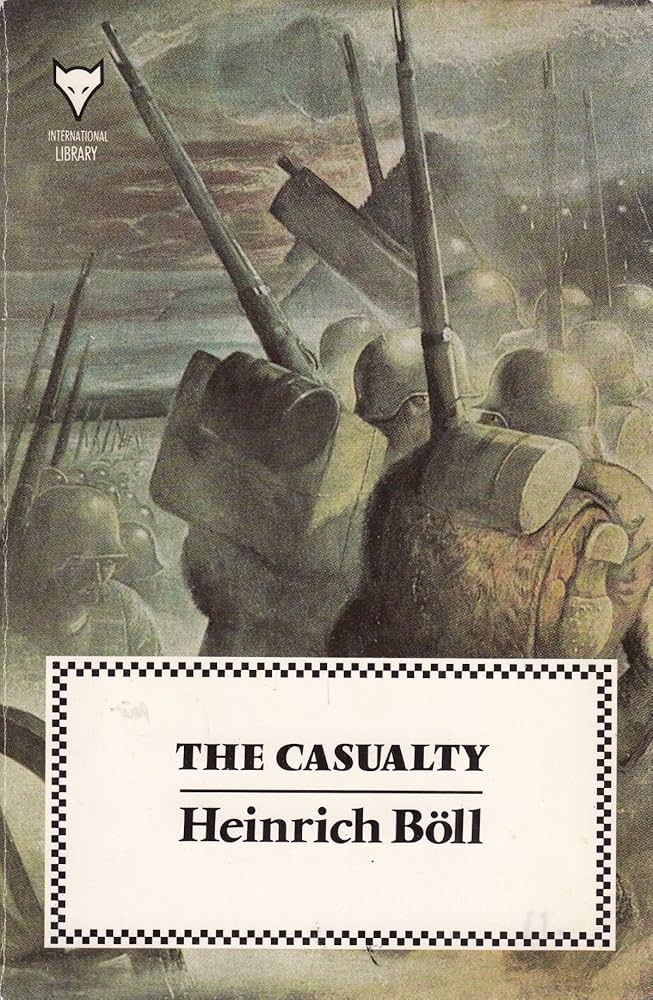
The Casualty by Heinrich Böll
I commenced my April literary journey with yet another name I first encountered through must-read lists. German writer Heinrich Theodor Böll’s works were regularly featured in such lists, including the 1001 Books You Must Read Before You Die list. It was only later on that I learned that he is a Nobel Laureate in Literature, recognized for “his writing which through its combination of a broad perspective on his time and a sensitive skill in characterization has contributed to a renewal of German literature.” Last year, I read my first Böll novel, The Silent Angel. Less than a year later, I am reading my second. Interestingly, I had no intention of reading The Casualty. However, since I unintentionally began a Nobel Prize in Literature reading binge, I decided to pick up the book. Imagine my surprise when I learned that it was a collection of short stories. I am not particularly fond of the form, and I prefer full-length prose. Still, since I started reading it, I feel compelled to continue; I rarely DNF a book. The book is composed of short stories written by Böll between 1946 and 1952. However, it was only in 1983 that they were published together in a single volume as Die Verwundung und andere frühe Erzählungen. The Casualty consists of twenty-two short stories and takes readers to the battlefields of the Second World War. The Silent Angel also grappled with the legacy of the war. After all, Böll is widely recognized as a pre-eminent voice in Post-War literature, deservedly so. The short stories explore familiar themes not only within Böll’s oeuvre but also across the broader literary landscape. The short stories prominently featured German soldiers who fought during the Second World War. The stories delve into their experiences. Böll himself served in the German Army on both the Eastern and Western Fronts. Most of the soldiers were reluctant participants in the war. They had no choice but to take part in a war they had no desire to join. They were trapped, both by duty and by their enemies. The situation at the battlefields was beyond dire. “Those nights were very dark, and fear hung like a thunder cloud over the alien, pitch-black earth,” as described in Jak the Tout. The collection’s title story was the longest. It followed the story of two wounded soldiers: one was a hand grenade victim, while his companion was a cynic who paid to be wounded by an obliging gunman. They drink, smoke, and revel in relative freedom as they move away from the front. The collection delves into themes such as fear, hope, despair, and the human will to survive in the midst of chaos; some stories capture the war’s legacy and its physical toll. Other stories capture not only the dire situations on the battlefield but also the human capacity for survival. Overall, The Casualty is a riveting collection of stories from a master storyteller.
Goodreads Rating:
Reading Challenge Recaps
- 2026 Top 26 Reading List: 11/26
- 2026 Beat The Backlist: 6/20; 36/60
- 2026 Books I Look Forward To List: 0/10
- Goodreads 2026 Reading Challenge: 36/100
- 1,001 Books You Must Read Before You Die: 4/20
- New Books Challenge: 0/15
- Translated Literature: 26/50
Book Reviews Published in April
In terms of my book-reviewing endeavors, it was unfortunate that my writing momentum had stalled. After having a little prolific writing quarter, I didn’t fare well in April. I have been busy at work. It did not help that my anxiety has been acting up. In the past month, I was able to publish just two book reviews. It is a measly number. This is my least output since January 2025. I find it ironic that while I was able to avoid my January writing curse, life’s travails would hold me back. Things, however, have been getting better. I just published my review of Bilge Karasu’s The Garden of Departed Cats, which means I only have one pending book review from July 2023. Somehow, I made a dent in my 2023 pending book reviews, even though it was just one book review. This is a much-needed progress because I have quite a lot of pending reviews from 2023. The only non-2023 book I reviewed during the month is An Artist of the Floating World, the first novel by Kazuo Ishiguro I read; I read it back in 2015.
Still, my pending list continues to grow, as my writing is unable to cope with my reading pace. I am reading way more than I am reviewing. I hope I get to sustain the writing momentum I built in the first quarter of the year. I hope that my writing momentum will extend to the rest of the year. For now, my primary focus is to complete my pending July 2023 reviews while trying to work on those from 2024 and 2025. With less than 20 book reviews, I am on track to complete my 2023 backlog. Occasionally, I might also publish reviews of books I read before I began publishing reviews—such as Haruki Murakami’s Norwegian Wood and Kafka on the Shore, Salman Rushdie’s The Ground Beneath Her Feet, Ian McEwan’s Atonement, and Naguib Mahfouz’s Miramar. These books hold special significance for me as they were the first works I read by these authors.
My venture into the vast European literary landscape continues into May. I still have quite a lot of works of European writers in my ongoing reading challenges. Further, my focus on the works of European women writers in March and European Nobel Laureates in Literature in April made me pass over some of these books. Still, I have a long list of European literary works I want to read, apart from those on my reading challenges. I am currently reading Günter Grass’s The Flounder, just my second book by the German Nobel Laureate in Literature. I am also considering reading the works of his fellow Nobel Laureates in Literature, László Krasznahorkai and Hermann Hesse. On top of these are Raymond Queneau’s The Last Days, Vassilis Vassilikos’s Z, Pierre Lemaitre’s The Great Swindle, Michel Tournier’s The Ogre, M.M. Kaye’s The Far Pavilions, and Joseph Conrad’s Nostromo, which are all part of my ongoing reading challenges.
I also recently secured copies of some of the books nominated for the International Booker Prize. I am planning to read them as well. May is certainly going to be another memorable reading month. How about you, fellow reader? How is your own reading journey going? I hope you enjoyed the books you have read. For now, have a great day. As always, do keep safe, and happy reading, everyone!

