
Happy Tuesday, everyone! How has the year been so far? I hope that the year is going in everyone’s favor. As it is a Tuesday, it is time for a Top 5 Tuesday update. Top 5 Tuesday was originally created by Shanah @ the Bionic Bookworm, but is now being hosted by Meeghan @ Meeghan Reads.
This week’s topic: Top 5 books with mysterious houses

Rebecca by Daphne Du Maurier
Snippet from my review: With various elements to work on, it could be quite challenging to spin one cohesive tale that can enchant the readers, not just for the present but also for years to come. Daphne du Maurier proved that it is something that is manageable, as proven by the success of Rebecca. Its various elements were reinforced by du Maurier’s inimitable writing. Her writing also gave the narrative a personality of its own. Through her writing gave refined characteristics to the various characters, including Manderley. She painted an eerie setting, an unnerving tale, and a sinister crew of characters with masterful strokes. She further enhanced this landscape with a chilling ambiance and bleak atmosphere.
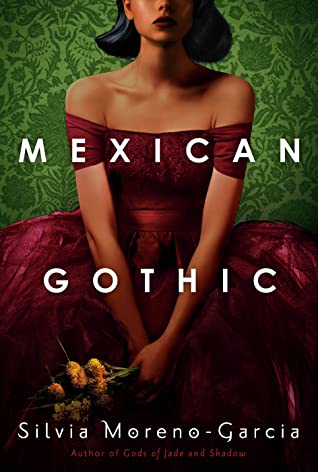
Mexican Gothic by Silvia Moreno-Garcia
Snippet from my review: This eerie quality was complemented by the descriptive quality of Moreno-Garcia’s writing. However, Moreno-Garcia spent a lot of time weaving the atmosphere of High Place, and she nearly forgot about the story. Moreno-Garcia refused to rush the story, hence its sluggish start, which can impair one’s appreciation of the story. It took the story some time to percolate, but once it took off, the plot turned into an explosive action.

The House in the Cerulean Sea by TJ Klune
Snippet from my review: The crux of it is that society is not always willing to embrace our differences. The things that make us unique – the color of our skin, our sexuality, or our birthmark – are reduced into subjects of gossip, of debates. Worse, it becomes the subject of hatred. Society pushes us out because it cannot fit us into a box, just like the denizens of the neighboring village. Despite being paid by the government for their silence, the villagers wanted to kick out the children because they fear them and what they can do. As has been underscored repeatedly in the novel, people fear what they do not understand. Their fear snowballed into deceit.

The Hacienda by Isabel Cañas
Snippet from my review: Horror was the prevailing theme as darkness enveloped the story; without any preamble, Cañas throws the reader immediately into the heart of the action. The horror element of the novel was quite graphic. Nevertheless, this aspect of the novel brought out some of the best qualities of Cañas’ writing. Her writing was key in the crafting of an atmospheric read. The horror, turmoil, and prevailing attitudes of the period were vividly captured. This amplifies the sense of paranoia and dread that were swirling around the story. The hacienda also came alive with Cañas’ descriptive writing. She was sublime both in situating the readers in the mind of Beatriz and transporting the readers to the vast grounds of Hacienda San Isidro. These two elements complemented each other.

The Aunt Who Wouldn’t Die by Shirshendu Mukhopadhyay
Snippet from my review: Following her husband’s death, Aunt Pishima was reduced to a virtual prisoner, confined to her room, denied joy, and stripped of her social identity. Aunt Pishima was reduced to a virtual prisoner, a specter left to roam the four corners of her room: “There was nothing for her to savour in her life, no joy.” Mukhopadhyay uses her character to represent all widows bound by the strictures of Hindu tradition. Because of their inability to retain their husbands’ souls, widows, even child and adolescent ones, are forbidden to remarry. Widows are forced into austerity, excluded from religious and social life, and forgotten by both their own and their husband’s families. They are forced to hide in the house and removed their jewelry while donning the color of mourning. Widowers, on the other hand, are free to remarry.
 The Pine-Scented Chronicles
Read House in the Cerulean while Rebecca is on my TBR
LikeLike
Rebecca is on my list and I like the sound of the aunt who wouldn’t die
LikeLike