
Happy Tuesday, everyone! As it is Tuesday, it is time for a Top Ten Tuesday update. Top Ten Tuesday is an original blog meme created by The Broke and the Bookish and is currently hosted by That Artsy Reader Girl.
This week’s given topic: My Favorite Books by My Favorite Authors


Title: My Name is Red
Author: Orhan Pamuk
Translator (from Turkish): Erdağ M. Göknar
Publisher: Faber and Faber
Publishing Date: 2001 (1998)
Number of Pages: 666
Genre: Historical, Literary
Snippet from my review:
All of these narrative elements—life, death, love, faith, politics, and art—are seamlessly and masterfully woven together. Pamuk crafts a richly layered and evocative literary masterpiece that subtly and astutely illuminates the identity crisis experienced by the Ottomans—a crisis that continues to echo in modern Turkey. Art and its intersection with religion become the crucible through which Pamuk examines the West’s looming influence on the East. This central theme intersects with others: mortality, desire, autonomy, and ideology. My Name is Red is also a cautionary tale about the dangers of extremism and fundamentalism. Just as art can elevate and preserve beauty, it also holds the power to destroy. At once a murder mystery, philosophical reflection, love story, and historical narrative, My Name is Red stands as a literary tour de force from a master wordsmith.
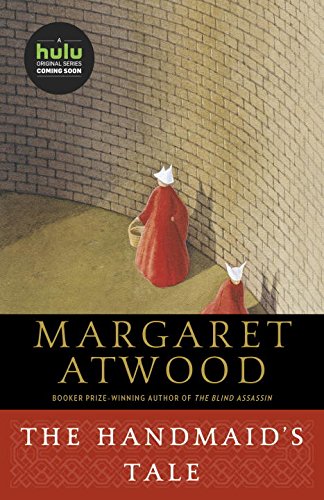
Title: The Handmaid’s Tale
Author: Margaret Atwood
Publisher: Anchor Books
Publishing Date: 2017
Number of Pages: 295 pages
Genre: Dystopian, Satirical, Speculative Fiction
Snippet from my review:
The true gem in the story is Margaret Atwood’s writing she told the story as it is without it going awry. The storytelling is packed with heavy punches but it was not overbearing and overwhelming. It is straightforward and the reader can immediately distinguish what the story is about without having to exert very much effort. The writing wasn’t poetic put it possesses a certain ring to it that makes it engaging from the start until the end. It is also filled with prophetic but wonderful quotes.

Title: Midnight’s Children
Author: Salman Rushdie
Publisher: Penguin Books
Publishing Date: 1991
Number of Pages: 533 pages
Genre: Historical Fiction, Magical Realism
Snippet from my review:
Midnight Children’s complexity is what makes it a worthwhile read. As one digs deeper, the initial intimidation one felt melts because one gets engrossed with the events that gripped India. The book’s rigorous depiction of the infancy of India, including its partition, is one of the numerous achievements of the book. Rushdie is relentless in his indoctrination of his readers with a very important phase of Indian history. Indeed, his mastery of literature and writing is in full display in the book.

Title: The House of the Spirits
Author: Isabel Allende
Translator (from Spanish): Magda Bogin
Publisher: Everyman’s Library
Publishing Date: 2005
Number of Pages: 488
Genre: Family Saga, Magical Realism
Snippet from my review:
The House of the Spirits is a great and captivating read. It has the right mixture of mature themes and multi-faceted characters. Allende’s writing prowess was also showcased from the start until the end. Her vivid imagery greatly helped in my appreciation of the story. She was so good at it that even the grotesqueries seemed lyrical. Thankfully, the magical realism aspect of the novel wasn’t as overwhelming as the other works I have previously read. Most importantly, the message at the end was remarkably eked out from the distorted pieces of the family’s past.

Title: One Hundred Years of Solitude
Author: Gabriel Garcia Marquez
Translator (from Spanish): Gregory Rabassa
Publisher: Harper Perennial Modern Classic
Publishing Date: 2006
Number of Pages: 415 pages
Genre: Historical, Romance, Magical Realism
Snippet from my review:
The parallels between the history of Macondo and the history of Latin America are too ostentatious not to notice. The story of Macondo is a subtle reflection of the history and culture of Latin America. These are represented carefully through metaphors that abound in the narrative. In a manner of speaking, the narrative is a crossroad where the historic meets the fantastic. In this collision of history and myths, the Buendias are haunted by different ghosts. These ghosts of the past are allusions to how the past shaped Macondo’s future.

Title: Flights
Author: Olga Tokarczuk
Translator (from Polish): Jennifer Croft
Publisher: Riverhead Books
Publishing Date: 2018
Number of Pages: 403
Genre: Philosophical, Literary
Snippet from my review:
Flights is a literary labyrinth that tackled a plethora of subjects. It is a well of information, opinions, and thoughts. It is a meditative and insightful look at several facets of our contemporary lives. Ambitious, innovative, imaginative, and, at times, quirky, it captured everything that Tokarczuk’s prose was capable of, and then some more. Incorporating singular thoughts, stories, observations, and commentaries, Flights is a genre-bending literary masterpiece that refuses to be confined in any specific box. In challenging the norms, Tokarczuk wrote a discursive literary piece that expounded on our desire to be in perpetual motion while at the same time providing a tapestry that flourished with evocative details of science, politics, ethics, and philosophy. Flights is certainly not for the faint of heart but it is nevertheless a stellar literary experience that ruminated on a life that is always on the go.

Title: The Melancholy of Resistance
Author: László Krasznahorkai
Translator (from Hungarian): George Szirtes
Publisher: New Directions
Publishing Date: 2000 (1989)
Number of Pages: 314
Genre: Historical, Dystopian, Literary
Snippet from my review:
An evocative political allegory. A scathing social commentary. An immersive historical meditation. A propulsive satire. All of these facets underscore the multilayered complexity of The Melancholy of Resistance. Building upon the achievements of his debut novel, Krasznahorkai paints a vivid portrait of a town poised on the brink of physical and moral collapse. Ominous signs abound. The descent into pandemonium feels inevitable. The absurd presses uncomfortably close. A circus. A dead whale. Reclusive intellectuals. A dreamer. A domineering reformer. All converge in a desolate Hungarian town, participating in what feels like a fevered apocalyptic vision. The Melancholy of Resistance stands as a searing critique of humanity’s insatiable desire for power and control. Krasznahorkai masterfully dramatizes the tension between order and chaos, revealing the fragility of human constructs. The Melancholy of Resistance ultimately serves as a testament to his mastery of apocalyptic imagination.
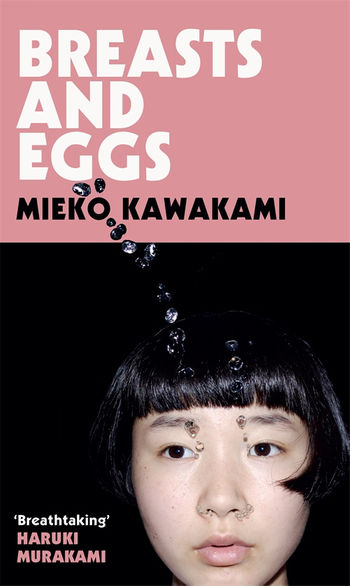
Title: Breasts and Eggs
Author: Mieko Kawakami
Translators (from Japanese): Sam Bett and David Boyd
Publisher: Picador
Publishing Date: 2020
Number of Pages: 430
Genre: Literary Fiction
Snippet from my review:
Breast and Eggs was a realistic prognosis of the plights of women in contemporary Japan. However, it does not limit itself to local spectators for it tackled subject and themes that resonate on a universal scale. It expounded on complex subjects such as bodily autonomy, asexuality, conformity, and single parenthood in a patriarchal society. It vividly illustrated how misogyny and poverty adversely affects the female body. It was never perfect. The translation failed to demonstrate the nuances of language. Some discourses came across as ephemeral. But then again, no work is truly perfect. What Kawakami has demonstrated was her ability both as a storyteller and a social critic. She has certainly proven herself as an exciting literary voice on the rise.
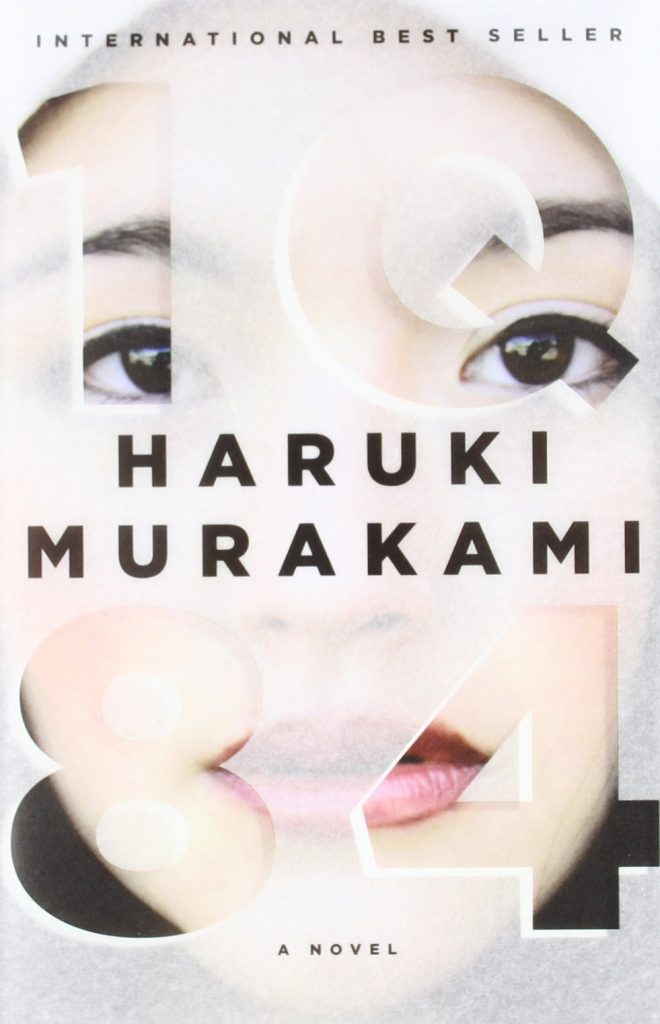
Title: 1Q84
Author: Haruki Murakami
Translators (from Japanese): Jay Rubin and Philip Gabriel
Publisher: Alfred A. Knopf
Publishing Date: 2011
Number of Pages: 925 pages
Genre: Magical Realism, Mystery, Romance
Snippet from my review:
Shifting realities and parallel worlds/dimensions are plot devices that are very common in Haruki Murakami’s works. These are elements that Murakami has mastered, turning it into a skill in his vast literary repertoire. 1Q84 echoed these elements. Whilst alternate worlds in previous Murakami works like The Wind-Up Bird Chronicles and Sputnik Sweetheart are places where the male protagonist searches for the female protagonist, 1Q84’s alternate dimension is concerned more on the possibilities of being “irretrievably lost”, a phrase that is repeatedly used by the characters. Time, hence, is a key element in the novel.

Title: Human Acts
Author: Han Kang
Translator (from Korean): Deborah Smith
Publisher: Portobello Books
Publishing Date: 2016
Number of Pages: 224
Genre: Literary, Historical
Snippet from my review:
But whilst Human Acts is no perfect masterpiece, it gave a visceral and luminous experience. In seven heartbreaking chapters and seven distinct characters, Kang delivered a literary masterpiece that evoked the very same emotion she felt seeing the picture of a mutilated girl, one of many victims of the flourish of blood and barbarity. She reminded her readers of the fragility of our human spirits. Kang powerfully described the feeling of being shot; of the moment the bullet enters then exits the body; of how, in between the egress and the ingress, the bullet shatters something tender in us in slow, painful motion. She trudged the thin line of indifference to deliver a work where emotions spring eternal, evoking a collective sense of humanity, not once, not twice but seven times.

