Happy Wednesday, everyone! Woah! Just like that, we are already in the last week of the fifth month of the year. I hope the year has been kind and great to everyone. I know life isn’t a walk in the park, but it is my fervent prayer that everyone’s year is going well. Regardless, I hope the rest of the workweek goes smoothly.
That said, the middle of the week also brings a fresh WWW Wednesday update. WWW Wednesday is a bookish meme hosted originally by SAM@TAKING ON A WORLD OF WORDS.
The mechanics for WWW Wednesday are quite simple: you just have to answer three questions:
- What are you currently reading?
- What have you finished reading?
- What will you read next?

What are you currently reading?

It’s already the middle of the week, which means we have only two more days until the weekend. I hope everyone makes it through the workweek. Anyway, my 2026 reading journey is going as planned. After spending the first two months of the year reading works by Latin American and Caribbean writers, I am now in the midst of a European literary adventure. While I had not originally planned to embark on a journey across European literature this early in the year, realizing that I had listed several works by European writers in my reading challenges prompted me to pivot toward them in March. Because of the number of European works in my reading challenges, I am extending the journey into this month. I believe this is the first time I have read works of European literature for three consecutive months. This shift has reintroduced me to familiar names while also introducing me to writers whose oeuvres I have yet to explore. My current read takes me back to a familiar name after reading a couple of works by writers who were new to me.
It was must-read lists that first introduced me to Karl Ove Knausgård, although it was only during the pandemic that I started taking notice of the Norwegian writer. I kept encountering his series of autobiographical novels, Min Kamp (My Struggle). However, the first novel of his that I read was The Wolves of Eternity (2022), the book that turned my attention toward him and his oeuvre. For the third consecutive year, I am reading one of Knausgård’s novels. Interestingly, The Wolves of Eternity is the sequel to my current read, The Morning Star. Originally published in 2020 as Morgenstjernen, The Morning Star is Knausgård’s first major novel since his My Struggle series. The novel is primarily set in the city of Bergen, the second-largest city in Norway, and unfolds over two days in late August. The novel’s chapters are narrated by different characters who are introduced as the story progresses. Their lives are connected by the appearance of a new star in the sky.
The first chapter is narrated by Arne, a university professor married to Tove, an artist. Tove has been grappling with manic episodes, and her condition has been escalating for days. Later that day, Arne drinks whisky with Egil, a former documentary filmmaker. As he drives away and encounters crabs crawling across the road, a massive blazing light rises over the ridge. The second chapter introduces Kathrine, a priest in the Church of Norway. She has just arrived home after attending a seminar in Oslo. During the flight home, she is seized by the realization that she does not want to return to her husband, Gaute, and their children. When she tells her husband that she wants a divorce, he accuses her of being unfaithful. She neither confirms nor denies the allegation. She is then invited to conduct the funeral rites for Kristian Hadeland, who has no known relatives. Kathrine recognizes him as the same man who spoke to her at the airport. Interestingly, his death had been registered ten days earlier.
We also meet Emil, a young nursery school worker and aspiring musician. Then there is nineteen-year-old Iselin, a university dropout who works at a supermarket checkout. There seems to be very little connecting the characters. They come from different walks of life. This is deliberate, however, as Knausgård wants to explore how different individuals perceive a single event. So far, The Morning Star has been an interesting read. I am still on Day One, and the characters are already piquing my interest. I will be sharing more of my impressions in this week’s First Impression Friday.
What have you finished reading?
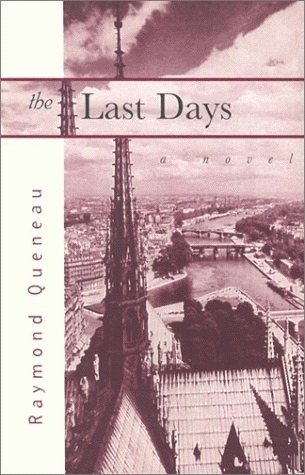
Interestingly, in 2025, I did not read any book originally written in French. I was surprised by this realization. It was unintentional, but it happened nonetheless. To make up for this, I included several works by French writers in my ongoing reading challenges. Among the books in these challenges is The Last Days by Raymond Queneau. It was through an online bookseller that I first encountered Queneau during the height of the COVID-19 pandemic. I came across his novel The Last Days, which immediately piqued my interest and prompted me to secure a copy. However, it suffered the same fate as most of my books: it was left to gather dust on my bookshelf. To redress this—and partly because I learned that Queneau is an influential name in French literary circles—I included the book in my 2026 Top 26 Reading List.
Originally published in 1936 as Les Derniers Jours, the novel transports us to 1920s Paris and introduces Vincent Tuquedenne, the novel’s main character. He is from the countryside and was a philosophy student at the Sorbonne. Despite his intellect, he was not entirely comfortable in the big city. Still, Tuquedenne drifted through life aimlessly and was bereft of any clear ambition. Technically, he did have an ambition: he wanted to learn languages and read even more books. He was guided by the belief that he could read and study his way through his difficulties and into life itself. This included mustering the courage to approach attractive women and even to touch and be touched. However, life in Paris proved more challenging than he had initially thought. Instead, he spent his nights walking the streets alone. Interestingly, he studied not merely to earn a degree but to gain wisdom. Ironically, despite studying religiously, his grades remained poor. Being socially inept, he merely tagged along with his fellow students to the cafés of Paris; interestingly, we encounter them more often in these cafés than at the école. In the café where they gather and drink, there is a trio of older men and a waiter named Alfred. One of the older men is one of their teachers. For him, visiting the café daily has become part of a ritual. It seems that they have discovered the secret to reversing aging: they have learned to celebrate the passing of time. Time is spent through small crimes, small games, withdrawal, and inner retribution for the past. Still, they have learned to embrace their fate. Death is inevitable; this is where the title derives its meaning. This heightened awareness of endings animates the characters as they weave through each other’s lives. For Tuquedenne and his peers, this realization makes them want to avoid studying and instead pursue a hedonistic life, including concocting swindles and betting on horses. After all, one of the older men is a crook who devises schemes to fleece people and acquire the money needed to keep his mistress interested. Meanwhile, one of the young men is tender yet envious of his more explosive companions. Another disappears overseas in an attempt to build a new life for himself. Another prepares to enter the army, while another tries to secure a job as an assistant to the crook. Women flit in and out of some of their lives but never seem to remain for long.
The Last Days is told through short, episodic chapters that span several years. As the story progresses, it emerges as a novel about generations occupying the same space. It captures the concerns of each generation and what they contribute to one another. Time, then, plays a seminal role. Its passage adversely impacts the lives of the characters. Before one realizes it, one has transformed from an angsty young adult into a pensive old man. Time takes its natural course and remains irreversible. The dreams and schemes of the characters run parallel to and intersect across generations. This adds depth to the novel, imbuing it with existential and philosophical layers. Because of its fragmented structure, the story can occasionally feel disjointed. Some episodes are poignant and humorous, while others are less remarkable. Still, The Last Days fascinates through its vivid portrait of Paris in the 1920s, particularly its depiction of Parisian student and café life, making it a riveting read. And yes, it is partly autobiographical.
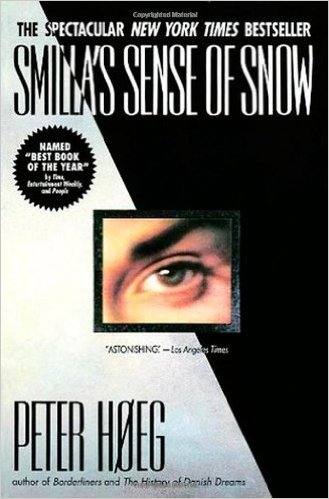
From one unfamiliar writer to another, my venture into the vast European literary landscape next takes me into unfamiliar territory. I admit that my foray into Danish literature is rather limited. In fact, the only book I have read by a Danish writer is Tove Ditlevsen’s The Copenhagen Trilogy, which is a memoir. This gives Peter Høeg’s Smilla’s Sense of Snow a unique position in my literary journey. It is the first novel I have read that was originally written in Danish. It was must-read lists that first introduced me to the Danish writer. However, despite repeated encounters with his novel, I kept holding back from securing a copy of one of his books. This year, however, I finally took the leap of faith and acquired a copy of the novel. While I had no plans to read it immediately, I eventually changed my mind. After all, it is also listed among the 1,001 Books You Must Read Before You Die.
Originally published in 1992 as Frøken Smillas fornemmelse for sne, Smilla’s Sense of Snow (or Miss Smilla’s Feeling for Snow) catapulted Høeg to global literary recognition. The titular Smilla is Smilla Qaaviqaaq Jaspersen, a thirty-seven-year-old woman born to an Inuk hunter mother and a Danish anesthesiologist father. Despite being raised in Greenland, she now resides alone in Copenhagen, working as a scientist. She feels out of place in the city. In search of companionship, she befriends six-year-old Isaiah, the neglected son of her alcoholic neighbor. Like Smilla, Isaiah is Inuit and originally from Greenland. Interestingly, Smilla loathes children in general, but Isaiah’s circumstances somehow earn him a soft spot in her heart. Her life unravels one day following a shocking event. Just before Christmastime, she arrives home to find a boy lying face down in the snow. Standing nearby is a mechanic named Peter Føjl. The boy turns out to be Isaiah Christensen. Isaiah’s sudden death is immediately ruled by the police to be an accidental fall from the roof of an adjacent warehouse while playing. However, Smilla is unconvinced by this conclusion. Isaiah suffered from acrophobia. Furthermore, the tracks he left on the snowy roof convince her that it was not an accident. Isaiah may have deliberately jumped from the roof, perhaps to evade an attacker. Smilla, after all, is a leading authority on snow and ice who has undertaken nine expeditions to her homeland. She has also published highly esteemed scholarly articles on glaciology. Smilla approaches the authorities to raise her suspicions. Yet when she asks them to open a homicide investigation, an expert from the fraud division is instead dispatched to the crime scene. Because the matter is deeply personal, Smilla commences her own investigation. As she browses through the files belonging to Isaiah’s mother, Juliane, Smilla discovers a connection between the family and the Cryolite Corporation, a Danish company involved in mining natural resources in Greenland. Apparently, Isaiah’s father was killed during a mining expedition in Greenland. This discovery draws Smilla into a complex web of lies and sinister secrets surrounding Isaiah’s family. The corporation has been providing Juliane with a widow’s pension, but this barely scratches the surface. Cryolite also has ties to an Arctic expedition.
Suspense reverberates throughout the narrative as Smilla races against time to uncover what truly happened to Isaiah. The deeper she digs, the more the evidence points toward the Cryolite Corporation and the dark shared history of Denmark and Greenland. There are also overtones of romance as Smilla enlists Føjl’s help. Her scientific expertise is complemented by his practical skills. However, the more they scour corporate documents, the more powerful enemies emerge, intent on preventing them from uncovering deeply buried secrets. Smilla’s journey takes her from the capital to the icy realms of Greenland. With each revelation, she draws closer to the heart of the conspiracy. This means that danger multiplies as the truth remains obscured. The mystery and suspense belie the deeper themes the novel explores. Colonial repression and identity loss echo throughout the narrative. This becomes especially apparent in Smilla, whose mixed heritage places her in a unique position as a bridge between two cultures. Smilla’s Sense of Snow, then, does not reduce itself to a mere murder mystery. It is a nuanced exploration of identity, oppression, and resilience, juxtaposed with societal neglect. Smilla’s Sense of Snow is a lush novel, worthy of its recognition.
What will you read next?