Happy Wednesday, everyone! Woah! Just like that, we are already in the sixth month of the year. I hope the year has been kind and great to everyone. I know life isn’t a walk in the park, but it is my fervent prayer that everyone’s year is going well. Regardless, I hope the rest of the workweek goes smoothly.
That said, the middle of the week also brings a fresh WWW Wednesday update. WWW Wednesday is a bookish meme hosted originally by SAM@TAKING ON A WORLD OF WORDS.
The mechanics for WWW Wednesday are quite simple: you just have to answer three questions:
- What are you currently reading?
- What have you finished reading?
- What will you read next?

What are you currently reading?
It’s already the middle of the week, which means we have only two more days until the weekend. I hope everyone makes it through the workweek. Anyway, my 2026 reading journey is going as planned. After spending the first two months of the year reading works by Latin American and Caribbean writers, I am now in the midst of a European literary adventure. While I had not originally planned to embark on a journey through European literature this early in the year, realizing that I had listed several works by European writers in my reading challenges prompted me to pivot toward them in March. Because of the number of European works included in these challenges, I am extending the journey slightly into this month. I just need to finish the books in my reading challenges, which is ironic. The reason I started a European Literature Month was to read the books in these challenges, and yet I am barely done with them.
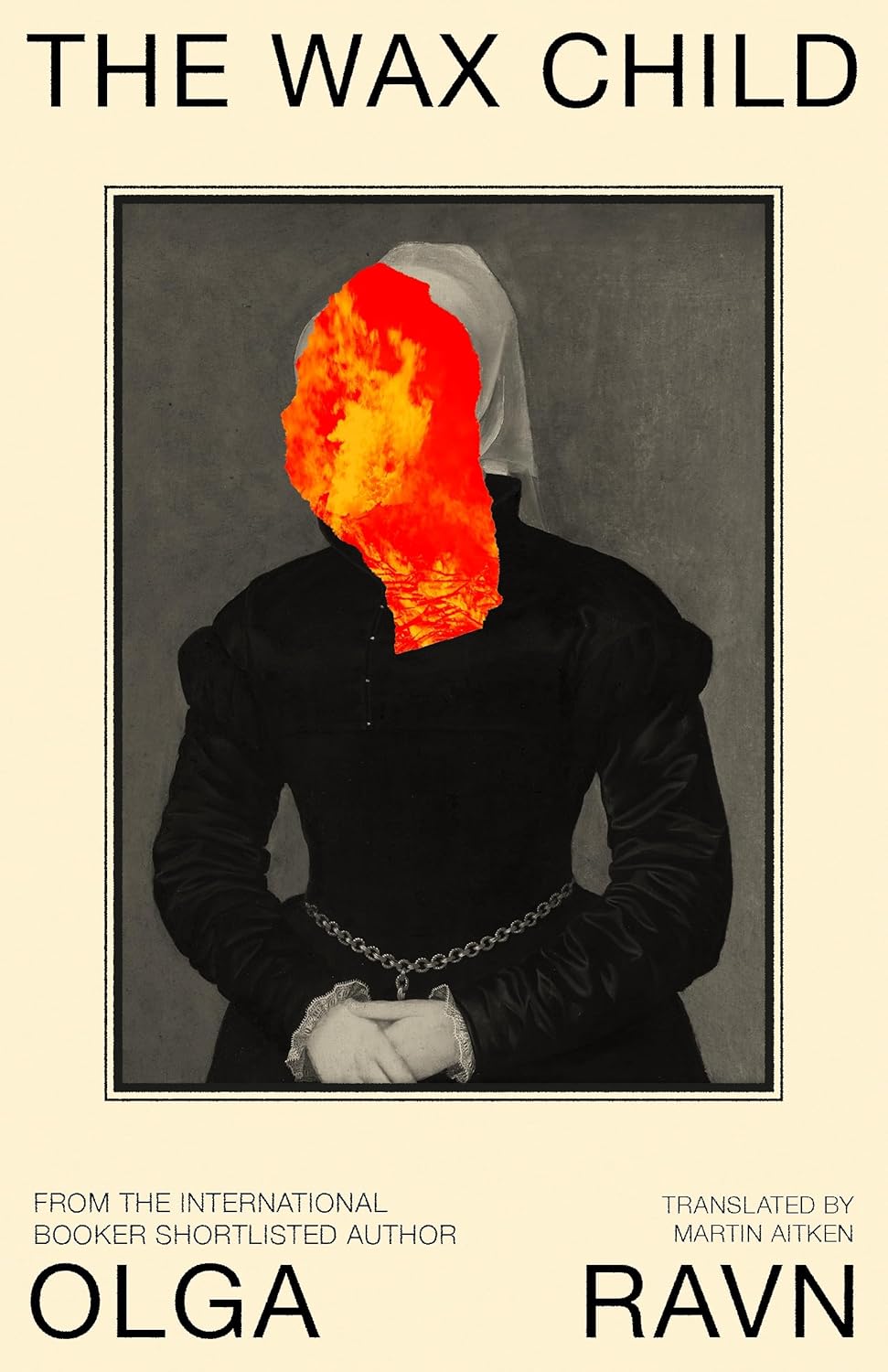
My current read, however, is not part of any of these reading challenges. Had it not been for the International Booker Prize, I would not have considered securing a copy of Olga Ravn’s latest translated novel, The Wax Child. It was actually another International Booker Prize-nominated book by Ravn that first introduced me to the Danish writer. Originally published in 2023 as Voksbarnet, The Wax Child is apparently based on real events. Back in the seventeenth century, witch hunts were prevalent; the most famous of them all, the Salem witch trials, was also taking place across the Atlantic. I am actually surprised by the novel’s premise. Still, it is a promising one. After all, it is also a work of historical fiction, which is just right up my alley. This makes me look forward to the novel. However, I have yet to start reading the novel. I do not finish it on or before Friday, I will share more of my impressions in this week’s First Impression Friday.
What have you finished reading?
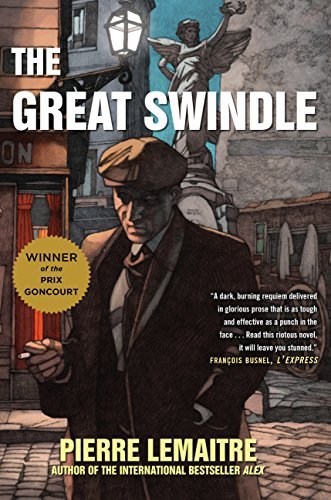
Interestingly, in 2025, I have not read any book originally written in French. I was surprised by this realization. It was unintentional, but it happened nonetheless. To remedy this, I included several works by French writers in my ongoing reading challenges. Among the books on these lists is The Great Swindle by Pierre Lemaitre. It was through an online bookseller that I first encountered the French writer during the height of the COVID-19 pandemic. I came across his novel The Great Swindle, and it immediately piqued my interest, prompting me to secure a copy. Besides, the seal indicating that the book had won the Prix Goncourt was a bonus. I have always had a soft spot for books bearing such seals. For me, these recognitions elevate them. I imagine many readers can relate, although for some, it is the title or the cover that first captures their attention; I am guilty of both as well.
Anyway, The Great Swindle was originally published in 2013 as Au revoir là-haut. The novel takes us to post–World War I France. It is interesting to note that most of the historical fiction I have read this year deals with the First World War. This marks a departure from the historical novels I usually read, which tend to center on the Second World War. I admit that my understanding of the First World War is quite limited. The story begins on the French-German front as the Great War is about to end. On a fateful day in November, the lives of enlisted men Albert Maillard and Édouard Péricourt, along with their commanding officer, Lieutenant Henri d’Aulnay-Pradelle, become tragically intertwined. Ambitious and hungry for promotion, the lieutenant plots the deaths of two of his subordinates in order to incite the rest of the troops under his command. Amid the ensuing outrage, he orchestrates a victory against the German forces—a last-ditch effort on his part, as news of an armistice has already reached him. Albert and Édouard survive, although the latter is severely injured. We meet them again after the war. They have been reduced to two traumatized veterans struggling to adjust to civilian life. Grotesquely disfigured, Édouard grapples with his identity and self-worth. In a society that idolizes fallen soldiers but shuns survivors, the two men have become forgotten. Nevertheless, they become close friends, seemingly bonded by the trauma of their experiences. Albert looks after Édouard, especially as a morphine addiction exacerbates Édouard’s psychological struggles. Albert, meanwhile, harbors an overwhelming sense of resentment toward Pradelle. The two friends then hatch a plan involving the creation of fraudulent war memorials for invented war heroes, collecting deposits for projects that do not exist. They consider it a form of poetic justice. Pradelle, on the other hand, devises a fraudulent scheme of his own. He manages to woo Madeleine, Édouard’s sister, who believes her brother to be dead. They marry, although he sees her primarily as an opportunity to climb the socio-political ladder. Her father is rich and influential—a springboard for the scheming and ambitious Pradelle. He also has connections with Pradelle’s generals.
As such, the title is fitting. Several forms of swindling and deception are woven into the story. The novel begins with one such act, and it irreversibly alters the fate of the three men, some more tragically than others. Lemaitre evocatively captures the trauma—both physical and psychological—left behind by war. This has become familiar territory for me, even reminding me of Pat Barker’s Regeneration and the other World War I novels I have read this year. As always, it is a difficult read because it deals with a heavy subject. Still, the novel captures the power of friendship and loyalty while illustrating humanity’s darker impulses in the face of trauma. It is, in many ways, a quintessential struggle between good and evil. Apparently, the novel is based on actual events. Overall, The Great Swindle is a thought-provoking meditation on the human condition, grounded in the timeless subject of war.

By coincidence, my venture into the works of European writers has been dominated by French and British authors. I only recently realized this, much to my surprise. Apparently, I have included several works by British writers in my ongoing reading challenges. This realization came when I noticed that I had been lagging behind in these challenges. That brings me to the second book I finished last week: Nostromo by Joseph Conrad. It was through various must-read lists that I was first introduced to the British writer. I would later learn that he was born Józef Teodor Konrad Korzeniowski in what is now Ukraine. He was the only child of Apollo Korzeniowski, a writer, translator, political activist, and would-be revolutionary. Conrad was orphaned while still in his early teens; both of his parents died of tuberculosis. As a young boy, he read the works of Sir Walter Scott, James Fenimore Cooper, Charles Dickens, and William Makepeace Thackeray in Polish and French.
Interestingly, Conrad only began writing in English when he was twenty. He would go on to become one of the most renowned novelists in the English language, with many of his works becoming staples of must-read lists. Among them is Nostromo: A Tale of the Seaboard. Originally published in monthly installments in T.P.’s Weekly in 1904, the novel transports readers to the fictitious South American republic of Costaguana. Several commentators have noted its geographical similarity to Colombia. Costaguana’s history has been marked by tyranny, revolution, and warfare. The novel then takes us to the port city of Sulaco, located in the Occidental Province. A local man of English descent, Charles Gould, has taken over his father’s silver mine near the city. Gould has grown weary of the rampant corruption and political volatility that permeate the region, prompting him to use his wealth to support the political career of Don Vicente Ribiera. With the help of his English-born wife, Emilia Gould, he reopens the mine, which eventually becomes highly lucrative. As their wealth grows, so too does their influence within Costaguana’s political circles. They helped Ribiera secure an election to a five-year term as national leader. His regime initially appears promising. After a long succession of self-serving dictators who had brought ruin to the country, Ribiera succeeds in steering Costaguana toward a period of relative socio-economic and political stability. However, this stability does not last. The silver mine inspires a new wave of revolutions and ambitious warlords, among them the revolutionary forces led by General Montero, Ribiera’s former Minister of War. They eventually overthrow Ribiera, plunging the country into chaos. With the capital city captured, Montero’s men turn their attention toward Sulaco, prompting Gould to panic. He refuses to allow his silver mine to become a spoil of war. He then enlists the help of the titular Nostromo, the trusted Capataz de Cargadores (Head Longshoreman) of Sulaco. An Italian sailor named Giovanni Battista Fidanza, Nostromo is entrusted by Gould with the daunting task of smuggling the mine’s most recent shipment of silver ingots offshore to safety amid the civil unrest.
Nostromo serves as the foreman of the Oceanic Steam Navigation Company (OSN), whose workers oversee activity along the Sulaco shoreline. This position earns him widespread respect throughout the city. He is also renowned for his bravery and boldness. These qualities allow him to rise through the ranks and become the trusted intermediary for virtually every powerful figure in Sulaco. Accompanied by the young journalist Martin Découd, Nostromo sets about implementing the plan. However, the lighter carrying the silver is intercepted at night in the waters off Sulaco by a transport carrying the invading revolutionary forces. Nostromo and Découd manage to save the silver by running the lighter ashore on Great Isabel. This development prompts a change of plan. Leaving Découd to guard the silver, Nostromo makes his way back to Sulaco to inform Gould of what has transpired. When Costaguana finally begins to stabilize, Nostromo becomes wealthy and influential. He attains the privileges that had initially been denied to him. Still, he feels slighted and exploited.
The novel was inspired by a story Conrad heard when he was seventeen while serving aboard a ship in the Gulf of Mexico. The story involved a man who had single-handedly stolen “a whole lighterful of silver.” Conrad initially dismissed the tale but was reminded of it nearly three decades later when he came across a travelogue in a used-book shop. The author recounted having worked for years aboard a schooner whose captain claimed to be the very thief who had stolen the silver. Nostromo is often cited as Conrad’s magnum opus, or at least as one of his finest works. Within its pages, the novel explores the legacies of colonialism and the impact of capitalism and politics. Moral idealism and material interests clash throughout the story, with moral corruption serving as a recurring theme. Certainly, Nostromo is a complex literary work—a profound meditation on history and the human condition.
What will you read next?