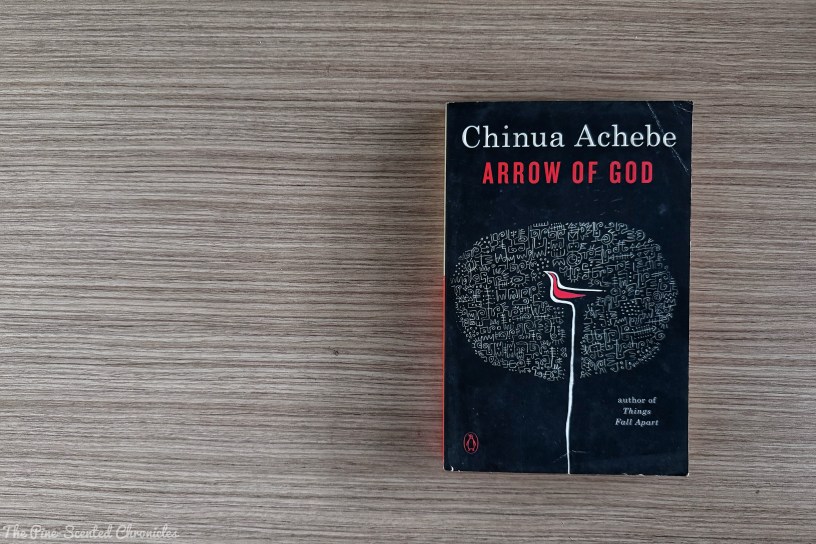
The African Trilogy Part III
Nigerian literature has certainly come a long way. Like most ancient literatures of the world, the earliest form of Nigerian literature traces its origins to oral traditions that were handed down from one generation to another. The various communities and tribes comprising modern Nigeria, including the Igbo, Yoruba, Hausa, and Nupe, were able to preserve their cultural values, history, and social norms through folktales, proverbs, songs, and legends. These early oral traditions laid the foundation for Nigeria’s eventual written literature, which emphasized communal memory, moral lessons, and cultural identity. It is also this diversity that provides Nigerian literature with a colorful tapestry of voices and perspectives. With the arrival of colonialism, Western education introduced new literary forms. Colonialism also introduced the English language, which played an instrumental role in the meteoric rise of Nigerian literature to global recognition during the twentieth century.
Among the first modern Nigerian authors was Amos Tutuola (1920–1997). His 1952 novel, The Palm-Wine Drinkard, catapulted Nigerian literature to global recognition and remains one of the most enduring works of contemporary Nigerian literature. He was succeeded by equally accomplished writers such as Cyprian Ekwensi (1921–2007), Flora Nwapa (1931–1993), and Buchi Emecheta (1944–2017). Their evocative portraits of Nigeria and its diverse voices were encapsulated in widely recognized works such as Ekwensi’s Jagua Nana (1961), Nwapa’s Efuru (1966), and Emecheta’s The Joys of Motherhood (1979). Further underscoring Nigerian literature’s place on the global literary map, the country also produced a Nobel Prize laureate in literature in Wole Soyinka, the first Black African to receive the world’s most prestigious literary award. These highly acclaimed writers passed the proverbial torch to succeeding generations, including Ben Okri, Sefi Atta, Irenosen Okojie, and Chimamanda Ngozi Adichie.
A venture into contemporary Nigerian literature, however, would not be complete without encountering Chinua Achebe. Widely regarded as the father of modern African literature, Achebe’s works placed Nigeria—and, consequently, Africa—on the global literary map. Throughout his distinguished career, he earned numerous accolades from around the world. This legacy of excellence began in 1958 with the publication of his debut novel, Things Fall Apart. Exploring the impact of British colonialism on Igbo society, the novel was an immediate literary sensation, earning Achebe widespread critical acclaim. It also propelled him to national and eventually international literary stardom. Things Fall Apart is widely recognized as a milestone of African literature and remains a staple of the African literary canon. It also became the first novel in a trilogy collectively known as The African Trilogy. Although the three novels do not share the same characters, they are thematically interconnected.
When was it ever heard that a child was scalded by the piece of yam its own mother put in its palm? What man would send his son with a potsherd to bring fire from a neighbor’s hut and then unleash rain on him? Whoever sent his son up the palm to gather nuts and then took an axe and felled the tree?
Chinua Achebe, Arrow of God
Concluding the highly acclaimed African Trilogy is Arrow of God. Originally published in 1964, the novel unfolds in Okperi and the six Igbo villages that comprise Umuaro in eastern colonial Nigeria. The story is set in the 1920s, when British colonial rule was transitioning from direct to indirect rule. At the beginning of the novel, a bitter feud between Umuaro and Okperi is escalating. The inhabitants of the two communities stand on the brink of war over a disputed piece of land. Serving as the spiritual leader of Umuaro is Ezeulu, the High Priest of Ulu. Ulu is the ruling deity of the village, revered for bringing together six formerly warring villages to create a strong community that shares common values while preserving local traditions. As High Priest, Ezeulu wields immense influence over the villagers. However, his authority is increasingly threatened by various forces.
Among those challenging Ezeulu was Nwaka, an influential and affluent member of Umuaro. He openly advocated for war despite Ezeulu’s warnings. Nwaka also resented the High Priest’s dominance and influence over the community. Ignoring the counsel of the deity’s chosen representative, Nwaka continued to pursue armed conflict, even though it threatened the fragile peace between the two villages. The conflict came to an abrupt end through the intervention of Captain T. K. Winterbottom, referred to by the locals as “Wintabota.” Appointed by the British Crown as District Commissioner, he had spent fifteen years administering colonial Nigeria. Assisting him were his newly arrived subordinate, Clarke, and his steward, John Nwodika. After Ezeulu testified that Umuaro had no legitimate claim to the disputed land, Winterbottom awarded the territory to Okperi.
Despite the relative peace that followed, a new threat to Ezeulu’s authority soon emerged. The arrival of Christian missionaries gradually converted many of the villagers to the new religion. Persuading the locals that the worship of their traditional gods was both sinful and futile, the missionaries also established a church and a school. As Christianity gained ground in Umuaro, Ezeulu sent his third son, Oduche, to study under the missionaries led by John Goodcountry. He hoped that Oduche would learn as much as possible about the white man’s culture so that such knowledge could benefit their people. Instead, Oduche gradually became a zealous Christian. To demonstrate his conversion, he followed Goodcountry’s instruction to imprison the sacred python, the symbol of Idemili, inside a box. Although he failed to kill the python, his actions enraged Ezidemili, the High Priest of Idemili and guardian of the sacred serpent.
As Ezeulu became increasingly entangled with the colonial administration, the rift between him and Nwaka widened. Their rivalry developed into open hostility, particularly after the land dispute. Nwaka strengthened his position through his friendship with Ezidemili, who had long resented Ezeulu’s supremacy. They also found another ally in Edogo, Ezeulu’s eldest son. Edogo grew jealous of his younger brother Nwafo, who appeared destined to succeed their father as High Priest of Ulu. Meanwhile, many villagers became increasingly suspicious of Ezeulu’s willingness to cooperate with the British. He became even more isolated when Winterbottom attempted to appoint him as a warrant chief, a position designed to enforce British colonial policies.
Do you think it is the sound of the death-cry gurgling through blood that we want to hear? No, my friend, we do it because we have reached the very end of things and we know that neither a cock nor a goat nor even a bull will do. And our fathers have told us that it may even happen to an unfortunate generation that they are pushed beyond the end of things, and their back is broken and hung over a fire. When this happens they may sacrifice their own blood. This is what our sages meant when they said that a man who has nowhere else to put his hand for support puts it on his own knee.
Chinua Achebe, Arrow of God
As the concluding novel in The African Trilogy, Arrow of God vividly chronicles the transition from precolonial traditions, as first explored in Things Fall Apart, to the growing influence of Western ideals. Nigeria, like much of Africa, remained deeply rooted in tradition well into the early twentieth century despite decades of colonial rule. Achebe masterfully captures numerous aspects of Igbo culture and traditions, reflecting the heritage into which he was born. In particular, he illustrates the immense influence of deities and High Priests on communal life. High Priests such as Ezeulu serve as intermediaries between the gods and the people. Their authority over the villagers is often absolute. The villagers seek guidance, wisdom, and protection from their deities, believing that every aspect of life is ultimately governed by supernatural forces.
For this reason, Ezeulu views himself as an invincible arrow in the bow of his god—part man, part divine instrument. Proud and often stubborn, he remains determined to lead his people, even if doing so ultimately brings destruction. Arrow of God vividly portrays the central role that High Priests and spiritual leaders play in community life. They resolve disputes, oversee important festivals, and regulate the agricultural calendar, shaping the rhythm of communal existence. Achebe thus underscores how deeply many traditional societies are anchored in spiritual beliefs and in their adherence to a higher authority. As a character, Ezeulu emerges as remarkably complex. Like many leaders, he becomes the target of envy and resentment. His authority is challenged first by Nwaka, then by Ezidemili, and eventually by members of his own family. His downfall is further compounded by his inability to distinguish divine will from personal ambition, highlighting the tension between human pride and spiritual responsibility.
Within his household, Ezeulu governs with an iron fist, bordering on authoritarianism. His decision to send Oduche to the Christian school intensifies tensions within his family while simultaneously provoking distrust among his fellow villagers. Although he embodies traditional authority and spirituality, Ezeulu struggles to adapt to the rapid social and political changes surrounding him. Yet his predicament extends beyond Umuaro. Across Africa, spiritual leaders who once commanded immense influence gradually found their authority diminished. Growing dissatisfaction among those they led weakened their leadership. In addition to the challenges arising within his community and family, Ezeulu’s influence steadily declines because of external forces. The arrival of Christian missionaries, represented by John Goodcountry, places traditional religious leaders in an even more precarious position.
For those seeking but a comfortable living and a quiet occupation Nigeria is closed and will be closed until the earth has lost some of its deadly fertility and until the people live under something like sanitary conditions. But for those in search of a strenuous life, for those who can deal with men as others deal with material, who can grasp great situations, coax events, shape destinies and ride on the crest of the wave of time Nigeria is holding out her hands.
Chinua Achebe, Arrow of God
Historically, colonialism has often gone hand in hand with religious conversion. The missionaries encouraged the villagers to abandon their ancestral beliefs in favor of Christianity. In doing so, they sowed seeds of doubt that left many people questioning the foundations of their traditional faith. Spiritual leaders such as Ezeulu gradually lost their hold over their communities. For Ezeulu, these developments tested both his leadership and his faith. Although his intimate knowledge of his people initially gave him an advantage, he ultimately proved ill-equipped to respond to the profound transformations taking place around him. As he was pushed to the brink, the novel illustrates the delicate balance between personal authority and communal welfare. Many of Ezeulu’s decisions reveal his human fallibility, as he increasingly acts according to his own judgment rather than faithfully fulfilling his responsibilities as the spiritual guide of his people.
Ezeulu’s story serves as a microcosm of how traditional institutions were systematically dismantled by a convergence of internal and external forces. Beyond the missionaries, British colonialism posed the greatest threat to both Ezeulu and Umuaro. The expanding influence of colonial rule endangered not only traditional religious practices but also long-established customs and social structures. Achebe vividly weaves details of Igbo culture throughout the novel. He also highlights the exploitation of Nigerians under British colonial rule. In one memorable scene, a Nigerian plantation worker is whipped by his white employer. The British misunderstanding of Igbo customs becomes a recurring motif, exposing both their arrogance and their ignorance. Colonialism ushered in sweeping social changes, with Christianity serving as one of its most powerful instruments. For many villagers, the new religion offered hope and a renewed sense of purpose. Western education likewise accelerated these transformations. As traditional values became increasingly entangled with foreign influences, the people of Umuaro found themselves caught between two competing worlds.
Arrow of God perfectly concludes The African Trilogy, standing as one of Chinua Achebe’s most profound works. Capturing the intricacies of power, faith, and colonialism, it is a hallmark of Achebe’s oeuvre. Through Ezeulu’s tragic and seemingly inevitable downfall, Achebe illustrates how the collapse of traditional authority is shaped not only by the disruptive forces of colonialism but also by the flaws and limitations of those entrusted with preserving their communities. Rather than presenting colonialism as a simple conflict between two opposing cultures, Achebe reveals the complex interplay of ambition, pride, faith, and social change that transformed Igbo society. Rich in cultural detail and philosophical depth, Arrow of God remains a compelling meditation on leadership, identity, and the resilience of tradition in the face of irreversible change. More than six decades after its publication, the novel continues to resonate with readers as a timeless examination of how societies navigate periods of profound political, cultural, and spiritual upheaval.
A poor man might wander outside for years while his kinsmen scraped their meagre resources together; that was his penalty for lack of success in his life. But a great man who had toiled through two titles must be called indoors by those for whom he had toiled and for whom he left his riches.
Chinua Achebe, Arrow of God
Book Specs
Author: Chinua Achebe
Publisher: Penguin Books
Publishing Date: 2016 (1964)
No. of Pages: 230
Genre: Literary, Historical
Synopsis
When Things Fall Apart ends, colonial rule has been introduced to Umuofia, and the character of the nation and its values, freedoms, and religious and sociopolitical foundations have substantially and irrevocably been altered. Arrow of God, the second novel in Chinua Achebe’s The African Trilogy, moves the historical narrative forward. This time, the action revolves around Ezeulu, the headstrong chief priest of the god Ulu, which is worshipped by the six villages of Umuaro. The novel is a meditation on the nature, uses, and responsibility of power and leadership. Ezeulu finds that his authority is increasingly under threat from rivals within his nation and functionaries of the newly established British colonial government. Yet he sees himself as untouchable. He is forced, with tragic consequences, to reconcile conflicting impulses in his own nature – a need to serve the protecting deity of his Umuaro people; a desire to retain control over their religious observances; and a need to gain increased personal power by pushing his authority to the limits. He ultimately fails as he leads his people to their own destruction and, consequently, his personal tragedy arises. Arrow of God is an unforgettable portrayal of the loss of faith and the downfall of a man in a society forever altered by colonialism.
About the Author
To learn more about one of the most influential voices of African literature, Chinua Achebe, click here.

