
Wow—we are already halfway through the year! How time flies! With the first half behind us, I hope everyone is getting back on track. Global and personal tensions continue to disrupt our lives. Still, I sincerely hope these challenges will eventually be resolved. I hope this year has brought you blessings, good news, and answered prayers. I know living can be quite a challenge. Still, we march on. We move forward, even if we do so slowly and cautiously. We keep moving. Personally, life has been quite hectic and challenging, but I hope things start looking up. I also hope everyone is finding their footing. I wish everyone well on their individual journeys. For those whose goal is simply to move from one point to another, know that that is perfectly fine, too. I am proud of you and your resilience. In times like these, with so much turmoil surrounding us, silencing the noise can be a challenge. I hope 2026 will be kinder to you. Above all, I hope everyone stays healthy—in mind, body, and spirit.
My 2026 literary journey commenced with a two-month venture through Latin American and Caribbean literature. I then followed it with a foray into the works of European writers. I originally planned to stay there for two months, just enough time to complete all the works by European writers in my reading challenges. However, these books ultimately extended my literary adventure into a four-month journey. Instead, I spent the first two months reading works that were not part of those lists. I find this ironic because the main reason I started reading European writers so early in the year was that I usually reserve them for later in the year. The books included in my reading challenges were completed only in June. Nevertheless, I am glad I was finally able to conclude this journey. It was a memorable one. Without further ado, here is how my foray into the works of European writers—and my third month immersed in European literature—unfolded.
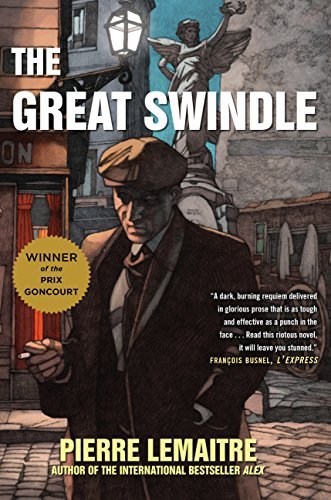
The Great Swindle by Pierre Lemaitre
Interestingly, in 2025, I did not read a single book originally written in French. It was unintentional, but it happened nonetheless. To redress this, I included several works by French writers in my ongoing reading challenges. Among these books was The Great Swindle by Pierre Lemaitre. Through an online bookseller, I discovered the French writer and his novel during the height of the COVID-19 pandemic. It immediately piqued my interest, prompting me to secure a copy. Besides, the seal indicating that the book had won the Prix Goncourt was an added bonus. The Great Swindle was originally published in 2013 as Au revoir là-haut. The novel takes readers to post–World War I France. The story begins on the French-German front, with the Great War drawing to a close. On a November day, the lives of enlisted men Albert Maillard and Édouard Péricourt, along with their commanding officer, Lieutenant Henri d’Aulnay-Pradelle, become tragically intertwined. Ambitious and hungry for promotion, the lieutenant orchestrates the deaths of two of his subordinates in an attempt to incite the rest of the troops under his command. It is a desperate last-ditch effort on his part, as he already knows that the armistice is imminent. Albert and Édouard survive, although the latter is left severely injured. After the war, they become two traumatized veterans struggling to adjust to civilian life. Grotesquely disfigured, Édouard grapples with his identity and self-worth. Forgotten by society, the two men forge a close friendship, bonded by the trauma of their shared experiences. Albert looks after Édouard, especially as a morphine addiction exacerbates Édouard’s psychological struggles. Together, they hatch a plan—a “great swindle”—involving the creation of fraudulent war memorials for fictitious war heroes, collecting deposits for projects that do not exist. They see it as a form of poetic justice. Pradelle, meanwhile, succeeds in wooing Madeleine, Édouard’s sister, who believes her brother to be dead. They marry, although he views her merely as an opportunity to climb the socio-political ladder. Her father is wealthy and influential, with connections to Pradelle’s generals. Several forms of swindling and deception are woven throughout the story. The novel opens with one such act, and it irreversibly alters the fates of the three men. Lemaitre evocatively captures the trauma—both physical and psychological—left in war’s wake. This has become familiar territory for me, even reminding me of Pat Barker’s Regeneration and the other World War I novels I have read this year. As always, it is a difficult read because of its heavy subject matter. Still, the novel celebrates the power of friendship and loyalty while exposing humanity’s darker impulses in the face of trauma. In many ways, it is a quintessential struggle between good and evil. Apparently, the novel is inspired by actual events. Overall, The Great Swindle is a thought-provoking meditation on the human condition, grounded in the timeless realities of war.
Goodreads Rating:


Nostromo by Joseph Conrad
By coincidence, my venture into the works of European writers has been dominated by French and British authors. Apparently, I have included several works by British writers in my ongoing reading challenges, among them Nostromo by Joseph Conrad. It was through various must-read lists that I was first introduced to the British writer. Born Józef Teodor Konrad Korzeniowski in present-day Ukraine, Conrad was orphaned while still in his early teens. Although he was a voracious reader of English literature, he only began writing in English at the age of twenty. Among his most renowned works is Nostromo: A Tale of the Seaboard. Originally published in monthly installments in T.P.’s Weekly in 1904, the novel transports readers to the fictitious South American republic of Costaguana. In the port city of Sulaco, in the Occidental Province, lives Charles Gould, a local of English descent who has taken over his father’s silver mine near the city. Weary of the country’s rampant corruption and political volatility, Gould uses his wealth to support the political career of Don Vicente Ribiera. Ribiera’s regime initially appears promising. After a long succession of self-serving dictators who have brought ruin to the country, he succeeds in steering Costaguana toward a period of relative socio-economic and political stability. However, this stability does not last. The lucrative silver mine inspires a new wave of revolutions and ambitious warlords, among them the revolutionary forces led by General Montero, Ribiera’s former Minister of War. They eventually overthrow Ribiera and capture the capital. Montero’s men then turn their attention to Sulaco. Refusing to allow his silver mine to become a spoil of war, Gould enlists the help of Nostromo, the trusted Capataz de Cargadores of Sulaco. An Italian sailor named Giovanni Battista Fidanza, Nostromo is entrusted by Gould with the task of smuggling the mine’s latest shipment of silver ingots offshore to safety. As the foreman of the Oceanic Steam Navigation Company (OSN), Nostromo is widely respected. He is also renowned for his bravery and boldness. These qualities make him the trusted intermediary among Sulaco’s most influential figures. Accompanied by the young journalist Martin Découd, Nostromo sets about carrying out the plan. However, the lighter carrying the silver is intercepted at night in the waters off Sulaco by a transport carrying the invading revolutionary forces. Nostromo and Découd manage to save the silver by running the lighter ashore on Great Isabel. This development prompts a change of plan. Leaving Découd to guard the silver, Nostromo makes his way back to Sulaco to inform Gould of what has transpired. Nostromo is often cited as Conrad’s magnum opus, or at least as one of his finest works. Within its pages, the novel explores the legacies of colonialism and the interplay of capitalism and politics. Moral idealism and material interests clash throughout the story, with moral corruption serving as a recurring theme. Certainly, Nostromo is a complex literary work—a profound meditation on history and the human condition.
Goodreads Rating:
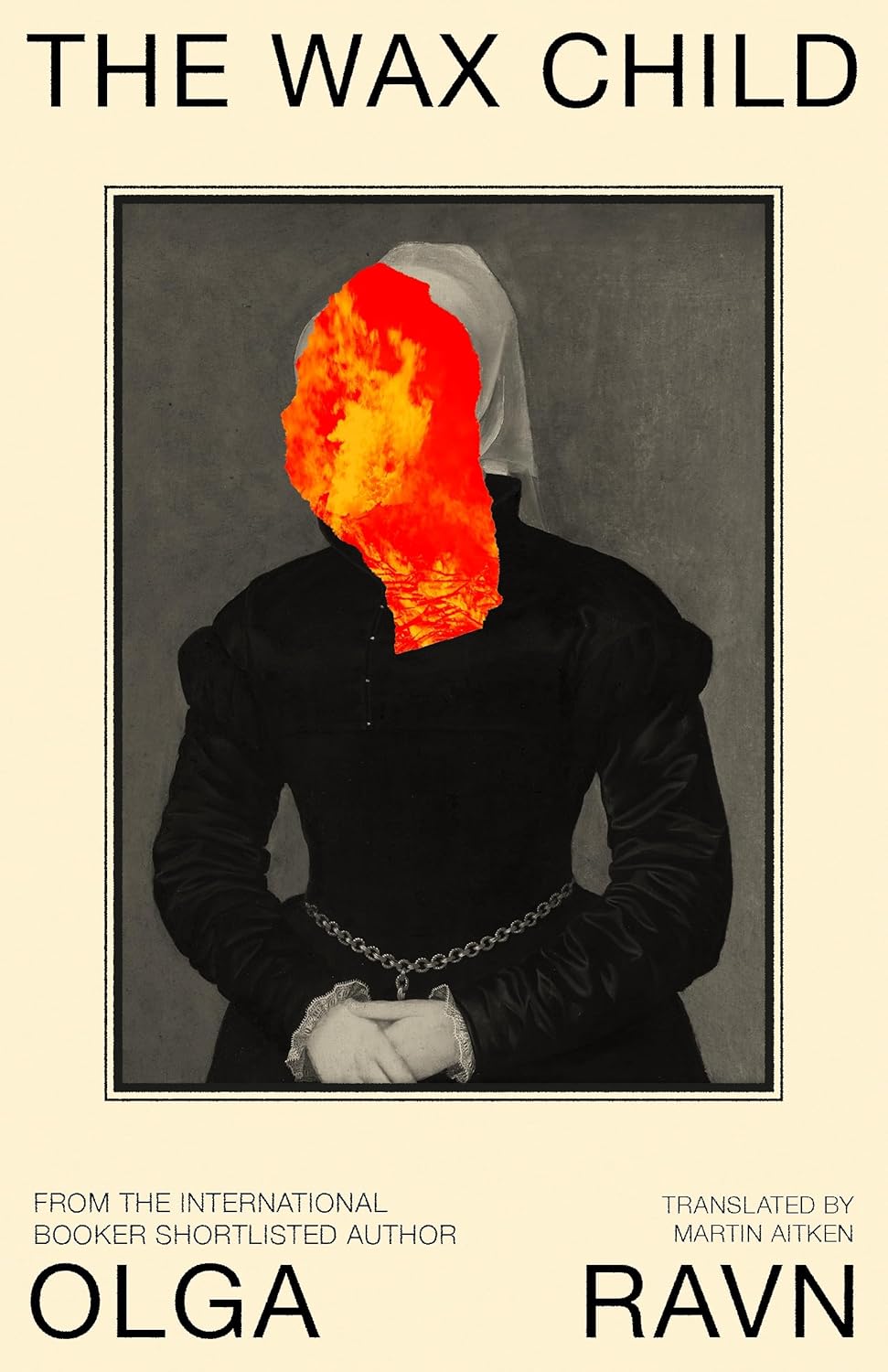
The Wax Child by Olga Ravn
Early this year, Danish writer Olga Ravn’s The Wax Child was longlisted for the International Booker Prize, prompting me to secure a copy of the book. It is actually the fourth book from the longlist that I have read. It was during the pandemic that I first heard about Ravn, when her 2020 novel Mit arbejde catapulted her to international recognition. The novel’s English translation, My Work, was shortlisted for the International Booker Prize. Although The Wax Child failed to win the prize, I was still intrigued by what it had in store. Originally published in 2023 as Voksbarnet, The Wax Child transports readers to 17th-century Denmark. The spiritual guide of the story is the titular wax child, a small human effigy made of beeswax and created by Christenze Kruckow, an unmarried noblewoman. The wax child observes its creator’s life, even listening to the whispers of the townspeople. Despite her noble birth, Christenze possesses no fortune. She serves as a companion to the wealthy Anne Bille and lives with Anne and her husband in a manor house at Nakkebølle Fjord on Funen. Anne desperately wants to become a mother. However, she repeatedly suffers devastating losses—stillbirths and infants who die shortly after birth. In her desperation, Anne turns to Christenze for help following a difficult childbirth. Christenze conceals a spider in sheep’s milk, which Anne then feeds to the baby. The infant survives, but the sight of the spider crawling out of the baby’s mouth causes Anne to panic. She accidentally drops the infant onto the stone floor, killing it. Interestingly, Christenze’s refusal to conform to traditional gender norms leads many to suspect that she practices witchcraft, along with another woman named Ousse. Christenze brushes off the rumors, believing that her noble status will protect her. However, the increasingly bitter Anne identifies Christenze as a devilish spell-caster responsible for her tragedies. While Ousse is burned at the stake on charges of sorcery and witchcraft, Christenze manages to flee to the larger town of Aalborg, where she meets Maren Kneppis and her circle of friends—Apelone and the one-eyed widow, Dorte. The move to Aalborg, however, only delays the inevitable. The Wax Child is inspired by the condemnation and execution of four Danish women in the early seventeenth century. They were alleged to have been part of a “society of witches in North Jutland.” While the other three women are burned at the stake, Christenze is instead decapitated because of her noble status, making her the only member of the Danish nobility ever condemned to death as a witch. The Wax Child also captures the intricacies of female camaraderie. The novel vividly portrays the pervasiveness of patriarchy and the imbalance of power dynamics. Its depiction of misogyny is evident in the way women who resist conformity are perceived as threats to society. Overall, The Wax Child is an eerie exploration of the plight of women, transcending both time and place.
Goodreads Rating:

Z by Vassilis Vassilikos
Like most of the writers I have recently been exploring, I first discovered Vassilis Vassilikos through various must-read lists. The Greek writer’s novel, Z, is ubiquitous—a familiar presence on many of these lists, including 1,001 Books You Must Read Before You Die. By reading the book, I am essentially hitting two birds with one stone, as one of my goals is to read at least twenty books from that list. In fact, Z is the eighth book from the list that I have read this year and the sixteenth book on my 2026 Top 26 Reading List. Originally published in Greece in 1966, Z catapulted Vassilikos to international acclaim. Set in 1960s Greece, the novel centers on the titular Z, a charismatic and progressive parliamentary deputy. Referred to simply as “The Deputy,” he is portrayed as convincing, brave, intelligent, and capable of inspiring large crowds. The novel is set in motion by Z’s arrival in a Greek city. News of his visit stirs the city’s extreme right wing into action. Paramilitary forces and local politicians aligned with the ruling elite organize a counterdemonstration led by right-wing thugs and stand by as violence erupts. Chaos naturally ensues. Amid the confusion, Z is struck by a demonstrator wielding an iron bar and is later killed. What the ruling elite does not anticipate is the public outcry that follows. The overwhelming response culminates in a massive funeral procession that becomes a powerful political demonstration. This outpouring of public support transforms what appears to be a simple crime into a profound political statement. An investigation is immediately launched, and as it progresses, it becomes increasingly evident that uncovering the truth will be an uphill battle. A meticulous examination of the evidence reveals a complex conspiracy involving the collusion of influential figures, including police officers, military officials, and members of the judiciary—powerful men with vested interests to protect. The judicial inquiry exposes the complicity of the police and political elites, underscoring the systemic nature of repression. This is further highlighted by repeated attempts to obstruct justice, tamper with witnesses, and intimidate those determined to tell the truth. Still, the investigating judge persists, and most of the witnesses remain undeterred. Interestingly, the novel is inspired by the 1963 assassination of Gregoris Lambrakis, a leftist parliamentarian, in Thessaloniki. It explores the corruption permeating Greek society that enables both the planning and execution of the assassination. Yet despite depicting such a bleak period, the novel ultimately brims with hope. At the same time, the assassination serves as an ominous portrait of an era in which scores are settled and marginalized people are exploited to carry out the dirty work of their superiors. Z vividly captures the atmosphere of fear, suspicion, and outrage permeating Greek society. In the process, it exposes the deep divisions and authoritarian tendencies embedded within the state apparatus.
Goodreads Rating:


The Far Pavilions by M.M. Kaye
I concluded my venture into European literature with two works of British literature, beginning with Mary Margaret “Mollie” Kaye’s The Far Pavilions. In fact, I acquired a copy of the novel nearly a decade ago. I had long intended to read it, but other books continually took precedence. For that reason, I included it in my 2026 Beat the Backlist Challenge. Originally published in 1978, The Far Pavilions transports readers to nineteenth-century India, where we are introduced to Ashton Pelham-Martyn. Ashton is born on the road in 1852, in the foothills of the Himalayas, but is soon orphaned. His care is entrusted to a Hindu ayah, Sita, who is tasked with taking him to his maternal English relatives in the city of Mardan. However, during the Sepoy Uprising of 1857, British feringhis are being targeted and killed, prompting Sita to adopt Ashton and take him with her in search of safety. Sita and Ash, now renamed Ashok, eventually find refuge in the kingdom of Gulkote. Ashok is raised according to Indian traditions and later becomes a servant to Lalji, the young yuveraj (crown prince) of Gulkote. He also befriends Anjuli, a beautiful but neglected half-caste princess. When he is eleven, Ash uncovers a conspiracy against his master. With his own life threatened, Ash and Sita escape the palace. During their flight, however, Sita dies, but only after revealing Ash’s true parentage. Following her final instructions, Ash makes his way to a British military post, where he is taken in by Major Sir Louis Cavagnari. He subsequently resumes his British identity and is sent to England for a formal education and military training. Still, he never forgets his Indian upbringing and longs to return to India. At the age of nineteen, Ash returns to British India as an officer in the Corps of Guides, an elite military unit stationed on the North-West Frontier. He later goes AWOL for a year to recover stolen rifles from Afghan tribesmen. Upon his return, he is assigned to escort a royal wedding party across India. The party is from the former kingdom of Gulkote, now known as Karidkote. Among its members are the princesses Anjuli and her sister, Shushila. After revealing his identity to Anjuli as Ashok, Ash falls in love with her. However, he is unable to act on his feelings because Anjuli is already betrothed. Although she confesses that she loves him, she refuses his pleas to run away. Ash can only watch as Anjuli marries the Rana of Bhithor before returning to his military duties. Fate has many twists and turns, and Ash and Anjuli experience the full spectrum of them. The Far Pavilions is an evocative historical epic that explores the Second Anglo-Afghan War and Great Britain’s role in the colonization of the Indian subcontinent. These historical contexts richly enhance the novel. At the same time, the story is also about Ashok/Ashton and his struggle for identity. Torn between his British heritage and his Indian upbringing, Ash embodies the complexities of belonging to two vastly different cultures. While the novel pays loving tribute to the Indian landscape, it also critiques rigid social hierarchies, including the caste system and the subjugation of women within a deeply patriarchal society. The Far Pavilions is also a moving romance, with its characters grappling with the tension between personal desire and duty to their families and societies. It is these many facets that make The Far Pavilions a rich tapestry and a compelling read despite its daunting length.
Goodreads Rating:
The Mayor of Casterbridge by Thomas Hardy
My venture into European literature officially concluded with another book that had been left to gather dust on my bookshelf. Thomas Hardy first captured my interest while I was perusing various must-read lists, where many of his works came highly recommended. The Mayor of Casterbridge is the third Hardy novel I have read. I acquired a copy of the novel in 2019, which is why I included it in my 2026 Beat the Backlist Challenge. Originally published as The Mayor of Casterbridge: The Life and Death of a Man of Character, the novel was first serialized weekly beginning in January 1886. The story begins on a September day in the 1820s, when the Henchard family arrives on foot at the village of Weydon-Priors. The patriarch, Michael, is seeking work as a hay-trusser. Along with his wife, Susan, and their daughter, Elizabeth-Jane, the family stops for food at the furmity tent during the local fair, where Michael is served alcohol. As he becomes increasingly drunk, he loudly confesses his unhappiness and makes a rash and reckless declaration. In a drunken stupor, he auctions off his wife and daughter to any man willing to buy them. A sailor named Richard Newson offers five guineas for Susan and Elizabeth-Jane. Believing the transaction to be genuine, Susan and Elizabeth-Jane leave with Newson. Henchard falls asleep and awakens filled with regret. Unable to find his wife and daughter, he goes to a church and swears that he will never drink alcohol again. He then settles in the agricultural town of Casterbridge, where he works relentlessly over the next eighteen years. His business acumen makes him a wealthy and respected corn merchant, and his growing influence eventually leads to his election as the town’s mayor. Meanwhile, Newson is believed to have been lost at sea, leaving Susan and Elizabeth-Jane without support. Mother and daughter set out in search of Henchard and soon arrive in Casterbridge, where they are reunited with him. Michael and Susan then plot their next move. Wishing to avoid scandal and to keep Elizabeth-Jane from learning the truth about their past, they agree that Michael will court and remarry Susan. After Susan dies, Henchard learns that Elizabeth-Jane is not his biological daughter and that his own child died in infancy. He grows increasingly distant toward the young woman. These revelations also mark the beginning of Henchard’s decline. The novel’s premise is quite compelling. The Mayor of Casterbridge is, unmistakably, about the trials and tribulations of Michael Henchard. From the outset, he is a deeply flawed character and, ultimately, his own worst enemy. His story demonstrates how the past continues to haunt the present. Although he manages to rebuild his life and achieve success, the resurfacing of his dark past gradually dismantles everything he has worked so hard to build. His downfall is further exacerbated by his pride, deception, and secrecy. Despite his many flaws, however, Henchard genuinely strives to redeem himself. Overall, The Mayor of Casterbridge is a compelling read from one of literature’s great masters.
Goodreads Rating:
Reading Challenge Recaps
- 2026 Top 26 Reading List: 16/26
- 2026 Beat The Backlist: 11/20; 51/60
- 2026 Books I Look Forward To List: 0/10
- Goodreads 2026 Reading Challenge: 51/100
- 1,001 Books You Must Read Before You Die: 9/20
- New Books Challenge: 0/15
- Translated Literature: 38/50
Book Reviews Published in June
- Book Review # 654: Dream of Ding Village
- Book Review # 655: Miramar
- Book Review # 656: The Lodging House
- Book Review # 657: Waiting to Live
- Book Review # 658: Arrow of God
Thankfully, despite the challenges of the previous month, I was able to carry my writing momentum from May into June. This came after a very modest output in April, my lowest monthly output since January 2025. I guess this has become a pattern. A prolific writing month is often followed by a disappointing one. Still, I am just glad I was able to rediscover my writing mojo, pick up the pen again, and carry that momentum into June. In May, I finished seven book reviews, and in June, I published five more. With my reviews of The Lodging House and Waiting to Live, I completed all my pending book reviews from August 2023. Building on that milestone, I also began reducing my 2024 backlog, publishing two reviews from that year. I also finally published my review of Naguib Mahfouz’s Miramar, a book I had wanted to write about for quite some time, even though I read it more than a decade ago.
June was a significant victory in terms of sustaining my writing momentum. Still, my backlog continues to grow because my writing simply cannot keep pace with my reading. I am reading far more books than I am reviewing. I hope I can sustain the momentum I have built and carry it through the rest of the year. For now, my primary focus is to complete my remaining 2023 reviews while steadily working through those from 2024 and 2025. With fewer than fifteen reviews remaining, I am on track to complete my 2023 backlog. I also hope to make meaningful headway into my 2024 backlog, which is considerably larger. Occasionally, I may also publish reviews of books I read before I began writing reviews—such as Haruki Murakami’s Norwegian Wood, Salman Rushdie’s The Ground Beneath Her Feet, and Ian McEwan’s Atonement. These books hold special significance for me, as they were the first works I read by each of these authors.
With my venture into the vast landscape of European literature finally at an end, I am now turning toward a different literary territory. As July is my birth month, I have decided to focus on the works of Asian writers, with particular emphasis on Japanese authors. Japanese literature is one of my favorite literary traditions, and I often reserve July for reading works from Japan. However, my supply of unread Japanese books has gradually dwindled. As such, I am complementing them with works by other Asian writers, many of which also feature in my ongoing reading challenges. I have begun this literary adventure with Mieko Kawakami’s latest translated novel, Sisters in Yellow. In fact, I had been eagerly anticipating its English translation ever since I learned of its Japanese publication in 2023. I have also lined up Kiran Desai’s The Inheritance of Loss, Elaine Castillo’s America Is Not the Heart, and Ayad Akhtar’s Homeland Elegies. All three are part of my 2026 Top 26 Reading List. Along the way, I also plan to pick books from my bookshelf that align with the month’s primary reading theme.
How about you, fellow reader? How is your own reading journey going? I hope you enjoyed the books you have read. For now, have a great day. As always, do keep safe, and happy reading, everyone!

