
Happy Tuesday everyone! As it is Tuesday, it is time for a Top Ten Tuesday update. Top Ten Tuesday is an original blog meme created by The Broke and the Bookish and is currently hosted by That Artsy Reader Girl.
This week’s given topic: Books That Live in My Head Rent-Free


Title: The Travelling Cat Chronicles
Author: Hiro Arikawa
Translator (from Japanese): Philip Gabriel
Why it lives in my mind rent-free? The Travelling Cat Chronicles is a tender and heartwarming tale about connections we create with animals. It delves into the losses we incur as we grow while, at the same time, it is a mirthful celebration of life, memories and growth.
Snippet from my review:
The novel’s best, if not one of the best, facet is the endearing relationship between Satoru and Nana. Satoru has a soft spot, in stark dichotomy to Nana’s cold and elusive gloom; he is used to being left alone in the cold. They have an unbreakable bond that is invisible to the eye but palpable to the heart. Nana’s narration leaves so much to be wanted. His wit made up for a moving and insightful recount of their adventures and companionship.

Title: The Shadow of the Wind
Author: Carlos Ruiz Zafón
Translator (from Spanish): Lucia Graves
Why it lives in my mind rent-free? The Shadow of the Wind had all the elements – the suspenseful and atmospheric air, an amazing sidekick, and descriptive but not overpowering writing. Yes, the story did drag, but it was all good.
Snippet from my review:
Ruiz Zafón, with acuity, used his native city as a major protagonist. His writing made Barcelona come alive before the readers’ very eyes. A breathing and interesting character, distinct from the primary characters, was drawn. With every turn of the page, an image of Barcelona unfolds; its nooks and crannies, its Spanish houses, its dark alleys, its backstreets all vividly came alive. Ruiz Zafón’s Barcelona went beyond the aesthetic. The Gothic atmosphere is a stark dichotomy from the typical sunny Barcelona advertised in tourism posters. He eloquently captured the soul and the spirit of the city with his astute storytelling.

Title: Crime and Punishment
Author: Fyodor Dostoyevsky
Translator (from Russian): Constance Garnett
Why it lives in my mind rent-free? Sure, Crime and Punishment is easily one of the most recognizable titles in the world. Beyond its reputation and its dark theme, I was in awe of Dostoyevsky’s exploration and understanding of the human psyche.
Snippet from my review:
Dostoyevsky’s prose flowed naturally even though he was dealing with a difficult subject. The highest form of his body of work was extensively showcased in Crime and Punishment. His writing is impeccable and his astute portrayal of human behavior is even more remarkable. This lofty standard if literary excellence is also showcased in Brothers Karamazov, the only other Dostoyevsky that I have read. His depiction of human nature is an intellectual endeavor that awakens the inner literati in his readers. It makes one probe deeper into one’s self.

Title: A Man Called Ove
Author: Fredrik Backman
Translator (from Swedish): Henning Koch
Why it lives in my mind rent-free? Like in the case of Crime and Punishment, A Man Called Ove is a delightful exploration of the human spirit. Backman’s integration of wit and humor is contrasted by its reminder about how our small act of kindness never goes unpaid.
Snippet from my review:
There was an undertone of an old adage murmuring underneath the surface – that it takes a village to raise a child. Ove and Sonja’s love story was a luminous part of the story. A Man Called Ove is a generally light read but it also has heavier and darker undertones subtly hidden underneath its heartwarming tale. Backman ingeniously incorporated the context of depression and suicide into his prose. It wasn’t overwhelming but it was depicted enough not to escape one’s attention.

Title: Kafka on the Shore
Author: Haruki Murakami
Translator (from Japanese): Philip Gabriel
Why it lives in my mind rent-free? Interestingly, Kafka on the Shore has long been living in my mind rent-free. Back when I read it, it left me confused. It was, after all, one of the first works of magical realism I read. Even after a decade, I still keep thinking about the book and its brand of surrealism.
Snippet from my review:
Kafka on the Shore surely is not an easy read. Like Murakami’s other works, it requires utmost attention. Nevertheless, it ultimately stands as one of Haruki Murakami’s most ambitious and enduring works. It transcends conventional narrative boundaries, exploring the intricacies and even mysteries of memory, identity, fate, and human connection. By fusing the ordinary and the surreal, he created a dreamlike world where reality and imagination coexist seamlessly. The novel challenges conventional notions of reality while exploring the anxieties and desires that shape human existence. The novel’s labyrinthine structure, philosophical depth, and emotional resonance transform it into more than just a work of magical realism; it becomes a meditation on what it means to search for meaning in a fragmented and often incomprehensible world. Often considered Murakami’s magnum opus, Kafka on the Shore is a story that lingers long after closing its final page.
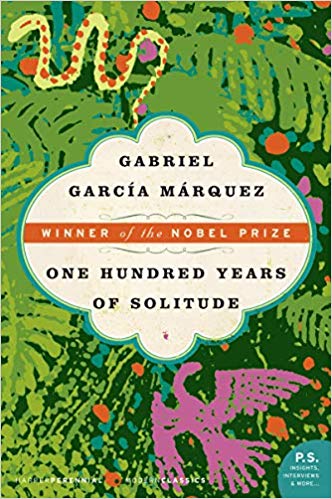
Title: One Hundred Years of Solitude
Author: Gabriel García Márquez
Translator (from Spanish): Gregory Rabassa
Why it lives in my mind rent-free? The case for One Hundred Years of Solitude is akin to Kafka on the Shore. It was a book that rendered me speechless, perhaps for interesting reasons. It was literally my baptism of fire into the interesting world of magical realism.
Snippet from my review:
Nevertheless, it was the rise and falls of the Buendia family and the character of Macondo that converge to give the readers a pleasant intersection of the tragedies and comedies of life, its ironies, and hyperboles. The interplay of the fictional and the historical makes One Hundred Years of Solitude a captivating read. Hemmed in its wonderful tapestry is an amazing plot, a set of colorful characters, and, of course, Marquez’s excellent storytelling. Its influence is indeed encompassing. One Hundred Years of Solitude is one of those very rare reads that reminds you of the simple pleasures of reading. It was my first Marquez book, but it was the one that led me to more of his works. The impression it created in me is everlasting.

Title: The Secret of Secrets
Author: Roberto Bolaño
Translator (from Spanish): Natasha Wimmer
Why it lives in my mind rent-free? The Savage Detectives left me awestruck. It was not a book I would usually encounter, which perhaps made me appreciate it even more. In fact, writing a review on the book was nearly impossible. How can one capture the magnificence it has? Upon reading more about the book, I was even more in awe. I guess I have a thing for unusual books.
Snippet from my review:
Parts-coming-of-age, parts-historical, parts-literary, The Savage Detectives painted a vast landscape. The breathtaking, albeit vast novel exhibited the fine qualities of Bolaño’s storytelling. It also demonstrated his elan, managing to vividly paint a portrait of the lives of the visceral realists. However, it never reduced itself into a book about poets or poetry or even mystery. There were elements that remained out of the casual reader’s grasp. The book’s vigor, through the three main characters, nonetheless propelled it.

Title: The House of the Spirits
Author: Isabel Allende
Translator (from Spanish): Magda Bogin
Why it lives in my mind rent-free? The House of the Spirits is a great and captivating read. It has the right mixture of mature themes and multi-faceted characters. Allende’s writing prowess was also showcased from the start until the end. Her vivid imagery greatly helped in my appreciation of the story.
Snippet from my review:
Beyond family and politics, the most important message of the novel lies in the end. And it was something that I did not expect, but it was something that has candidly developed over the narrative. The book’s message of forgiveness is in its highest and purest form. At the end of the story, Alba contemplates revenge for the atrocities that were committed against her. However, upon deeper reflection, she has realized that revenge will not put an end to the cycle of violence that her family has been subjected to. The moment she lets go of the evils of her past is one of the most captivatingly written passages in the story. It was filled with serenity.
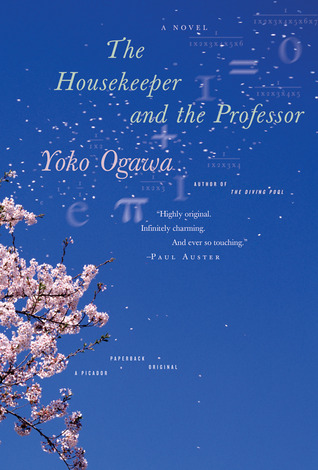
Title: The Housekeeper and the Professor
Author: Yōko Ogawa
Translator (from Japanese): Stephen Snyder
Why it lives in my mind rent-free? I loved this slice-of-life narrative. It was a very heartwarming story, but I nearly misinterpreted the growing fondness between the Professor and the Housekeeper.
Snippet from my review:
In the vast halls of the Japanese literary Pantheon that houses Kawabatas, Mishimas, Ishiguros, and Murakamis, The Housekeeper and the Professor dwarves amongst such esteemed ranks. However, in its own subtle and distinct way, it stands at par with them. It is a sweet tale that plucks the proverbial heartstrings. It reminds the readers about the connections they make with everyone, no matter how small, and how these connections influence others’ lives. We might not realize it, but we leave our imprints in the people whose lives we have touched.

Title: The Name of the Rose
Author: Umberto Eco
Translator (from Italian): William Weaver
Why it lives in my mind rent-free? The Name of the Rose is one of my best reads. The writing style and the story were great. It was not as challenging as I initially thought it would be. I am most impressed with the way Eco expertly depicted medieval monastic life.
Snippet from my review:
Umberto Eco, a renowned semiotician, also bequeathed his encyclopedic knowledge to Brother William. Brother William solved most mysteries, even the most mundane ones, using signs and symbolism that his keen perception had observed. As a result of this allusion to signs and symbolism, the book often drew comparisons to Dan Brown’s books. Personally, I felt that Brown employed more symbolism and less literature, while Eco employed literature more in his work than he did with the symbolism.
 The Pine-Scented Chronicles