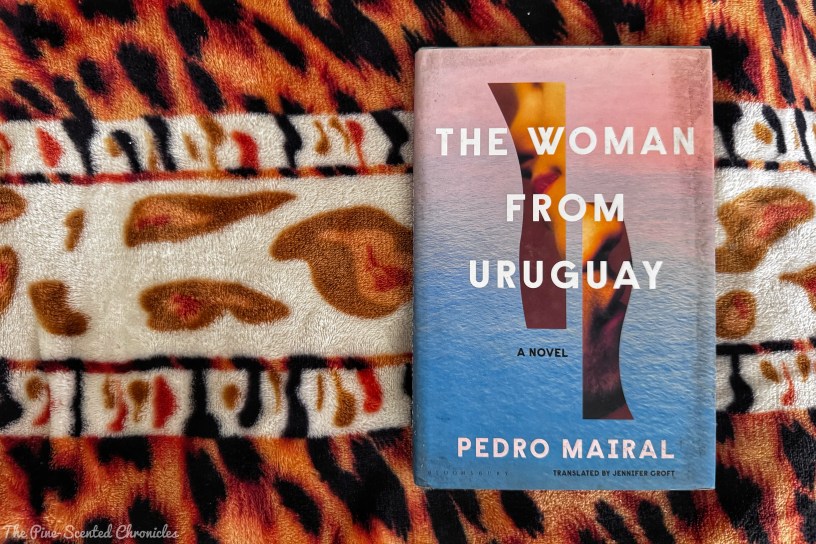
On the Cusp of a Midlife Crisis
The first thing that comes to mind when talking about Argentina is its strong and passionate football tradition. Argentina’s national football team is one of the country’s sources of pride. It has won the FIFA World Cup a whopping three times; only Brazil (five), Germany (four), and Italy (four) have won it more often than Argentina. This rich footballing tradition has produced legendary figures such as Diego Maradona and Lionel Messi, two of the greatest icons not only of Argentine football but of the global game. Undoubtedly, football culture is deeply embedded in Argentine society. It is part and parcel of the country’s national identity. But there is more to Argentina than just football. It is the birthplace of tango, a passionate and globally celebrated dance. Evita Perón is a cultural icon, with her life serving as the basis for the musical Evita (1978) by Andrew Lloyd Webber and Tim Rice. This vibrant culture is vividly embodied by the nation’s capital, Buenos Aires, a bustling cultural hub with a strong emphasis on the arts and music.
The Argentine literary scene is also not lagging far behind. Argentina’s diversity and colorful culture have provided rich material for its writers. It has a strong literary tradition that, like those of most of its neighbors, began to take shape during the colonial era. Over time, Argentine literature diverged from its Spanish origins, developing a distinct identity. The nineteenth and twentieth centuries marked a pivotal moment in the development of Argentine literature. Argentine writers started embracing a more authentic Argentine voice. This helped establish Argentine literature as one of the influential bodies of writing in the Spanish-speaking world. This would yield several names who emerged as literary titans, among them Julio Cortázar, José Hernández, Manuel Puig, and Adolfo Bioy Casares. Argentine literature has also become synonymous with Jorge Luis Borges, who compiled a magnificent literary résumé and was nominated for the Nobel Prize in Literature several times.
The emergence of up-and-coming Argentine writers has ensured the future of Argentine literature. It continues to thrive through writers such as César Aira, Mariana Enriquez, and Samanta Schweblin. They are joined by Pedro Mairal, who initially pursued medicine but struggled with the sciences. As he struggled with his studies, he started reading voraciously while concealing his academic setbacks from his parents. Using the film Dead Poets Society, he managed to convince his family to support his decision to switch to studying literature at the Universidad del Salvador in Argentina. The rest, they say, was history. His earlier works were poetry. His first poems were published in the literary supplement of La Prensa in 1994. His debut poetry collection, Tigre como los pájaros (Tiger as a Bird), was subsequently published. Mairal, however, earned greater recognition with his novels. His debut novel, Una noche con Sabrina Love (A Night with Sabrina Love, 1998), earned him the prestigious Premio Clarín.
You have to be careful with Uruguay, especially if you come thinking it’s like the countryside in Argentina only everybody’s good, there’s no corruption, no Peronism, you can smoke pot on the street, the cute little country where everyone is a good person and friendly and all that bullshit. If you’re not paying attention, Uruguay will fuck you in the ass.
Pedro Mairal, The Woman from Uruguay
Among the celebrated Argentine writer and poet’s works is The Woman from Uruguay. Originally published in 2016 as La uruguaya (literally, The Uruguayan), the novel was awarded the XXXIX Premio Tigre Juan in 2017, Spain’s prestigious award for the best novel of the preceding year, selected by a jury that included writers such as Almudena Grandes. The novel’s global reach was amplified when it became available to Anglophone readers in 2021. At the heart of The Woman from Uruguay is Lucas Pereyra. Born into relative privilege, Lucas is a writer in his mid-forties living in Buenos Aires. However, Lucas hasn’t been writing as much, although he did experience a modicum of success before parental obligations held him back. He is also underpaid and mildly depressed. He has been relegated to being a househusband, bereft of inspiration, and sinking into debt. His personal troubles were exacerbated by his marriage to Catalina going stale. He felt beholden to his wife, who had been financially supporting their family of three.
There was also a nagging suspicion that Catalina had been unfaithful. Lucas also resented the fact that he owed her money. The answer to his growing troubles, he believed, lay just across the border. The catalyst for the chain of events that propelled the story was a $15,000 advance from his Spanish publisher. Lucas traveled across the River Plate to Montevideo, Uruguay, to collect the advance he had earned from foreign sales of his writing. He would then smuggle it into Argentina and convert it into pesos in Buenos Aires on the black market, “at the unofficial exchange rate.” He had to take this risk to avoid punitive tax deductions and bypass the unfavorable official exchange rate. This underscored the urgency of his financial need. The novel, after all, is set amid Argentina’s currency controls of the 2010s. Officially, the trip to Montevideo was about collecting the advance that could alleviate his current situation. Unofficially, however, Lucas had a far more exciting plan.
His trip to the Uruguayan capital was also driven by his desire to meet Magalí Guerra Zabala. During one of Lucas’s periodic absences from home, he encountered Magalí, a much younger Uruguayan woman. They had met a couple of months earlier at a literary festival. Their first meeting was fleeting; they spent just a few hours together before they were parted. Their initial flirtation and mutual attraction were frustratingly left unconsummated. Since their first meeting, Lucas has idealized Magalí. For a man whose life has become austere, Magalí has slowly transformed into a symbol of escape from his unhappy and troubled domestic life. He also hoped that their passion would reinvigorate him, spurring his creativity and pulling him out of his creative stagnation. With a rendezvous scheduled and a bigger plan in place, Lucas imagined that spending the day with her would rekindle his passion for life. He also hoped it would offer him a fresh start and help move him forward.
As the day unfolded, almost nothing went according to Lucas’s carefully constructed plans and fantasies. He encountered Yael, a young Uruguayan poet, setting off a series of unexpected encounters, misunderstandings, and even financial complications that threatened to derail his plans. With money in hand, Lucas booked an expensive hotel room. It was, he planned, a fine place where he and Magalí could consummate their attraction. Magalí proved to be far more complex than Lucas had imagined. A free-spirited individual, she had her own relationship challenges. As the day progressed, all of Lucas’s plans were abandoned. Rather than heading to the hotel, Lucas and Magalí spent their time walking around the city. They spent the afternoon at an outdoor café, where they plotted their seduction over multiple rounds of drinks before getting high. Inevitably, their plans went awry, and their day took on a hallucinatory edge that included a visit to a tattoo parlor, where Lucas had a Celtic symbol tattooed on his shoulder. They also encountered an angry ex-boyfriend.
When two people are attracted to each other, a strange telekinesis opens up a path between them that removes all obstacles. It’s that clichéd. Mountains are moved aside. It was three in the morning, and I went to sleep drunk on all of that, without an ounce of guilt.
Pedro Mairal, The Woman from Uruguay
As his day in Montevideo dwindled and his fantasies were thwarted, how would these developments eventually alter Lucas? Interestingly, The Woman from Uruguay takes the form of a confessional letter. A year after the events in Montevideo unfolded, Lucas found himself confessing to Catalina about his indiscretion with the titular woman from Uruguay and what happened on that day in Montevideo. He also confronted her about his nagging suspicions that she was having an affair. Catalina often returned to their apartment long after her work hours were over, spending her time drinking with her colleagues and leaving Lucas to look after their son, Maiko. With his plans in Montevideo failing to materialize, Lucas was left with no recourse but to return home, with his loveless marriage weighing heavily on him. Things did not look up from there. What he had hoped would reverse his fate instead resulted in him falling deeper into depression; he had become physically, mentally, and emotionally battered, if not broken.
Lucas felt his entire life crashing down around him. As the story moves forward, Lucas Pereyra emerges as the quintessential man experiencing a midlife crisis. An existential dread was slowly developing. He was unhappy and desired change, even though he was one of the factors contributing to the collapse of his marriage and their financial situation. Up until the point when he decided to candidly confess to his wife, Lucas proved to be a deadbeat husband and father. Not only was he an unsuccessful writer, but he was also an exhausted father. He had also become a disinterested and unsatisfied husband caught in his own self-pity. As a narrator, he was unreliable and unlikeable, with the lens of insecurity filtering his storytelling. He also refused to take accountability for his contribution to the way his life had unfolded. His suspicions about his wife’s infidelity prompted him to pursue an affair of his own. He also sought an idealistic escape that would alter the course of his life.
However, his day in Montevideo disillusioned him. Magalí, whom he had fantasized about for months, was not who he thought she was. Montevideo was also not the place of liberation he hoped it would be. Initially, the landscape of Montevideo felt familiar, even though it was old-fashioned and exotic. The city provided him with comfort, allowing him to shake free from the burdens of his life as a broke writer and stay-at-home dad. As his day unfolded, however, the city slowly emerged as a mirror reflecting his own insecurities and disappointments. Still, his adventures and misadventures in Uruguay allowed him a reset. This reset, however, was not only for him but also for the two women he was involved with. His thwarted romance challenged his fantasies; as a writer, he lived too much in his head. His odyssey to Uruguay also forced him to confront his reality. The months immediately following the events in Montevideo were filled with mishaps, but they were also birth pains that slowly set him up for a period of deep introspection.
The novel is also a nuanced character study. Lucas’s unlikeability is deliberate. He is an anti-hero who objectifies women and ignores the female point of view. His saving grace, however, is his facade of self-awareness. Somehow, it is his flaws that also make him deeply human. He was keen on playing the author of his own life. This ultimately detached him from reality. Beyond his flaws, he was thoughtful and observant. He had scathing commentary on a range of subjects. At home, he offered penetrating commentary on child-rearing and, ironically, marital infidelity. Mairal’s portrayal of the deterioration of a marriage was vivid. His astute sense of observation carried over once he crossed the border, as he observed Montevidean life as both an insider and an outsider. He is a character whom many can relate to, become frustrated with, and perhaps even root for. Through Lucas, Mairal explores the intricacies of middle age while capturing the beauty of personal transformation.
You know I adore my child. I love him more than anybody in the world. But sometimes he exhausts me, not so much him as my constant worrying about him. Sometimes I think I shouldn’t have had a kid at my age. It’s a terrible thing to think, but it has filled my life with a fear that I never had before, fear that something will happen to me and he’ll be left an orphan, that something will happen to him, to you.
Pedro Mairal, The Woman from Uruguay
Beyond Lucas’s personal transformation, marriage and fatherhood were at the forefront of the novel. After all, the novel takes the form of a family story. In a broader sense, it captures what family means. Lucas vividly portrays the intricacies of fatherhood, in itself an interesting perspective, as child-rearing is often associated with women. Lucas experienced how childcare can be all-consuming. His observations and descriptions of fatherhood provided the novel with some of its most tender and poignant moments. Beyond the physical work involved, child-rearing also entails endless worry and concern. Lucas worried about his influence on his son. He wondered whether he was giving his son enough of his energy as an older father. Despite the stresses that came with fatherhood, Lucas loved his son. However, Lucas also saw Maiko as an obstacle to his writing.
Often humorous but also thought-provoking, The Woman from Uruguay is deceptively taut. It is engrossing and well written. It is also a brilliantly observed exploration of the complexities of relationships, mixed with introspective voices that capture economic desperation, financial stress, and existential drift. It is a meditation on masculinity, middle age, and regret, while capturing the tensions between desire, responsibility, and human connections. As the novel approaches its conclusion, Lucas confronts his illusions. In the process, he starts to realize that his concerns cannot be resolved simply by crossing a physical border or pursuing a fantasy. It is a quiet and even cathartic reckoning, as Lucas returns home with a clearer understanding of himself. His personal crisis does not stem from his desire for a woman from Uruguay. Rather, it stems from his idealized fantasies. The Woman from Uruguay thus does not reduce itself to a mere exploration of illicit affairs.
The winner of the Premio Tigre Juan in 2017 and the Premio San Clemente in 2018 for its narrative ingenuity, The Woman from Uruguay is a nuanced character study that astutely blends melancholy and humor. While the novel’s structure is straightforward, its philosophical inquiries invite close attention. In the end, The Woman from Uruguay is a poignant portrait of a man caught between desire and responsibility, fantasy and reality, and the person he imagines himself to be and the person he actually is. Ultimately, Mairal suggests that self-reinvention does not necessarily come with age; sometimes, it begins with the difficult recognition that escape cannot substitute for change.
It terrifies me the way couples become conjoined: same opinions, same degree of drunkenness, as if man and wife shared one bloodstream. There must be a chemical leveling that occurs after years of maintaining that constant choreography. Same place, same routines, same diet, simultaneous sex life, identical stimuli, shared temperature, income, fears, incentives, walks, plans.
Pedro Mairal, The Woman from Uruguay
Book Specs
Author: Pedro Mairal
Translator (from Spanish): Jennifer Croft
Publisher: Bloomsbury Publishing
Publishing Date: 2021
No. of Pages: 152
Genre: Literary, Historical, Romance
Synopsis
From acclaimed Argentine author Pedro Mairal and Man Booker International-winning translator Jennifer Croft, the unforgettable story of two would-be lovers over the course of a single day.
Lucas Pereyra, an unemployed writer in his forties, embarks on a day trip from Buenos Aires to Montevideo to pick up fifteen thousand dollars in cash. An advance due to him on his upcoming novel, the small fortune might mean the solution to his problems, most importantly the tension he has with his wife. While she spends her days at work and her nights out on the town – with a lover, perhaps, he doesn’t know for sure-Lucas is stuck at home all day staring at the blank page, caring for his son Maiko and fantasizing about the one thing that keeps him going: the woman from Uruguay whom he met at a conference and has been longing to see ever since.
But that woman, Magalí Guerra Zabala, is a free spirit with her own relationship troubles, and the day they spend together in this beautiful city on the beach winds up being nothing like Lucas predicted.
The constantly surprising, moving story of this dramatically transformative day in their lives, The Woman from Uruguay is both a gripping narrative and a tender, thought-provoking exploration of the nature of relationships. An international bestseller published in fourteen countries, it is the masterpiece of one of the most original voices in Latin American literature today.
About the Author
Pedro Mairal was born on September 27, 1970, in Buenos Aires, Argentina, into a middle-class family. While the family was not overtly artistic or literary, his parents were avid readers who instilled an appreciation for books. Ironically, they considered it an unserious pursuit. His father even urged Mairal toward a practical career, such as medicine. In 1989, Mairal enrolled in the medical school at the University of Buenos Aires. Mairal completed the basic cycle, but struggled with the sciences. As he struggled in his studies, he started reading voraciously while concealing his academic setback from his parents. Using the film Dead Poets Society, he managed to convince his family to support his switch to studying literature at the Universidad del Salvador (Argentina).
Mairal’s earlier works were poetry. His first poems were published in the literary supplement of La Prensa in 1994. His debut poetry collection, Tigre como los pájaros (Tiger as a bird), was published in 1996. In 1998, he published his debut novel, Una noche con Sabrina Love (A night with Sabrina Love). It was an early literary success that earned him the prestigious Premio Clarín. It was even adapted into a film. His succeeding novels include El año del desierto (2005) and Salvatierra (2008; trans. The Missing Year of Juan Salvatierra). Global recognition arrived with his 2016 novel, La uruguaya, which was translated into English in 2021 as The Woman from Uruguay. The novella won the Premio Tigre Juan in 2017 and the Premio San Clemente in 2018. These prizes cemented Mairal’s status as a key figure in contemporary Latin American literature. His latest novel is titled Los nuevos (2025)
In 2007, he was named one of the best young Latin American authors by the Hay Festival Bogotá39 jury. In 2013, he published the novel in sonnets El gran surubí. He also published essays, producing at least three notable collections: El equilibrio (2013), El subrayador (2014), and Maniobras de evasión (2015). He also published short story collections. His crónicas and columns have been published in Maniobras de evasión and Esta historia ya no está disponible. He is an adjunct professor of English literature at the Universidad del Salvador.

