
Wow—we’re already done with the eighth month of the year! That was rather quick. How time flies! With eight months down, I hope everyone is right on track. August here in the Philippines, at least in the northern part of the country, has been marked by the monsoon season. The days have been damp for most of the month, and the sun barely made an appearance. The proverbial Ghost Month has certainly lived up to its reputation, although it stretches until September 10. Ghost Month is often considered an ominous period, when businesses experience slowdowns and travel is discouraged. Nevertheless, I hope that things will start looking up as the year enters the “-ber” months. For Filipinos, this also marks the start of the holiday season. Christmas songs will start playing in malls and occupying the airwaves. The Philippines, after all, is renowned for having the longest holiday season.
With this in mind, I hope that global and personal tensions will eventually be resolved. I hope the rest of the year showers you with blessings, good news, and answered prayers. I know living can be quite a challenge. Still, we march on. We move forward, even if we do so slowly and cautiously. Personally, life has been quite hectic and challenging, but I hope things start looking up. I also hope everyone is finding their footing. I wish everyone well on their respective journeys. For those whose goal is simply to move from one point to another, know that that is perfectly fine, too. I am proud of you and your resilience. In times like these, with so much turmoil surrounding us, silencing the noise can be a challenge. I hope 2026 will be kinder to everyone. Above all, I hope everyone stays healthy—in mind, body, and spirit.
Before I say goodbye to August, let me look back at how it unfolded, at least where reading is concerned. My 2026 reading journey is going as planned. After opening the year with Latin American literature, I then spent four months reading European literature. I think this is the longest I have spent immersed in European literature in a single year. I am just glad I was finally able to complete all the European works included in my reading challenges. Ironically, I first ventured into European literature because of these books, yet they were the last ones I read. In any case, I am glad I was finally able to complete that journey. In July, I decided to venture into the works of Asian writers. Given the number of Asian works I wanted to read, it was inevitable that I would extend this journey into August. However, even this journey had to come to a close. After a brief stop in July and August, I wrapped up my venture into Asian literature. Without further ado, here is how I concluded my foray into the works of Asian writers.
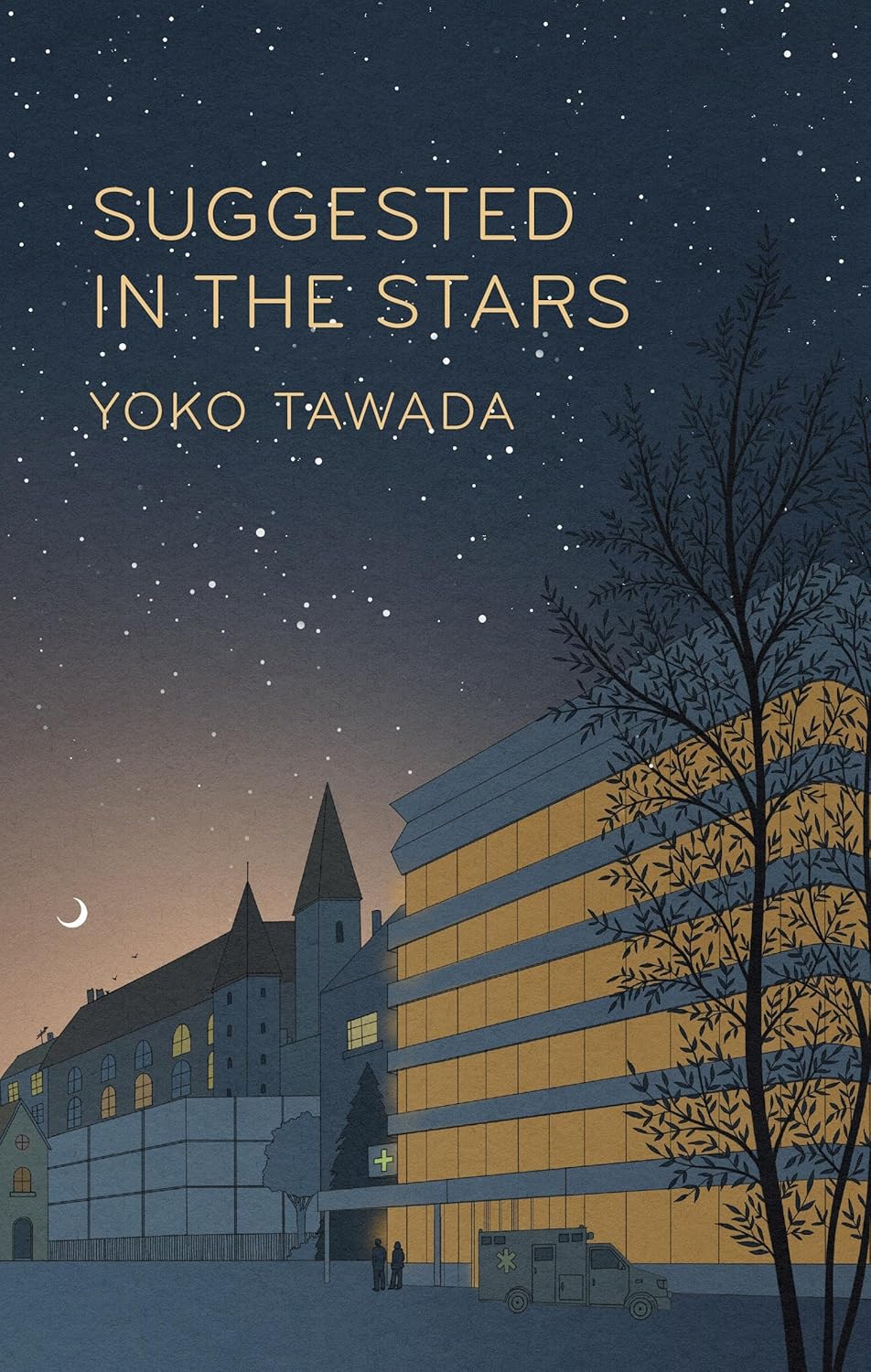
Suggested in the Stars by Yōko Tawada
Ever since I encountered Yōko Tawada during the lead-up to the 2018/2019 Nobel Prize in Literature, she has become a fixture in my literary journeys. She was not awarded the prestigious literary prize, but the attention surrounding her was enough to pique my curiosity. In 2019, I read Memoirs of a Polar Bear. It was an interesting read, standing outside the conventional Japanese literary mold, which can perhaps be attributed to Tawada’s having resided in Europe since her early twenties. Only one of the four Tawada books I have read so far is set in Japan. Still, all four novels share the quality of being unconventional, or at least of dealing with familiar subjects in intriguing and unexpected ways. Suggested in the Stars, the fourth Tawada novel I have read, was originally published in 2020 as 星に仄めかされて (Hoshi ni Honomekasarete). It is the sequel to Tawada’s 2018 novel Scattered All Over the Earth. It reunites readers with the trilogy’s quirky cast of characters introduced in the first novel. With chapters narrated in the first person by different characters, the story is set in a dystopian world that both resembles and diverges from our own. In a large, bizarre hospital in Copenhagen, three of the new characters work. It is an eerie space where reality and rationality are undermined by a series of surreal and increasingly absurd events. Central to the cast is Hiruko, a native of “the Land of Sushi.” Her homeland has vanished beneath the sea due to a mysterious environmental disaster. She then embarks on an odyssey to find someone else who speaks her mother tongue, prompting her to travel to the hospital, where she believes one of the patients, Susanoo, is among the last members of her ethnic group. Susanoo may or may not have aphasia. Hiruko hopes to speak with him in their shared language and reconnect with someone from her vanished homeland. Hiruko’s friends—Nanook, Nora, Knut, and Akash—also try to reach the hospital, each driven by different motivations. Before the characters reunite in Copenhagen, they encounter a series of seemingly random events on their way to the hospital. These incidents appear arbitrary, but they also reflect a world shaped by the existential crises of climate change and the erosion of cultures. In Copenhagen, they try to help Susanoo regain his lost voice. Tawada revisits many of the ideas introduced in Scattered All Over the Earth, with language once again occupying the novel’s thematic center. Through Panska, a self-fashioned language, Tawada examines the search for identity in an increasingly interconnected world, where languages and cultures constantly intersect, diverge, and transform. The sequel further expands these ideas by exploring the possibilities and limitations of human communication. These questions are intertwined with concerns about climate change, displacement, and the crossing of both physical and symbolic borders. The narrative is marked by an engaging surrealism that unsettles conventional notions of reality. Ultimately, Hiruko’s journey develops into a meditation on belonging, memory, and the ways in which identities are both preserved and relinquished. Suggested in the Stars is an intellectually rich and remarkably ambitious novel.
Goodreads Rating:


His Native Coast by Edith L. Tiempo
My venture into Philippine literature has been rather sparse, as I used to be apprehensive about exploring my own country’s literary world. It was only in the past decade that I made a concerted effort to delve deeper into Philippine literature and read at least two works by Filipino writers annually. This has been paying dividends, as I have been learning more about my own country’s history and literary tradition. I have also come across names I would not have encountered otherwise. Among them is Edith L. Tiempo and her novel His Native Coast. His Native Coast, the second novel by a Filipino writer that I have read this year, is a book I acquired out of sheer curiosity. The novel opens in Pagatban, in a mountainous forest in Negros. At the heart of the story is Marina Manuel, the daughter of an Ifugao woman and a Batangas congressman, both of whom have passed away. The story begins during the twilight years of the Second World War, specifically in 1944. Before the war, Marina worked as a schoolteacher at Silliman University. Since the war began, Marina has been part of the Pagatban underground resistance movement. With the war approaching its inevitable end, it is time for the resistance movement to make its move and descend to the lowlands. At the same time, American guerrilla forces have been arriving from Australia to reinforce the Philippine resistance movement. Among them is Lieutenant Michael Linder. Marina and Michael’s fates inevitably cross when the guerrilla command and the U.S. Army run the town of Viñas until the disrupted civil government can take over. Michael develops a deep affection for Marina and even proposes marriage, which Marina ultimately declines. Returning home to the United States, Michael tries to readjust to life as a war veteran. However, his efforts are for naught, as the past constantly haunts him. Through acquaintances, he learns about Marina’s marriage to Paulo Lacambre, the chief chemist at the Santa Rosa Sugar Central, owned by brothers Don Gonzalo and Don Carlos de Villa Beruz. Almost a decade later, Michael receives an offer to become the personnel manager at the Beruz brothers’ sugar central. Michael is given the task of identifying the culprit behind the nefarious activities at the sugar mill. For Michael, it is an unexpected opportunity that will bring him back to the place where he left his heart. On the surface, the story is a typical romance. During the American occupation, American GIs often made romantic overtures to Filipinas, eventually leading to the abandonment of these women when the soldiers returned home. However, His Native Coast is more than simply a story about a GI falling in love with a Filipina. As the story unfolds, we learn more about the concerns that occupy both characters. Michael’s existential quest is perhaps a residue of the war. As he travels through different Philippine landscapes, he develops a profound appreciation for the Philippines and its people. Marina, herself, is grappling with her own identity. She received a Western education and also embraced several aspects of Western culture. However, she remains deeply conscious of her indigenous heritage, constantly feeling the weight of the culture she never fully inherited. The writing can be dense at times, but I ultimately find His Native Coast to be an insightful exploration of home, identity, and love.
Goodreads Rating:

Four Treasures of the Sky by Jenny Tinghui Zhang
I haven’t read that many works by Chinese writers this year. Despite the vastness of Chinese literature, my venture into it has been quite limited. Technically, Jenny Tinghui Zhang is a Chinese-American writer; she was born in Changchun, China, but grew up in Austin, Texas, and Oxford, Mississippi. It was in 2022 that I first encountered her. Her debut novel, Four Treasures of the Sky, was among the most highly anticipated releases of the year. I was looking forward to reading the book, but obtaining a copy proved to be a challenge. A couple of years later, I was finally able to secure a copy, which I then made part of my ongoing venture into Asian literature. Zhang’s debut novel takes us to the 1880s. The novel follows Daiyu, a Chinese girl named after Lin Daiyu, a tragic heroine from a classic story her grandmother tells her. Daiyu, however, hates her name and its association with tragedy. She grows up in a fishing village near the port city of Zhifu, China, where her parents’ tapestry designs attract wealthy officials and mysterious visitors dressed in plain black clothing. When Daiyu is twelve, her parents mysteriously vanish, prompting her grandmother to dress her in boys’ clothes, shave her head, and send her to Zhifu for safety. She tells her granddaughter that they will communicate through the rain. Adopting the identity of a boy named Feng, Daiyu finds work as a cleaner at a calligraphy school run by Master Wang. When the master learns that she has been secretly studying by eavesdropping on lessons, he begins giving her private instruction. Just when fate starts to smile on her, tragedy strikes once again. Daiyu is charmed by Jasper, a human trafficker. She is drugged and wakes up in a dark room, where an old woman teaches her English in preparation for her new life in America. Smuggled across the ocean, she is sold to the Tong, a Chinese criminal organization operating in San Francisco. Eventually, she is purchased by Madame Lee, who gives her the name Peony and teaches her the ways of a prostitute. During her stint at the brothel, she befriends Samuel, an eighteen-year-old who is half-Chinese and half-white and who helps her flee. Samuel provides her with men’s clothing and forged identification papers bearing the name Jacob Li. However, tragedy still follows Daiyu. After being sexually assaulted, Daiyu takes her papers and leaves Samuel. She finds a new start as Jacob Li in the mining town of Pierce, Idaho, where she works at Pierce Big Store, a Chinese general store run by Nam, a jovial man in his fifties, and his stern partner, Lum. All the while, Zhang carefully lays out the landscape of the story. The passage of the Chinese Exclusion Act of 1882 emboldens the locals, escalating anti-Chinese hostility. This echoes the hostility experienced by Asians during the spread of the COVID-19 pandemic, underscoring how the present can echo the past. The novel is also Daiyu’s coming-of-age story. Throughout her journey, Daiyu’s spirit becomes connected with that of her namesake, Lin Daiyu, who is also able to enter and exit Daiyu’s body. The concluding pages of the novel were graphic, but this was both necessary and deliberate, underscoring the violence and prejudice that Chinese people and Asians in general have been subjected to. Overall, Four Treasures of the Sky was an interesting and compelling read.
Goodreads Rating:
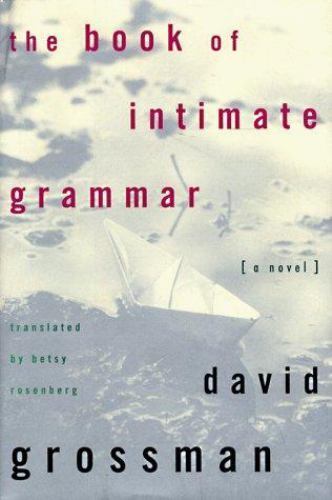
The Book of Intimate Grammar by David Grossman
Over the past few years, I have also been venturing into the works of Israeli writers. During this period, I have come across several Israeli writers, among them David Grossman. In 2023, I read his International Booker Prize-winning novel, A Horse Walks Into a Bar. It was quite an interesting work and served as a primer to Grossman’s oeuvre. However, I gained a better and deeper appreciation of Grossman’s prose with More Than My Life. Three years after reading my first Grossman novel, I have now read my third, The Book of Intimate Grammar. Originally published in 1991 as ספר הדקדוק הפנימי (Sefer HaDikduk HaPenimi), the novel takes place in the neighborhood of Beit HaKerem, Jerusalem, in the 1960s, during the years leading up to the Six-Day War. Beit HaKerem was a poor housing project that housed scores of Eastern European refugees. At the heart of the story is Aron Kleinfeld, who is eleven years old when the novel begins. The son of a Polish refugee father, he lives with his working-class parents and older sister. Aron is a sensitive and imaginative young boy who is the ringleader of escapades among his circle of friends, composed primarily of neighborhood boys. His closest friend is Gideon, and together they invent elaborate games and fantasies. Their ordinary surroundings are transformed into something mysterious and exciting. In particular, Aron is fascinated by Houdini. But Aron and his peers are approaching puberty, something that Aron loathes. As his friends physically mature, Aron remains physically small and childlike. His situation is exacerbated by his impending bar mitzvah, making him even more uncomfortable. His mother, anxious about his apparent lack of physical development, tries to convince herself—and Aron—that he is growing, despite evidence to the contrary. Slowly, he becomes a source of enduring shame for his parents. He is short, myopic, and seems incapable of developing into the conventional physical form of manhood. However, Aron’s case is more complex than it seems. He is deeply resistant to the entire concept of growing up. He regards adults with a mixture of fascination, disgust, and incomprehension. The more he observes adults, the less attractive adulthood becomes, and the more he retreats into his imagination. Aron’s inability to mature mentally also becomes a source of shame among his friends. The Book of Intimate Grammar, on the surface, is a coming-of-age story. However, it is a coming-of-age story in reverse. Aron resists the idea of maturing, both physically and mentally. The novel’s central theme is the loss of innocence and childhood. For Aron, adulthood represents conformity with society and its expectations. It is also associated with disappointment and hypocrisy. Aron’s refusal to grow physically manifests itself in his increasing isolation from his family and even his friends. In a way, Aron’s refusal to mature is also his own form of rebellion against societal expectations. Interestingly, Aron struggles to express his own thoughts, although he thinks constantly, analyzes everything, and even constructs elaborate private associations. This is where the book derives its title. The Book of Intimate Grammar is yet another compelling read by the highly renowned Israeli writer.
Goodreads Rating:

The Guide by R.K. Narayan
My venture into Asian literature has ultimately been reduced to three major literary traditions: Japanese, Philippine, and Indian literature. Through Salman Rushdie, and by extension, the Booker Prize, Indian literature has become one of the staples of my annual literary journeys. Because of its vastness, there are several Indian writers whose works I have yet to explore. Among them is Rasipuram Krishnaswami Narayanaswami, more popularly known as R. K. Narayan. He is quite a figure in Indian literary circles, revered as one of the leading authors of early Indian literature in English. Must-read lists first introduced me to him. His novel, The Guide, is listed as one of the 1,001 Books You Must Read Before You Die. Originally published in 1958, The Guide transports readers to the fictional town of Malgudi in South India; Malgudi is one of Narayan’s most renowned creations. At the heart of the novel is Raju, nicknamed “Railway Raju.” His story weaves in and out of the past and the present. When we first meet him, he has just been released from prison after serving a two-year sentence for forgery. Rather than returning to his hometown of Malgudi, he takes refuge in an abandoned temple near the river in the village of Mangal. There, he encounters Velan, a simple and devout villager who mistakes Raju for a holy man, leading Raju to become the villagers’ swami, or holy man. How he arrived at this point is what the novel traces. Raju was born and raised during a period of drastic change in India, including the expansion of the railway system. The construction of a railway line in Raju’s hometown changes the family’s fortunes and Raju’s life forever. A second shop opened by Raju’s father brings prosperity to the family. When his father passes away, Raju naturally takes over the railway-station shop. Rather than remaining a shopkeeper, he reinvents himself as a tourist guide, taking visitors arriving at the railway station to the various sites of Malgudi. His exaggerated and fabricated tales impress his customers, and before long, his reputation as a guide grows exponentially. He earns the moniker “Railway Raju” and becomes sought after by tourists from different parts of the country. Raju’s life changes dramatically when he meets Marco, an archaeologist and scholar, and his wife, Rosie. Rosie is an accomplished classical dancer, a talent her husband dismisses as frivolous. Raju, by contrast, immediately recognizes her talent. This leads to an illicit affair, prompting Marco to leave Rosie and resulting in her moving in with Raju and his mother. Meanwhile, Raju finds himself in dire financial straits, but he still encourages Rosie’s career; Rosie is unaware of his financial troubles. The Guide is a slender book, but it is packed with a lot. It examines identity and reinvention. It is about personal transformation, captured particularly through the titular guide. From being a shopkeeper, life’s cruel (or perhaps funny) twists lead him to become a holy man, although Raju is admittedly far from being one. This is not to say that Raju is without redeeming qualities. Beyond Raju, the novel grapples with the familiar subject of modernity and tradition. Raju’s conservative mother represents tradition, while Rosie embodies the modern woman. The novel also explores how greed and materialism can adversely affect a person’s life. Overall, The Guide is a compelling read. How I wish it were longer.
Goodreads Rating:
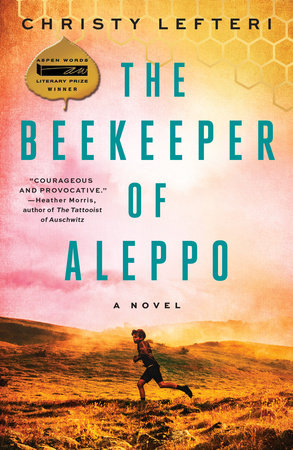
The Beekeeper of Aleppo by Christy Lefteri
I have also noticed how sparse my literary venture into the Middle East has been, although it is a region one often hears about, frequently for negative reasons. During the 2010s, Syria became part of the world’s collective memory. The outbreak of the Syrian Civil War tore the Middle Eastern nation apart. This was exacerbated by the rise of terrorist groups and the involvement of foreign powers, most prominently Russia. While I have long been familiar with Syria, I can’t say that I have explored its literature to any significant extent. This places Christy Lefteri’s The Beekeeper of Aleppo in an interesting position. Interestingly, Lefteri was born to Greek Cypriot refugee parents who met in London after fleeing the 1974 invasion. Originally published in 2019, The Beekeeper of Aleppo chronicles the story of Nuri and Afra, who are from the city of Aleppo, the second-largest city in Syria. The novel opens in 2016, with Nuri and Afra in a bed-and-breakfast in England. Nuri confesses his fear about Afra’s eyes, fearing that her sight is disappearing. The reason for her blindness is not immediately explained, but it is obviously causing distress between the couple. Along with refugees such as Moroccan Hazim and Diomande, they are waiting to begin the process of claiming asylum in England. This raises the question of the circumstances that brought them to England. The answers, as always, lie in the past. In Aleppo, Nuri and his family live a simple life. Nuri is a beekeeper, a craft he learned from his wayward cousin, Mustafa. Together, they run a successful business caring for their bees and selling honey-based products. Afra, on the other hand, earns a living as a prolific artist. The couple has a young son named Sami. Their family shares meals with Mustafa and his wife, Dahab, and their children, Firas and Aya. Their idyllic life, however, is slowly shattered by the encroaching war. With trouble brewing on the horizon, Mustafa sends his wife and Aya to England. Soon after, the war makes its way into their city. Vandals destroy their apiaries, prompting Mustafa to flee, but only after Firas is killed. Mustafa also leaves a note for Nuri, asking him to follow as soon as he can. Grief-stricken by the death of their son, Afra refuses to leave; just as with her blindness, Lefteri leaves the details of Sami’s death unexplained. When soldiers threaten Nuri’s life and ransack their house, Afra changes her mind, commencing their long journey to England. The Syrian Civil War of the 2010s made waves, literally, especially through the refugee crisis it instigated. Many Syrians, forced to flee their country, were smuggled by ship, some of which ended in disaster. One of the most enduring symbols of this crisis is the death by drowning of two-year-old Alan Kurdi. The photograph of Kurdi’s drowned body became a symbol of the suffering of refugees trying to reach Europe. The Beekeeper of Aleppo subtly references this incident. As vivid as the historical details are, the depiction of Afra and Nuri’s journey is perhaps even more striking. It is richly rendered and is one of the novel’s finer elements. The novel also explores grief and the trauma caused by war, astutely examining the refugee crisis and the complexities of displacement. Overall, The Beekeeper of Aleppo is a quick but insightful read.
Goodreads Rating:

Malice by Keigo Higashino
I was saddened by the recent death of Keigo Higashino, whom I first encountered through an online bookseller in the mid-2010s. I read his novel Salvation of a Saint. Although I was not as impressed as I had hoped to be, Higashino still left a mark on me. It was, after all, one of the first Japanese mystery novels I had read. Over a decade later, I have now read my fourth Higashino novel. I also recently watched a film adaptation of one of his novels, A Midsummer’s Equation. Needless to say, Higashino has grown on me. The Devotion of Suspect X helped me understand and appreciate Higashino’s mystery-fiction prose. I must say, I am beginning to see a pattern emerging. Originally published in 1995 as 悪意 (Akui), Malice is the first book in the Detective Kaga series. Malice opens with the shocking murder of Kunihiko Hidaka, a celebrated novelist, on the eve of his planned move to Vancouver. Hidaka is found strangled in his locked office by his wife, Rie, and his best friend, Osamu Nonoguchi. A brass paperweight is also found to be the murder weapon. At first, the crime seems unsolvable. Both Rie and Nonoguchi have ironclad alibis. A manuscript faxed by Hidaka to Nonoguchi at precisely 6:13 p.m. establishes Nonoguchi’s alibi; the novel opens with his narration. Like his friend, Nonoguchi is a published writer. He writes children’s books, but he aspires to become a novelist himself. Just when it seems that the case is about to be closed, Detective Kyoichiro Kaga enters the investigation. Detective Kaga also shares a history with Nonoguchi. They both taught at the same school. As Detective Kaga digs deeper, he quickly realizes that the friendship between Hidaka and Nonoguchi is not what it seems. On the surface, Nonoguchi portrays himself as an ardent admirer of Hidaka and his works. The story unfolds through reflections and revelations intertwined with interviews with various individuals connected to the victim and the suspect. Kaga’s interviews with Hidaka and Nonoguchi’s former acquaintances, friends, and schoolmates reveal an entirely different story. Each interaction seems to hold a potential clue that could lead Kaga to the truth behind the case. As both Kaga and Nonoguchi take over the narration, the story’s complexion also changes. As the different layers are peeled back, the story’s focal point drastically shifts from who murdered Hidaka to what motivated his murder. One of Malice’s most interesting facets lies in how it challenges readers’ understanding of the conventional mystery thriller. Rather than emphasizing the unmasking of the who or the how, the novel focuses on the why. This is further muddled by the contrasting narrations of Kaga and Nonoguchi; one is a reliable narrator, while the other is unreliable. The intricate and complicated relationships and motivations are also indicative of human frailty. For one, Malice captures the destructive power of suppressed emotions. Jealousy and desperation are prevalent emotions, as characters strive to be recognized and create personal legacies. This paves the way for pivotal revelations toward the novel’s conclusion. The novel probes into the very essence of malice, which creates the tension that pushes the story forward. Getting there was one of the novel’s finer elements. Overall, Malice’s central mystery is engaging, but its exploration of human nature elevates it.
Goodreads Rating:


Once on a Moonless Night by Dai Sijie
Over the past decade, one of the names that has become a staple of my reading is Orhan Pamuk. Interestingly, I first encountered Orhan Pamuk through an online bookseller. I eventually learned that he is a Nobel Laureate in Literature. The first novel I read by him was Snow, which I read back in 2016. While I initially struggled with it, the passage of time made me appreciate it. It led to a long-term writer-reader relationship with the Turkish writer. He is also one of my primers to the wonderful and exciting world of Turkish literature. A decade after I read my first novel by Pamuk, I have completed my sixth Orhan Pamuk novel, The White Castle. Originally published in 1985 as Beyaz Kale, The White Castle is Pamuk’s third novel. The story opens in the mid-1980s, when historian Faruk Darvinoglu recalls finding a manuscript in a storage room while looking through an archive in the governor’s office in Gebze. He hopes to authenticate the manuscript. Apparently, similar manuscripts could be found throughout Istanbul’s old wooden houses, mistaken for ancient Korans. The story then flashes back to the seventeenth century, where the narrative voice is taken over by a young Italian academic. Born into an affluent family, he sails with his family from Venice to Naples. From the dense fog emerges a Turkish fleet. The ship’s captain hesitates to act, permitting the Turks to capture the ship. It is, in a way, a reversal of roles, with the conquered becoming the conquerors. The Turks take control of the ship and capture the European travelers, taking them as their slaves. The narrator, in an attempt to curry favor, lies and tells them he is a doctor; he is still taken as a slave. After curing the pasha, one of the leaders of the Turkish fleet, the narrator is allowed some privileges, including working on the plans for the fireworks display to take place at the wedding of the pasha’s son. While working on this project, he meets Hoja, his mirror image. Hoja eventually becomes his master. The narrator is subject to Hoja’s cruelty, ambitions, and inquiries. Still, they embark on a journey of mutual education. The narrator eventually learns that Hoja is using the narrator’s knowledge of astronomy, as well as tales from Italy, to entertain the young sultan, thus elevating himself within the Ottoman court. However, the questions Hoja asks take on deeper meanings: “Why am I what I am?” The White Castle is surely a propulsive and compelling read. On the surface, it captures the dynamics of a slave-master relationship. Hoja tries to assert superiority over the narrator by ridiculing him for his childhood or for his weakness and paranoia as a slave. Ironically, he also spends just as much time trying to learn from the narrator. This sets the stage for the novel’s exploration of identity. Pamuk’s philosophical inquiries challenge the foundations of the self. The two main characters, interestingly, can switch identities. The ambiguity of the self is a major conflict for the narrator. The interactions between the two characters also underscore the power of knowledge. Historical contexts further provide nuance to the story. The plague that sweeps the city also provides the characters with a mantle upon which to reflect on their positions in society, the lives they live, and the people they really are. Short but surprisingly insightful, The White Castle is a masterstroke from the Turkish wordsmith.
Goodreads Rating:
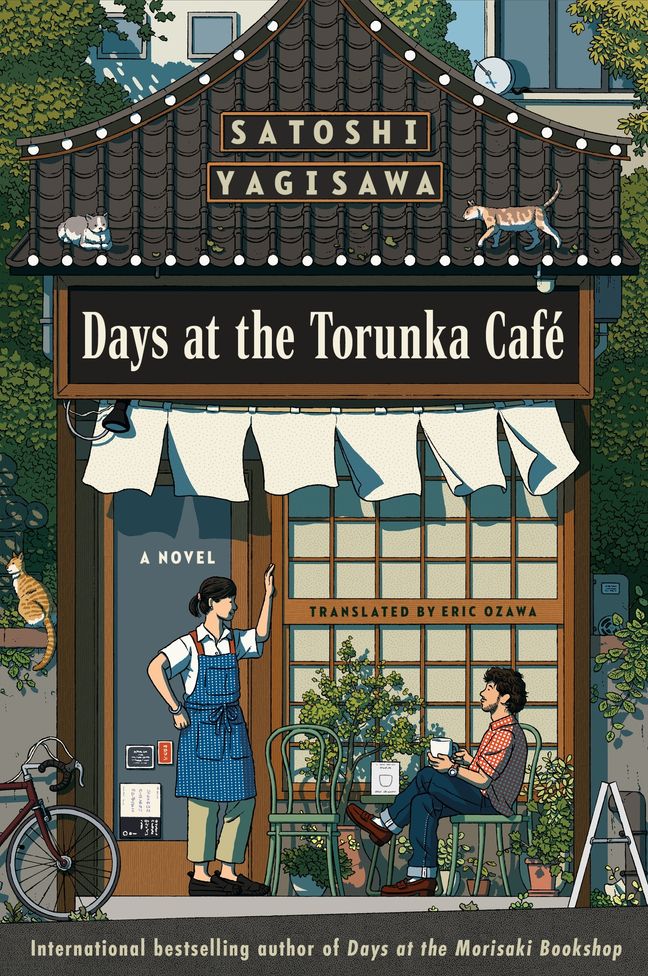
Days at the Torunka Café by Satoshiy Yagisawa
I have concluded my venture into Asian literature in the same manner that I commenced it: by reading a work by a Japanese writer. In July, I started this journey with Mieko Kawakami’s latest translated novel, Sisters in Yellow. I am now concluding it with Satoshi Yagisawa’s latest translated novel, Days at the Torunka Café. The Japanese writer’s novel Days at the Morisaki Bookshop was ubiquitous, naturally piquing my interest. It also came at a time when Japanese literature had become saturated with healing novels. I ended up liking the novel. Three years later, I have concluded my 2026 Asian literature venture with my third Yagisawa novel. Originally published in 2013 as 純喫茶トルンカ, Days at the Torunka Café is set in the Yanaka neighborhood of downtown Tokyo, where the titular Torunka Café is situated. The novel is divided into three interconnected stories linked by the Torunka Café. The novel opens with Shūichi Okuyama, a twenty-one-year-old college student who works part-time at the Torunka. During a slow Sunday afternoon, he is working with the owner, Isao Tachibana, and Tachibana’s high school-aged daughter, Shizuku. Their solitude is broken by the arrival of a young woman in a black coat and a scarlet scarf, who orders Colombian coffee served by Shūichi. However, the moment their eyes meet, she seizes his hands and says, “We meet at last.” The young woman, Chinatsu Yukimura, claims that they knew each other. While they have never met in this life, they were lovers in a past one during the French Revolution; she was a man named Etienne, and Shūichi was a woman named Sylvie. Shūichi is unsure what to make of what he is hearing. Beyond her unusual claim of a former life, everything else about Chinatsu seems normal. She lives nearby and found the café by chasing a cat. This unsettles Shūichi because it mirrors his own story of discovering the café. Chinatsu then becomes a regular visitor to the café, spending her Sunday afternoons there. The second story involves a middle-aged man named Hiroyuki Numata, who returns to the neighborhood to confront the life he left behind. He remembers the café as Nomura Coffee, the café he once frequented with Sanae, the woman he loved in his youth. He meets Ayako, Sanae’s daughter. Through a private investigator, Hiroyuki learns about Sanae’s death from cancer. The last story involves Shizuku. She confesses that she has avoided coffee for nearly ten years, ever since her older sister, Sumiré, secretly gave her a cup at the age of seven. The novel is about observed human behavior and the complex interactions that we have with those around us. Along with Yagisawa’s other works, it instigates a simulacrum of introspection, mixed with curiosity and even confusion. But this shock factor reels readers in, as it did with me. The stories also explore our humanity, as they reflect on regret, lost opportunities, healing, grief, and self-identity. The stories also underscore the strength and beauty that can be found in establishing authentic and meaningful human connections while exploring the theme of opening oneself to new possibilities. All the while, the stories find a connection in the past. In confronting the past, the characters learn to heal, forgive themselves, and move forward. Overall, Days at the Torunka Café is tender and warm, a quintessential Yagisawa work.
Goodreads Rating:
Reading Challenge Recaps
- 2026 Top 26 Reading List: 19/26
- 2026 Beat The Backlist: 11/20; 60/60
- 2026 Books I Look Forward To List: 0/10
- Goodreads 2026 Reading Challenge: 69/100
- 1,001 Books You Must Read Before You Die: 11/20
- New Books Challenge: 0/15
- Translated Literature: 47/50
Book Reviews Published in August
- Book Review # 662: Traveler of the Century
- Book Review # 663: The Woman from Uruguay
- Book Review # 664: Amalia
- Book Review # 665: Sisters in Yellow
- Book Review # 666: Lost Children Archive
- Book Review # 667: Velvet Was the Night
After hitting a writing slump in July due to hectic days at the office—end of quarters are often like this, inevitably limiting my writing time—I was finally able to gain a semblance of momentum in August. After completing just three book reviews in July, I made up for lost time by doubling my output in August. While six book reviews are still below my target of at least eight, it is still a good number. I guess that, with everything happening, six has become my norm. Still, I am grateful that I was able to find the time to write. This allowed me to complete all my pending book reviews from my venture into Latin American literature in late 2023; four of the books I reviewed were from this period. Meanwhile, I reviewed Mieko Kawakami’s latest novel, Sisters in Yellow, making it just the second book I have read this year that I have reviewed.
In a way, my review of Silvia Moreno-Garcia’s Velvet Was the Night marks the gradual transition to my 2024 pending reviews. With about seven book reviews remaining, I am about to complete all my 2023 pending reviews. Still, my backlog continues to grow because my writing simply cannot keep pace with my reading. My hope is to carry over the momentum I built in August into September and sustain it through the rest of the year. For now, my primary goal is to finish my remaining 2023 reviews while steadily working through those from 2024 and 2025. I hope to make meaningful progress on my considerably larger 2024 backlog. From time to time, I may also publish reviews of books I read before I began writing reviews, such as Haruki Murakami’s Norwegian Wood, Salman Rushdie’s The Ground Beneath Her Feet, and Ian McEwan’s Atonement. These novels hold special significance for me, as they were the first works I read by each of these authors.
As for my reading, September will mark the pivot toward a new literary territory. American literature has been a staple of my annual literary journey. With American literature being one of the most readily available, I guess one can never escape it. I also realized that I have several works of American literature in my ongoing reading challenges. William Gibson’s Neuromancer, Bret Easton Ellis’s Less Than Zero, Philip Roth’s Portnoy’s Complaint, and Marion Zimmer Bradley’s The Mists of Avalon are all part of my 2026 Top 26 Reading List. Interestingly, I have never read any of their works before. In addition, Michael Punke’s The Revenant, Don DeLillo’s Underworld, Fannie Flagg’s Welcome to the World, Baby Girl!, Michelle Richmond’s The Year of Fog, and Myla Goldberg’s Bee Season are part of my 2026 Beat the Backlist Challenge.
Along the way, I plan to continue selecting books from my bookshelf that complement each month’s primary reading theme. I might as well read Yáng Shuāng-zǐ’s Taiwan Travelogue, the recent winner of the International Booker Prize. How about you, fellow reader? How is your own reading journey going? I hope you enjoyed the books you have read. For now, have a great day. As always, do keep safe, and happy reading, everyone!

