
Happy Wednesday, everyone! Woah! Just like that, we are nearly midway through the eighth month of the year. How time flies! I hope the year has been kind and great to everyone. I know life isn’t a walk in the park, but it is my fervent prayer that everyone’s year is going well. Regardless, I hope the rest of the workweek goes smoothly.
That said, the middle of the week also brings a fresh WWW Wednesday update. WWW Wednesday is a bookish meme hosted originally by SAM@TAKING ON A WORLD OF WORDS.
The mechanics for WWW Wednesday are quite simple: you just have to answer three questions:
- What are you currently reading?
- What have you finished reading?
- What will you read next?

What are you currently reading?
It’s already the middle of the week, which means we have only two more days until the weekend. I hope everyone makes it through the workweek. Anyway, my 2026 reading journey is going as planned. I spent the first two months of the year reading works by Latin American and Caribbean writers. I then followed that with a venture into European literature, a journey that lasted four months. I think this is the longest time I have spent immersed in European literature in a single year. I am just glad I was finally able to complete all the works by European writers included in my reading challenges. Ironically, I first ventured into European literature because of these books, yet they were the last ones I read. In any case, I am glad I was finally able to conclude that journey. Nevertheless, it was one that I truly relished. Still, I am happy to begin a new literary adventure. In July, I decided to venture into the works of Asian writers. With the number of Asian works I wanted to read, it was inevitable that I would extend this journey into August.
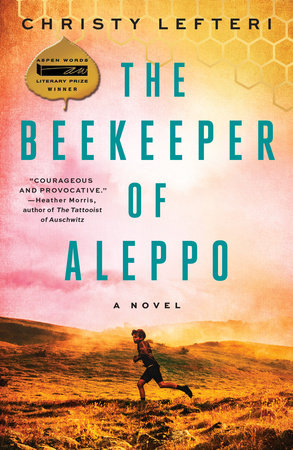
During the 2010s, Syria became part of the world’s collective memory. The outbreak of the Syrian Civil War divided the Middle Eastern nation. This was exacerbated by the rise of terrorist groups and the involvement of other foreign countries, prominently Russia. While I have known about Syria and Damascus (one of the oldest continuously inhabited cities in the world), I can’t say I have explored its literature that much. I believe the closest I came to it was Zeyn Joukhadar’s The Map of Salt and Stars. This places Christy Lefteri’s The Beekeeper of Aleppo in a unique position. Interestingly, Lefteri was born to Greek Cypriot refugee parents who met in London after fleeing the 1974 invasion. Nevertheless, I am interested to know what the novel has in store; I have long been curious about it because it was once ubiquitous. I am just about to start reading the novel. I will be sharing my impressions in this week’s First Impression Friday update.
What have you finished reading?
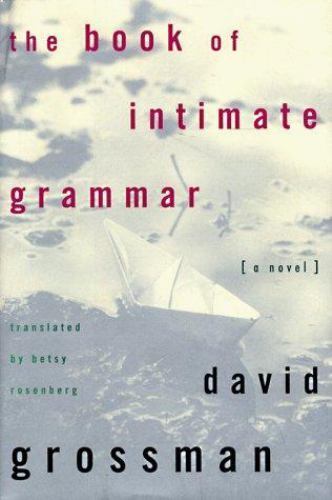
Over the past few years, I have also been venturing into the works of Israeli writers. It has not escaped my attention that my foray into Israeli and Hebrew literature remains quite sparse. During this period, I have come across several Israeli writers. Amos Oz was among them, and his body of work has since piqued my interest. Another Israeli writer whom I recently discovered is David Grossman. In 2023, I read his International Booker Prize-winning novel, A Horse Walks Into a Bar. It was quite an interesting work and served as a primer to Grossman’s oeuvre. However, I gained a better and deeper appreciation of Grossman’s prose with More Than My Life. Three years after reading my first Grossman novel, I have now read my third, The Book of Intimate Grammar. I was not planning on reading this novel this year, but I realized that my Asian literary adventure has been too focused on the works of Japanese, Indian, and Filipino writers. With this in mind, I decided to read The Book of Intimate Grammar.
Originally published in 1991 as ספר הדקדוק הפנימי (Sefer HaDikduk HaPenimi), the novel was made available to Anglophone readers in 1994 in a translation by Betsy Rosenberg. The story takes place in the neighborhood of Beit HaKerem, Jerusalem, in the 1960s, during the years leading up to the Six-Day War. Beit HaKerem was a poor housing project that housed scores of Eastern European refugees. At the heart of the story is Aron Kleinfeld, who is eleven years old when the novel begins. He is the son of a Polish refugee father and lives with his working-class parents and older sister. Aron is a sensitive and imaginative young boy. He is a great dreamer and the ringleader of escapades among his circle of friends, composed primarily of neighborhood boys. His closest friend is Gideon, and together they invent elaborate games and fantasies. Through these games, they transform their ordinary surroundings into something mysterious and exciting. In particular, Aron is fascinated by Houdini. But Aron is approaching a stage of life that terrifies him: puberty. All around him, his friends are beginning to grow taller. Their voices are deepening, and their bodies are developing. As his friends physically mature, Aron remains physically small and childlike. His situation is exacerbated by his impending bar mitzvah, making him even more uncomfortable. A bar mitzvah marks the formal passage into Jewish adulthood. His mother, anxious about his apparent lack of physical development, tries to convince herself—and Aron—that he is growing. However, it is becoming increasingly apparent that he is not. Slowly, he is becoming a source of enduring shame for his parents. He is short, myopic, and scrawny, and seems incapable of developing into the conventional physical form of manhood. However, Aron’s case is more complex than it seems. He is deeply resistant to the entire concept of growing up. He regards adults with a mixture of fascination, disgust, and incomprehension. The more he observes adults, the less attractive adulthood becomes, and the more he retreats into his imagination. Aron’s inability to mature mentally is also becoming a source of shame among his friends. His school friends have grown tired of his childish imagination. Will Aron mature? The Book of Intimate Grammar has an interesting premise. On the surface, it is a coming-of-age story. However, it is a coming-of-age story in reverse, as Aron is resistant to the idea of maturing, both physically and mentally.
Like his other works, the novel is rather dense, with long paragraphs. The novel’s central theme is the loss of innocence and childhood. For Aron, childhood represents imagination and liberty. This is why the idea of adulthood daunts him. To him, adulthood represents conformity with society and its expectations. It is also associated with disappointment and hypocrisy. Aron’s refusal to grow physically manifests itself in his increasing isolation from his family and even his friends. In a way, Aron’s refusal to mature is also his own form of rebellion against societal expectations. He refuses to grow up into a conventional adult. Interestingly, Aron struggles to express his own thoughts, although he thinks constantly, analyzes everything, and even constructs elaborate private associations. This is where the book derives its title. The Book of Intimate Grammar is yet another compelling read by the highly renowned Israeli writer. Each of the three works I have read so far has provided me with a different perspective on his oeuvre. I am looking forward to reading more of his works.

As I have mentioned above, my venture into Asian literature has ultimately been reduced to three major literary traditions: Japanese, Philippine, and Indian literature. From the Middle East, my literary journey next took me to South Asia, to a literary territory that has been growing on me. Through Salman Rushdie, and by extension, the Booker Prize, Indian literature has become one of my annual literary journey staples. Because of its vastness, there are several Indian writers whose works I have yet to explore. Among them is Rasipuram Krishnaswami Narayanaswami, more popularly known as R. K. Narayan. He is quite the figure in Indian literary circles. He is revered as one of the leading authors of early Indian literature in English. I first encountered the Indian writer through must-read lists. Some of his novels are featured on such lists. Among them is The Guide, which is also listed as one of the 1,001 Books You Must Read Before You Die. Like The Book of Intimate Grammar, I was not planning on reading this book, but then I changed my mind.
Originally published in 1958, The Guide transports readers to the fictional town of Malgudi in South India; Malgudi is one of Narayan’s most renowned creations. At the heart of the novel is Raju, who is nicknamed “Railway Raju.” His story weaves in and out of the past and the present. When we first meet him, he has just been released from prison after serving a two-year sentence for forgery. However, instead of returning to his hometown of Malgudi, he takes refuge at an abandoned temple near the river in the village of Mangal, where he encounters Velan, a simple and devout villager who mistakes Raju for a holy man. A coincidence, or rather, a stroke of luck, leads Raju to become the villagers’ swami, or holy man. But the novel then moves backward to tell the story of how he arrived at this point. Raju was born and raised during a period of drastic change in India. Among these changes was the expansion of the railway system across the country. One of these railway lines was constructed in Raju’s hometown. This event changed the family’s fortunes and Raju’s life forever. A second shop opened by Raju’s father brought prosperity to the family. When his father passed away, Raju naturally took over the railway-station shop to continue his father’s enterprise. However, he did not remain a shopkeeper for long. He soon reinvents himself as a tourist guide, taking visitors arriving at the railway station to the various sites of Malgudi. He exaggerates and fabricates tales to impress his customers, and before long, his reputation as a guide grows exponentially. Not only is he resourceful, but he is also charismatic. He earns the moniker “Railway Raju” and becomes sought after by tourists from different parts of the country. Raju’s life changes dramatically when he meets Marco, an archaeologist and scholar researching ancient Indian art and cave paintings, and Marco’s wife, Rosie. Rosie is an accomplished classical dancer, a talent her husband dismisses as frivolous. Raju, by contrast, immediately recognizes her talent. He becomes fascinated by her and begins encouraging her to dance. This eventually leads to an illicit affair, prompting Marco to leave Rosie and resulting in her moving in with Raju and his mother. Meanwhile, Raju finds himself in dire financial straits. Still, he continues to encourage Rosie’s career, while Rosie remains unaware of his financial troubles.
The Guide is a rather slender book. However, it is packed with a lot. At its heart, it is a novel about identity and reinvention. It is about personal transformation, captured particularly through the titular guide, who reinvents himself from a shopkeeper into a tourist guide. He then becomes Rosie’s manager before eventually being imprisoned. Life’s cruel (or perhaps funny) twists lead him to become a holy man, although Raju is admittedly far from being one. This is not to say that Raju is without redeeming qualities; his devotion to Rosie, at one point, was commendable. Beyond Raju, the novel grapples with the familiar subject of modernity and tradition. Raju’s conservative mother represents tradition, while industrialization ushers modernity into their town. Rosie, meanwhile, embodies the modern woman. The novel also explores how greed and materialism can adversely affect a person’s life. Overall, The Guide is a compelling read. How I wish it were longer.
What will you read next?


