Happy Wednesday, everyone! Woah! Just like that, we are already in the ninth month of the year. How time flies! Still, tomorrow marks the end of the daunting “ghost month,” a period often connected to slowdowns in business and a period when travels are discouraged. I hope the year has been kind and great to everyone. I know life isn’t a walk in the park, but it is my fervent prayer that everyone’s year is going well. Regardless, I hope the rest of the workweek goes smoothly.
That said, the middle of the week also brings a fresh WWW Wednesday update. WWW Wednesday is a bookish meme originally hosted by SAM@TAKING ON A WORLD OF WORDS.
The mechanics for WWW Wednesday are quite simple: you just have to answer three questions:
- What are you currently reading?
- What have you finished reading?
- What will you read next?

What are you currently reading?
It’s already the middle of the week, which means we have only two more days until the weekend. I hope everyone makes it through the workweek, even though the past few days have been damp here in the Philippines. Anyway, after spending the past two months exploring the works of Asian writers, I have now crossed the Pacific and commenced an exploration of American literature. American literature has always been a staple of my annual literary journey. With American literature being one of the most readily available, I guess one can never escape it. I also realized that I have several works of American literature in my ongoing reading challenges. This reminds me that we are already in the final stretch of the year, and I still have quite a lot of books to read for my reading challenges. I guess it is time to lock in to avoid cramming during the last month of the year.
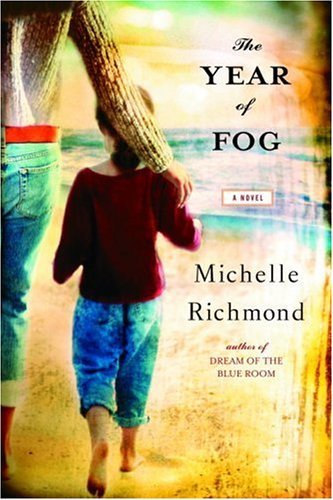
Among the books I listed on my reading challenges is Michelle Richmond’s The Year of Fog. It has been nearly a decade since I acquired a copy during one of my random ventures into the local bookstore. While I had no inkling of who Richmond was, the book piqued my interest. It, however, suffered the same fate as most of my books: gathering dust on my bookshelf. It was because of this that I included it in my 2026 Beat the Backlist Challenge. Originally published in 2006, The Year of Fog opens with Abby Mason, a photographer and soon-to-be stepmother. She is at Ocean Beach looking after her fiancé Jake’s six-year-old daughter, Emma, while Jake is away on a trip. It is a foggy day at the beach. While Abby is busy taking photographs, Emma is playing on the beach. A brief moment of distraction, however, alters her life.
As Abby looks away for mere seconds, Emma is enveloped by the fog and vanishes inexplicably. This brief moment of inattention leads to heartache and turmoil, prompting a desperate search. The police soon lose interest in the case. However, Abby’s life begins to unravel. After Emma’s disappearance, Abby is consumed by guilt. Jake, on the other hand, is shattered. However, Abby holds on to the unwavering hope that Emma is still alive. Days soon stretch into weeks, yet Abby remains resolute in her desperate quest for answers. This inevitably collides with her own childhood memories. I have just started reading the book today, but it already commands my attention. It is gripping, making me look forward to seeing how the story unfolds and whether the mystery is solved. What really happened to Emma?
What have you finished reading?

I am still trying to gain some reading momentum as my life has been experiencing a couple of transitions, both professionally and personally. Nevertheless, I am glad I was able to allot time to reading. In the past week, I was able to complete two books, which I still consider a good number. The first of the two books I read, and my first work by an American writer this year, is William Gibson’s Neuromancer. It was through must-read lists that I was first introduced to Gibson. Since I am not a big fan of speculative fiction, I avoided it and other works of speculative fiction. However, the genre has been growing on me recently. I guess this is partly due to literary classics such as Douglas Adams’s The Hitchhiker’s Guide to the Galaxy series and Philip K. Dick’s Do Androids Dream of Electric Sheep? Besides, Neuromancer is listed as one of the 1,001 Books You Must Read Before You Die. It is for these reasons that I included the novel in my 2026 Top 26 Reading List.
Originally published in 1984, Neuromancer is set in the near future. The novel interestingly opens in Chiba, Japan, where we meet Henry Dorsett Case. Case is a former console cowboy who now works as a middleman for smugglers and drug dealers. Apparently, he was forced out of his former job after stealing from his bosses. He was punished by having his nervous system damaged, preventing him from ever jacking into the matrix again. In Japan, Case hopes to find a cure. Unfortunately, he has run out of money. He now resides on the edge of society, drug-addicted and indebted to his employers. His misfortunes only grow when he runs into his ex, Linda Lee. Fortune seems to start smiling on him when he is approached by Molly, an augmented razorgirl (cyborg) and mercenary. She is a street soldier working for Armitage, a mysterious former military point man. Armitage’s mysterious employer tasks him with assembling a team to carry out a series of heists. Case signs on to the mission when Armitage promises him that he will restore his nervous system. Case undergoes the operation but soon discovers that Armitage has sabotaged him with a time-delayed poison. If Case completes the job, Armitage will disarm the poison; if not, he will find himself crippled again. Thus commences a series of adventures and misadventures that take them across the world. They are joined by Peter Riviera, a psychopathic police spy and holographic illusionist, in Istanbul. A lead eventually brings them to Wintermute, an artificial intelligence created by the eccentric Tessier-Ashpool family. The family spends its time in rotating cryonic preservation in their home, Villa Straylight. The villa is located on Freeside, a cylindrical space habitat that serves as a pleasure retreat for the wealthy. Wintermute soon reveals itself to Case. It is one half of a super-intelligent artificial intelligence (AI) entity planned by the family. It is programmed with a need to merge with its other half, Neuromancer. However, due to the severe restrictions placed on AI programs by the Turing Registry, it cannot achieve this on its own. Wintermute then directs Armitage to recruit the team and infiltrate Villa Straylight, where Neuromancer’s access terminal is located. A Chinese military icebreaker virus is obtained by the team to pierce Neuromancer’s defenses. Case will then run and steer it with the help of the Dixie Flatline construct. Meanwhile, Riviera tries to win over Lady 3Jane Tessier-Ashpool, the only member of the family awake in the villa. He will then open the way for the team, while Molly will reach 3Jane and extract Neuromancer’s password. Case then sets up his hacking rig on a tug ship operated by Zion, a Rastafarian space colony. But then the plan goes sideways.
Throughout, Case’s interactions with Wintermute reveal philosophical undercurrents about consciousness and identity, two prevalent subjects the novel delves into. After all, the story takes place in a world where technology is taking over. Most of the characters prefer the world of cyberspace to the organic one. Neuromancer confronts questions of who counts as a person and what qualifies as a personality. The novel advocates for a wide definition of personhood, especially in a world that is increasingly becoming populated with artificial intelligences, digital reconstructions of the dead, clones, and people who have constructed new personalities. Despite the novel being written in the 1980s, its prognosis of the future is chillingly becoming closer to reality. Still, vestiges of humanity are indelible. Personal interests collide with the yearning for genuine connection, a luxury in a world where emotions come in last. One of the progenitors of cyberpunk, Neuromancer is a richly layered novel, grappling with several questions about humanity and technology. Apparently, it is the first book of a trilogy. I just might consider reading the entire trilogy.

The second book I read in the past week is Fannie Flagg’s Welcome to the World, Baby Girl! It has been nearly two decades since I first encountered the American actress and writer. I was still in university when I came across her and her novel Standing in the Rainbow while browsing at a secondhand bookseller. I loved her writing and its depiction of American small-town life. I hoped to read more of her work, but it never materialized until nearly two decades later. Interestingly, it has been over a decade since I acquired a copy of Welcome to the World, Baby Girl! Unfortunately, it was left to suffer the same fate as most of my books: gathering dust on my bookshelf. It is for this reason that I included the book in my 2026 Beat the Backlist Challenge.
Welcome to the World, Baby Girl! opens with a preface about the town of Elmwood Springs in southern Missouri. In the 1940s, it is described as being “like a thousand other small towns scattered across America.” This immediately sets the tone for the story, at least for me. The first Flagg novel I read was about small-town America. It is therefore no surprise that my second Flagg novel tackles, or at least attempts to explore, the same theme. The story proper, however, commences in a not-so-small town. The story opens in the Big Apple. In 1970s New York City, we meet the novel’s heroine, Dena Nordstrom. Living in Manhattan, she works for a cable network as a high-powered, career-driven morning-show star. Not only is she a major success, but she is also in line to continue rising through the ranks of morning television. It is a period when news networks are increasingly thriving on manipulative and exploitative interviews. It is a great opportunity for Dena, as these kinds of manipulative interviews are made more presentable by the appearance and demeanor of attractive women like her. New York City, after all, is fast-paced and sleazy. It is brimming with groping news anchors. Then there are the dirt-diggers who are always on alert for the skeletons in anyone’s closet. Everyone wants to get ahead, and the dirty laundry of the rich, famous, and powerful is always a great starting point. For Dena, her future is full of promise. She is, after all, the pride of the network. However, it is also this environment that has been causing Dena great distress. She suffers from bleeding ulcers. She has also started drinking excessively, all to mask the unhappiness that has been sweeping over her. The ulcers eventually lead a doctor to send her to a local psychiatrist, Dr. Elizabeth Diggers. Dena’s case is exacerbated by her memories of the past. Her mother’s abandonment continues to hound her. When everything becomes overwhelming, her psychiatrist recommends that she return home. Dena initially resists the idea, as she barely has any memories of the town. However, the locals remember her; they refer to her as Baby Girl, the daughter of a fallen World War II veteran. As soon as she arrives in town, Dena wants to leave immediately. After all, she has spent years cultivating her sophisticated New York identity and views the people of Elmwood Springs as unsophisticated and provincial. Gradually, however, she discovers that the people she once dismissed possess qualities she has lost. Meanwhile, Dena also starts investigating her own family’s history.
Ultimately, Dena’s journey becomes a process of self-discovery and transformation. Welcome to the World, Baby Girl! is her coming-of-age story. At the start of the story, her personal happiness is anchored in her professional achievement. She has become consumed by the idea of climbing the corporate ladder, although, ironically, she is unaware of how popular she has become. However, her drive and ambition have taken a toll on her body. Her illness soon dismantles her idea of happiness. Through the Elmwood Springs locals she interacts with, such as Aunt Elner, the Warrens, and Sookie, she comes to recognize the value of genuine human connection and a simpler, more authentic form of happiness. All the while, the novel contrasts the fast-paced life of New York City with the laid-back atmosphere of small towns. One of the novel’s more interesting storylines involves the mystery surrounding Dena’s provenance. Her complicated family history explores the idea of passing and how skin color has defined a person. Overall, Welcome to the World, Baby Girl! is a compelling read, brimming with tender moments as Dena reconnects not only with her past but also with herself.
What will you read next?