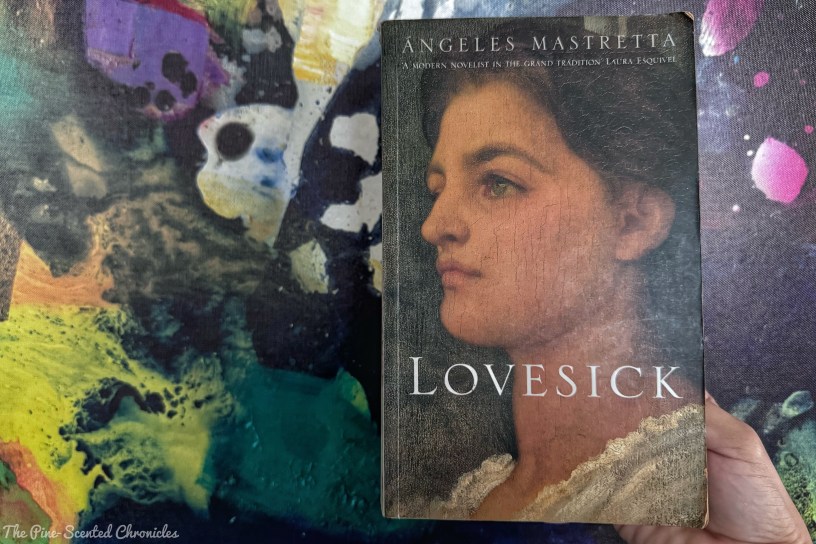
Of Love and Revolution
Latin American literature rose to global prominence in the 20th century due in large part to the Latin American Boom, a period catalysed by the literary titans Gabriel García Márquez of Colombia, Mario Vargas Llosa of Peru, Carlos Fuentes of Mexico, and Julio Cortázar of Argentina. Their individual and collective bodies of work placed Latin American literature firmly on the global literary map. García Márquez’s Cien años de soledad (1967; One Hundred Years of Solitude), Cortázar’s Rayuela (1963; Hopscotch), Fuentes’s La muerte de Artemio Cruz (1962; The Death of Artemio Cruz), and Vargas Llosa’s La ciudad y los perros (1963; The Time of the Hero) are among the cornerstones of contemporary Latin American literature. They remain some of the most recognized works of Latin American literature today. Their legacy endures, with succeeding generations of Latin American writers drawing inspiration from their fabled lives and diverse oeuvres.
Carlos Fuentes’s prominence underscores the important role Mexican literature played in this remarkable rise of Latin American literature. After all, it is one of the most influential bodies of Spanish-language writing. Originating in Indigenous oral traditions, it was eventually shaped by colonial rule. It soon diverged from its colonial roots following independence, developing its own distinct identity that reflects Mexico’s complex history, identity, and social struggles. Mexico has since produced some of the world’s most revered literary figures and celebrated works. Several Mexican writers have even been nominated for the prestigious Nobel Prize in Literature. Among them are Rafael Altamira y Crevea, Enrique González Martínez, and María Enriqueta Camarillo Roa. In 1990, poet and diplomat Octavio Paz Lozano became the first Mexican writer to be awarded the Nobel Prize in Literature.
Another prominent name in the contemporary Mexican literary landscape is Ángeles Mastretta, who studied journalism at the School of Political and Social Sciences of the Universidad Nacional Autónoma de México (UNAM). Inspired by her father, who had been a journalist in his youth, she pursued writing. She first worked as a journalist for publications such as Siete, a magazine published by the Mexican Ministry of Education, and the afternoon paper Ovaciones, where she wrote a column titled “On the Daily Absurdity.” A scholarship from the Mexican Writers’ Center opened more doors for Mastretta, allowing her to devote more time to her writing. In 1978, after a year at the Center, she published her first book, La pájara pinta (The Colorful Bird), a collection of poetry. All the while, she was also contemplating writing a novel. After embarking on a sabbatical, she completed Arráncame la vida (Tear This Heart Out), which was published in 1985. It was a critical success, and the rest, they say, is history.
Child, for you I wish madness, valor, yearning, impatience. May you hae the good fortune of love and the delirium of solitude. A taste for comets, water, and men. Intelligence and wit. Curious eyes, a nose that remembers, a mouth that smiles and curses with godly precision, legs that never grow old, tears that restore wholeness. For you I wish the sense of time of the stars, the temperament of the ants, and the doubt of temples. And may you have faith in auguries, the voices of the dead, the lips of the adventurous, the peace of men who forget their destinies, the strength of your memories and of the future as a promise that holds all you have yet to experience.
Ángeles Mastretta, Lovesick
Building on the success of her debut novel, Mastretta worked on her sophomore novel. Mal de amores was published in 1996, more than a decade after her debut. It was made available to Anglophone readers in 1998 as Lovesick. Set in turn-of-the-century Mexico, primarily in Mastretta’s hometown of Puebla, Lovesick follows Emilia Sauri. Born into a privileged, freethinking family, Emilia was raised by a family of progressive eccentrics. Her father, Diego, was a Mayan apothecary who, after traveling the world for many years, returned to Mexico, where he met the love of his life, Josefa Veytia. Josefa also had an interest in herbal medicine and healing. Diego held high hopes for his only child, raising Emilia in an intellectually stimulating household. Her parents were liberal-minded and encouraged her curiosity and independence, exposing her to political ideas, medicine, literature, and the turbulent political climate of Mexico.
As she was growing up, Emilia developed a friendship with Daniel Cuenca, the son of Dr. Cuenca. As a young boy, Daniel fell in love with Emilia, and his feelings were reciprocated. In one memorable scene, Emilia pushed Daniel into a pond and then jumped in after him. It was evident that romance between the two was on the horizon. However, as they entered adolescence, their paths slowly began to diverge. Their relationship was complicated by the radically different paths they were forging. When Daniel was twelve, his father sent him to a military school to placate his adventurous spirit. This, however, achieved the opposite; it only reinforced his free-spiritedness. Like Emilia, he was raised by his father with a strong political consciousness. He carried his father’s political teachings with him into adolescence. He even studied law at a university in the United States.
Meanwhile, under her father’s tutelage, Emilia began to focus on her studies in medicine. His mentorship deepened her appreciation for medicine, which ultimately developed into a passion. As Emilia matured, she pursued this passion, eventually traveling to the United States to study and become a physician. At the same time, Daniel became increasingly involved in the struggle against the Porfirian regime. With the Mexican Revolution looming, Daniel assumed a prominent role in the revolutionary movement, traveling across Mexico. Barely in his twenties, he began traveling through the states of Chihuahua and Sonora to acquaint himself with the liberal groups preparing to rebel against the regime. After the overthrow of dictator Porfirio Díaz in 1911, chaos ensued. The Mexican Revolution thus became the backdrop to their love story.
However, Daniel’s deep political involvement became a contentious point between him and Emilia. His political commitments repeatedly pulled him away from her, creating a chasm between them. Meanwhile, Emilia’s work also brought her into contact with the consequences of political violence. She became indirectly involved in the revolutionary struggle, using her medical knowledge to treat wounded revolutionaries and ordinary people. Their relationship became even more complicated when Emilia encountered Dr. Antonio Zavalza while studying medicine. Politically and temperamentally, Antonio was Daniel’s antithesis. While Daniel thrived on danger and uncertainty, Antonio was steady, tolerant, and peace-loving—the embodiment of stability and professional ambition. He also loved Emilia deeply, perhaps even more than she loved herself.
Because people had been doing without necessities with such dedication for so long that no one needed a baker, say, or a seamstress, much less a lawyer turned journalist. Nor were they hungry for good cooks, because to prepare the kind of food they could forage, all that was wanting was a fire and a little will. Laws were something that for the moment were kept in the drawer, waiting to be reintroduced in a far distant future, and lawyers, if they didn’t know how mto wash dishes or shoot a thirty-thirty, were completely useless. Of all the professions, the only one respected and needed was the medical profession. No matter the degree of training, much less the specialty, even an itinerant dentist was worth his weight in gold.
Ángeles Mastretta, Lovesick
On the surface, Lovesick is a love story involving a ménage à trois. The emotional backbone of the story comes from the complicated romantic relationship among its three central characters. At the center of it all is Emilia. Both men present an available path for her. Daniel represents thrill, as he is a man of action and adventure. He is also a man of political commitment, and with that commitment comes personal risk. However, his political involvement repeatedly comes between them. They separate and reunite several times. On the other hand, Dr. Zavalza is a figure of reason and professional stability. He seeks calm in a country in the midst of violent transformation. Daniel and Dr. Zavalza thus present Emilia with two starkly different futures. All the while, Emilia is reconsidering her own future. She must figure herself out and confront her feelings for both men.
Still, Emilia is a woman of élan. She does not let these relationships define her. She refuses to be defined solely by them. A third path soon emerges: medicine. Practicing as a doctor becomes an option for Emilia, although the dream takes shape at a time when women face significant restrictions in pursuing and practicing medicine. She holds on to the dream of one day fulfilling this personal commitment, placing her professional aspirations alongside her romantic ones rather than subordinating them to her relationships. Beyond her romantic connections, her career, intellectual independence, and commitment to healing are equally important to her identity. She wants to be loved without being possessed by the man she loves. The novel thus explores Emilia’s struggle to reconcile passion with her true calling.
Through Emilia’s story, the novel explores the struggles and circumstances of women during the period. Emilia is fortunate to have been raised in a liberal household, a privilege not afforded to many other women. Women are often confined to domestic work and valued primarily for the roles they play within marriage. Professional opportunities for women are rare. When Emilia travels to the United States to study medicine, she is not admitted to the university’s classes. She nevertheless learns under Dr. Hogan, who happens to be Antonio’s mentor, and audits classes at the university. When she returns home after separating from Daniel, she discovers that Dr. Zavalza has opened a full-fledged clinic. As her family maintains a close relationship with him, he invites Emilia to join the clinic. However, several patients refuse to be treated by her because she lacks a medical degree.
Lovesick examines the barriers women must overcome to pursue their ambitions. By rejecting nineteenth-century Mexican decorum and traditional domestic expectations, Emilia challenges the limitations imposed upon her gender. Her journey is made possible in part by the men who support her. Her father is her first mentor, a role eventually taken over by Dr. Hogan. Such opportunities are not often afforded to women of the time, and Emilia seizes them. Back in Puebla, with Dr. Zavalza’s encouragement, she takes the medical examinations despite having received no formal education in the field. Women had limited access to higher education, so Emilia’s knowledge is built through her apprenticeship in Puebla and the classes she attends in America. Her commitment and passion ultimately pay off: she passes the examinations and rightfully earns her medical degree.
She controlled me with her eyes. In a sweet-as-sugar voice, as if she were a diplomat greet an ambassador, she spoke in English to tell me not to do anything, but in the clearest Spanish on earth, she telegraphed a military command with her eyes. She’s amazing, Aunt. I’m going to be afraid of her, you don’t know how cool she is in a crisis. The jefe was actually convinced that the farce he’d agreed to was true.
Ángeles Mastretta, Lovesick
All the while, Daniel keeps barging in and out of Emilia’s life. Their relationship brims with passion, yet it remains deliberately unconventional. In Mastretta’s masterful depiction, love does not require individuals to surrender their identities or sacrifice their ambitions. Rather, they can coexist with their individual and intellectual independence. As their romance percolates, so do their individual commitments. Daniel remains committed to his revolutionary endeavors, while Emilia dedicates herself to healing. They have the freedom to make an impact without getting in each other’s way. Their periods of separation only make their hearts grow fonder, making their reunions all the more intense. Yet their passionate relationship unfolds alongside events of equal intensity. The story is set against the lush historical backdrop of the Mexican Revolution (1910–1920), vividly capturing the social and political turmoil of the era.
Daniel’s participation in the Revolution alongside figures such as Emiliano Zapata and Pancho Villa stands in stark contrast to Emilia’s work as a physician. Through her connection to both men, she experiences two opposing dimensions of the upheaval. With Daniel, she witnesses its destructive force; through her medical work with Dr. Zavalza, she encounters its human cost. Her knowledge proves invaluable in treating wounded revolutionaries and ordinary people alike, making her an indirect participant in the conflict. Mastretta consequently looks beyond the battlefield and its political leaders to portray the Revolution through the lives of ordinary Mexicans. The novel’s historical backdrop is not merely decorative; it shapes the characters’ choices, relationships, and aspirations.
At its heart, Lovesick is more than a story of romantic entanglement. Beneath its ménage à trois lies a coming-of-age story about a woman determined to carve out a life on her own terms. Emilia loves deeply, but she refuses to allow love to become a cage. Daniel may represent adventure and political idealism, while Antonio offers stability and security, but neither man ultimately determines her future. Her greatest commitment is to herself—to her intellect, her vocation, and her desire to heal. Amid political upheaval and personal uncertainty, Emilia’s journey becomes one of forging an identity independent of the men she loves. Love is an important part of that journey, but it is not its destination. With its spirited heroine, unconventional love story, and richly drawn historical setting, Lovesick ultimately celebrates female agency, intellectual freedom, and the courage to forge one’s own path.
What I must do is get her out of wherever she is and once and for all take her to a world that is less deafening for her. I’m not going to ask. I’m sick and tired of giving in, tired of her treating me as if I don’t exist, of her picking me up and dropping me as if I were the wife of some general off at war.
Ángeles Mastretta, Lovesick
Book Specs
Author: Ángeles Mastretta
Translator (from Spanish): Margaret Sayers Peden
Publisher: Jonathan Cape
Publishing Date: 1998
No. of Pages: 292
Genre: Historical, Romance, Literary
Synopsis
A bestseller throughout Latin America, Lovesick is the story of a passion interwoven with the history of a nation, a war, and a family. Emilia Sauri is torn between her love for her childhood playmate, Daniel Cuenca, who runs off to join the Mexican Revolution, and her desire to become a doctor. Her professional calling leads her to Antonio Zavalza, a physician whose only audacity is to desire peace in the midst of a civil war.
With an assured hand and a crystalline touch, reminiscent of the writings of Gabriel Garcia Marquez, and Isabel Allende, Ángeles Mastretta presents the vivid portrait of a woman both fragile and bold, who enters the new century shedding the bonds and the prejudices of previous generations. As Emilia must sort through the affairs of her heart, so too must she confront the fate history presents – a nation wracked by years of war and society awakening to the tumult of the twentieth century, and the place for a woman of many passions.
About the Author
Ángeles Mastretta was born on October 9, 1949, in Puebla, Mexico. She studied journalism at the Universidad Autónoma de México. She claimed that her father inspired her to pursue journalism and writing. In his youth, her father was a journalist. Unfortunately, he passed away when Mastretta was still young. She first wrote as a journalist for publications such as Siete, a magazine published by the Mexican Ministry of Education, and the afternoon paper Ovaciones, with her column On the daily Absurdity. A scholarship from the Mexican Writers’ Center opened more doors for her, allowing her to work on her writing along with other authors such as Juan Rulfo, Salvador Elizondo, and Francisco Monterde.
In 1978, after a year working at the Center, she published her first book, La pájara pinta (The Colorful Bird), a collection of her poetry. All the while, she was thinking about writing a novel. After embarking on a sabbatical, she completed Arráncame la vida (Tear This Heart Out), which was published in 1985. It was a critical success, earning her the Mazatlán Prize for Literature for Best Book of the Year. In 1996, she published her sophomore novel, Mal de Amores (Lovesick), which was awarded the 1997 Premio internacional de novela Rómulo Gallegos (Rómulo Gallegos Prize). This made her the first woman in Latin America to receive the award. The novel is adapted into a Netflix series in 2026. Other works include Puerto libre (1993; Free Port), El Mundo Iluminado (1998; The Illuminated World), Ninguna Eternidad Como la Mía (1999; No Eternity Like Mine) and Maridos (2007; Husbands).
Although journalism is not her main focus like it was when she first started her career as a writer, Mastretta still actively contributes to the newspaper El País and the magazine NEXOS, which was founded by her husband, Héctor Aguilar Camín. Mastretta has also contributed to the film industry as both an actress and a producer. She worked as an actress and a producer in the 2008 short film, Tabacotla. In the same year, she worked on the film based on her novel, Tear This Heart Out. The film was critically received, winning six awards and earning three nominations. In 2009, Mastretta was awarded at the Ariel Awards in Mexico with Best Screenplay Adapted from Another Source alongside director Roberto Sneider.

