
Wow—we’re already done with the first three quarters of the year! That was rather quick. How time flies! With nine months down, I hope everyone is right on track. After a damp August in the northern part of the Philippines, the sun has returned to its usual self. The stifling heat is back, and the sun is shining brilliantly, although occasional downpours still occur. However, an ominous sign is emerging on the horizon. Weather forecasters across the world have been warning about the threats posed by the super El Niño phenomenon. The Philippines is among the countries expected to feel its full force, despite the late-season breeze. Still, I fervently hope and pray that its impact on the country will not be as devastating as forecast. I also hope that things will start looking up as the year enters the “-ber” months. For Filipinos, this also marks the beginning of the holiday season. Christmas songs will start playing in malls and filling the airwaves. The Philippines, after all, is renowned for having the longest holiday season.
I hope 2026 will be kinder to everyone. Above all, I hope everyone stays healthy—in mind, body, and spirit. Before I bid September goodbye, let me look back at how my reading adventure unfolded. My 2026 reading journey is going as planned. After opening the year with Latin American literature, I spent four months immersed in European literature. I think this is the longest I have spent exploring European literature in a single year. I am just glad I was finally able to complete all the European works included in my reading challenges. Ironically, I first ventured into European literature because of these books, yet they were among the last ones I read. In any case, I am glad I was finally able to complete that journey. I then pivoted toward Asian literature, spending two months exploring this literary territory closer to home.
During my two-month sojourn in Asian literature, I eventually crossed the Pacific Ocean to venture into American literature. American literature has always been a staple of my reading adventures. With American literature being one of the most readily available literary traditions, I guess one can never escape it. I also realized that I have several works of American literature lined up in my ongoing reading challenges. This reminds me that we are already in the final stretch of the year, and I still have quite a lot of books to read for my reading challenges. I guess it is time to lock in to avoid cramming during the last month of the year. Without further ado, here is how I concluded the first month of my venture into the works of American writers.

Neuromancer by William Gibson
I kicked off my September reading journey with a name that I first came across through must-read lists. My first work by an American writer this year is William Gibson’s Neuromancer. Since I am not a big fan of speculative fiction, I initially avoided the novel. However, the genre has been growing on me recently, partly due to literary classics such as Douglas Adams’s The Hitchhiker’s Guide to the Galaxy series and Philip K. Dick’s Do Androids Dream of Electric Sheep? Besides, Neuromancer is listed among the 1,001 Books You Must Read Before You Die. For these reasons, I included the novel in my 2026 Top 26 Reading List.
Originally published in 1984, Neuromancer is set in the near future. The novel opens in Chiba, Japan, where we meet Henry Dorsett Case, a former console cowboy who now works as a middleman for smugglers and drug dealers. He was forced out of his former profession after stealing from his employers and was punished by having his nervous system damaged. This prevents him from ever jacking into the matrix again. In Japan, Case hopes to find a cure. Unfortunately, he has run out of money and now lives on the fringes of society, drug-addicted and indebted to his employers. Fortune seems to smile on him when he is approached by Molly, an augmented razorgirl (cyborg) and mercenary working for Armitage, a mysterious former military operative. Case is tasked with assembling a team to carry out a series of heists. He agrees to the mission when Armitage promises to restore his nervous system. Case undergoes the operation but soon discovers that Armitage has sabotaged him with a time-delayed poison. If Case completes the job, Armitage will neutralize the poison; if not, Case will find himself crippled again. Thus begins a series of adventures and misadventures.
A lead eventually brings them to Wintermute, an artificial intelligence created by the eccentric Tessier-Ashpool family. The family spends its time in rotating cryonic preservation in its home, Villa Straylight, located on Freeside, a cylindrical space habitat that serves as a pleasure retreat for the wealthy. Wintermute soon reveals itself to Case. It is one half of a superintelligent AI entity conceived by the family, programmed with an imperative to merge with its other half, the titular Neuromancer. However, due to the severe restrictions placed on artificial intelligence programs by the Turing Registry, it cannot achieve this on its own. Wintermute then directs Armitage to recruit the team and infiltrate Villa Straylight, where Neuromancer’s access terminal is located.
Throughout the novel, Case’s interactions with Wintermute reveal philosophical undercurrents concerning consciousness and identity. Neuromancer confronts questions about who counts as a person and what constitutes a personality. Interestingly, the novel advocates for a broad definition of personhood, especially in a world increasingly populated by artificial intelligences, digital reconstructions of the dead, clones, and people who have constructed new identities. Despite being written in the 1980s, the novel’s vision of the future is chillingly becoming closer to reality. One of the progenitors of cyberpunk, Neuromancer is a richly layered novel that grapples with several questions about humanity and technology.
Goodreads Rating:


Welcome to the World, Baby Girl! by Fannie Flagg
It has been nearly two decades since I first encountered Fannie Flagg, an actress and writer. I was still in university when I came across her and her novel Standing in the Rainbow while browsing at a secondhand bookstore. I loved her writing and hoped to read more of her work. A decade has passed since I acquired a copy of Welcome to the World, Baby Girl! This prompted me to include it in my 2026 Beat the Backlist Challenge.
Welcome to the World, Baby Girl! opens with a preface about the town of Elmwood Springs in southern Missouri. In the 1940s, it is described as being “like a thousand other small towns scattered across America.” This immediately sets the tone for the story. The narrative proper, however, begins in a not-so-small town. In 1970s New York City, we meet the novel’s heroine, Dena Nordstrom. Living in Manhattan, she works for a cable network as a high-powered, career-driven morning-show star. She is poised to continue rising through the ranks of morning television. It is a period when news networks are increasingly thriving on manipulative and exploitative interviews. This presents a great opportunity for Dena, as such interviews are made more palatable by the presence of attractive women like her. New York City, after all, is fast-paced and sleazy. Then there are the dirt-diggers, always on the lookout for the skeletons in anyone’s closet.
As the pride of her network, Dena has a promising future ahead of her. However, the very environment that fuels her career is also causing her considerable distress. She suffers from bleeding ulcers and has started drinking excessively, all in an attempt to mask the unhappiness that has been consuming her. Her condition eventually prompts a doctor to refer her to a local psychiatrist, Dr. Elizabeth Diggers. Dena’s struggles are further exacerbated by memories of the past. Her mother’s abandonment continues to haunt her. When everything becomes overwhelming, she returns home at her psychiatrist’s recommendation. Dena initially resists the idea, as she barely remembers the town. However, the locals remember her; they refer to her as Baby Girl, the daughter of a fallen World War II veteran. As soon as she arrives, Dena wants to leave immediately. Her sophisticated New York identity leads her to regard the people of Elmwood Springs as unsophisticated and provincial. Gradually, however, she discovers that the people she once dismissed possess qualities she herself has lost. Meanwhile, Dena also begins investigating her family’s history. Ultimately, her journey becomes a process of self-discovery and transformation.
Welcome to the World, Baby Girl! is Dena’s coming-of-age story. Her personal happiness is initially anchored in professional achievement. However, her drive and ambition have taken a toll on her health, and her illness soon dismantles her understanding of happiness. In Elmwood Springs, she comes to recognize the value of genuine human connection and a simpler, more authentic form of happiness. All the while, the novel contrasts the fast-paced life of New York City with the laid-back atmosphere of small-town America. Dena’s complicated family history also explores the idea of passing and how skin color has shaped a person’s identity and place in society. Overall, Welcome to the World, Baby Girl! is a compelling read, brimming with tender moments as Dena reconnects with her past and, ultimately, herself.
Goodreads Rating:

The Year of Fog by Michelle Richmond
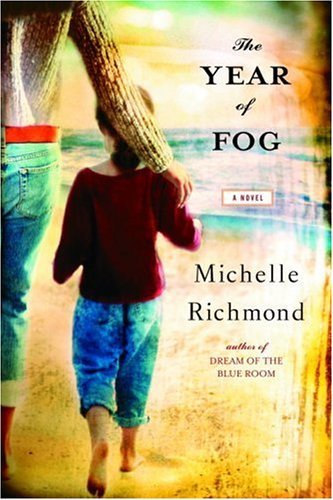
From a familiar writer to a new-to-me author, my next read introduced me to a name whose oeuvre I have yet to explore. It has been nearly a decade since I acquired a copy of Michelle Richmond’s The Year of Fog during one of my random ventures into a local bookstore. While I had no inkling of who Richmond was, the book piqued my interest. It, however, suffered the same fate as most of my books: gathering dust on my bookshelf. This was why I included it in my 2026 Beat the Backlist Challenge. Originally published in 2006, The Year of Fog opens with Abby Mason, a photographer and soon-to-be stepmother. She is at Ocean Beach, looking after her fiancé Jake’s six-year-old daughter, Emma, while Jake is away on a trip. It is a foggy day at the beach. While Abby is busy taking photographs, Emma is occupied with looking for sand dollars. However, a brief moment of distraction irreversibly alters Abby’s life. As Abby looks away toward the Great Highway for mere seconds, Emma is enveloped by the fog and inexplicably vanishes. This brief moment of inattention leads to heartache and turmoil, prompting a desperate search.
News of Emma’s disappearance fills the airwaves. Still, no trace of Emma is found. With no fresh leads, the police gradually lose interest in the case. As Abby’s life begins to unravel, guilt consumes her. By repeatedly replaying that moment in her mind, she hopes to find clues. While everyone else grows pessimistic, Abby clings to the unwavering hope that Emma is still alive. Jake is understandably shattered. Days soon stretch into weeks, yet Abby remains resolute in her desperate quest for answers. Richmond also skillfully captures Abby’s internal turmoil. She feels both joy and apprehension about becoming a mother figure to Emma. Despite her reservations about stepmotherhood, Abby feels an undeniable connection to the child. She wanders the beaches, searching for any signs of Emma, and relentlessly pursues fresh leads. Emma’s disappearance under her care profoundly affects Abby’s psyche. Her determination leads her to unexpected places, both geographically and emotionally.
As time passes, the once-bustling search efforts dwindle, and Emma’s name is no longer mentioned in the news. Still, Abby’s hope remains. The case, however, creates a chasm between her and Jake, who turns to religion and scientific theories even as he loses hope. Abby’s quest for answers eventually becomes an obsession. Yet, her relentless pursuit of the truth takes a toll on her. Her fixation on Emma’s disappearance leads her to alcohol. When it all becomes too much, Abby leaves San Francisco behind and travels to another country. In a way, her quest for answers transforms into a quest for her true self. In Costa Rica, she immerses herself in a different cultural setting, where she gradually discovers new things about herself. Slowly, her perspective shifts.
Beyond the mystery, the novel explores love, loss, and the emotional turmoil that accompanies them. It grapples with the intricacies of parenthood, including stepparenthood, and the anxieties that come with raising a child. What begins as a quest to find a missing child gradually transforms into a quest for self-understanding. Photography takes on an interesting allegorical role, serving as a means of capturing memory. While the conclusion was a downer and the dialogue was stilted, The Year of Fog was still a propulsive read.
Goodreads Rating:

The Revenant by Michael Punke
From a new-to-me writer to another new-to-me writer, my venture into American literature next took me to Michael Punke’s The Revenant. I first came across the story through its film adaptation. The Revenant starred none other than Leonardo DiCaprio, and it was the film that finally earned him the elusive Academy Award. It was the title that made me take notice and secure a copy of the book when I came across it during the 2018 Big Bad Wolf Sale. Interestingly, I have not watched the movie. Still, this did not keep me from acquiring the book. Like The Year of Fog, however, it sat gathering dust on my bookshelf. It is also for this reason that I included the book in my 2026 Beat the Backlist Challenge.
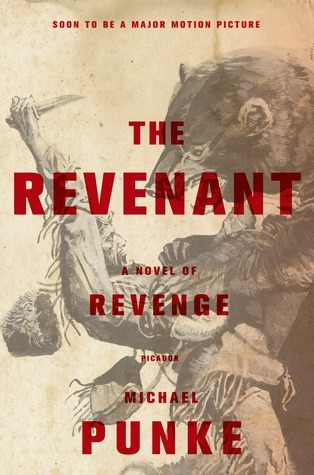
The Revenant: A Novel of Revenge was originally published in 2002. The novel transports readers to September 1823, where we meet Hugh Glass, a trapper for the Rocky Mountain Fur Company. However, he is severely wounded after a grizzly bear attack. His two companions, John Fitzgerald and Jim Bridger, abandon him. Fitzgerald takes Glass’s rifle, powder horn, and other essential gear, leaving the helpless man to die. A couple of days earlier, William H. Ashley, a leader of the Rocky Mountain Fur Company, is at Fort Brazeau. Frustrated by the closure of the Missouri River to trade following a battle with the Arikara tribe, he plans to have two parties travel overland. Captain Andrew Henry will lead one group, which includes Glass, Fitzgerald, and Bridger, up the Grand River. The group is tense as they travel along their initial route to Fort Union. One night, Bridger accidentally fires his faulty musket while on watch, causing a panic that Glass defuses by blaming the poor equipment.
Then comes the fateful day. While scouting an area, Glass is brutally mauled by a grizzly sow. He kills the bear, but it collapses on top of him, leaving him near death. His fellow scouts crudely stitch his wounds. Glass is carried on a litter for three days, but this slows down the company’s progress, placing them in constant danger. Captain Henry then decides to leave Glass behind and offers a reward to two men willing to stay with him until he dies and give him a proper burial. Fitzgerald volunteers for the money, followed by Bridger. This leads to the opening sequence. Fitzgerald, however, misjudges the situation. Despite being on the brink of death, Glass miraculously survives and embarks on a treacherous journey of survival and vengeance. His only goal is to exact retribution for his betrayal. Throughout his harrowing trek, Glass encounters various people and hardships that only strengthen his growing desire for revenge. His sense of isolation intensifies as he battles on two fronts: the elements and his relentless pursuit of vengeance.
The Revenant is a story steeped in historical detail. Punke vividly captures the contours of the nineteenth-century American frontier. The landscape mirrors Glass’s struggle, filled with both beauty and danger. It is a gripping historical novel that immerses us in the brutal realities of the early American frontier, where traders contend with the unforgiving elements of nature. However, their worst enemies are often their fellow men, from hostile Native American tribes to rival traders. Still, the novel captures Glass’s resilience in the face of these challenges. Overall, The Revenant is an engrossing story about the indomitable human spirit in the face of adversity.
Goodreads Rating:

Taiwan Travelogue by Yáng Shuāng-zǐ
Despite September being an American literature month, I made one exception—and it is for a special case. Yáng Shuāng-zǐ’s Taiwan Travelogue was recently awarded the International Booker Prize, making her the first Taiwanese writer to win the prestigious literary prize. I actually first came across the novel a year ago, but for some reason, I held back. A year later, I encountered the book again when it was nominated for the International Booker Prize, making it imperative for me to read it. Thankfully, my Taiwanese friend gifted me a copy of the book.
Originally published in 2020 as 臺灣漫遊錄 (Táiwān Mànyóu Lù), the novel is framed as an autofiction written by a Japanese author, Aoyama Chizuko (青山千鶴子), whose manuscript is uncovered and translated into Chinese by Yáng. Chizuko is a celebrated young novelist, and her story transports us to Japanese-occupied Taiwan. In May 1938, she travels to the Japanese colony at the joint invitation of the colonial Government-General and the Nisshinkai, a Japanese women’s organization. The invitation is intended to serve the interests of propaganda, with Chizuko expected to write essays about her travels and give lectures. Chizuko, however, is more interested in experiencing authentic Taiwanese life. Upon arriving in Taichū, she struggles to buy a pineapple at the local market. A petite Taiwanese woman intervenes, speaking flawless Japanese. Armed with an insatiable appetite, Chizuko looks forward to Taiwanese cuisine. She is disappointed when her government guide, Mishima, deflects her requests for local dishes. Even her host, Madame Takada, serves her meals tailored to Japanese tastes.
Madame Takada then arranges for an interpreter named Ō Chizuru to accompany Chizuko. Chizuko recognizes her as the woman from the market. Aside from her linguistic abilities, Chizuru’s extraordinary knowledge of Taiwan’s geography, history, ethnic groups, and cuisines makes her a perfect guide. She is also a good cook. She then arranges for Chizuko to taste the authentic local delicacies she craves. Chizuko gradually becomes attached to her guide, privately giving her the affectionate nickname “Chi-chan.” Their relationship deepens through shared meals and travels along Taiwan’s western railway. Despite their easy companionship and growing affection, it becomes apparent that Chi-chan is deliberately keeping her distance. This makes Chizuko want to learn more about her. Chizuko’s repeated advances and encouragement for Chizuru to abandon her impending marriage and move to Japan with her eventually prompt Chizuru to resign.
Yáng has certainly provided a vicarious experience. The food that permeates the story seduces both the olfactory and gustatory senses, although the minutiae of food can sometimes feel pervasive. Still, the historical details and contexts enrich the story. Above all, however, the novel’s overarching theme is identity. Taiwanese identity is projected through its cuisine. Chizuko herself also begins to learn more about her own identity during her stay in Taiwan. She gradually comes to understand how colonialism has affected the lives of the locals, impacting both their culture and identity. Beyond identity, the novel explores the nature of language and translation. Above all, it is a story of friendship and love that transcends both linguistic and physical boundaries. Overall, Taiwan Travelogue is a thought-provoking story about identity, memory, colonialism, and food.
Goodreads Rating:
Giovanni’s Room by James Baldwin
My next read, while the work of an American writer, is also not part of any of my ongoing reading challenges. Technically, it is. Still, James Baldwin’s Giovanni’s Room is listed among the 1,001 Books You Must Read Before You Die, technically making it part of one of my ongoing challenges. Must-read lists introduced me to the highly esteemed American writer. During the first year of the pandemic, I obtained copies of his works Go Tell It on the Mountain and Giovanni’s Room. I have already read the former, but the latter was left to gather dust on my bookshelf. This made me reconsider including Giovanni’s Room in my ongoing literary adventure.
Originally published in 1956, Giovanni’s Room is narrated by a man named David. As he peers out the window of the house he rented with his fiancée, Hella, in the south of France, he contemplates their relationship. Intoxicated and staring into the darkness, he begins to realize that he never truly loved Hella. His thoughts drift back to his memories of the titular Giovanni. Giovanni is an Italian man David fell in love with while living in Paris. David still harbors strong feelings for Giovanni. However, he laments his inability to embrace and express those feelings. Aboard a train to Paris, David reminisces about his past. His first sexual encounter with another man occurred when he was still a teenager. His initial bond with Joey eventually turned into a sexual encounter. However, the experience left David upset even though he had enjoyed it. He then tried to avoid Joey, thinking that his attraction to men would threaten his masculine identity and worrying about how it would break his father’s heart.
To feel like a “real man,” he began bullying Joey. To make his father happy, David joined the Army. However, after returning from the Army, David left for Paris to create some distance between himself and his father’s expectations of him to become a certain kind of man. In Paris, he met Hella, to whom he proposed marriage. When she traveled to Spain to contemplate his proposal, David was kicked out of his hotel but was taken in by Jacques, an older gay acquaintance. At Guillaume’s gay bar, they noticed the new server, Giovanni. David is instantly attracted to him, even though he tries to hide it. David and Giovanni eventually become friends, with David moving in with Giovanni. In Giovanni’s small maid’s room, their relationship further blossoms. However, David becomes resentful of the increasingly domestic and feminine role he associates with himself. He also worries about what Hella would feel if she found out about his relationship with Giovanni. David tries to reassert his attraction to women through a one-night stand with an acquaintance. However, he can only think of Giovanni, making him even more frightened of what the future might hold.
At its heart, Giovanni’s Room is evidently a love story. However, identity and sexuality are the novel’s overarching themes. In David’s case, his denial of his sexuality is particularly compelling, especially his internalized homophobia. His denial creates a chasm between him and Giovanni, as he begins to resent people like Giovanni, whom he loves but cannot bring himself to fully embrace. David’s story also highlights societal and familial expectations. Conventional gender norms often interfere with a person’s sense of self. Because he associates manhood with heterosexuality, he feels that his attraction to Giovanni indicates his failure as a man. This makes Giovanni’s Room an interesting and thought-provoking read.
Goodreads Rating:

The Mists of Avalon by Marion Zimmer Bradley
Another book that I first encountered through must-read lists is Marion Zimmer Bradley’s The Mists of Avalon. I was initially reluctant to read the book because it belongs to a genre I rarely venture into. I eventually relented, curious about what the book had in store. While I was able to secure a copy in 2019, it sat gathering dust on my bookshelf. This prompted me to include it on both my 2026 Top 26 Reading List and 2026 Beat the Backlist Challenge.
Originally published in 1983, the novel is Bradley’s retelling of the renowned Arthurian legends, told from the perspective of the female characters, particularly Morgaine (Morgan Le Fay). Morgaine is the daughter of Igraine, the younger half-sister of Viviane, and the older sister of Morgause. Igraine was married at fifteen to the much older Duke Gorlois of Cornwall. She later married King Uther Pendragon after Gorlois died in battle against Uther. However, before Igraine learned of Gorlois’s death, Uther consulted Merlin, who made him appear as Gorlois, allowing him to gain access to Igraine at Tintagel and conceive Gwydion. An attempt to murder the young Gwydion prompts Viviane to advise that he be fostered far away from the court. Meanwhile, Morgaine is taken by her aunt to Avalon, where she is trained as a priestess of the Mother Goddess. It is also foretold that Morgaine will play a pivotal role in uniting Britain under a new High King. After Morgaine is initiated as a priestess of the Mother, she is given in a fertility rite, the Great Marriage, to the future High King of Britain. For Avalon to accept the new High King, he must participate in the ritual, which involves having sex with a virgin priestess to form a covenant with the land he is destined to defend.
Morgaine is horrified to learn afterward that she has unwittingly slept with Gwydion, who now goes by the name Arthur. Despite questions about his paternity, Arthur eventually claims the throne after his father dies fighting the Saxon invaders. To help her nephew defend Britain against the Saxons, Viviane gives him the sacred sword Excalibur. She also has Morgaine make him an enchanted scabbard that prevents him from losing blood. With the combined forces of Avalon and Caerleon, Arthur repels the invaders, brings peace to the land, and marries Gwenhwyfar. To her dismay, Morgaine discovers that she is pregnant with Arthur’s child. Angry with Viviane, Morgaine renounces Avalon and gives birth to her son, Gwydion, at the court of her aunt Morgause. Eventually, Morgaine decides to return to Caerleon, where she serves as a lady-in-waiting to Gwenhwyfar, who is extremely anxious and deeply pious. Because of her position as a priestess of Avalon, Morgaine often argues with Gwenhwyfar about matters of religion, as Gwenhwyfar is a devout Christian.
With the arrival of the new Christian faith, tensions with the old pagan religion begin to escalate. Adventures and misadventures abound throughout the novel. Love and ambition are its driving forces, as portrayed through the stories of Morgaine, Morgause, Viviane, and Gwenhwyfar. Arthur, on the other hand, is mainly a spectator. The tension between Paganism and Christianity captures a society on the cusp of breaking with tradition. This brings forth the broader subject of modernization. Ultimately, The Mists of Avalon is a meditation on how women’s voices are often muted by history and their roles reduced to the margins. Riddled with magic, history, and folklore, it is a compelling read.
Goodreads Rating:
Bee Season by Myla Goldberg
It was in early 2019 when I first came across Myla Goldberg. Her latest novel, Feast Your Eyes, was among the books scheduled to be released that year that everyone was looking forward to. Unfortunately, I was unable to obtain a copy of the book. Nevertheless, I was able to obtain a different work. During a random venture into a local bookstore, I came across Bee Season. Because I had just encountered her, I immediately recognized Goldberg’s name, prompting me to buy a copy of the book. However, the book was left to suffer the same fate as most of my books. This prompted me to include it in my 2026 Beat the Backlist Challenge.
Originally published in 2000, Bee Season is Goldberg’s debut novel. At the heart of the story is Eliza Naumann, an ordinary girl who is often overlooked by her parents and teachers. Early on, she recognizes that she is a “student from whom great things should not be expected.” Her life begins to look up after a previously unrecognized ability is discovered. She surprises everyone, including herself, when she correctly spells words like “raspberry”; she wins her class bee with the word “weird.” She then wins her school spelling bee and advances to the district level. Her unexpected success, although initially overlooked, eventually prompts her father, Saul, a Jewish scholar and cantor with a deep interest in the Kabbalah, to take her under his tutelage. As a result, Aaron, his favored sixteen-year-old son, is neglected. Basically ignored at home, Aaron seeks solace with the Hare Krishnas. Meanwhile, Miriam, their mother, a brilliant but distant lawyer, barely pays attention to the events unfolding in her own household. She is too busy leading a double life that keeps her barely hanging on to the edge of sanity.
Flashbacks capture Miriam’s isolated childhood. Her marriage to Saul is based on mutual convenience. She sees him as a househusband who would enable her career, while he sees her as a means to a lifestyle conducive to his mystical studies. In the present, the family attends the area finals at the Philadelphia Spectrum. While preparing for the competition, Eliza studies on her own and develops a deep, personal connection to language. During the competition, Saul begins to view Eliza’s spelling technique as connected to mystical practice—a gift with words that runs much deeper than her ability to spell. He sees in her the potential to reach the ultimate heights of Jewish mysticism, something he is unable to achieve.
Meanwhile, Miriam recognizes her own girlhood intensity. After the victory, Miriam gives Eliza her treasured childhood kaleidoscope, but Eliza fails to grasp its significance, disappointing her mother. Eliza’s unexpected success in the spelling bee vividly captures her intellectual awakening. However, there is more to the story. Her father’s coaching makes her fixated on following the teachings of the ancient Kabbalists. The novel is thus also about her spiritual awakening. All the while, her family begins to unravel. Aaron becomes increasingly detached from them as he finds companionship with the Hare Krishnas. The emotionally detached matriarch also secretly struggles with her own concerns. Eliza’s spelling success ironically exposes the fault lines beneath the surface. Bee Season vividly portrays a family falling apart through neglect and a lack of communication.
Goodreads Rating:

Such a Fun Age by Kiley Reid
I concluded my first venture into American literature with another new-to-me writer. It was during the pandemic that I learned about Kiley Reid and her novel, Such a Fun Age. The novel was ubiquitous, naturally piquing my interest. It was also longlisted for the Booker Prize. However, it took some time before I was convinced to take a chance on the book. Originally published in 2019, Such a Fun Age was Reid’s debut novel. The novel opens with Emira Tucker, a 25-year-old African American college graduate. While out with her friends late one Saturday night, she receives a call from Alix Chamberlain, the woman she babysits for. Alix begs Emira to watch Briar, her two-year-old daughter. Alix, a wealthy influencer, lifestyle blogger, and public speaker in her early thirties, has built a brand known as “LetHer Speak.” The brand advocates writing old-fashioned letters to businesses in exchange for free product samples. It also encourages women to be more assertive.
Alix and her family are originally from New York City but have moved to Philadelphia for her husband Peter’s job as a television anchor. Meanwhile, Alix has hit a slump as she tries to balance work with her personal life. A “family emergency” prompts Alix to call Emira that Saturday evening. Emira arrives at the Chamberlains’ residence, where she notices a hole in one of their windows. Their residence has been egged during the night. Peter has received backlash for making a racist remark on-air, though he insists the comment was thoughtless. Alix asks Emira to take Briar to a nearby upscale supermarket to kill some time. However, a security guard accuses Emira of kidnapping Briar and refuses to believe that she is the child’s babysitter. Peter’s arrival clears up the issue. During the altercation, a bystander named Kelley Copeland records the incident. Later, Emira runs into Kelley on the subway. Kelley urges Emira to post the video online, but Emira refuses. Emira eventually relents and allows him to at least forward the video to her. This interaction, however, leads to something deeper and more intimate.
Alix also recalls the details of her life that led to this point. Before becoming Alix, she was Alex Murphy. While studying in college, she started writing letters to companies, which then sent her free products. She posted her reviews on her blog, which gradually gained a respectable following. She then met Peter, who supported her business endeavors. Despite becoming pregnant, Alix was encouraged by the success of her business and refused to quit just yet. Catherine’s birth prompted them to return to Philadelphia to settle down and raise their family. While Catherine was mild-mannered, Briar was unpredictable, leading to Emira’s hiring.
Shocked by the incident at the supermarket, Alix tried to treat Emira better and cultivate a deeper relationship with her. Emira, however, simply regards Alix as her employer. Such a Fun Age grapples with both contemporary and classic subjects. The racial profiling Emira experiences at the supermarket is an experience shared by many African Americans. They have become so accustomed to such forms of aggression that they would rather let them pass than allow them to escalate. On the other hand, Alix’s resolve to gain Emira’s allyship captures white saviorism. However, the rise of social media has made it increasingly challenging to discern what is authentic and what is artificial. Overall, Such a Fun Age is a timely meditation on social media, race, and humanity.
Goodreads Rating:
Reading Challenge Recaps
- 2026 Top 26 Reading List: 21/26
- 2026 Beat The Backlist: 16/20; 60/60
- 2026 Books I Look Forward To List: 0/10
- Goodreads 2026 Reading Challenge: 77/100
- 1,001 Books You Must Read Before You Die: 13/20
- New Books Challenge: 0/15
- Translated Literature: 48/50
Book Reviews Published in September
- Book Review # 668: Dance on the Volcano
- Book Review # 669: Lovesick
- Book Review # 670: Taiwan Travelogue
- Book Review # 671: The Remembered Soldier
A huge change in September somehow stymied the writing momentum I gained in August. I was focused on transferring my responsibilities from my previous job at the start of the month. The rest of the month, on the other hand, was spent learning the ropes of my new one. Still, I am glad I was able to complete four book reviews in September, two fewer than my output in August. While this is only half of my writing target, four is still a good number, all things considered. I am grateful that I was able to find the time to write. I still have a lot of backlogs. Interestingly, three of the books I reviewed during the month were books I read in 2026. Despite my backlogs from 2023 to 2025, I also wrote my review of Lovesick by Mexican writer Ángeles Mastretta. Apparently, the book has been adapted into a Netflix series. This also means that my pending 2023 book reviews remain the same.
My review of Marie Chauvet-Vieux’s Dance on the Volcano, meanwhile, marks the gradual transition to my 2024 pending reviews. With about seven book reviews remaining, I am about to complete all my 2023 pending reviews. I sure hope I get to finish them all this month. I am crossing my fingers, especially as my backlog continues to grow because my writing simply cannot keep pace with my reading. My hope is to build writing momentum this October and sustain it through the rest of the year. However, October is going to be hectic at work. Nevertheless, I hope to finish my remaining 2023 reviews while steadily working through those from 2024 and 2025. I also hope to make meaningful progress on my considerably larger 2024 backlog. From time to time, I may also publish reviews of books I read before I began writing reviews, such as Haruki Murakami’s Norwegian Wood, Salman Rushdie’s The Ground Beneath Her Feet, and Ian McEwan’s Atonement. These novels hold special significance for me, as they were the first works I read by each of these authors.
As for my reading, October will essentially be a continuation of my venture into American literature. I still have some works by American writers in my reading challenges that I have yet to read. These include Don DeLillo’s Underworld, Bret Easton Ellis’s Less Than Zero, and Philip Roth’s Portnoy’s Complaint. I have just started reading Portnoy’s Complaint. Along the way, I plan to continue selecting books from my bookshelf that complement each month’s primary reading theme. However, I am also expecting to receive my copies of R.F. Kuang’s Taipei Story and Douglas Stuart’s John of John. Reading these books would make them the first books published this year that I read. Unfortunately, 2026 has not been a good year for new books so far.
How about you, fellow reader? How is your own reading journey going? I hope you enjoyed the books you have read. For now, have a great day. As always, do keep safe, and happy reading, everyone!

