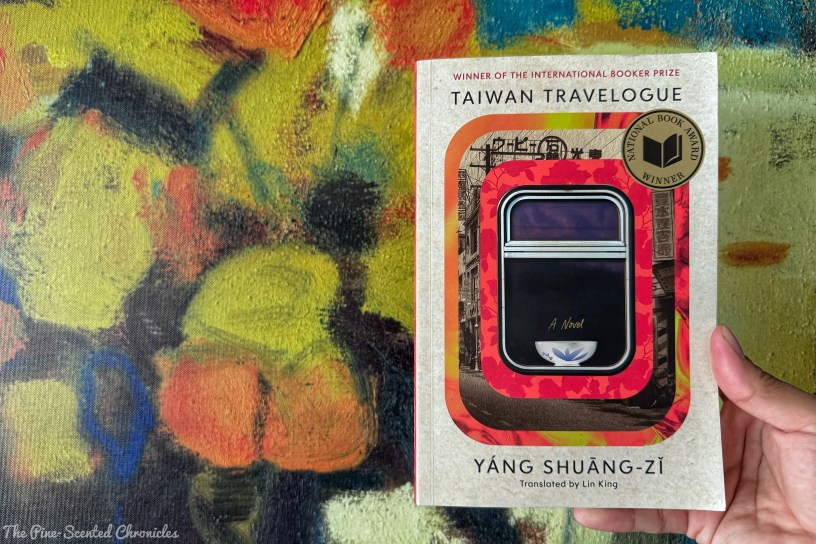
Culinary (and Literary) Delight in Colonial Taiwan
Nestled between the East China Sea and the West Philippine Sea is the island nation of Taiwan. Its history spans millennia. Chinese court records dating to the third century BCE mention Taiwan, and the first recorded contact between China and Taiwan occurred in 239 CE. The Chinese emperor sent a 10,000-man mission to Taiwan to explore the island. An expedition sent in 605 brought back Indigenous Taiwanese people. The P’eng-hu (Penghu) Islands in the Taiwan Strait were inhabited by Han Chinese fishermen by 1171, although Chinese fishermen had visited the island as early as the seventh century. In 1225, the island became part of China under the rule of the Mongol Empire. Hoklo and Hakka immigrants from Fujian and Guangdong began settling on the island by the early seventeenth century. The existence of Chinese settlements on the island before the twelfth century underscores the long history of connections between Taiwan and China.
To the West, the island of Taiwan was known as Formosa. In the sixteenth century, a ship carrying Portuguese explorers passed by the island. The ship’s log recorded the words Ilha Formosa, meaning Beautiful Island in Portuguese. This marked the beginning of the island’s history of interaction with Western colonizers. Between 1624 and 1662, the southern part of the island was colonized by the Dutch, who were headquartered at Zeelandia in present-day Anping, Tainan. Spanish colonizers, on the other hand, established an outpost in the north. In 1642, Dutch forces expelled the Spanish, put down a rebellion by Chinese inhabitants, and, with the help of Indigenous peoples, established control over the entire island. The island once again came under Chinese influence when the Manchus gained control, laid siege to the Dutch, and forced them to surrender in 1662. This marked the first instance of a Western colony being “liberated.”
A quick visit to Taipei’s Tamsui District walks travelers through Taiwan’s colonial past. Surviving structures, such as forts and residences, are vestiges of a bygone era. However, the island’s history with colonizers did not end with the Dutch and the Chinese. The twilight years of the nineteenth century saw yet another changing of the guard. In 1894, China and Japan went to war over their conflicting interests in Korea. Japan won the conflict handily, with the Treaty of Shimonoseki (1895) formally ending the war. The treaty also included, among its provisions, the cession of Taiwan and the P’eng-hu Islands to Japan in perpetuity. Japan’s control over the island, ironically, was bookended by two wars. While the First Sino-Japanese War allowed Japan to take control of the island, the end of the Second World War also brought an end to its control and influence over Taiwan. Literature, as always, has played a role in documenting this chapter of contemporary Taiwanese history.
Traveling is living in a foreign place. As in, experiencing all four seasons of normal life in a foreign place. Leaving behind a home environment where one’s habits have settled into old, tired ways and spending one’s days somewhere else, trying to find some new feeling in the mere act of being alive in this world. In this sense, traveling is a way of cleansing one’s body and mind—starting afresh.
Yáng Shuāngzǐ, Taiwan Travelogue
One of the most recent novels exploring the Japanese occupation of Taiwan is Yáng Shuāngzǐ’s Taiwan Travelogue. Originally published in 2020 as 臺灣漫遊錄 (Táiwān Mànyóu Lù), the novel presents itself as a recovered Japanese text that has been translated multiple times. It is ostensibly framed as a memoir-like novel written by a Japanese author, Aoyama Chizuko (青山千鶴子). Born and raised in Nagasaki, Chizuko is a celebrated young novelist in her homeland. Her book A Record of Youth was recently adapted into a popular film. Apart from writing, Chizuko loves exploring new places and experiencing different cultures. Among the places she wants to visit is Taiwan, one of the Empire’s colonies. In May 1938, she finally gets the opportunity to travel to Taiwan. She is invited by both the colonial Government-General and the Nisshinkai, a Japanese women’s organization.
Chizuko is invited to travel around the island, write a series of travel essays, and conduct a lecture tour introducing the film at schools and associations throughout Taiwan. Without hesitation, she packs her bags, eager for the new adventure. While the invitation is extended to Chizuko to serve the interests of Japanese propaganda, she is less interested in cooperating with the imperialist agenda and promoting it than in experiencing authentic Taiwanese life. Upon arriving in Taichū (the Japanese name for Taichung), Chizuko is immediately overwhelmed by the sights and sounds of the Islander market. In the novel’s colonial vocabulary, Islanders refer to Taiwanese people, while Mainlanders refer to the Japanese. At the local market, Chizuko struggles to buy a pineapple. A petite Taiwanese woman intervenes, speaking flawless Japanese. Mishima, a stiff City Hall staffer born on the island, is initially assigned to escort her.
However, Mishima repeatedly deflects Aoyama’s requests for local cuisine, disappointing her. Even her host, Madame Takada of the Nisshinkai, disappoints her when she serves meals tailored to Japanese tastes. Madame Takada then arranges for a Taiwanese interpreter named Ông Tshian-hóh, or Ō Chizuru in Japanese, to accompany Chizuko. Chizuru is a former schoolteacher preparing for marriage. Chizuko immediately recognizes her as the woman from the market. Chizuru, however, is more than just an interpreter. Beyond her consummate language skills, she possesses an extraordinarily intimate knowledge of Taiwan’s geography, history, ethnic groups, and cuisines. It is a serendipitous encounter, as Chizuru provides Chizuko with the window into Taiwanese life she has been yearning for. Chizuru then arranges for Chizuko to taste the authentic local delicacies she craves. The visitor gradually becomes attached to her guide, even privately giving her the affectionate nickname “Chi-chan.”
What begins as a professional relationship gradually deepens through shared meals and travels along Taiwan’s western railway. They travel across the island, from Shōka (Changhua) to Kagi (Chiayi), Takao (Kaohsiung), and Tainan, bonding over elaborate meals and local histories. They even play sleuths while investigating a dispute between two students at a girls’ school. Chizuru’s erudition astonishes Chizuko. Not only is she fluent in Japanese, but she also speaks some French. Her knowledge far exceeds what her background would suggest. She is also a good cook. However, despite their easy companionship and growing affection, it becomes apparent that Chi-chan is deliberately keeping her distance, piquing Chizuko’s curiosity. Chizuko wants to learn more about her interpreter’s past. However, Chizuru eventually resigns as Chizuko’s interpreter after Chizuko repeatedly makes advances toward her. Chizuko even invites Chizuru to abandon her impending marriage and move to Japan with her.
A stomach was but a fireplace and food was but charcoal. When one was hungry, one chomped down on rice or toast with one’s teeth until one could swallow, and from there the steam train of one’s body could continue chugging along. For the first time in my life, I understood that the activity of eating was truly no more than that.
Yáng Shuāngzǐ, Taiwan Travelogue
Taiwan Travelogue is, quite literally, a travelogue. It chronicles Chizuko and Chizuru’s adventures across Taiwan, taking readers along as they tour the colony, with vivid details of sights, sounds, and even tastes breathing life into the island, its people, and its culture. Yáng astutely reels readers in, offering a vicarious experience that engages both the olfactory and gustatory senses. Food emerges as the main ingredient—pun intended—in their adventures and one of the major backbones of the story. Their travels thus become a culinary journey. Each chapter is named after a dish that features prominently in it. Whenever they arrive in a new place, Chizuko’s battle cry is, “Is there something good to eat around here?” It is both endearing and amusing, leading to many scrumptious descriptions of local delicacies. Yáng even details their ingredients and how they are prepared. Food also serves to mark the passing seasons.
Looming above them, however, is history. Chizuko is invited at the behest of the colonial Government-General to promote its propaganda. She is expected to write essays about the island and conduct lectures, both of which she shirks as she immerses herself in life on the island. The story is set at a time when Japan was indoctrinating its colonies through movements such as the Southern Expansion Movement (南進論; Nanshin-ron) and the National Spirit Mobilization Movement. These movements formed part of Japan’s broader efforts at imperial expansion and colonial assimilation. This lays the foundation for the novel’s astute exploration of colonialism. From the outset, the relationship between the two main characters is shadowed by colonial power dynamics. Yáng effectively captures the attitudes on both sides of the colonial divide, vividly depicting the undercurrents and intricate interplay between colonizer and colonized.
These power dynamics are subtly underscored throughout the story. While Chizuko refuses to honor her commitments to the colonial government, her travels across Taiwan lead her to a greater understanding of the existing colonial dynamics. She witnesses how Chizuru is often overlooked by Mainlanders. At a university event, Chizuru is dismissed by an administrator as being no different from an odd-job worker. She is even ordered by a staff member at a girls’ school to clean Chizuko’s shoes. At a hotel in Tainan, the receptionist rudely responds to Chizuru when Chizuko is not around. However, his attitude turns amiable when Chizuko interacts with him. Still, Chizuru takes these indignities in stride. She eventually explains to Chizuko why she refuses to dine alone with her. As a subordinate to the Mainlanders, Chizuru believes that she should not eat at the same table because they are not of equal rank.
In many ways, Chizuko takes on the role of a liberator. However, her actions raise the question of whether she is motivated by genuine generosity or by her own perception of herself as a liberator. This question hovers over the story, as she is also driven by her desire for the exotic. She means well, even protesting on Chizuru’s behalf. However, her self-righteous goodwill leads her to decide for herself what Chi-chan needs to be protected from. She is also largely unaware of the privileges afforded to her as a Japanese citizen within the colonial system. Yáng, however, does not vilify her. Rather, the story loves her while simultaneously holding her accountable. It is also apparent that Taiwan’s culture, language, and food have been influenced by Japan—yet another residue of colonialism. These influences reveal the complicated legacy of colonial rule and the ways in which colonialism can reshape a people’s cultural identity. At the same time, this legacy is visible in the social hierarchy of the period, with “Islanders” treated as second-class citizens even in their own homeland.
Fresh powdered peanuts; fish floss from the market; ink- black seaweed to be shredded right before the dish was served; two varieties of Taiwanese pickled cabbage, sour and salted; bean sprouts, garlic chives, fresh cabbage, wild rice shoots, bamboo shoots, lotus roots, soybeans, and whole peanuts, all of which were to be boiled. Some of this had to be julienned, whereas the beans and nuts were individually shelled. There was river shrimp, which had to be gutted, cleaned, boiled, and peeled. Braise- dried tofu, Taiwanese sausage, and pork were to be sautéed at specific temperatures and cut into slices. Carrots and burdock roots were to be peeled and stewed in a mixture of soy sauce and sugar. Cucumber, celery, scallions, garlic sprouts, and cilantro, which did not need to be cooked, still had to be washed thoroughly.
Yáng Shuāngzǐ, Taiwan Travelogue
Ironically, the use of names, places, and foods in several languages creates an impression of a harmonious, multicultural, and multilingual paradise where everyone gets along. However, the opposite is true. There is more to the story than its gustatory delights. As the two women’s adventure deepens, so does their relationship. As the story progresses, it becomes increasingly clear that romance permeates their story. Propelled by Chizuru’s erudition, Chizuko craves her friendship, hence the private nickname she gives her translator. Gradually, Chizuko finds herself being drawn deeper into her companion’s world, who shares the first two kanji characters of her given name: 千鶴 (Chizu). Chizuko also recognizes much of herself in Chizuru, especially since they are the same age and share the same literary dreams. They are also constrained by social expectations.
In many ways, they are outcasts. Chizuko is nicknamed Tall Cedar because she is physically large and endlessly curious. Meanwhile, Chizuru is more circumspect about what she says. Still, Chizuko sees her companion as being on a higher plane. She is cognizant that Chizuru is, in several respects, superior to her. She is also conscious of the distance that Chizuru deliberately creates between them. Chizuko describes it as her Noh mask. Still, the tension between the women begins to grow alongside their genuine affection. Food provides another avenue for vicarious experience. Not only is it a lens through which culture is explored, but it is also used to illustrate the deepening intimacy between them. Seemingly mundane acts and changes, such as cooking for each other, passing each other choice morsels, and shifting from eating separately to eating together, become significant. Seemingly innocuous gestures develop into devices through which the characters express their emotions.
All the while, Taiwan Travelogue is an homage to language and translation. Within the story, Chizuru is a translator, but the book itself is also an exploration of these subjects. Its framing is distinctive, akin to a nesting doll. It appears to be a manuscript uncovered by Yáng, who acts merely as the translator of the 2020 Mandarin translation. Her footnotes provide further context for the “original” text and reinforce the atmosphere of a translated novel. There is even an introduction and several afterwords. Together, these elements provide a fascinating fictional textual history for the book. Various editions and translations are also discussed. In the process, the reader discovers what happened after the final chapter. Lin King’s translation adds another layer, as the novel becomes a translation of a translation of a translation. King also adds her own footnotes on top of Yáng’s.
The winner of the 2026 International Booker Prize, Taiwan Travelogue is a compelling story about two women navigating the cultural shifts of one of modern Taiwan’s most difficult periods. On the surface, the novel invites readers to savor Taiwan—its culture, sights, and tastes. Beneath that inviting surface, however, lies a reminder of the history underlying the experience. Its food may be enticing, its travels enchanting, and its central relationship deeply affecting, but beneath all these pleasures lies the uncomfortable reality of colonial power. Yáng ultimately demonstrates that the past cannot simply be translated away. It remains embedded in language, culture, memory, and even in the seemingly ordinary act of sharing a meal between two people. By bringing together the pleasures of travel and the complexities of history, Taiwan Travelogue becomes both a celebration of Taiwan’s rich cultural landscape and a thoughtful meditation on the enduring legacies of colonialism.
If I happened to see the word ‘noodles’ in my notes and called out that I wanted noodles, by dinnertime she would deliver clam and egg noodles along with grated yam noodles. In the Christian Bible, when God said “Let there be light,” there was light. When I said, “Let there be vermicelli noodles, rice noodles, thick starch noodles, egg-drop udon noodles,” Chi-chan would light up the dining table with my fulfilled wishes.
Yáng Shuāngzǐ, Taiwan Travelogue
Book Specs
Author: Yáng Shuāngzǐ
Translator (from Chinese): Lin King
Publisher: Graywolf Press
Publishing Date: 2024 (2020)
No. of Pages: 289
Genre: Historical, Romance, Literary
Synopsis
May 1938. The young novelist Aoyama Chizuko has sailed from her home in Nagasaki, Japan, and arrived in Taiwan. She’s been invited there by the Japanese government ruling the island, though she has no interest in their official banquets or imperialist agenda. Instead, Chizuko longs to experience real island life and to taste as much of its authentic cuisine as her famously monstrous appetite can bear.
Soon a Taiwanese woman – who is younger even than she is, and whose name shares characters with her – is hired as her interpreter and makes her dreams come true. The charming, erudite, meticulous Chizuru arranges Chizuko’s travels all over the Land of the South and also proves to be an exceptional cook. Over scenic train rides and braised port rice, lively banter and winter melon tea, Chizuko grows infatuated with her companion. But something causes Chizuru to keep her distance. It’s only after a heartbreaking separation that Chizuko begins to grasp what the “something” is.
Disguised as a translation of a rediscovered Japanese text, Taiwan Travelogue unburies lost colonial histories and deftly reveals how power dynamics inflect our most intimate relationships.
About the Author
Yáng Shuāngzǐ (楊双子) was born Yáng Ruòcí (楊若慈, Yang Jo-tzu) on July 10, 1984, in a military dependents’ village in Wuri, Taichung. She is the older of twin sisters alongside Yáng Ruòhuī (楊若暉). After their parents divorced when they were five, the twins were primarily cared for by their paternal grandmother and their father’s girlfriend. However, their grandmother died when they were fourteen, and their father abandoned the family. From the age of fifteen, they worked part-time to support themselves. Jo-tzu spent eight years in night school, three years in the business program at the vocational high school affiliated with National Taichung University of Science and Technology, followed by five years in a continuing education bachelor’s degree program in Chinese language and literature at National Chung Hsing University (NCHU).
While attending night school, Jo-Tzu also worked during the day and wrote fiction. After completing her undergraduate degree in 2008, she was admitted for graduate studies in literature at National Cheng Kung University, but withdrew before completing the program. The following year, she enrolled in the Graduate Institute of Taiwan Literature and Transnational Cultural Studies at NCHU. In 2014, the twins decided to collaborate on historical fiction under the shared pen name Yang Shuang-zi, meaning “twins”, with Jo-hui primarily responsible for historical research and Jo-tzu for narrative and plot. Before starting their creative work related to the yuri culture, they researched historical documents and built a database to ensure accuracy in depicting historical details. They also dreamt of starting a small publishing house dedicated to yuri novels, aiming to localize yuri culture.
Unfortunately, Jo-hui was diagnosed with stage three breast cancer in 2009 and died in 2015. Jo-tzu, however, continued writing under the pen name in her sister’s memory. A year after her twin’s demise, Jo-tzu published her first yuri novel, 撈月之人 (The Man Scooping Up the Moon). Since then, Yáng has published several works, including the novel 花開時節 (Huā Kāi Shí Jié, 2017; Seasons of Bloom) and the short story collection 花開少女華麗島 (2018, Blossoming Girls of Gorgeous Island). Her global breakthrough came with 臺灣漫遊錄 (Táiwān Mànyóu Lù, 2020). It was translated into English as Taiwan Travelogue. In 2026, the novel earned Yáng the prestigious International Booker Prize, making it the first novel originally written in Mandarin to win the prize. In 2024, Taiwan Travelogue was also awarded the U.S. National Book Award for Translated Literature.
Yáng is married to Lai Ting-ho (Rose), a fashion influencer and writer.
But practically speaking, it is much easier to accept the fate of such arrangements than to resist. On the other hand, whether on the Mainland or on the Island, some men claim to be ‘modern’ and ‘civilized’ and boast about believing in free will and love. These men complain about being suffocated by arranged marriages, yet they can also abandon their arranged wives after the wedding and continue pursuing their studies or their jobs. The so-called marriages they object to only span the few weeks between the wedding and the moment they go off to do whatever they please. But it is different for women. For women, marriage is always a division between her past life and the rest of her life.
Yáng Shuāngzǐ, Taiwan Travelogue

