Happy Wednesday, everyone! Woah! Just like that, we are already in the last quarter of the year. How time flies! I hope the year has been kind and great to everyone. I know life isn’t a walk in the park, but it is my fervent prayer that everyone’s year is going well. I hope that the coming months will usher in blessings and positive news for everyone. I hope the rest of the workweek goes smoothly.
That said, the middle of the week also brings a fresh WWW Wednesday update. WWW Wednesday is a bookish meme originally hosted by SAM@TAKING ON A WORLD OF WORDS.
The mechanics for WWW Wednesday are quite simple: you just have to answer three questions:
- What are you currently reading?
- What have you finished reading?
- What will you read next?

What are you currently reading?
It’s already the middle of the week; technically, it’s almost the weekend. I hope everyone makes it through the workweek. After a couple of damp weeks, the sun is finally shining here in the northern part of the Philippines. But this feels like an ominous sign. The super El Niño phenomenon threatens the country. Still, I fervently hope it won’t be as devastating as forecast. After spending a month and a half exploring the works of American writers to tick off some books on my reading challenges, I’ve since adopted a more freestyle literary journey, although it’s shaping up to be about catching up on the most recent releases. At the start of the year, I usually churn out a list of new releases I’m looking forward to. However, my recent reads haven’t been part of this list. On the other hand, it’s been a while since I last read a new release. I believe I hadn’t read a newly released book this year until this month.
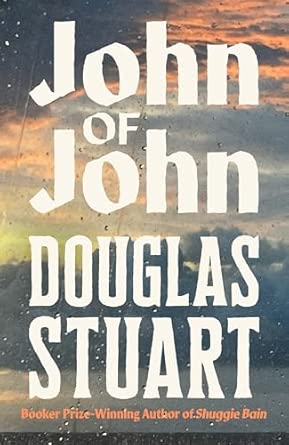
I’m about to start reading Douglas Stuart’s latest novel, John of John. I first encountered the Scottish writer during the pandemic. His debut novel, Shuggie Bain, was ubiquitous, especially after it was awarded the prestigious Booker Prize. This naturally piqued my interest, prompting me to secure a copy of the book and read it. I did love Stuart’s prose, although I felt that his sophomore novel, Young Mungo, was more cleanly written. I was actually surprised when I learned about his latest release. John of John was among this year’s releases that I was looking forward to. My interest in the book tripled after it was shortlisted for the Booker Prize. As I have yet to start reading it, I don’t have much of an impression to share. Nevertheless, I’ll be sharing my initial impressions in this week’s First Impression Friday update. I’m expecting another well-written piece from Stuart.
What have you finished reading?

After a rather slow reading week the week before, the past week has been quite a busy one, both at work and in my reading endeavors. I was able to complete three books. Interestingly, the slow reading week was partly attributable to the first of the three books I finished this past week. Like many of the writers whose works I have been reading over the past few years, DeLillo was first brought to my attention through must-read lists. Interestingly, DeLillo has long been part of the conversation surrounding the Nobel Prize in Literature, which was recently awarded to Canadian poet Anne Carson. Some of DeLillo’s works have also been included in the 1,001 Books You Must Read Before You Die lists. During the pandemic, I read my first DeLillo novel, Cosmopolis. This makes Underworld the second novel of his that I have read. I have also included it on my 2026 Top 26 Reading List. It is also featured on the 1,001 Books You Must Read Before You Die list, allowing me to hit two birds with one stone, as my goal is to read at least twenty books from the list.
Originally published in 1997, Underworld opens with a prologue recounting how a young Black boy named Cotter Martin attends a National League baseball game between the New York Giants and their rivals, the Brooklyn Dodgers. The scene fictionalizes the Shot Heard ’Round the World, the home run Bobby Thomson hit on October 3, 1951. Martin catches the game-winning ball and runs home with it, hoping to keep it as a memento of this memorable day. His father, Manx, however, has other ideas. The family is struggling financially, so Manx takes the baseball without his son’s permission, intending to sell it to help make ends meet. The story then moves to the early 1990s, shifting its focus to Nick Shay, the novel’s main protagonist. Nick eventually comes into possession of the baseball, although nobody believes his claim. In 1992, Nick lives in Arizona, where he works as a waste-management executive. He is married to Marian, but their marriage is unhappy. At the beginning of the story, Nick drives across the desert in search of an artist named Klara Sax, who is renowned for repainting abandoned military aircraft. Through flashbacks, we learn that his life changed when, as a teenager, he accidentally shot a man. Nick was also deeply affected by his father’s abandonment of the family when he was young. Nick and his brother Matt, who were both raised in the Bronx, preferred to imagine that their father had been killed by the Mafia. In the 1980s and early 1990s, Marian begins an affair with Brian Glassic, Nick’s colleague. Nick, too, contributed to the breakdown of his marriage through his own infidelity. In the late 1970s, during a waste-management conference, Nick had an affair with a woman named Donna. Around this time, he acquired the baseball from Marvin Lundy, an avid collector of baseball memorabilia.
During the 1970s, Klara Sax emerges as an artist. After divorcing her husband, she develops an interest in collecting discarded objects and repurposing them in her work. Matt, on the other hand, serves in Vietnam before training as a weapons scientist. Although he played chess when he was young, he has since become disillusioned with the game. Similarly, he no longer wants to work in the weapons industry. He still thinks fondly of his former chess teacher, Bronzini, who was once married to Klara. In the 1960s, Nick had a brief affair with Klara while she was still married to Bronzini. All the while, Nick becomes increasingly involved with the criminal underground. The novel also chronicles the changes taking place during the second half of the twentieth century, including the Cold War and the Cuban Missile Crisis. It examines how these events have affected American society and captures the ways ordinary Americans respond to changing times.
Trash features prominently in the story, with Nick’s profession serving as its most explicit manifestation. However, in DeLillo’s world, trash takes various forms. Interestingly, the novel was tentatively titled Trash or Summa Americana. As the story unfolds, it becomes evident that the novel explores the concept of trash through a postmodern lens. DeLillo vividly captures its intersection with violence and politics in contemporary America. Ultimately, however, the novel emerges as a meditation on concealment. Trash, after all, is an object of societal disdain, something we would rather hide from view. DeLillo takes this idea further by using trash as an allegory for who we are, both as individuals and as a society. At over eight hundred pages, Underworld is a hefty read, filled with numerous subplots. Still, DeLillo rarely loses the reader’s attention. Underworld is the story of one man and one family, but above all, it is the story of a country grappling with events unfolding around the world.
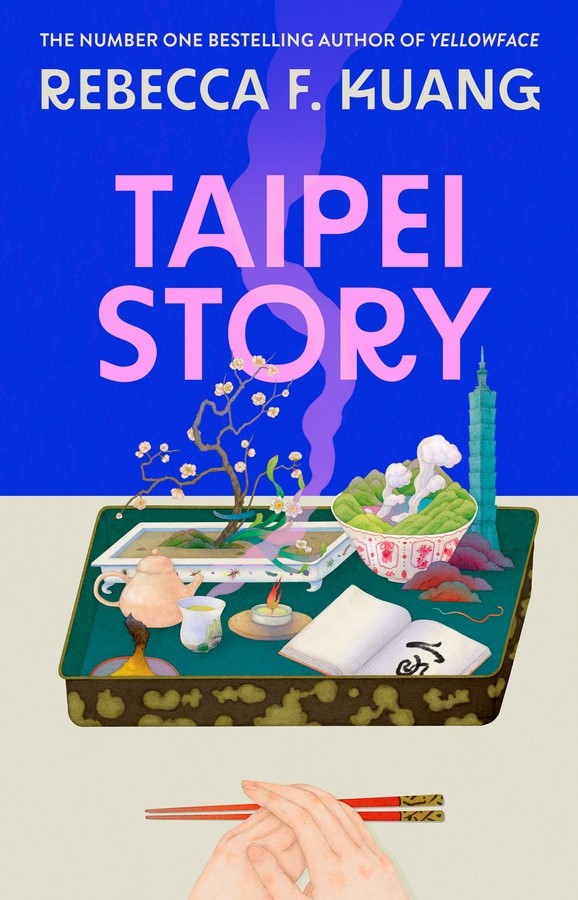
Underworld also marks the completion of all the works by American writers included in my reading challenges. With all the books read, I am now free to explore works beyond the realm of American literature. My next read, however, technically still falls within this literary landscape, as Rebecca F. Kuang is an Asian American writer. Kuang, as she is more commonly known, has gained recognition for her historical fantasy novels. I first ventured into her oeuvre in 2023 with Yellowface, which happens to be her first non-historical fantasy novel. The book made me want to explore her other works, although I was unable to read Katabasis (2025). This year, I learned that she was releasing a new work, Taipei Story. Its departure from Kuang’s usual work piqued my interest. Fortunately, I was able to obtain a copy through an online bookseller, making it the first newly released book I read this year.
At the heart of Taipei Story is Lily Chen, a Chinese American sophomore at Yale University majoring in East Asian Studies. The story begins with Lily about to board a plane from Boston to Taipei. She is enrolled in a ten-week, government-funded intensive Mandarin program at National Taiwan University. Although Lily grew up speaking Chinese at home, she gradually lost most of her fluency. The summer thus presents an opportunity to reconnect not only with her language but also with her heritage. At the airport, she notices several other Chinese American students bound for Taipei who seem to be in the same boat as she is. By traveling to Taipei, they hope to reconnect with their culture and immerse themselves in Chinese-speaking society. In Taipei, Lily reunites with Anna, a classmate from Yale’s Chinese language section and her designated roommate. They rent an apartment in one of the city’s less glamorous districts. It has only one bed, a tiny couch, and a bathroom where the showerhead hangs above the toilet. Still, Lily and Anna decide to tough it out. Before classes begin, Lily sets out to explore Taipei as a way of familiarizing herself with her new surroundings. She meets fellow Yale students, including Skipper Leys and John Cahan-Song, known as JC. Meanwhile, a pecking order begins to emerge. Lily and Anna occupy the top rung because their Chinese is the strongest. Still, Lily is troubled by her own complicity. Does her Chinese heritage exempt her from being an exploitative tourist? She has no roots in Taiwan and chose the program partly for convenience. Despite these reservations, Lily persists in her studies, including private sessions with Teacher Sun, who recognizes the paradox of Lily’s position as a heritage speaker. Although Lily has an intuitive ear for tones and grammar, she is lazy and inconsistent because certain aspects of the language come too easily to her. As her interactions with JC increase, the two gradually develop a quiet attraction.
However, just as their affection for each other begins to grow, Anna confesses to Lily that she has a crush on JC. She even asks Lily to help her find out whether JC feels the same way about her. Lily, however, does not follow through on the request. This becomes a source of tension between them when Anna discovers Lily’s text messages with JC. Lily is unapologetic about the messages but attempts to reconcile with Anna. Nevertheless, the breach of trust lingers. As Anna and Lily’s friendship begins to unravel, Lily receives an urgent call from her mother. Her maternal grandfather, Gonggong, has died following a fall in Guangzhou. Lily cannot attend the funeral because she lacks a valid visa to enter mainland China. Still, she grieves in her own way, reminiscing about her relationship with Gonggong, which, ironically, consists largely of stilted video calls during which she repeats scripted greetings in halting Chinese. She has always wanted to visit her grandparents but intends to do so only after becoming fluent, hoping that they will finally be able to have meaningful conversations. Fate, however, has other plans.
Lily can be quite hard on herself. When she cannot attend her grandfather’s funeral because she lacks a valid visa, she blames herself for procrastinating. This reflects one of the challenges of growing up in an Asian household, where numerous expectations are placed on children from an early age. In many ways, Taipei Story is a coming-of-age novel about Lily. As she tries to learn more about her heritage, she also begins to understand herself better. However, she comes across as an underdeveloped character, and the story lacks a sweeping character arc. Still, Lily’s story examines the intricacies of language and how it can serve as both a bridge and a barrier. It also explores the diasporic experience, particularly the weight placed on second-generation immigrants who inherit a culture and language that do not quite feel like their own. The novel further captures the contrast between the Chinese American experience and Taiwanese historical memory. It may not be perfect, but Taipei Story is an insightful rumination on memory, cross-cultural identity, silence, and grief.
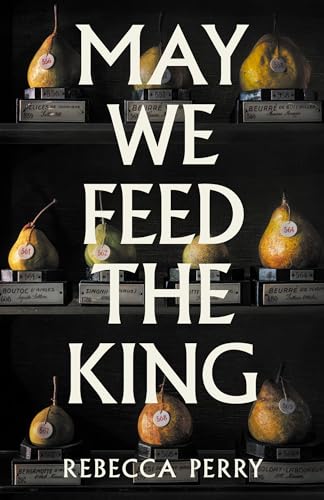
The third book I completed this past week introduced me to an unfamiliar name. It was only this year that I came across British writer Rebecca Perry. Perry apparently began her literary career in poetry, with her debut poetry pamphlet, Little Armoured (2011), winning the 2011 Poetry Wales Purple Moose Poetry Prize. Her debut poetry collection, Beauty / Beauty (2015), was also critically acclaimed. It was shortlisted for the T. S. Eliot Prize and the Seamus Heaney Centre Prize for First Collection. All of this points to Perry being a writer of considerable talent. In 2026, she made a significant career shift with the publication of her debut novel, May We Feed the King. It was a much-anticipated debut that won Perry the Waterstones Debut Fiction Prize. It gained even more international attention after being longlisted and eventually shortlisted for the Booker Prize. May We Feed the King is, in fact, the first book from this year’s Booker Prize longlist that I have read.
The novel alternates between two narratives. In the present day, we meet a curator who arranges historically accurate replica scenes in medieval buildings. With more than two decades of experience placing replica food and furnishings in historic houses, the unnamed curator has recently received a commission to create six scenes inside a former palace that is about to celebrate its 750th anniversary. The palace also possesses extensive on-site archives, an almost unheard-of resource. Her guiding principle is that every scene must appear as though its occupants have just left the room. This conviction stems from a childhood memory of visiting a furniture superstore, where she squeezed a plastic grape in a display and felt transported into someone else’s life. As an adult, her circumstances have changed considerably, and her work has become a source of personal sustenance. At the palace, she maps the building and walks its corridors alone. She meets the archivist and discovers ledgers spanning five centuries, along with recipes, feast accounts, remedies, letters, and poems. On her fifth day, the curator discovers the King, whose narrative thread formed the novel’s second narrative line. A single page is devoted to his reign, cluttered with marginalia, footnotes, and strike-throughs accumulated over centuries. This moves her deeply, as she sees the page as a reduction of a life. She also refuses to reproduce the entry in full. Her attachment to the King and the archivist begins to transform her personal life. The narrative gradually shifts to the King’s story. He reluctantly ascends to the throne following the deaths of his two elder brothers. It is a role he never wanted, and his reluctance eventually shapes his reign. He is a passive and pacifist king, qualities that do not serve him well. He rules a kingdom in an era when kingdoms and empires expect their leaders to don their armor, lead armies into battle, bring glory to their nations, quell rebellions, and execute dissenters.
The King’s advisors are at their wits’ end over how to deal with him. They would have been content to rule in his name, but the King refuses to allow this. Instead, he continues to thwart their efforts because he wants his country to live in peace. This resolve stems partly from the botched execution of a father and son accused of treason. His advisors pressure him to sign the execution warrant to demonstrate his authority, but the decision haunts him for the rest of his life. It also strengthens his resolve not to raise an army for battle. As the King remains passive, his chief advisor grows increasingly aggressive. The arrival of his cousin’s wife transforms the court, while the new Queen is in love with the assistant to the royal physician. The King and Queen share a marriage founded on mutual respect rather than passion. The royal couple have little privacy, as their actions are constantly observed and discussed. The King’s advisors even question servants about every aspect of their behavior.
May We Feed the King offers a vivid depiction of medieval court life. The King’s reluctance to rule challenges conventional notions of royal authority. The novel examines how a monarch’s legitimacy depends not only on the crown but also on the perceptions, ambitions, and expectations of those around him. Food emerges as a symbol of control and power. Feasting, fasting, feeding, and refusing food can reflect authority, vulnerability, social hierarchy, and bodily desire. The title subtly invokes the idea of nourishment, raising questions about who receives it and what it signifies within a royal court. Meanwhile, the novel explores the fine line between fact and fiction through the curator’s attempts to reconstruct the past. Ironically, historical records are incomplete and often open to interpretation. Memory, erasure, and mortality are also central to Perry’s exploration of history and the lives it preserves. Overall, May We Feed the King is a searing and thought-provoking debut, beautifully written by Perry.
What will you read next?