Happy Wednesday, everyone! Woah! Just like that, we are just a couple of weeks away from welcoming a new year. How time flies! 2026 is slowly drawing its curtain. Still, I hope the year has been kind and great to everyone. I know life isn’t a walk in the park, but I pray that everyone’s year is going well. I hope that the coming months will usher in blessings and positive news for everyone. I hope the rest of the workweek goes smoothly.
That said, the middle of the week also brings a fresh WWW Wednesday update. WWW Wednesday is a bookish meme originally hosted by SAM@TAKING ON A WORLD OF WORDS.
The mechanics for WWW Wednesday are quite simple: you just have to answer three questions:
- What are you currently reading?
- What have you finished reading?
- What will you read next?

What are you currently reading?
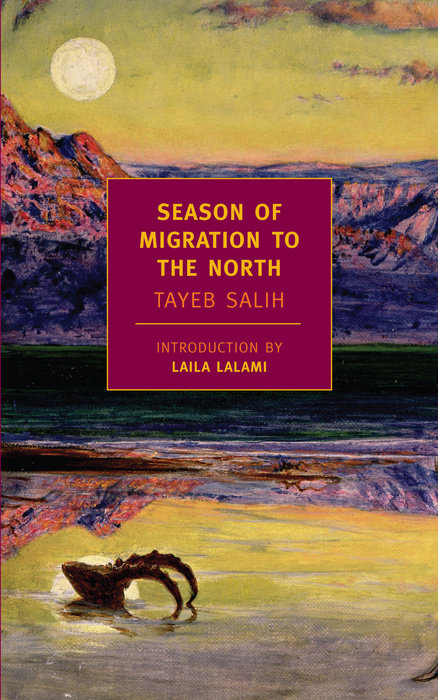
It’s already the middle of the week, which means we have only two more days until the weekend. I hope everyone makes it through the workweek. Thankfully, today is still a holiday here in the Philippine capital due to the series of summits and conventions hosted by Manila over the past five days. Still, the heat has been ominous here in the Philippines, as the super El Niño phenomenon threatens the country. Some provinces are forecast to experience drought by the end of this month, although the weather over the past few days has been waxing and waning. Still, I fervently hope it will not be as devastating as forecast. Reading-wise, I have resumed a more liberal reading journey. I am nearly done with all the books in my ongoing reading challenges, well, except for my 2026 Books I Look Forward To List. This is a good sign going into the final stretch of the year, as I won’t have to cram, which is something of a common occurrence. Still, I have a couple of books from my reading list to complete, all of which are works by African writers. The number five is more manageable, allowing me to venture into other literary territories.
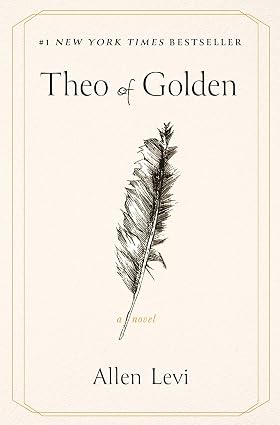
This brings me to my current read. It was while watching bookish blogs that I first came across Allen Levi’s Theo of Golden. Attendees of this year’s Manila International Book Fair named it among the books they loved or recommended, naturally piquing my interest. I recently acquired a copy of the book and, out of curiosity, immediately made it part of my ongoing reading adventure. Originally published in 2023, Theo of Golden is Levi’s debut novel. Apparently, Levi is an attorney, judge, and singer-songwriter from Middle Georgia. The titular Theo is an enigmatic elderly Portuguese man with a fondness for rivers. He arrives in the southern town of Golden just before Easter. On his first morning in town, Theo discovers The Chalice, a coffee shop that features the work of Asher Glissen, a local artist. Asher’s ninety-two pencil portraits line the coffee shop’s walls. Theo resolves to purchase them individually and give them to their subjects in exchange for stories about their lives.
Through Tony Wilcox, a war veteran and the owner of the Verbivore bookshop, Theo learns about an apartment for rent in Ponder House, owned by James Ponder. Theo establishes a confidential relationship with Mr. Ponder, renting the third-floor apartment and depositing $100,000 to finance his portrait purchases and charitable endeavors. Mr. Ponder’s secretary, Anita Gidley, helps track down the addresses of the portraits’ subjects. The first of these “bestowals” is to a woman called Minnette Prentiss, a young accountant trapped in a career she dislikes. When Theo invites her for a meeting, Minnette is hesitant, believing the whole situation to be strange; her curiosity nonetheless wins out. She tells him about her life, her hopes, and her dreams. She also happens to be Asher’s niece. Theo, on the other hand, tells her he saw sadness in her portrait but also strength. This initial interaction makes Theo more resolved than ever to continue with his mission.
As Theo spends more time in Golden, he meets more and more of its residents. Theo bestows another portrait on Kendrick Whitaker, a night custodian. His daughter, Lamisha, was injured in a car accident, and when Theo learns of Lamisha’s hospitalization, he discreetly arranges for medical care and financial support for Kendrick’s grandmother. Meanwhile, Simone Lavoie is a graduate cello player studying at the local university. On the other hand, Ellen is a homeless woman who rides around on her bicycle, while Basil is a street musician. Theo also befriends his landlord, Ponder, who becomes both his advisor and confidant. Eventually, Theo also meets Asher. Asher asks why Theo is buying his portraits, and Theo says he wants to make people happy. His new friends try to find out more about him, but Theo reveals little beyond the fact that he is from Portugal and that he only ever truly loved one woman. Levi vividly paints the portrait of a small town and how it is brought together by the arrival of Theo. What I am looking forward to, however, is getting to know Theo better.
What have you finished reading?
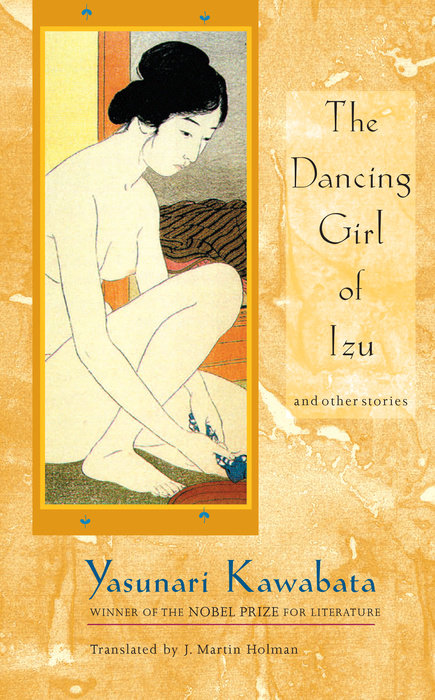
The previous week was rather slow in terms of reading. I had to rush back home to the province, roughly half a day’s journey from Manila, due to the passing of my grandmother. Still, I was able to complete two books. The first was written by an Asian writer. Ever since encountering Kawabata through various must-read lists, I have resolved to explore his works. Interestingly, when I first came across his name, I barely had an inkling of the significance and prestige of the Nobel Prize in Literature. Since then, I have read about six of his novels, beginning with Snow Country, which I read back in 2015, and continuing, more recently, with The Rainbow. I have also been curious about the works cited by the Swedish Academy in its laudation of Kawabata’s literary achievements. Among them is The Dancing Girl of Izu. Although it was not explicitly named in the formal Nobel citation, it was discussed in the presentation speech, which naturally piqued the interest of readers around the world. I have continued to encounter the work, not only on must-read lists but also in numerous paeans to Kawabata’s literary genius.
The featured novella was originally published in 1926 as 伊豆の踊子 (Izu no Odoriko). At the heart of the novella is an unnamed narrator. A twenty-year-old student from Tokyo, he travels to the Izu Peninsula during the last days of the summer holidays. There, he repeatedly comes across a troupe of five traveling musicians—one man and four women—while heading toward the Mount Amagi tunnel. The youngest-looking woman in the troupe immediately piques his interest. After traversing the tunnel, Eikichi, the troupe’s male leader, strikes up a conversation with him. He tells him that they are from Ōshima Island and are on a short tour before the cold season sets in. In Yugano, where the group rests for the night, the narrator learns from Eikichi that the young woman, Kaoru, is his fourteen-year-old sister. The other troupe members are Eikichi’s wife, Chiyoko, his mother-in-law, and a maid. The next day, the narrator witnesses the naked Kaoru coming out of the bathhouse, waving at him. While the sight makes him laugh, it also makes him realize that she is still a young, innocent girl. Although the day of his return to Tokyo is approaching, he accepts the musicians’ offer to keep them company for another day. During a walk, the student overhears Kaoru and Chiyoko saying what a nice person he is, which enlightens him and distracts him from his melancholy. Eikichi’s mother-in-law invites him to their home during his winter holidays but later forbids Kaoru from accompanying him to the cinema. However, all good things must come to an end, and when the student departs for Tokyo, tears brim in his eyes. Interestingly, The Dancing Girl of Izu is inspired by autobiographical elements.
The Dancing Girl of Izu is succeeded by Diary of My Sixteenth Year, Oil, and The Master of Funerals. Diary of My Sixteenth Year is comprised of diary entries written during the writer’s sixteenth year. An afterword informs readers that he published the piece ten years after his grandfather’s passing. The diary itself reveals not only the young boy’s grief but also his struggle to deal with his grandfather’s pain, dementia, and physical needs. Death is what thematically connects the stories. Oil deals with Kawabata’s reaction to loss—the deaths of both his parents by the age of three and the subsequent loss of his grandmother and sister. It also explores the role of stories in memory. While the stories are individually interesting and insightful, what truly stood out for me was The Master of Funerals. It is a reflection on the reputation the narrator has earned after experiencing so much death in his young life. The twenty-two-year-old narrator is called upon by his relatives and friends to attend three funerals in one month. For each funeral, he dons a silk gauze coat his father left to him and dutifully makes his journey and performs the appropriate rites.
The collection’s second part is comprised of even shorter stories, or palm-of-the-hand stories, which are usually one to four pages long. They deal with a plethora of themes and subjects concerning tradition and major events that shaped the landscape of contemporary Japan. Hurrah, for instance, is an impressionistic sketch of onsen culture, while The Money Road is about a commemoration for those who died during the Great Kantō Earthquake of 1923. Chastity is a recurring theme in other stories; these somehow reminded me of The Lake, one of Kawabata’s later works. The stories in the second part, while interesting, feel ephemeral. Still, they exude the literary brilliance possessed by Kawabata. They brim with ideas that he would later explore further in his novels. Overall, The Dancing Girl of Izu and Other Short Stories is an insightful read that those who yearn for quick reads can appreciate.

From a familiar writer to an unfamiliar writer. The second book I completed in the past week takes me to South Africa and introduces me to a writer whom I first encountered through an online bookseller during the twilight year of the COVID-19 pandemic. Born in 1985 in a township outside Pretoria, South Africa, Kopano Matlwa Mabaso’s interest in writing began when South Africa was devastated by HIV in 2004. Apart from being a writer, Matlwa is also a public health physician. She earned both a medical degree and a doctoral degree, completing her PhD in population health at Oxford University. While completing her medical degree, she wrote her first novel, Coconut, which was published in 2007. However, it is a different novel that I secured, Evening Primrose, which I made part of my ongoing venture into the works of African writers.
Originally published in 2017, Evening Primrose‘s original title was Period Pain. At the heart of the novel is Masechaba, a young Black doctor working in the underfunded healthcare system. The novel is epistolary and is composed of entries from her journal. Her thoughts, frustrations, and insecurities are all addressed to God. The novel is divided into four parts. The first part details her motivation for pursuing a career in the medical field. Prior to graduating, she experiences personal loss. Her brother dies by suicide, prompting her to question God’s presence in the world. She also suffers from chronic endometriosis. Nonetheless, she begins interning at a public hospital. While she eventually attains a position at a private hospital in Johannesburg, she often finds herself unable to heal people. The lack of resources holds her back, causing her to gradually lose her confidence. She feels useless to her patients. The second part captures her friendship with Nyasha, a young doctor from Zimbabwe. Nyasha is fiery and feels that South Africans are a lazy people, resigned to grin and bear the crap piled onto them by white people. Meanwhile, Masechaba’s mother says kwere-kweres (foreigners) like Nyasha use black magic and will steal everything from her. This does not prevent Masechaba from moving in with Nyasha. As the story progresses and they deal with growing concerns at work, Masechaba finds herself slowly being swamped. Being a doctor is difficult. It also demands that Masechaba make sacrifices. She’s got nothing left to give. Her patients drown her. Her work environment fills her with trepidation. Her life is suffocating her, and she needs her roommate to just hold her steady. At work, instances of xenophobic violence continue to increase. The hospital emerges as a microcosm of the rest of South Africa as xenophobia sweeps the country. Masechaba feels its effects reverberating through her life and work. She also grows increasingly irritated by Nyasha’s prejudice. She is desperate to prove to her friend that most South Africans do not condone the violence.
To prove that South Africans are not in thrall to white supremacy, as Nyasha continues to imply, Masechaba starts to change things by taking direct action. She even starts petitions and writes newspaper articles to demonstrate her hospital’s stance against xenophobia. This brings Masechaba to the attention of the press. This is when the plot takes a sharp, brutal turn. Something is bubbling within the community she works in. A quiet, latent anger is threatening to spill over. However, Masechaba is unable to notice it because she is too busy putting body and soul together. She is barely taking care of herself. This is exacerbated by Nyasha, who chastises her for not caring enough about social issues. This is what Masechaba says of Nyasha after one of her many tirades: “Her hands were always so full of good arguments, unsettled debts and old grudges that there was no room for nothing else.”
Evening Primrose grapples with different subjects and themes. The overarching theme, however, is the disillusionment the country experiences in the post-apartheid era. Masechaba belongs to a generation that inherited a formally democratic society, unshackled from the chains of apartheid. However, racial and economic inequalities remain deeply entrenched. The specters of race and racial identity then haunt the pages of the story. Masechaba observes how apartheid’s legacies, particularly its racial categories, continue to shape relationships, social interactions, economic opportunities, and perceptions of self. The novel is particularly concerned with what it means to be Black in a society that is supposedly liberated from apartheid. Ironically, apartheid’s legacy continues to structure modern South African society. Masechaba’s personal struggles mirror the larger struggles of South Africa itself: the desire for progress exists alongside anger, disappointment, inequality, and unresolved historical trauma. All of these elements make Evening Primrose an insightful story about contemporary South African society, examined through the lens of the writer’s own profession.
What will you read next?