Happy Wednesday, everyone! Woah! Just like that, we are just a couple of weeks away from welcoming a new year. How time flies! 2026 is slowly drawing its curtain. Still, I hope the year has been kind and great to everyone. I know life isn’t a walk in the park, but I pray that everyone’s year is going well. I hope that the coming months will usher in blessings and positive news for everyone. I hope the rest of the workweek goes smoothly.
That said, the middle of the week also brings a fresh WWW Wednesday update. WWW Wednesday is a bookish meme originally hosted by SAM@TAKING ON A WORLD OF WORDS.
The mechanics for WWW Wednesday are quite simple: you just have to answer three questions:
- What are you currently reading?
- What have you finished reading?
- What will you read next?

What are you currently reading?

It’s already the middle of the week, which means we have only two more days until the weekend. I hope everyone makes it through the workweek. The heat has been ominous here in the Philippines, as the super El Niño phenomenon threatens the country. Some provinces are already experiencing drought, although the weather over the past few days has been waxing and waning. Still, I fervently hope it will not be as devastating as forecast. Reading-wise, I have resumed a more liberal reading journey. I am nearly done with all the books in my ongoing reading challenges, well, except for my 2026 Books I Look Forward To List. This is a good sign going into the final stretch of the year, as I won’t have to cram, which is something of a common occurrence. Still, I have a couple of books from my reading list to complete, all of which are works by African writers. The number five is more manageable, allowing me to venture into other literary territories.
This brings me to my current read. I can’t recall exactly how I came across Mia Couto. I believe it was online booksellers that introduced me to the Mozambican writer. In 2024, I read my first Couto novel, mainly because I hadn’t read any works by a Mozambican writer. Confession of the Lioness is actually the third Couto novel I have read. Originally published in 2012 in Portuguese as A confissão da leoa, the novel transports readers to Kulumani, a remote African village. The story commences with the funeral of Mariamar’s older sister, Silência. As she and her mother, Hanifa Assula, watch the burial, Mariamar reveals that lions have been attacking the women of their village; Silência was their most recent victim. The next morning, Mariamar’s father, Genito Mpepe, informs Hanifa that a hunter is being sent from Mozambique’s capital, Maputo, to aid their village. The hunter chosen to aid Kulumani is Archangel, or “Archie,” Bullseye.
Before he departs, Archie visits his brother, Roland, who was placed in a mental hospital as a child. Archie confesses that the true motivation for his visits is to see Luzilla, Roland’s wife, with whom Archie is madly in love. Accompanying Archie is Gustavo Regalo, the writer chosen to record their journey. However, their arrival in the village, accompanied by the administrator of Kulumani, Florindo Makwala, and his wife, Dona Naftalinda, is met with apprehension. Their presence upsets the delicate balance of the village. Mariamar’s father forbids her to leave the house for fear that she will learn something unsettling from Archie. Mariamar complies out of fear, but she is miserable and traumatized by the incident. The entire time, she hopes Archangel will somehow learn about her and save her, taking her away from Kulumani. The book is a quick read, and its elements have reminded me of Couto’s other works. I am looking forward to seeing how the story unfolds.
What have you finished reading?
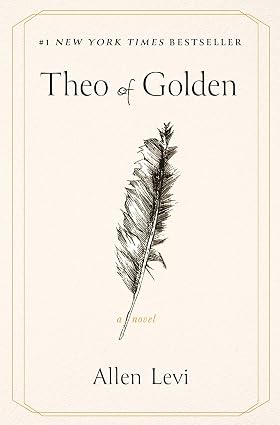
The previous week was rather slow in terms of reading. There was quite a lot happening, and I had to find ways to either speed up or slow down. Regardless, I was able to complete two books in the past week, which is still a good number, all things considered. The first was written by a new-to-me writer. Before this year, I had never heard of Allen Levi. It was while watching bookish blogs that I first came across Allen Levi’s Theo of Golden. Attendees of this year’s Manila International Book Fair named it among the books they loved or recommended. This naturally piqued my interest. During a random visit to the bookshop, I came across the book, which reminded me of the MIBF recommendations. I then acquired a copy and, out of curiosity, immediately made it part of my ongoing reading adventure. Apparently, Levi is an attorney, judge, and singer-songwriter from Middle Georgia.
Originally published in 2023, Theo of Golden is Levi’s debut novel. The titular Theo is an enigmatic elderly Portuguese man who is proficient in five languages and has a fondness for rivers. He arrives in the southern town of Golden, near suburban Atlanta, from New York just before Easter. On his first morning in town, Theo discovers The Chalice, a coffee shop that features the work of Asher Glissen, a local artist. Asher’s ninety-two pencil portraits line the coffee shop’s walls. The artworks leave a deep impression on Theo, who resolves to purchase them individually and give them to their subjects in exchange for stories about their lives. Through Tony Wilcox, a war veteran and the owner of the Verbivore bookshop, Theo learns about an apartment for rent in Ponder House, owned by James Ponder. Theo establishes a confidential relationship with Mr. Ponder, renting the third-floor apartment and depositing $100,000 to finance his portrait purchases and charitable endeavors. Mr. Ponder’s secretary, Anita Gidley, helps track down the addresses of the portraits’ subjects. The first of these “bestowals” is to a woman named Minnette Prentiss, a young accountant trapped in a career she dislikes. Minnette had hoped that the painting was purchased by her husband, Derrick. When Theo invites her to a meeting, Minnette is hesitant, believing the whole situation to be strange. She wonders what his motivation might be. However, her curiosity nonetheless wins out. She eventually tells him about her life, her hopes, and her dreams. She and Derrick were high school sweethearts. Meanwhile, Theo admits that he chose Minnette’s portrait because she had the kindest face. She also happens to be Asher’s niece. Theo, on the other hand, tells her that he saw sadness in her portrait but also strength. This initial interaction makes Theo more resolved than ever to continue with his mission.
As Theo spends more time in Golden, he meets more and more of its residents. Theo bestows another portrait on Kendrick Whitaker, a night custodian. His daughter, Lamisha, was injured in a car accident, and when Theo learns of Lamisha’s hospitalization, he discreetly arranges for medical care and financial support for Kendrick’s family. Meanwhile, Simone Lavoie is a graduate cello student at the local university. Ellen is a homeless woman who rides around on her bicycle, while Basil is a street musician. Theo also befriends his landlord, Ponder, who becomes both his advisor and confidant. Eventually, Theo meets Asher as well. Asher asks why Theo is buying his portraits, and Theo says that he wants to make people happy. His new friends try to find out more about him. Still, Theo remains an enigma, barely revealing anything about himself. He has shared little beyond the fact that he is from Portugal and that he only ever truly loved one woman.
Levi vividly paints the portrait of a small town and how it is brought together by Theo’s arrival. Kindness and generosity are the novel’s overarching themes, giving it a touch of warmth and making it a tender-hearted read despite the tragedy that looms over the story. What makes Theo’s generosity distinct is that it is deliberately quiet and personal. Rather than giving to gain recognition or praise, he gives because he believes in the intrinsic value of kindness. These values also underscore the beauty of human connection. All the while, Theo’s generosity allows the locals to share their stories. As Theo draws them out of their shells, he also makes them feel seen and their stories heard. The novel also captures the beauty and wonder of ordinary life. Art, music, nature, and everyday encounters are important to Theo. It is not difficult to see why Theo of Golden is a highly recommended book, and I am grateful that I read it. It is easily one of my favorite reads of the year.
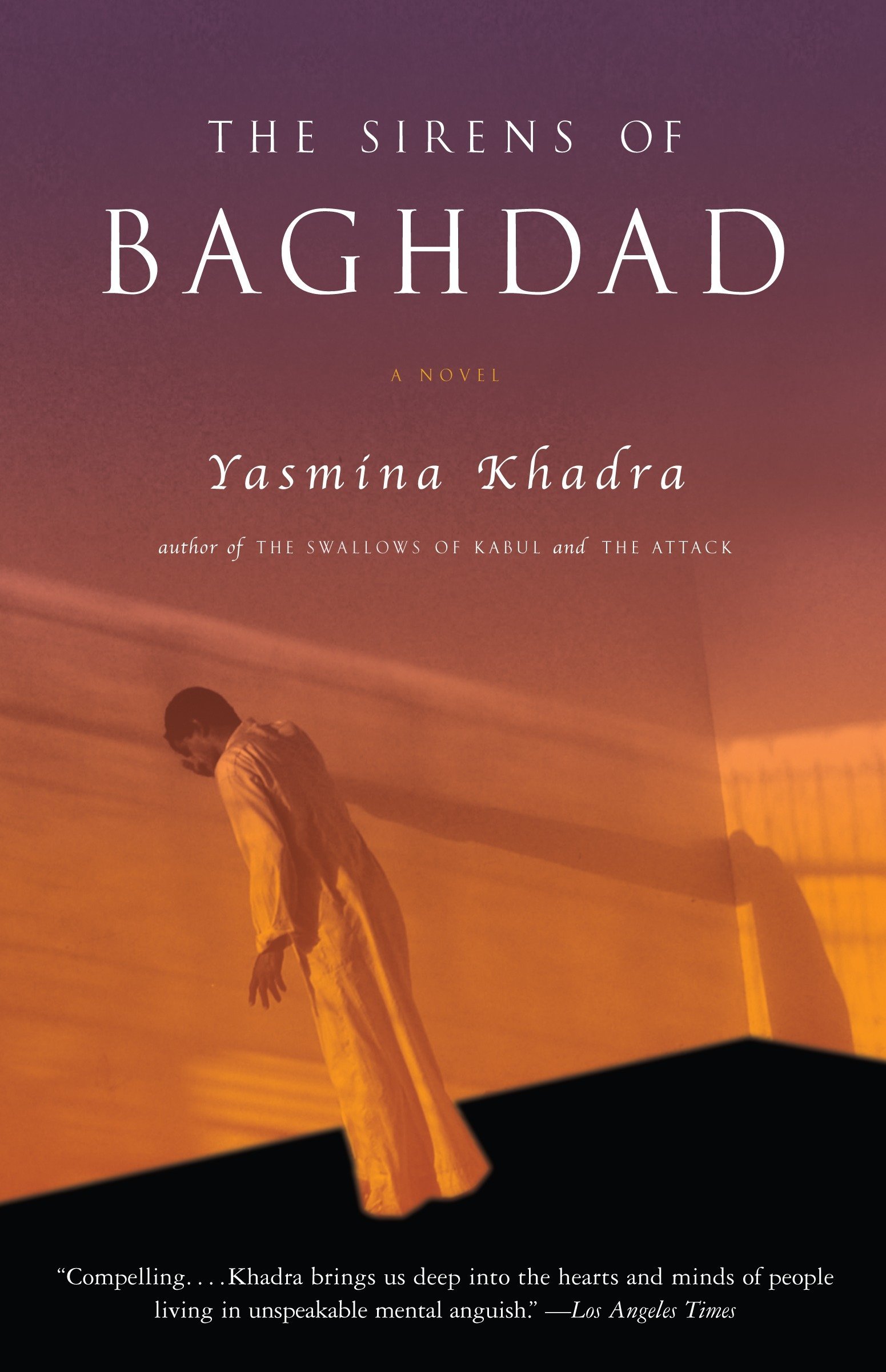
From a new-to-me writer to another new-to-me writer. The second book I completed in the past week takes me to Iraq and introduces me to a writer whom I first encountered through an online bookseller during the height of the COVID-19 pandemic. Yasmina Khadra’s The Sirens of Baghdad immediately piqued my interest, and I initially believed it was written by an Iraqi writer. I would later learn that Khadra is actually Algerian and that Yasmina Khadra is the pseudonym of Mohammed Moulessehoul. Before pursuing a full-time career in writing, Khadra served in the military. He has since had a prolific literary career that has produced almost forty novels. The Sirens of Baghdad, however, suffered the same fate as most of my books: it was left to gather dust on my bookshelf. This prompted me to include the book in my 2026 Top 26 Reading List, making it the 25th book on the list that I have read.
Originally published in 2006 in French as Les Sirènes de Bagdad, The Sirens of Baghdad charts the fortunes of its anonymous narrator. He is a Bedouin who lives in Kafr Karam, a remote village in the Iraqi desert described as a “place so discreet that it often dissolves in mirages, only to emerge at sunset.” He is ambitious, determined to become more educated than his illiterate, well-digging father. He has a twin sister, Bahia, who had to drop out of school because of an arranged engagement. He later attends a university in Baghdad, where he initially thrives academically. However, his education is disrupted by war. After the American invasion of Afghanistan, the United States turns its attention to Iraq, intending to topple Saddam Hussein’s regime. With the American invasion, the university is vandalized and closed down. After becoming disillusioned with life in Baghdad, the “wild-eyed and distraught” narrator is forced to return home to Kafr Karam, a prospect he is not looking forward to. Back at his parents’ house, living on the roof in a remodeled laundry room, he settles back into village life, feeling far removed from the troubles in the capital. While he is unenthusiastic about his return home, Kafr Karam initially provides the narrator with a peaceful refuge. As he immerses himself in village life, Khadra vividly paints a portrait of the community. The carefree enthusiasm of local boys playing lively soccer stands in stark contrast to the tension simmering in their war-torn surroundings. Khadra introduces the villagers, including the blacksmith, who has a mentally challenged son named Sulayman. At the local barbershop, village elders converge and engage in charged conversations about Saddam’s overthrow and the arrival of American forces.
The barbershop conversations capture the villagers’ various perspectives on Saddam’s overthrow. Tensions escalate as they debate whether they should celebrate their liberation from tyranny or lament the loss of their autonomy. Doc Jabir, a former philosophy professor, even delivers a powerful speech about American motives that leaves the men stunned into silence. However, the war soon finds its way into the village through a series of violent incidents involving American soldiers. One such incident occurs when Sulayman gets involved in a tragic accident. His father and the narrator then try to bring him to the clinic, but such a journey involves passing through an American military checkpoint. Tensions escalate when the soldiers misconstrue the situation, and the group is subjected to intense scrutiny. Overwhelmed and distraught, Sulayman runs from the car, resulting in a tragic incident. The episode deeply affects the protagonist. His sense of injustice intensifies as he witnesses the suffering of innocent Iraqis and concludes that the occupying forces regard them as less than human.
The American invasion of Iraq and the downfall of Saddam Hussein were the first things that came to mind when I encountered the book. The story then provides intimate glimpses into what transpired during the invasion. One of the more interesting facets of the novel is its presentation of a different perspective on Saddam Hussein’s regime. Some of the locals agree that he is evil, but he is their type of evil. The novel captures the cycle of violence and how violence perpetuates itself. The protagonist initially becomes involved in violence because he has experienced it himself. Ironically, he starts out as an idealist, but humiliation, grief, and anger gradually transform him into an extremist. The novel then examines the factors that can lead to an individual’s radicalization and extremism. This, too, is a residue of the dehumanizing impact of war, with men resorting to revenge in their search for justice. Overall, The Sirens of Baghdad is an evocative exploration of war, identity, and the consequences of occupation.
What will you read next?