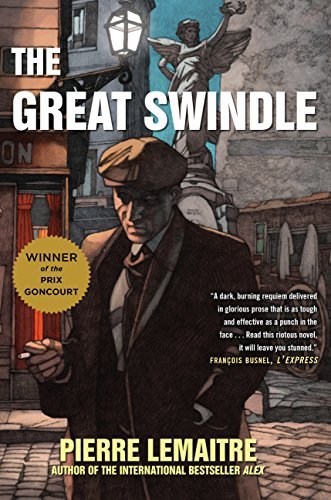
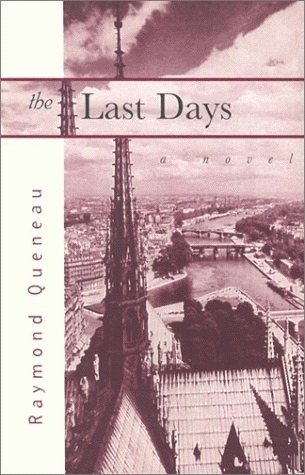
Happy Wednesday, everyone! Woah! Just like that, we are nearly through with the fourth month of the year. I hope the year has been kind and great to everyone. I know life isn’t a walk in the park, but it is my fervent prayer that everyone’s year is going well. Regardless, I hope the rest of the workweek goes smoothly.
That said, the middle of the week also brings a fresh WWW Wednesday update. WWW Wednesday is a bookish meme hosted originally by SAM@TAKING ON A WORLD OF WORDS.
The mechanics for WWW Wednesday are quite simple: you just have to answer three questions:
- What are you currently reading?
- What have you finished reading?
- What will you read next?

What are you currently reading?
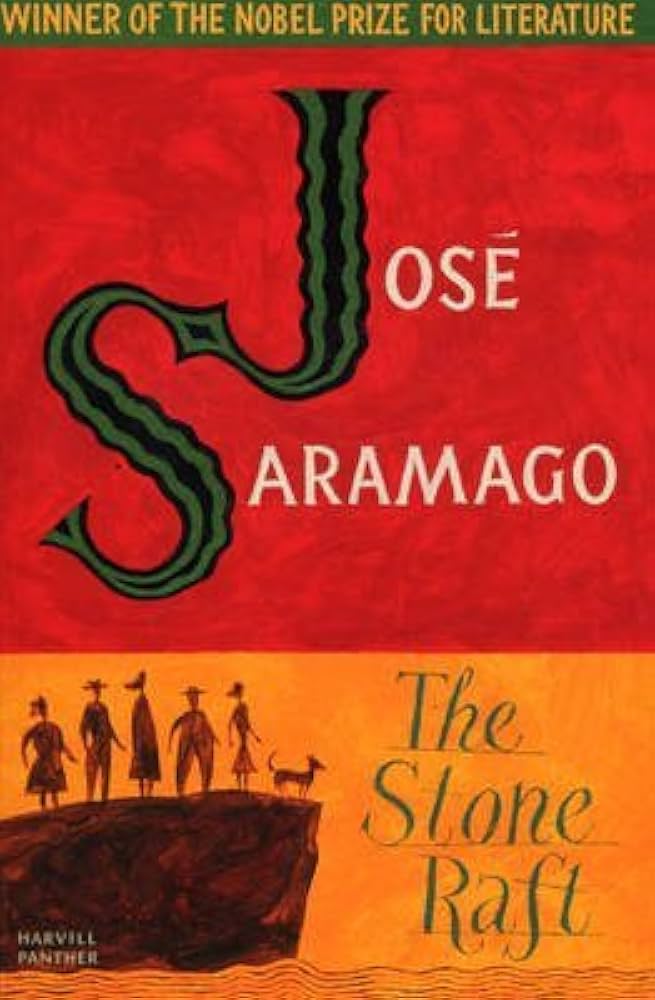
It’s already the middle of the week, which means we have only two more days until the weekend. I hope everyone makes it through the workweek. Anyway, my 2026 reading journey is going as planned. After spending the first two months of the year reading works by Latin American and Caribbean writers, I am now in the midst of a European literary adventure. While I had not originally planned to commence a journey across European literature this early in the year, the realization that I had listed several works by European writers in my reading challenges prompted me to pivot toward them in March. Because of the number of European works in my reading challenges, I am extending the journey into this month. This pivot has reintroduced me to familiar names while also introducing me to writers whose oeuvres I have yet to explore. My current read has taken me to a familiar name.
It was must-read lists that first introduced me to José de Sousa Saramago; his works were regularly featured in such lists, including the 1001 Books You Must Read Before You Die List. I later learned that he is a Nobel Laureate in Literature. In 2018, I read my first Saramago novel, The Double. Nearly a decade later, I am reading my sixth Saramago novel. Although I was not originally planning to read it, I included The Stone Raft in my ongoing venture into European literature. This is also in part due to my resolve to read works of Nobel Laureates in Literature; I just finished reading my second novel by Russian writer Aleksandr Solzhenitsyn. Anyway, The Stone Craft was originally published in 1986 as A Jangada de Pedra. In many ways, The Stone Raft is a departure from the Saramago works I have read so far, though its imagination is akin to that of The Double. Still, it is the quintessential Saramago work, as the novel possesses his signature lack of quotation marks and run-on sentences.
The Stone Raft starts a little interestingly as it talks about the mythological creature Cerberus, the three-headed dog guarding the gates of hell. The story, after all, commences in a peculiar town called Cerbère. Joana Carda scratches the ground with an elm branch, thus arousing the town’s silent dogs from their torpor. They inexplicably began to bark, sending the townsfolk into a panic. Legend has it that the dogs’ barking signifies the end of the world. Taking matters into their own hands, the villagers resorted to old remedies like poisoned meat pies to silence the dogs. These were all for naught as cracks in the Alberes mountains and across the Pyrenees started to manifest. These cracks deepened, and inevitably, the entire Iberian Peninsula broke off from the rest of the European continent. The novel’s title then starts to make sense. I actually just started reading the book, but it has already commanded my attention. The premise is certainly interesting. I will probably share more of my impressions on the book in this week’s First Impression Friday update.
What have you finished reading?
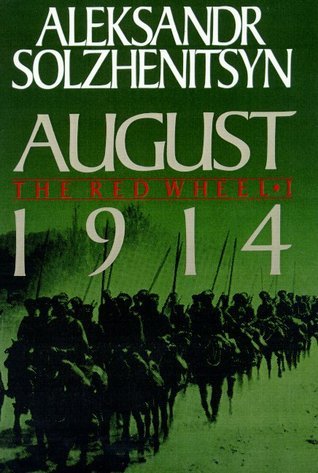
Just like the week before, the past week was a rather slow reading week. This is mainly because the books I have read and am currently reading are either hefty or require careful attention. The only book I was able to complete last week was August 1914 by Aleksandr Solzhenitsyn. It was must-read lists that first introduced me to Solzhenitsyn, and I later learned that he is a Nobel Laureate in Literature. In 2015, I read his novel One Day in the Life of Ivan Denisovich. It was a brief read, but it fascinated me by introducing me to the world of The Gulag Archipelago. I would encounter the Gulag again through another Nobel Laureate in Literature, Herta Müller, in her novel The Hunger Angel. However, it took some time before I was able to secure another work by the Russian literary titan. It was only early this year that I managed to acquire August 1914.
Although I was not originally planning to read it, I included August 1914 in my ongoing exploration of European literature. First published in 1971 as Август четырнадцатого, the novel takes us to the early 20th century—a time of great political and social upheaval in Russia. The story opens with Sanya, a young university student spending the summer in his provincial town. He boards a train bound for Moscow, planning to enlist in the army. Earlier, Russia had declared its intention to join World War I. Nicholas II’s resolute declaration inspires Sanya, who is seized by a sense of patriotism. He rejects his pacifism and makes a secret vow to fight for his country. On the train to Moscow, Sanya runs into his former girlfriend, Varya, who questions his newfound patriotism. She challenges his desire to join the army, even accusing him of denying support for the common people’s revolution because he supports the tsar. Interestingly, the tsar was initially apprehensive about joining the war but was pressured by his generals to mobilize the Russian army. His trusted adviser, Prime Minister Pyotr Stolypin, had been murdered at the Kyiv Opera House by a police agent and assassin, Dmitri Bogrov. The tsar believed that, had Stolypin been alive, he would have known what was best for Russia. The story then shifts to the battle lines at Battle of Tannenberg, where we meet Colonel Vorotyntsev, the novel’s central character. A General Staff officer, he is sent from the Grand Duke’s headquarters—the supreme command of the Russian Army—to the Russian Second Army, which is invading East Prussia under the command of General Alexander Samsonov. He is tasked with documenting conditions at the front and reporting back. It does not help that the Russian Army is generally unprepared for the war, dragged into battle by a corrupt bureaucracy.
The chaos at the Russian-German battle lines is worse than initially thought. Colonel Vorotyntsev has no recourse but to attempt to bring order to it. He tries to mitigate the looming disaster by traveling from one point to another, but he lacks the instinctive decision-making required at the front lines. Fortunately, he is accompanied by his friend Arseny Blagodaryov, who compensates for what he lacks. The two soon find themselves surrounded by advancing German troops, forming a bond in the trenches. They manage to rally the soldiers, with Vorotyntsev leading a successful charge through enemy lines. While it is a small victory, it is enough to boost the Russian Army’s morale. In light of what he has witnessed, the colonel abandons his original mission and decides to remain at the front. However, the victory is fleeting, soon undermined by the incompetence of General Samsonov. With the blunders of those in command, will the Russian Army succeed on the battlefield?
The version of the novel I read contained an extension. From the battle lines, the narrative returns to Russia, and the tone changes markedly. These chapters focus on Prime Minister Pyotr Stolypin, emphasizing how he rose through the ranks to become the tsar’s most trusted adviser. The background and personality of Stolypin’s murderer, Dmitri Bogrov, are also explored. There is, however, a sense of disconnect between the two halves of the novel. Still, I was engrossed by the historical context woven into its rich fabric. Interestingly, it explores a familiar theme: the Russia of the old and the Russia of the new—a tension that would eventually culminate in the Bolshevik Revolution, which dismantled the Russian monarchy. Overall, August 1914 is an insightful examination of history, leadership, and a nation at a crossroads.
What will you read next?