
First Impression Friday will be a meme where you talk about a book that you JUST STARTED! Maybe you’re only a chapter or two in, maybe a little farther. Based on this sampling of your current read, give a few impressions and predict what you’ll think by the end.
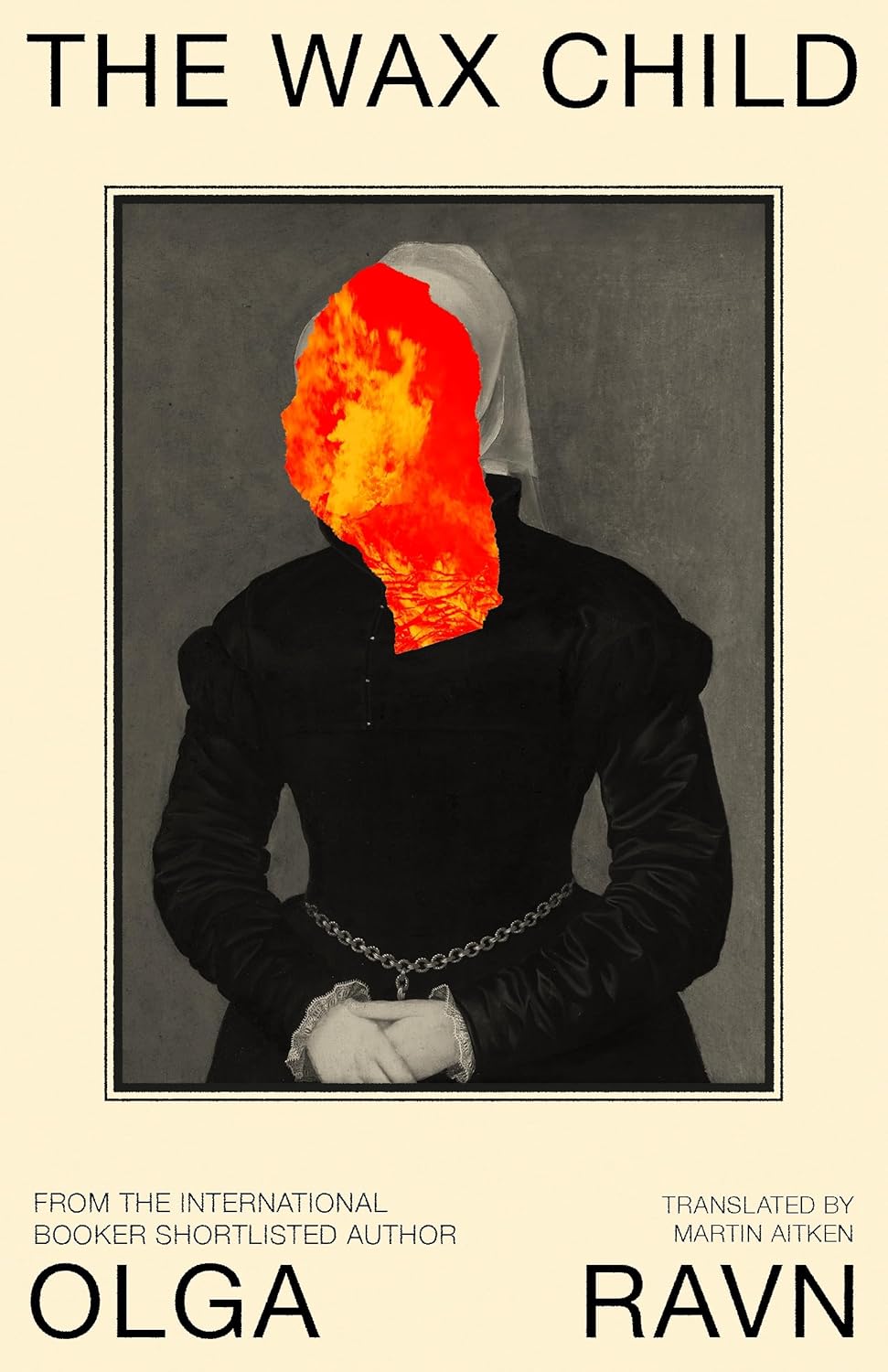
Synopsis:
It was a black night in the year 1620 when Christenze Kruckow made the wax child, when she melted down beeswax and set it in the image of a small human. For days, she carried it tucked beneath her arm, shaping it with the warmth of her flesh, giving it life. She fashioned for it eyes and ears that cannot open, and yet – it watches and listens.
It looks on as Christenze is haunted by rumour, it hears what the people whisper. It sees how, in the candlelight, she gazes with love at her friends, and hears the things they say in the shadows. It knows pine forest, misty fjord and the crackle of the burning pyre. It observes the violence in men’s eyes and the cruelty of their laws. In time, it begins to understand that once a suspicion of witchcraft has taken hold, it can prove impossible to shake…
Based on an infamous seventeenth-century Danish witch trial, The Wax Child is a mesmerizing, frightening vision of a time when witches and magic were as real to the human mind as soil and seawater.
It’s the end of the workweek—yay! Technically, it is already Saturday. Yesterday was a holiday here in the Philippines as we celebrated our Independence Day. It also meant an additional day of rest. For those who had to work, I hope you are ending the workweek on a high note. I hope the week has been kind to everyone. How time flies! We are already in the sixth month of the year, inching closer to its midpoint. Time takes its natural course. Nevertheless, I hope the first five months of the year have been promising. I hope conflicts in the Middle East and elsewhere in the world continue to de-escalate—or, better yet, are resolved altogether. As the year progresses, I hope everyone is given plenty of opportunities to grow and improve. With the weekend here, I hope everyone has a great one. It’s time to dress down and spend it either resting from the rigors of a demanding career, pursuing passions, completing household chores, spending time with loved ones, or simply relaxing. I hope you’re all doing well—physically, mentally, and emotionally.
I was supposed to wrap up my three-month venture into European literature in May. However, I realized that I have yet to read the works of several European writers included in my reading challenges. I find this ironic because the main reason I started reading works by European writers this early was to tackle the books I had already listed for those challenges. I usually read such works later in the year. I actually thought this extension would be brief, but upon reviewing my reading challenges, I realized I might spend more time here than planned. I have about five books left to read, most of which are part of my 2026 Beat the Backlist Challenge. Regardless, I am looking forward to reading them. Completing these books will make a noticeable dent in my Backlist Challenge. Hopefully, I can finish them before June ends.
My current read, however, is not part of any of these reading challenges. As the year progressed, however, it naturally became part of my reading plans for one reason. Early this year, Danish writer Olga Ravn’s The Wax Child was longlisted for the International Booker Prize, prompting me to secure a copy of the book. It is actually the fourth book from the longlist that I have read, or am currently reading. It was during the pandemic that I first heard about Ravn. Her first foray into a literary career came in the form of poetry. In 2015, she published Celestine, her first novel. Global recognition arrived with her 2020 novel Mit arbejde. The novel’s English translation, My Work, was shortlisted for the International Booker Prize. I am not exactly sure why I held back from reading it.
Anyway, The Wax Child failed to make the shortlist. Still, I am intrigued by what it has in store. Originally published in 2023 as Voksbarnet, The Wax Child transports readers to 17th-century Denmark. The spiritual guide to the story is the titular wax child, a small human effigy made from beeswax. It is the creation of Christenze Kruckow, an unmarried noblewoman. She carries the wax child with her, shaping it diligently as if breathing life into it. The wax child then serves as an observer of its creator’s life and listens to the whispers of the townspeople. Meanwhile, Christenze, despite having noble blood, possessed no fortune. As such, she had long been part of the household of the wealthy Anne Bille and her husband, serving as Anne’s companion. Their home is the manor house at Nakkebølle Fjord on Funen, Denmark’s third-largest island.
For the longest time, Anne wanted to be a mother. However, she experienced repeated tragedies. She suffered numerous losses—stillbirths and infants who died shortly after birth. By the age of thirty-two, she had lost fifteen children. Christenze, meanwhile, remained unmarried. She was also a subject of envy and controversy, particularly because of her unconventional lifestyle, “preferring to horse-ride on her own and drink red wine and read letters well into the night.” In desperation, Anne turned to Christenze for help. Christenze obliged by concealing a spider in sheep’s milk. Anne fed it to the baby, and the infant survived. However, when Anne saw the spider crawl out of the baby’s mouth, she panicked and accidentally dropped the infant onto the stone floor, killing it. As time passed, Anne became convinced that Christenze was the source of her misfortunes. She also resented Christenze’s independence.
Christenze’s refusal to conform to traditional gender norms led townspeople to suspect that she practiced witchcraft, along with another woman named Ousse. The period was marked by heightened paranoia surrounding witchcraft. According to a historian, between 1617 and 1625, Denmark burned a “witch” every five days. Christenze, however, was not overly concerned by the rumors. She believed that her noble status would protect her. However, the increasingly bitter Anne, driven by shame and grief, identified Christenze as a devilish spell-caster responsible for her tragedies. While Ousse was burned at the stake on charges of sorcery and witchcraft, Christenze managed to flee to the larger town of Aalborg. There, she met Maren Kneppis and her circle of friends—Apelone and the one-eyed widow, Dorte.
How about you, reader? What book—or books—are you taking with you this weekend? I hope you all have a great one and that whatever you’re reading provides a welcome respite from the demands of daily life.

