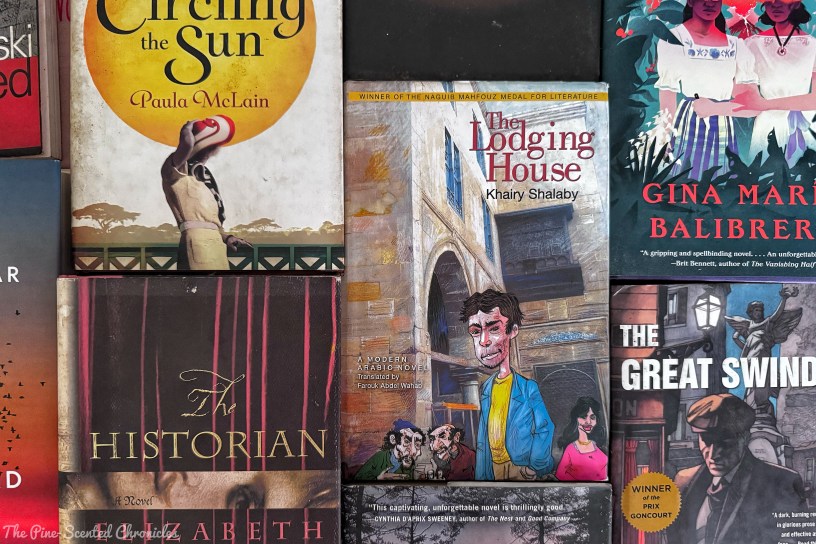
A Modern Arabic Novel
Egypt is easily one of the world’s most recognizable countries, especially for its ancient civilization. With a history spanning several millennia, it is considered one of the cradles of civilization. Emerging on the fertile banks of the Nile River, particularly in the Nile Delta and the lower Nile Valley, around 3100–3000 BCE, ancient Egypt wielded immense power, influence, and prestige. At its peak, the Egyptian kingdom stretched well beyond the Nile Delta. The Sphinx, the pyramids, and the obelisks are remnants of a once-great and thriving empire. These enduring monuments symbolize a remarkable civilization that was far advanced for its time. Even today, ancient Egypt’s many achievements, preserved in its art and monuments, continue to fascinate people around the world. This fascination only grows stronger as new archaeological discoveries reveal more of ancient Egypt’s secrets.
Ancient Egypt is also the birthplace of a diverse cast of historical personalities, ranging from the domineering to the docile and the tenacious. Among these prominent figures are Tutankhamun, Ramses II, Hatshepsut, and Cleopatra, all of whom left an indelible mark on history. Their distinct personalities, combined with ancient Egypt’s colorful past, have made the civilization one of the most extensively studied in human history. Owing to its wealth and grandeur, Egypt was long the object of envy and conquest. Repeated invasions and occupations gradually diminished what had once been a powerful and influential civilization. For centuries after its peak, Egypt was conquered and ruled by a succession of powerful empires, beginning with the Roman Empire. This period eventually culminated in a power struggle between the Ottoman Empire and the United Kingdom in the early twentieth century. By the mid-twentieth century, Egypt had finally achieved full sovereignty.
Beyond the pyramids and sphinxes, Egypt’s rich cultural landscape boasts a distinguished literary heritage. Ancient Egyptian literature ranks among the earliest known literary traditions in the world. Initially, much of this literature took the form of inscriptions on tombs, stelae, obelisks, and temples. Over time, myths, stories, and legends emerged alongside wisdom literature, philosophical works, and secular narratives. Among the most notable examples of ancient Egyptian literature are The Story of Sinuhe, the Westcar Papyrus, the Ebers Papyrus, and The Book of the Dead. Egyptian literature has endured through the centuries and remains influential in the modern literary world. This enduring legacy is exemplified by Naguib Mahfouz’s recognition by the Swedish Academy with the Nobel Prize in Literature, often regarded as the highest honor in the literary world.
Meeting any of those people, you were bound to show them their due respect, and feel awed by the manner in which they carried themselves, had not Shawadfi addressed every headman, pasha, bey or chief merchant by the title they truly deserved: “Goodbye, Playmaster!” “Beautiful morning, Slippery!” May God be with you, Joker!” or “My heart goes out to you, son of a bitch!” and so on. This drove home to me the point that the rooms of the wikala were nothing but the wings of a stage and here were the actors going onto the stage wearing the costumes for their roles. This inspired me to get up and put on the constume for a role to play. It was at that point that I came face to face with a fact that depressed me to no end, so much so that I almost let out a deep and pained groan: I had no role to play on any stage, not even that of an extra.
Khairy Shalaby, The Lodging House
Mahfouz is joined by equally revered Egyptian writers such as Khairy Shalaby. Interestingly, Shalaby won the Naguib Mahfouz Medal for Literature in 2003 for his novel The Lodging House. Originally published in Arabic in 1999 as وكالة عطية (Wikalat ‘Atiya), the novel became available to Anglophone readers in 2006. The story transports readers to the city of Damanhour, where they are introduced to an anonymous young man who serves as both protagonist and narrator. Raised in the countryside, he once dreamed of a better future. He aspired to become a respectable teacher and enrolled at the Public Teacher’s Institute. However, his dreams were quickly shattered. After a violent outburst against his math teacher, whom he believed had discriminated against him, he was expelled from the institute. He subsequently fell from grace in the eyes of both his family and his village, losing the support of those closest to him. Left penniless and without prospects, he found himself adrift.
His expulsion also marked the beginning of his descent into society’s underworld. Once ambitious and hopeful, the young man was reduced to the life of a vagrant. He slept on the streets and wandered through the city with no clear direction. Trapped in destitution, he found an unexpected lifeline in Mahrous, who befriended him. Carrying the narrator on his bicycle, Mahrous brought him to Wikalat Atiya, the titular lodging house. Wikalat Atiya was once a historic caravanserai, but it had long since fallen into disrepair. Over time, it became a refuge for the city’s marginalized and underprivileged residents. The narrator’s apprehension is encapsulated in the novel’s opening line: “I never thought I could be brought down so low that I would accept living in Wikalat Atiya.” The lodging house had earned a reputation as a dump, a haven for society’s forgotten and downtrodden.
However, as the narrator becomes increasingly immersed in life at the lodging house, his initial assumptions begin to unravel. At Wikalat Atiya, he encounters a diverse and memorable cast of characters. Presiding over the compound is Uncle Shawadfi, the guardian of peace and order. He rules the wikala with an iron fist. As Mahrous remarks, “whatever he wants is done.” Shawadfi commands the respect of the community and is often credited with keeping it together. To outsiders, he may appear to be little more than a gatekeeper, yet it is his authority that maintains order within the compound. His firm leadership helps prevent the wikala from being shut down or condemned by the authorities. Shawadfi’s influence permeates every corner of the compound, his watchful eyes observing everything that occurs under his jurisdiction. Though enigmatic, he serves as an important lens through which the narrator comes to understand and appreciate the other residents.
The narrator also meets Muhammad Abu Sinn, the owner of a fabric store. He is a member of the Muslim Brotherhood, as is his friend Abdullah Abu Hantour, an influential figure within the organization. Hamdi al-Zawawi, another friend of the narrator, sells cigarettes, shisha tobacco, and candy. Sheikh Zainhum al-Atris is a beggar who follows the Qutb dervish tradition. A veteran of the struggle against the British, he occasionally resorts to theft. Another fascinating figure is Ramadan Eraiga, an informant for the police and a cattle thief who also participates in various scams. Meanwhile, Sayyed Zanati is known as the master of tools. Yet the tools he commands are not material possessions but people whom he has shaped and molded to obey his instructions and carry out his wishes.
I had come to the conclusion that people in my country are alike in this respect: they either listened very attentively to intoxicating words if the speaker had a rich supply of brilliant sayings or they competed in the conversation by recalling or making up stories and sayings in the same vein and to the same effect. The real star among us – them – was the one who had the largest amount of stories, anecdotes, novelties, and cute expressions. He would be the only one to captivate the hearts and enchant the ears, even if he were a con artist and a fraud. And thus we would go around in a whirlpool in which the only ones who stayed on top were those unburdened by thinking, reason, honesty, and a genuine conscience.
Khairy Shalaby, The Lodging House
Wikalat Atiya’s dilapidated exterior conceals the vibrant life within. The narrator soon realizes that there is far more to the lodging house than meets the eye. Although the compound is populated by many men, it is the women who most capture his imagination. Etaita sells sweets on the streets and live chickens in the marketplace; at one point, the narrator becomes infatuated enough to follow her. Dumyana, known as the Monkey Woman, has trained her monkey to dance, beg, and pick pockets. Widad is a dancer, while her grandmother, Qut al-Qulub, is a Syrian tattoo artist. Widad and the narrator eventually develop a tender connection. He also befriends Sundus, a gypsy woman. In addition, he encounters several relatives, including Badriya al-Qabbani, the unmarried forty-year-old daughter of his cousin, and Wadida, his uncle’s daughter, who is married to Hagg Mas’oud al-Qabbani, a bursar in the Administration Building.
The narrator’s father is a farmer who gradually sells off his inherited land, one carat at a time, to support the children from his four marriages. Although the narrator has wealthier relatives, he keeps his misfortunes hidden from them, just as he conceals them from others around him. He has received a respectable education, particularly by the standards of the time. The novel is set during the Nasser era, when intellectual activity was heavily monitored and often suppressed by the state. The narrator’s literacy enables him to assist those who cannot read or write. Yet despite this advantage, he remains something of a cipher. He harbors literary ambitions and has already published a small booklet entitled The Smooth Cheek. However, he never actively pursues a literary career. Instead, he drifts through life, taking opportunities as they come. Although he expends considerable effort searching for work, he generally accepts whatever circumstances place before him. This passivity is reflected not only in his professional life but also in his romantic pursuits.
As the story progresses, it becomes increasingly evident that the novel lacks a single dominant protagonist. The narrator serves primarily as a vehicle through which Shalaby explores the social dynamics of life within the lodging house. His anonymity appears deliberate. There are no truly central characters or defining events; instead, the narrator functions as a mouthpiece through which the stories of others are conveyed. In many respects, Wikalat Atiya itself emerges as the novel’s true protagonist. The compound houses a marginalized segment of Egyptian society whose members come from vastly different backgrounds. Though forgotten by the wider world, each possesses a story worth telling. Shalaby allows his characters to recount their histories, experiences, and origins. The result is a kaleidoscopic portrait of Egyptian life, transforming Wikalat Atiya into a microcosm of modern Egypt.
The Lodging House vividly captures the everyday lives of Egypt’s urban poor. Shalaby breathes life into the lodging house and its inhabitants. The residents of Wikalat Atiya occupy the lowest rungs of society, possessing little and constantly struggling to survive. Yet the people the narrator encounters are never reduced to mere stereotypes. They encompass a broad spectrum of society, from the unemployed to academic failures. Some have been expelled from their villages, while others have fled scandal or disgrace. Certain residents are thieves and con artists. Nevertheless, behind their weary faces lie stories of resilience and perseverance. Each character longs to be heard, and each contributes depth and texture to the narrative. Their diversity enriches the novel and gives it remarkable vitality.
The government, in its idiocy, forgot that the people are all connected. So and so is a Muslim Brother and I am not; I am with the revolution, but that so and so is ultimately my relative; my cousin, my brother-in-law, my classmate or my childhood friend. That stupid bitch of a government hasn’t thought of that. It hasn’t considered that it cannot take someone from his house to jail as if it were pulling a hair from dough. First, because he his not a hair, and second, because his family is not dough. The person they arrest will be bruised and that will leave bruises in those around him.
Khairy Shalaby, The Lodging House
As he chronicles life within Wikalat Atiya, Shalaby skillfully exposes the gap between appearance and reality. He reveals dimensions of life in impoverished urban communities that remain largely invisible to mainstream society. His evocative storytelling exemplifies the qualities for which he is best known. Widely regarded as a master of the “Egyptian street,” Shalaby demonstrates an extraordinary ability to capture the rhythms, language, and experiences of ordinary people. Yet he does not limit himself to portraying daily life. He also explores the political climate of Gamal Abdel Nasser’s Egypt. The novel unfolds during a period marked by severe crackdowns on the Muslim Brotherhood. Shalaby depicts the brutality of the prison system and illustrates how segments of the population came to sympathize with imprisoned Brotherhood members whom they believed had been incarcerated on dubious grounds.
While Shalaby brilliantly captures the vibrant and communal life of Wikalat Atiya, the narrator’s personal development remains comparatively underdeveloped. The stories of the other residents create a rich and engaging tapestry, but the narrator himself often feels left behind. At the outset, he appears ambitious and driven. As the novel progresses, however, he gradually becomes a passive observer. The various phases of his life are largely shaped by the people around him and rarely result in meaningful personal growth. He undergoes little transformation and seems unable to envision a future beyond his immediate circumstances. This contributes to a certain aimlessness in the narrative. Ironically, some of the novel’s most compelling moments occur when genuine change takes place, such as the developments surrounding Badriya’s long-awaited marriage. For years, Badriya had remained unmarried because of her unusually large lips, making her eventual prospects particularly significant.
Despite its shortcomings, The Lodging House remains a compelling and deeply human portrait of modern Egypt. Through the decaying yet vibrant world of Wikalat Atiya, Khairy Shalaby illuminates the lives of those who exist on the margins of society—individuals often overlooked by history yet rich in experience, resilience, and humanity. The lodging house itself emerges as a microcosm of Egypt, bringing together an eclectic community whose stories collectively reveal the complexities of poverty, survival, social exclusion, and political change during the Nasser era. While the narrator’s limited personal growth may leave readers wanting a stronger character arc, his role as an observer allows the novel’s diverse cast to take center stage. Shalaby’s gift for capturing the rhythms of everyday life, his keen eye for social detail, and his compassion for ordinary people transformed a seemingly simple tale of hardship into a vivid tapestry of Egyptian society. Rich in humor and insight, The Lodging House is an engaging work of fiction that offers a memorable glimpse into a world that is at once uniquely Egyptian and universally human.
These are my beliefs in life and yet I cannot practice them most of the time because they need arduous training from childhood. That’s why I am telling you about them so you can keep them nailed in your mind. If you know things like these but don’t follow them, you’ll be tormented in your life whenever you do the opposite. And, by the way, everything I do in my life is the opposite of what I wish and what pleases me. I do not know to this day why I do what I do. If I did, maybe I’d abstain. But I know, deep down that I must know one of these days and my scale will be balanced and I will live like the rest of humanity even if just for one day.
Khairy Shalaby, The Lodging House
Book Specs
Author: Khairy Shalaby
Translator (from Arabic): Farouk Abdel Wahab
Publisher: The American University in Cairo Press
Publishing Date: 2006 (1991)
No. of Pages: 426
Genre: Literary, Historical
Synopsis
A young man’s dreams for a better future as a student in the Teachers’ Institute are shattered after he assaults one of his instructors for discriminating against him. From then on, he begins his descent into the underworld. Penniless, he seeks refuge in Wikalat Atiya, a historic but now completely run-down caravanserai that has become the home of the town’s marginal and underprivileged characters.
This award-winning novel takes on epic dimensions as the narrator escorts us on a journey to this underworld, portraying – as he sinks further into its intricate relationships – the many characters that inhabit it.
Through a labyrinth of tales, reminiscent of the popular Arab tradition of storytelling, we are introduced to these denizens, whose lives oscillate between the real and the fantastic, the contemporary and the timeless. And while the narrator starts out as a spectator of these characters’ lives, he soon becomes an integral part of the lodging house’s community of rogues.
About the Author
Khairy Shalaby (خيري شلبي) was born on January 31, 1938, in Kafr al-Shaykh village, in the Nile Delta. With his father’s death when he was young, he began to work at a young age. He struggled against hunger and poverty, and even lived in the Cairo cemeteries (the City of the Dead). His life changed in the 1950s, when he joined Salah Abu Seif’s cinema-writing workshop. He then started writing for radio and television. He eventually turned to fiction.
As a writer of fiction, Shalaby has had a prolific career, producing seventy books that span various genres such as novels, short stories, historical tales, and critical studies. He is known for his evocation of the Egyptian street. Among his renowned works are أولنا ولد (2008; trans. Our First is a boy), صالح هيصة (2000; trans. The Hashish Waiter), وكالة عطية (1999; trans. The Lodging House), and رحلات الطرشجى الحلوجى (1991; trans. The Time-Travels of the Man Who Sold Pickles and Sweets). His works also earned Shalaby various accolades. Istasia was longlisted for the International Prize for Arabic Fiction in 2010, while The Lodging House won the Saif Ghobash-Banipal Prize for Arabic Literary Translation in 2007 and the Naguib Mahfouz Medal for Literature in 2003. Shalaby also received the State Medal for Literature in 2005. He was also awarded the Egyptian National Prize for Literature 1980-1981.
He was also the editor-in-Chief of Poetry Magazine (Ministry of Culture) and the Library of Popular Studies books series published by the Egyptian Ministry of Culture. He was a professor at the Institute of Dramatic Arts (theatrical history). He was also passionate about theater criticism. His work on the history of Egyptian theater led him to discover many lost manuscripts, which he then reviewed and published. Some of his works were also adapted for film and television. He passed away on September 9, 2011.

