
Wow—we’re already done with the seventh month of the year! That was rather quick. How time flies! With seven months down, I hope everyone is right on track. Global and personal tensions continue to disrupt our lives. Still, I sincerely hope these challenges will eventually be resolved. I hope this year has brought you blessings, good news, and answered prayers. I know living can be quite a challenge. Still, we march on. We move forward, even if we do so slowly and cautiously. Personally, life has been quite hectic and challenging, but I hope things start looking up. I also hope everyone is finding their footing. I wish everyone well on their journeys. For those whose goal is simply to move from one point to another, know that that is perfectly fine, too. I am proud of you and your resilience. In times like these, with so much turmoil surrounding us, silencing the noise can be a challenge. I hope 2026 will be kinder to everyone. Above all, I hope everyone stays healthy—in mind, body, and spirit.
But before I could say goodbye to the month that passed, let me look back to how it unfolded, at least where reading is concerned. Following two months of reading purely works of Latin American and Caribbean literature, I spent the succeeding four months reading works of European literature. I originally planned to stay there for two months, just enough time to complete all the works by European writers in my reading challenges. However, these books ultimately extended my literary adventure into a four-month journey and I only read them in June. Nevertheless, I am glad I was finally able to conclude this journey. It was a memorable one. With my venture into European literature concluded, I have commenced a new literary journey in July, and what better way to mark my birth month than reading works that are close to home. In July, I read works of Asian writers. One of the reasons I ventured into the works of Asian writers is my love affair with Japanese literature, aside from the fact that this region is my home as well. Without further ado, here is how my foray into the works of Asian writers unfolded.
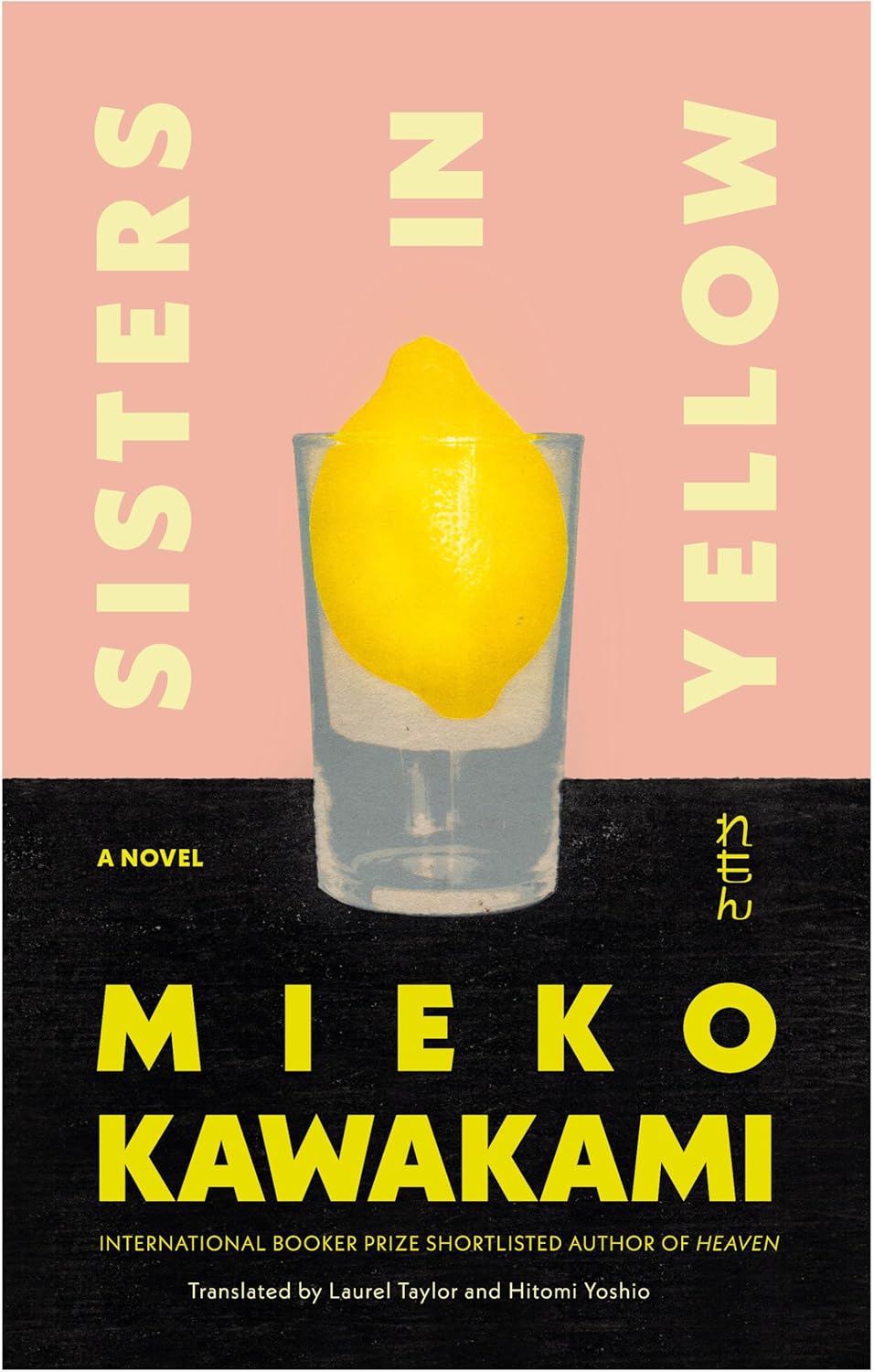
Sisters in Yellow by Mieko Kawakami
True to form, I opened my Asian literary adventure with the work of a Japanese writer. In fact, it is a novel I have long been looking forward to reading. Mieko Kawakami first piqued my interest during the pandemic, when her novel Breasts and Eggs became ubiquitous and won me over. It made me eager to explore her oeuvre further. Recently, I acquired a copy of Sisters in Yellow, Kawakami’s latest novel to be translated into English. I had been anticipating the book ever since I first learned of its release in 2023, though it was translated into English only this year. This makes Sisters in Yellow the fourth Kawakami novel I have read. Originally published in 2023 as 黄色い家 (Kiiroi Ie), the novel is narrated by Hana Ito, a forty-year-old woman navigating the onset of the COVID-19 pandemic. Hana works part-time at a deli in Tokyo just as Japan is about to shut down because of the pandemic. One day, she stumbles upon an online news article that stops her in her tracks. It concerns a crime involving a woman named Kimiko Yoshikawa, a sixty-year-old accused of keeping a vulnerable young woman locked in her apartment for two years. The article stirs long-buried emotions in Hana, causing her thoughts to drift back to the Kimiko she knew two decades earlier. As memories flood back, Hana worries that the past she has long suppressed might resurface. The story then flashes back to Japan in the 1990s, when Hana was fifteen and full of hope, even though little else was going well in her life. She lived in a small, run-down apartment with an absent-minded mother who drifted in and out of both their home and Hana’s life. One day, Hana woke up to find Kimiko lying beside her. Her mother had disappeared, asking her friend Kimiko to look after Hana for the summer. In Kimiko’s care, Hana finally experiences what it feels like to be genuinely cared for. When she gets the chance to move in with Kimiko, Hana accepts the offer, even agreeing to help her open a bar called Lemon. The bar takes its name from the color yellow, which symbolizes wealth. Lemon eventually becomes a refuge for them both. For Hana, it represents hope; for Kimiko, survival. They are eventually joined by Ran Kato and Momoko, a runaway from a wealthy family. Despite Hana’s hard work, however, something always seems to thwart her plans. No matter how hard she tries to build a future, she continually finds herself starting from scratch. Sisters in Yellow is quintessential Kawakami. Like many of Kawakami’s heroines, Hana is someone with whom readers naturally form a deep connection. At the same time, Sisters in Yellow stands apart from the author’s previous works. Kawakami’s latest novel ventures into Japan’s criminal underworld, incorporating elements of noir and suspense. At its heart, however, it remains Hana’s coming-of-age story. Darkness permeates the narrative, and Kawakami depicts it with remarkable vividness. Her characters are consumed by the basic struggles of daily survival as they grapple with depression, trauma, abuse, and illness. An engrossing coming-of-age tale about a young woman living in the shadows of Japan’s criminal underworld, Sisters in Yellow is a welcome addition to Kawakami’s growing oeuvre.
Goodreads Rating:

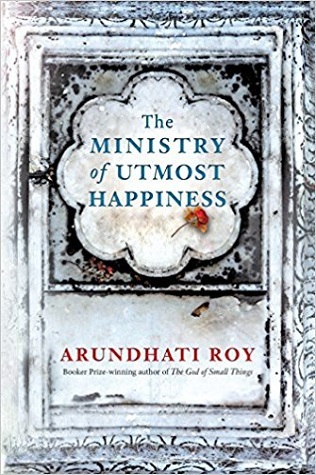
The Ministry of Utmost Happiness by Arundhati Roy
From Japan, my next read took me to another literary territory that has been growing on me: India. Among the several writers who have captured my interest is Arundhati Roy. Her Booker Prize-winning masterpiece, The God of Small Things, was a novel worthy of all the accolades it has received. It also left me eager to explore her other works. Ironically, I wasn’t able to read any of them until now. Nearly a decade after reading The God of Small Things, I have finally completed my second Roy novel, The Ministry of Utmost Happiness, a book I first encountered years ago. However, its relatively low Goodreads rating kept me from picking it up. Eventually, I relented and decided to give it a chance. Originally published in 2017, The Ministry of Utmost Happiness follows the interwoven lives of an eclectic cast of characters. The novel opens with Anjum, a Muslim Hijra, whom we first meet as she establishes her home in a graveyard behind a government hospital. She is friendless, but the blind old Imam Ziauddin soon becomes a fixture in her life. Anjum was born intersex and was initially raised as a boy named Aftab. Rejecting her assigned male identity, she joins the Khwabgah, a local community of Hijras. Decades later, Anjum leaves the Khwabgah and adopts Zainab, an abandoned toddler. Her plans, however, are disrupted by the rise of anti-Muslim sentiment in the early 2000s. A second major storyline then emerges. At its center is S. Tilottama, or “Tilo,” who attended architecture school in Delhi, where she met three young men who fell in love with her: Biplab Dasgupta, Nagaraj Hariharan (or Naga), and Musa Yeswi. Although they were once close friends, they lose touch after college, only for their lives to intersect again years later in Kashmir, each playing a different role. Tilo, however, remains shrouded in mystery. Biplab becomes involved in the Kashmir conflict, helping to conceal the atrocities committed by the Indian Army in the region, while Naga pursues a career as a journalist with leftist leanings. During an assignment in 1996, Biplab receives a phone call from an interrogation center in Srinagar informing him that the army has captured Tilo alongside a dreaded militant named Musa. He sends Naga to secure her release, and soon afterward, Naga and Tilo marry. The marriage is short-lived, and Tilo soon disappears. Following her disappearance, Biplab discovers photographs of people tortured during the insurgency, along with a collection of files on the officer who interrogated Tilo and killed Musa. Eventually, Anjum and Saddam Hussain (Dayachand) offer Tilo refuge at Jannat Guest House. The Ministry of Utmost Happiness is a remarkably eventful novel that chronicles several of the darkest and most violent episodes in modern Indian history. Along the way, Roy introduces a cast of compelling characters from different walks of life, each representing a different facet of Indian society. The novel vividly captures the socio-political maladies that continue to undermine contemporary India, including corruption, political violence, social divisions, and the excesses of capitalism. While it paints a bleak portrait of the country, what ultimately emerges is a profound sense of resilience and hope. With her sophomore novel, Roy further consolidates her status as a master storyteller.
Goodreads Rating:
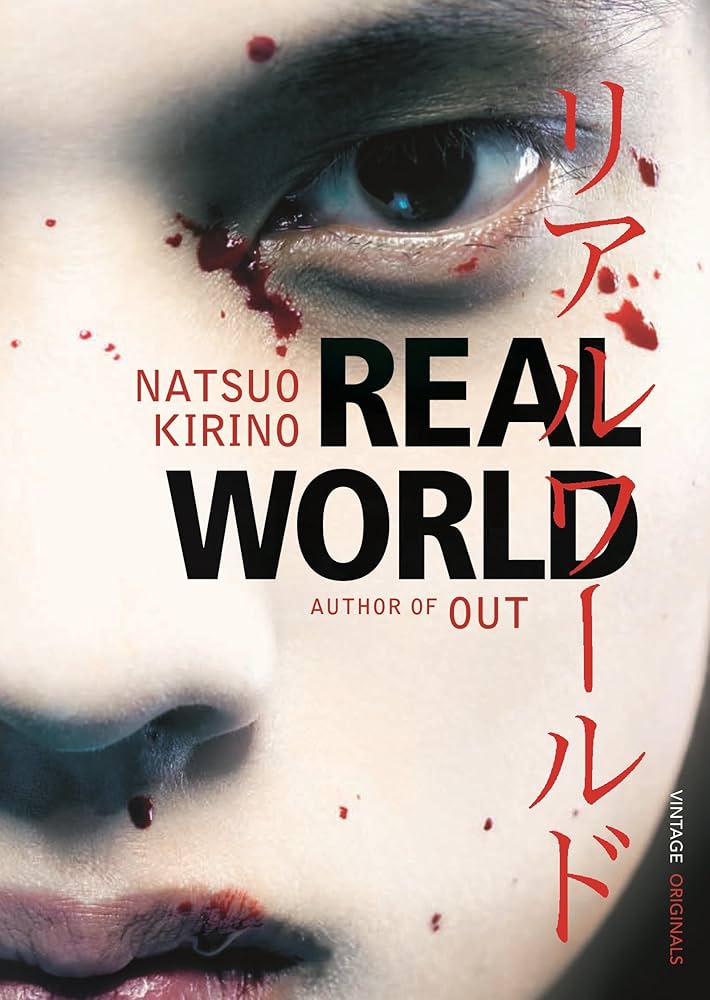
Real World by Natsuo Kirino
Japanese literature is so vast that there are still corners I have yet to explore. For the longest time, I have wanted to delve into Natsuo Kirino’s oeuvre. I kept encountering Kirino—the pseudonym of Mariko Hashioka—and she was also recommended to me by a friend. Interestingly, her earlier works were romance novels, but the genre was not particularly popular in Japan. In the early 1990s, she pivoted to writing mystery novels, placing particular emphasis on the psychological dimensions of crime. This brings me to Real World. Originally published in 2003 as リアルワールド (Riaru Wārudo), it is one of Kirino’s earliest works to be translated into English. The novel introduces Toshi (Toshika Yamanaka), the first of the four teenage girls at the heart of the story. She describes her neighbors—a family of three with a son close to her age—who moved in next door two years earlier. She refers to the family’s son as Worm. One day, as she is preparing to go to cram school, she sees Worm leaving his house. Later, she discovers that her bicycle and phone are missing. Terauchi calls her and tells her that she dialed Toshi’s phone, only for a strange man to answer. Toshi’s mother then informs her that their female neighbor has been murdered. The police suspect Worm of matricide. Toshi also suspects that Worm stole her phone and bicycle. However, she never tells the police either about the theft or about seeing Worm leave the house. Yuzan, on the other hand, lost her mother to cancer a couple of years earlier and has since been raised by her father and grandparents. She hides the profound loneliness that continues to consume her while struggling with her overbearing father and the lingering memories of her mother. Her deepest secret, however, is that she is a lesbian. Yuzan (Kiyomi Kaibara) is also one of the first to use the term “real world.” Her father constantly lectures her about living in the real world, which, to him, means earning degrees and securing gainful employment. Yuzan, however, bitterly believes that she has already experienced the real world, embodied in an incident that occurred the previous summer—a secret she refuses to reveal. Worm is also allowed to tell his own story, recounting his life before his family moved in next door to Toshi. His mother had high expectations of him. However, Worm is an isolated, underachieving student who resents his mother’s controlling and domineering behavior. Meanwhile, Kirarin (Kirari Higashiyama) appears to be the model good girl, though secrets lie beneath her polished exterior. Lastly, Kazuko Terauchi is the intellectual of the group and an outstanding academic achiever. When the girls receive a call from Worm, none of them are alarmed; instead, they are strangely fascinated by him. The premise is undeniably discomfiting. Apparently inspired by a real crime committed in 1997 by a high school student, Kirino uses the incident as a framework for exploring alienation and identity. She captures the pressures of adolescence, while the novel’s psychological depth illuminates her characters’ inner struggles, fears, and desires. Throughout, Real World examines the psychological consequences of their choices. As unsettling as the story can be, its rich psychological complexity makes it a compelling read.
Goodreads Rating:


America is Not the Heart by Elaine Castillo
A venture into Asian literature is, of course, not complete without at least one work by a Filipino writer. After all, it is my home literature. Among the books I included in my 2026 Top 26 Reading List is Elaine Castillo’s America Is Not the Heart; I have made it a tradition to include at least one Filipino book in my annual Top 20 Reading Lists. I can’t recall exactly how or when I first came across Elaine Castillo’s America Is Not the Heart. I do, however, remember hesitating when I first encountered it. Sometimes I have reservations about reading the works of my fellow Filipinos. This, however, is a mindset I have been gradually dismantling over the years. I eventually secured a copy of the novel. Originally published in 2018, America Is Not the Heart is set in the late twentieth-century United States, but the novel begins with a prologue in which a narrator addresses Pacita, or Paz, a girl who grows up in poverty in Pangasinan as the second of six children. Paz dreams of moving to America and, in pursuit of that dream, studies to become a nurse. While working at her first hospital job, she falls in love with Dr. Apolonio de Vera, or Pol, a surgeon from an affluent family in Ilocos Sur. They eventually migrate to the United States. Shortly after settling there, they have a daughter, Geronima—Roni for short—named after Pol’s niece, whom he mistakenly believes to be dead. The novel then shifts perspective as Pol’s niece, Geronima, locates her uncle and moves in with his family in suburban California. Roni christens her cousin “Hero.” They befriend Adela and Rosalyn, a grandmother and granddaughter, and the two families gradually grow close. As Hero and Rosalyn become increasingly close, Hero opens up to Rosalyn while revealing little about herself to her own family. Hero’s former life slowly comes into focus. Before moving to the United States, she was affiliated with the communist New People’s Army (NPA). She served as a doctor for the NPA, tending to peasants, farmers, laborers, and fellow militants in the countryside. These memories remain a source of trauma, as Hero was imprisoned for two years, tortured, and left with many broken bones. We also learn about her conflicted sexuality. She has had relationships with both men and women and has long been uncertain about her sexual identity. Rosalyn develops feelings for Hero, but Hero avoids reciprocating her affection, wary of becoming vulnerable. In the present, Hero tries to assimilate into life in the San Francisco Bay Area during the early 1990s while serving as Roni’s full-time caregiver. The past and the present converge as Hero grapples with her trauma while learning to adapt to her new environment. America Is Not the Heart is, above all, an exploration of the Philippines’ recent past and the Philippine diaspora. Castillo also does a remarkable job of connecting the Philippine immigrant experience to her characters’ cultural and geographical roots. Like many immigrants, Filipinos are drawn by the promise of the proverbial American Dream. Details of contemporary Philippine politics add further nuance to the story. America Is Not the Heart explores identity, gender, and the corruption and abuses that have long undermined the Philippines. The occasional use of Philippine languages, particularly Ilocano, lends the novel an added layer of authenticity. America Is Not the Heart is a compelling and thought-provoking novel.
Goodreads Rating:


China Rich Girlfriend by Kevin Kwan
Honestly, reading heavy books in succession can be quite distressful. That made me decide to look for something lighter. A casual browse through my bookshelf led me to an unsuspecting book. Singaporean writer Kevin Kwan made headlines with his novel Crazy Rich Asians, a satire of the upper crust of Singaporean—and, by extension, Asian—society. I read the book back in 2019. It was a light and entertaining read, punctuated by moments of genuine tenderness. I had not actually planned to read the rest of the trilogy. Seven years after reading the first book, I am finally continuing the journey with its sequel, China Rich Girlfriend. Originally published in 2015, China Rich Girlfriend picks up where its predecessor left off. The novel opens with a newspaper article about a horrific Ferrari crash in London. The Ferrari was driven by Carlton Bao, the only son of an immensely wealthy mainland Chinese family. He was studying in the United Kingdom. Carlton and another passenger were seriously injured when the car crashed into the front of an expensive boutique. Carlton’s mother, Shaoyen Bao, hurried to London along with her banker, Edison Cheng, a Hong Kong–based financial consultant. During her trip to London, Shaoyen meets Edison’s aunt, Eleanor Young, the mother of Nicholas “Nick” Young. When Shaoyen shows Eleanor a picture of her son, Eleanor immediately notices Carlton’s resemblance to Rachel Chu, her son’s fiancée. Nick and Eleanor’s relationship has been strained ever since Eleanor attempted to end her son’s relationship with Rachel three years earlier. She did not want her son to marry a woman who had never known her father and had been raised by a single mother with no prominent family name. Nick and Rachel have since reconciled and now live in Manhattan. Although Nick is at risk of losing his inheritance, he remains steadfast, willing to give it up for Rachel and a life together in New York. Eleanor’s investigations prompt her to attend her son’s wedding in California, even though she has not been invited. She discovers that Carlton’s father, Bao Gaoliang, is Rachel’s biological father, and she suddenly sees the value of having Rachel as a daughter-in-law, even orchestrating a reunion between father and daughter. Things, however, prove to be far more complicated than they initially appear. As the story unfolds, we once again encounter familiar characters, such as Nick’s cousin Astrid Leong. Alongside the returning cast are new figures, including Kitty Pong, a former actress whose marriage to Bernard Tai brought her into Singapore’s elite. Determined to buy her way into Hong Kong’s high society, she courts publicity through gossip magazines and acquires high-profile works of art. Like its predecessor, China Rich Girlfriend satirizes Asia’s ultra-rich. Kwan delves deeply into the dynamics of wealthy Asian families, while the Bao family offers a distinctly mainland Chinese perspective. They live in extraordinary luxury, a stark contrast to the poverty that persists in much of the Chinese countryside. China Rich Girlfriend continues to contrast Rachel’s humble upbringing with the extravagant lifestyle of the “China rich.” Kwan’s satire is sharp and humorous, while subtly exploring themes of social status, family loyalty, and identity. It certainly leaves me looking forward to reading the final installment of the trilogy.
Goodreads Rating:

The Blanket Cats by Kiyoshi Shigematsu
By now, I have established how much I adore Japanese literature. It is one of my favorite literary traditions in the world. From one light book to another, my next read was a heartwarming story, or rather a collection of heartwarming stories. Kiyoshi Shigematsu’s The Blanket Cats joins a long list of Japanese novels featuring cats. It has not escaped my attention how prevalent they are in Japanese literature. Even literary titan Haruki Murakami frequently incorporates cats into his novels. Beginning with Natsume Sōseki’s I Am a Cat, Japanese writers have produced numerous works centered on felines. In fact, one of my all-time favorite reads is Hiro Arikawa’s The Travelling Cat Chronicles. With The Blanket Cats, I was about to add another “cat book” to my ever-growing list. Originally published in 2008 as ブランケット・キャッツ (Buranketto Kyattsu), The Blanket Cats is a collection of seven loosely connected short stories. The collection is built around the intriguing concept of a shop where cats can be rented. Shigematsu not only introduces us to seven extraordinary cats but also offers a glimpse into everyday life in Japan. We encounter ordinary people facing ordinary yet deeply personal struggles. The cats serve as plot devices that allow Shigematsu to connect seven stories about people at crossroads in their lives. Whenever the characters temporarily adopt one of the blanket cats, they find themselves at a pivotal moment, uncertain about how to move forward. The cats cannot solve their problems, but the comfort of their warm presence provides reassurance. The opening story, “The Cat Who Sneezed,” introduces a childless couple wondering whether a feline companion can fill the void in their lives. “The Cat Dreams Were Made Of” follows a family forced to move after the patriarch suddenly loses his job, prompting them to create a few final memories before leaving their home. Meanwhile, “The Cat With No Tail” grapples with the issue of school bullying. In “The Cat Who Knew How to Pretend,” a family’s beloved cat, Ron-ron, has died. Before their grandmother arrives for a visit prior to entering a nursing home, they scramble to find a cat that resembles Ron-ron. “The Cat No-One Liked” deals with exploitative landlords and rising rents, and it contains one of the collection’s stronger storylines. “The Cat Who Went on a Journey” is narrated by Tabby, one of the shop’s more dependable cats, making it the story that feels most like a traditional cat tale. Finally, “The Cat in the Passenger Seat” follows a repeat customer taking an old friend on one final journey. The Blanket Cats has an intriguing premise. Japanese slice-of-life fiction is, after all, often heartwarming, comforting, and quietly insightful. Unfortunately, many of the human characters are unlikeable. More disappointingly, the cats are merely narrative devices rather than active participants. It was a missed opportunity. The cats symbolize companionship and the transient nature of human relationships, but most of the stories could have unfolded without them. Although there are moments of genuine brilliance, too many of the stories ultimately fall flat. Nevertheless, The Blanket Cats remains an interesting addition to the growing body of Japanese cat literature.
Goodreads Rating:
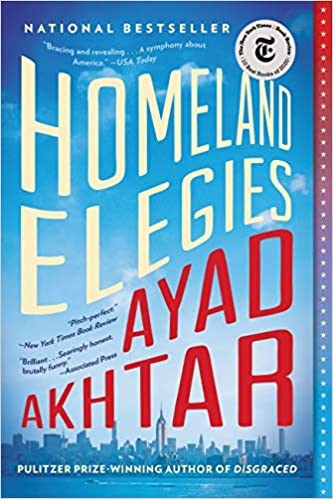
Homeland Elegies by Ayad Akhtar
Born in the United States to Pakistani parents, Ayad Akhtar has established a distinguished reputation as a playwright. For his work on Broadway, he has received Tony Award nominations for Best Play. Beyond the stage, he is also an acclaimed novelist. In 2012, Akhtar published his debut novel, American Dervish. He gained even greater recognition with his sophomore novel, Homeland Elegies. Shortly after its release in 2020, Homeland Elegies was named one of the best books of the year by several literary publications. This naturally piqued my interest. Half a decade later, I finally picked up the novel, which I had also included on my 2026 Top 26 Reading List. Akhtar’s sophomore novel, Homeland Elegies, begins with an overture dedicated “To America.” Akhtar himself serves as the novel’s spiritual guide, as it seamlessly blends fiction with autobiographical memoir. In the overture, he recalls Professor Moroni, a memorable college professor who instilled in him the idea that America is not what it claims to be. This observation sets the tone for everything that follows. Akhtar’s parents were physicians who emigrated from Pakistan to the United States while they were young, drawn by America’s promise of opportunity. Interestingly, they were ideological opposites, particularly in how they viewed their adopted country. Sikander adored America, while Fatima longed to return to the country of her birth. The novel’s first section, Family Politics, begins during Donald Trump’s first year in office. Following a medical emergency, the Akhtar family becomes acquainted with Trump after Sikander treats him for a heart condition. Through this encounter, Sikander develops an obsession with the American Dream and attempts to emulate Trump’s success. It is, however, all for naught. Hoping to assimilate more fully into American society, Sikander abandons medicine to speculate in real estate. The venture fails, forcing him to return to his profession. Eventually, he is compelled to sell his private practice and declare bankruptcy. Scranton Memoirs focuses on Ayad’s own struggles to assimilate into American culture, drawing on experiences such as being profiled by a state trooper and a white business owner in Scranton. To them, Akhtar does not look American, reinforcing the painful realization that being born in the United States is not always enough to be accepted as American. The final section, Pox Americana, turns further inward as Ayad grapples with his identity and the ways it has been shaped by his own prejudices. Homeland Elegies easily distinguishes itself from many of its contemporaries. Its autobiographical dimension lends the novel remarkable depth and nuance. Akhtar deftly blends memoir with fiction, resulting in a compelling and propulsive narrative. At its core, the novel is a profound exploration of identity, as Akhtar finds himself suspended between two worlds. He is not considered American enough to fully belong in the United States, yet neither is he Pakistani enough to claim his parents’ homeland as his own. Meanwhile, his father willingly sheds his old identity in pursuit of the proverbial American Dream. Ironically, when that dream collapses, Sikander returns to the homeland he had once left behind. Along the way, Akhtar also engages with contemporary issues such as debt, capitalism, and xenophobia. Overall, Homeland Elegies is an insightful and profound exploration of identity, family, and the contradictions at the heart of modern America.
Goodreads Rating:
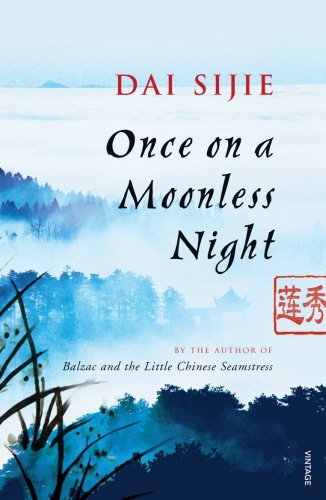
Once on a Moonless Night by Dai Sijie
From the United States—and, effectively, Pakistan—my literary journey next took me to China. Dai Sijie’s Once on a Moonless Night is the first work by a Chinese writer that I have read this year. Interestingly, Dai writes in French rather than Chinese. Born in China to professors of medical sciences at West China University, he left for France in 1984 on a scholarship to study at the Institut des hautes études cinématographiques. There, he developed a passion for filmmaking and eventually became a director. He has lived in France ever since. Dai first piqued my interest with his short novel, Balzac and the Little Chinese Seamstress, which was the first of his works that I read. Nearly a decade later, I finally decided to read my second Dai novel, Once on a Moonless Night. Originally published in 2007 as Par une nuit où la lune ne s’est pas levée, Once on a Moonless Night is narrated by an anonymous French scholar of Asian and African languages. As a young student, she spent time in China in 1978 and 1979, studying in the newly reopened “Peking” in the aftermath of the Cultural Revolution. There, she fell in love with a brilliant young man who worked at the neighborhood greengrocer’s shop. Tumchooq Zhong, however, is no ordinary greengrocer. He is the estranged son of the French linguist Paul d’Ampère, the first scholar to “crack” the dead language known as Tumchooq. Paul turned his back on his affluent European heritage to devote his adult life to finding a fragment of an ancient text written in Tumchooq. The language first became known to modern scholars through a partial Buddhist sutra preserved on a torn silk scroll, an artifact that passed through the hands of both of China’s “last emperors” and several of their predecessors. When Puyi, the last emperor, was exiled to Manchuria in the early 1930s, he is said to have carried the scroll with him. According to legend, he tore it in half before being taken prisoner by the Japanese. D’Ampère named his son after the lost language and ultimately spent the last years of his life as a political prisoner in a brutal Chinese labor camp. Meanwhile, the anonymous narrator first hears of the mysterious sutra in 1978 while serving as a translator during a meeting about The Last Emperor. Romance blossoms between her and Tumchooq, but history, as so often happens, repeats itself. Their paths diverge when Tumchooq learns of his father’s death and abandons his girlfriend to continue the search for the missing sutra, unaware that she is pregnant. Heartbroken, the unnamed narrator returns home and spends the following years studying and teaching in Africa while trying to make sense of what had happened between them. At the same time, Tumchooq struggles to understand the father he barely knew. Their stories intertwine with those of various Chinese scholars, politicians, and nobles. At times, this sprawling narrative becomes convoluted, making the novel more challenging to appreciate. Nevertheless, as one works through its many threads, what gradually emerges is a fascinating meditation on language and its many representations. Dai explores the intricacies of language against the backdrop of China’s turbulent history while weaving together passages from both real and imagined books. These seemingly disparate elements ultimately coalesce into an epistolary novel. In his sophomore novel, Dai highlights language’s power to heal people from madness and despair, even as it possesses the capacity to drive them to obsession. It is perhaps fitting that Dai himself—a Chinese-born writer who writes in French—embodies the novel’s enduring fascination with the transformative power of language.
Goodreads Rating:
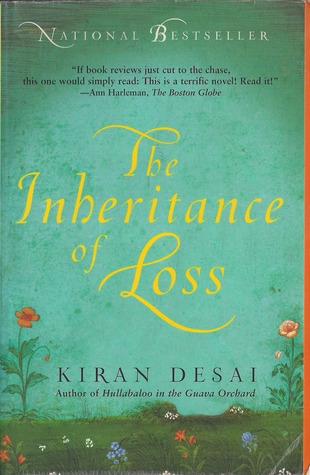
The Inheritance of Loss by Kiran Desai
I concluded my July reading journey with yet another work by an Indian writer. Over the past decade, my exploration of Indian literature has expanded, largely thanks to Salman Rushdie. Since then, I have discovered many more Indian voices, among them Kiran Desai. I first encountered her through various must-read lists, where her sophomore novel, The Inheritance of Loss, was a constant presence. Even so, I remained apprehensive about reading it. I eventually relented and included it in my 2026 Top 26 Reading List. Originally published in 2006, The Inheritance of Loss is set primarily in 1986 and opens with the retired judge Jemubhai Patel and his granddaughter, Sai, living in Cho Oyu, a dilapidated mansion in the Himalayan town of Kalimpong at the foot of Mount Kanchenjunga. One day, their quiet existence is shattered by the arrival of a group of young men from the Gorkha National Liberation Front (GNLF), a Nepali insurgent movement. They demand that the judge surrender his guns, threaten him at gunpoint, and steal whatever valuables they can find. The judge sends the cook to the police station, but when the police arrive, they instead accuse the cook of having a hand in the robbery. As they ransack his humble hut, they discover letters from his son, Biju. Biju is living illegally in New York City after overstaying his tourist visa. To survive, he drifts from one restaurant job to another, accepting whatever meager wages he can earn. Ironically, the letters he sends home paint a picture of a life that bears little resemblance to reality. Meanwhile, his father’s replies downplay the growing political unrest in India. The cook, in turn, proudly boasts to friends, family, and neighbors about Biju’s “successful” pursuit of the American Dream. The novel also flashes back to Sai’s arrival at Cho Oyu nine years earlier. She had been attending St. Augustine’s Convent when her parents were killed in a bus accident. The nuns then sent her to live with her grandfather. Raised in relative isolation, Sai comes to regard the cook as a surrogate father. Two elderly anglophiles, Noni and Lola, serve as her tutors until Sai surpasses Noni’s abilities. The judge then hires Gyan, a recent university graduate, to tutor her in mathematics and physics. Jemubhai’s own story unfolds alongside theirs. Born into poverty, he left India during the British Raj to study for the Indian Civil Service at Cambridge University, using the dowry from his marriage to finance the journey while leaving behind his fourteen-year-old wife, Nimi Patel. At Cambridge, he becomes increasingly disillusioned after being treated as an outsider. His attempts to assimilate are repeatedly rejected. When he returns to India, he has grown contemptuous of both his homeland and his wife. By the time the novel begins, retirement has become a life of self-imposed isolation. Isolation is one of the novel’s defining themes, as Biju experiences the same alienation in New York. Even the Himalayan setting reinforces this profound sense of solitude. Throughout the novel, the characters struggle with questions of belonging and the erosion of their cultural identities. Desai explores what it truly means to call a place home while examining the stark divide between privilege and poverty. As the title suggests, The Inheritance of Loss is ultimately a poignant meditation on loss, tempered by moments of love and quiet hope. These emotional currents unfold against a backdrop of political unrest and ethnic tension. Desai masterfully weaves these disparate threads into a rich literary tapestry. Winner of the 2006 Booker Prize, The Inheritance of Loss proved to be a delightful surprise.
Goodreads Rating:
Reading Challenge Recaps
- 2026 Top 26 Reading List: 19/26
- 2026 Beat The Backlist: 11/20; 60/60
- 2026 Books I Look Forward To List: 0/10
- Goodreads 2026 Reading Challenge: 60/100
- 1,001 Books You Must Read Before You Die: 10/20
- New Books Challenge: 0/15
- Translated Literature: 42/50
Book Reviews Published in July
- Book Review # 659: The Shadow King
- Book Review # 660: Dona Flor and Her Two Husbands
- Book Review # 661: The Law of Love
As has often been the case, the month immediately following the end of a quarter is a hectic one. July was an especially busy month at work, which inevitably limited my writing time. After regaining a semblance of writing momentum in May and June, I once again found myself in a slump. Despite my efforts, I was able to complete only three book reviews. That is still an improvement over April, when I managed to finish just two. However, it marks a stark reversal from May and June, during which I completed twelve reviews. Of the three reviews I published in July, only one—Laura Esquivel’s The Law of Love—was from my 2023 reading list; the other two were books I read in 2024. I suppose this also marks the gradual transition to my 2024 reviews, as I am close to completing my remaining reviews from 2023.
Unfortunately, July represented a setback in sustaining my writing momentum, especially as my backlog continues to grow because my writing simply cannot keep pace with my reading. I am reading far more books than I am reviewing. My hope is to rebuild that momentum in August and, more importantly, sustain it through the rest of the year. For now, my primary goal is to finish my remaining 2023 reviews while steadily working through those from 2024 and 2025. With fewer than fifteen reviews left to write, I am on track to complete my 2023 backlog. I also hope to make meaningful progress on my considerably larger 2024 backlog. From time to time, I may also publish reviews of books I read before I began writing reviews, such as Haruki Murakami’s Norwegian Wood, Salman Rushdie’s The Ground Beneath Her Feet, and Ian McEwan’s Atonement. These novels hold special significance for me, as they were the first works I read by each of these authors.
As for my reading, August will be an extension of my venture into Asian literature. Although I have already completed all the books in my reading challenges, there are still several works by Asian writers that I want to explore. I am about to begin Yōko Tawada’s Suggested in the Stars, which will be the fourth book by the Japanese writer that I have read. I am also planning to read Shugoro Yamamoto’s The Flower Mat, Edith L. Tiempo’s His Native Coast, and R. K. Narayan’s The Guide. This venture into Asian literature is gradually taking shape as a journey through Japanese, Indian, and Philippine literature. That said, I am also considering branching out to other literary traditions. I just might include Orhan Pamuk’s The White Castle. I also hope to acquire a copy of Yáng Shuāng-zǐ’s Taiwan Travelogue, the recent winner of the International Booker Prize. Along the way, I plan to continue selecting books from my bookshelf that complement each month’s primary reading theme.
How about you, fellow reader? How is your own reading journey going? I hope you enjoyed the books you have read. For now, have a great day. As always, do keep safe, and happy reading, everyone!

