A Modern Turkish Literary Masterpiece
With a Nobel Laureate in Literature to its name, Turkish literature has certainly established itself as one of the world’s pre-eminent literary traditions. The road to Orhan Pamuk’s—and by extension, Turkish literature’s—recognition by the Swedish Academy was a long yet colorful one. Turkish literature has a rich history spanning over a millennium. Like most literary traditions, the earliest forms of Turkish literature emerged as poetry and heroic epics. Some of the earliest known examples of Turkic poetry originated around the sixth century and were, interestingly, composed in the Uyghur language. This underscores the role played by Turkey’s strategic location at the confluence of two continents in shaping its literary landscape. Turkish literature has been enriched by the integration of multiple languages and cultural influences. Among the heroic epics, Kitab-i Dede Korkut (The Book of Dede Korkut) is a prime example, surviving in two 16th-century manuscripts, though the work’s exact date remains unknown. Meanwhile, Turkish oral tradition was deeply embedded in the community’s social life and entertainment.
Sufi (mystical) poetry became a prominent subgenre of Turkish literature by the middle of the 13th century. The masnavī, a poetic form consisting of a series of couplets in rhymed pairs, became a widely recognized form of Turkish poetry, even though it traces its origins to the Persian Empire. Aşık Paşa’s Gharībnāmeh (The Book of the Stranger) is one of the most recognized works from this period and is considered among the finest mesnevîs of the era. Along with the ascent of the Ottoman Empire came the recognition and spread of Turkish literature. This period also marked the development of various literary genres. While poetry remained prevalent, divan literature and tekke (mystical) literature flourished across the empire. Literature gained importance in daily Ottoman life, with many writers rising to prominence and leaving lasting legacies. Among the prominent figures produced by the Ottoman Empire are Ahmet Mithat Efendi, who pioneered Turkish prose, Tevfik Fikret, Evliya Çelebi, and Galib Dede.
The collapse of the Ottoman Empire in the early 20th century did not deter the spread of Turkish literature. Instead, it gained even greater influence and began to occupy a prominent place among the world’s distinguished literary traditions. Building on the legacy of earlier writers, figures such as Yaşar Kemal, Zülfü Livaneli, and Bilge Karasu pushed the boundaries of Turkish storytelling. Their works became widely known, elevating Turkish literature to global recognition. Among female Turkish writers, Elif Shafak stands out as one of the most significant. The pinnacle of international recognition came when Orhan Pamuk was awarded the Nobel Prize in Literature by the Swedish Academy. Despite their remarkable role in elevating Turkish culture on the world stage, Turkish writers have also faced censorship, with both Pamuk and Shafak encountering criticism and even legal challenges in their homeland.
The essence of life is in solitude – wouldn’t you agree? All unions are built on falsehood. People can only get to know each other up to a point and then they make up the rest, until one day, seeing their mistake, they turn their backs on sadness and run away. Would this ever happen, if they stopped believing in their dreams and made do with what was possible? If everyone accepted what was natural, then no one would suffer disappointment, no one would curse fate.
Sabahattin Ali, Madonna in a Fur Coat
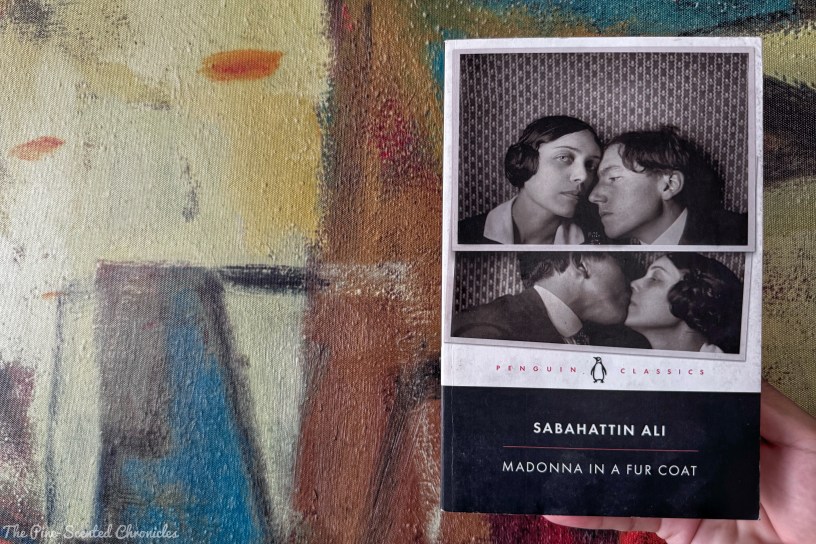
Another Turkish writer who faced censorship and intense scrutiny was Sabahattin Ali. A teacher by profession, he was critical of Mustafa Kemal Atatürk’s policies. A poem he wrote criticizing those policies even resulted in his arrest. Of his works, one stands out: Madonna in a Fur Coat. Often considered one of the finest novellas in Turkish literature, Madonna in a Fur Coat was originally published in 1943 as Kürk Mantolu Madonna. The novel transports readers to pre–Second World War Ankara, where we meet an unnamed narrator struggling through a difficult period in his life. Unemployed and consumed by despair and shame, he isolates himself from everyone around him. It is only when an old classmate, Hamdi, offers him a job that he begins to feel a semblance of hope. Although he initially harbors misgivings about both the work and his classmate’s condescending attitude, he eventually accepts the position.
In his new role as a clerk in a lumber firm, the narrator shares an office with an unremarkable man named Raif Efendi. Raif has worked for the company for several years, yet he has never advanced. Disrespected by everyone in the office, he is frequently overlooked. The narrator, however, sees him differently. Drawn to his quiet colleague, he becomes intrigued and eager to know him better. Eventually, the two become friends. One day, after Raif falls ill—something that happens frequently—the narrator decides to visit him at home. There, he witnesses the minimal affection and respect Raif receives from his family. Although Raif contributes significantly to the household finances, he is treated almost as a nonentity, valued merely for his ability to provide materially. Even his relationship with his children is distant and fragile. The only person who shows him genuine tenderness is his wife, Mihriye Hanım.
As the two friends converse, Raif asks the younger man to collect his belongings from his desk. Among them is a notebook that Raif asks the narrator to burn. Before doing so, however, he grants him permission to read it—on the condition that it be destroyed afterward. The contents of the notebook form the backbone of the novel and provide an intimate glimpse into the life of its reclusive author. Even during childhood, Raif was shy and withdrawn, and he did not enjoy his school years. Following the conclusion of the First World War, he enrolled at the Academy of Fine Arts in Istanbul but eventually dropped out. The crux of the story begins when his father sends him to Berlin to learn soap-making, as the family owned a soap manufacturing business that he was expected to inherit. Yet Raif finds himself increasingly isolated in Berlin, uninspired both by his work and by the factories themselves.
Instead, Raif redirects his energies toward his own pursuits. He spends his days reading and wandering through the streets of the German capital, frequently visiting museums and art galleries. During one such visit, he encounters a painting he calls Madonna in a Fur Coat, a self-portrait by Maria Puder. The painting immediately captivates him, affecting him in ways he cannot fully describe. He feels as though he has seen it before, somewhere deep within himself. Mesmerized, he returns to the gallery every day just to catch another glimpse of it. One day, however, his reverie is interrupted by a woman who approaches him and asks why he likes the painting. Fearing that she is mocking him, Raif abruptly leaves and never returns. Yet fate intervenes, and their paths cross once again. During one of his nocturnal outings, Raif encounters the woman by chance. Hoping to see her again, he continues visiting the same place, and eventually his efforts are rewarded.
But our missed opportunities never leave us, and every time they come back to haunt us, we ache. Or perhaps what haunts us is that nagging thought that things might have turned out differently. Because without that thought, we would put it down to fate and accept it.
Sabahattin Ali, Madonna in a Fur Coat
The mysterious woman turns out to be none other than Maria Puder, the artist behind Madonna in a Fur Coat. The pair develops an intense friendship, spending long nights together in conversation. Maria reveals that she is an unhappy cabaret performer, though she finds comfort in Raif’s quiet devotion and emotional sincerity. As their relationship deepens, the novel traces the gradual blossoming of their emotional connection. Their conversations span a wide range of subjects, though one topic consistently dominates: love. Maria is deeply skeptical of love and fixated on its disordered nature. Ironically, despite the growing intimacy between them, she insists that she is incapable of loving anyone at all. She challenges conventional notions of romance, viewing love as a kind of personal malady that has negatively shaped her past relationships. Beneath their discussions of love also lies a subtle exploration of gender dynamics.
The relationship between Raif and Maria, however, transcends romance. As they grow closer, both characters deviate from the social norms of their time. Raised in a conservative Turkish household, Raif is expected to embody traditional masculinity, yet he diverges from these expectations. He is gentle, observant, and quietly sensitive, drawn more toward art and literature than physical labor. His diary reveals a man filled with emotional depth and passion—a stark contrast to the unimpressive office worker dismissed by his colleagues. He is enamored with romantic novels and devours books with intensity. Maria, meanwhile, also refuses to be confined by social expectations. Free-spirited and fiercely independent, she does not conform to the standards imposed upon women of her era. She is charismatic, intellectually sharp, and deeply fascinating. At the same time, Maria emerges as the idealized embodiment of the love and beauty that Raif has long yearned for.
The contrast between Raif and Maria makes the convergence of their lives all the more compelling. Notably, Raif has had little prior experience with women. Maria, echoing the words of Raif’s father, remarks that there is something feminine about him. At the same time, she considers herself more masculine, stating, “I’m like a man in many other ways, too.” This perspective is also evident in her refusal to be controlled within relationships. She resolves that her relationships will be conducted strictly according to her own terms and conditions. Nevertheless, despite their stark differences, Raif and Maria forge a profound emotional connection. Rather than a stereotypical romance, their relationship is built upon intellectual companionship and emotional understanding. Their story highlights the beauty and unpredictability of chance encounters—the serendipitous meeting of two unlikely individuals at an inopportune moment, resulting in a bond that transcends labels.
Maria is a liberal German woman, while Raif is raised in a conservative and traditional Turkish household. Their bond therefore challenges social conventions. Neither conforms to what society expects of them. Theirs is the story of two outsiders who choose to live according to their own values of compassion and kindness. The quiet power of their relationship underscores the beauty of genuine human connection, particularly in a world descending into chaos. By transcending the strictures of social norms and expectations, they are able to create an enduring bond. Authentic human connection is founded upon mutual respect and understanding; it creates a space in which individuals are free to be themselves. Through Maria and Raif, Ali demonstrates how meaningful relationships can flourish beyond appearances and societal expectations.
Still, our conversations remained superficial. But this no longer puzzled me. For wasn’t there sufficient pleasure to be had in silent patience — in viewing others’ vices with compassion and enjoying their vulgarities? When we walked side by side, did I not feel his humanity most profoundly? Only now did I begin to understand why it was not always through words that people sought each other out and came to understand each other, and why some poets went to such lengths to seek out companions who could, like them, contemplate the beauties of nature in silence.
Sabahattin Ali, Madonna in a Fur Coat
Yet Madonna in a Fur Coat is far more than a romance novel. Running parallel to the development of Raif and Maria’s relationship is Raif’s own coming-of-age journey. In moving to Berlin, he begins to understand himself more deeply while cultivating his personal strengths. By immersing himself in the city’s culture, he undergoes a profound transformation. He falls in love not only with Maria, but also with art, Berlin, and even himself. Ironically, before encountering the painting Madonna in a Fur Coat, he is entirely bereft of purpose. It is only after meeting Maria that he begins to find meaning in his life. Berlin allows him to experience dimensions of existence that he had never encountered in his homeland. Since the narrator first introduces him as a dying and defeated man in Turkey, the revelations contained in his diary become all the more striking. Raif was never merely an unimpressive man crushed by the burdens of life; he once possessed dreams, passions, and emotional vitality before fate intervened.
Complementing the emotional depth of the novel is the remarkable quality of Ali’s prose and storytelling. His writing appears deceptively simple, yet within that simplicity lies extraordinary emotional power. Loneliness and melancholy permeate the narrative, creating an immersive and deeply affecting atmosphere. At the same time, the prose is suffused with warmth and tenderness on nearly every page, reflecting Ali’s background as a poet. There is a quiet intimacy in his writing that invites readers into the innermost thoughts and vulnerabilities of his characters. What might otherwise seem mundane is transformed by Ali into something profoundly moving, resulting in a narrative that resonates deeply with the reader.
Brimming with melancholy and regret over lost love and missed opportunities, Madonna in a Fur Coat is ultimately a story about the moments that slip away from us. Written in deceptively simple prose, the novel initially presents itself as a romance narrative. Yet beneath its surface lies a profound exploration of the human condition—of yearning, freedom, loneliness, and the desire to live authentically despite society’s constraints. Through Raif and Maria, Sabahattin Ali captures the beauty of genuine human connection in a world teetering on the edge of chaos. The emotional resonance of Ali’s writing lingers long after the final page, which explains why Madonna in a Fur Coat remains one of the defining classics of Turkish literature.
I definitely need to love a man. But a real man. A man who could sweep me off my feet without resorting to brute strength. Without asking anything of me, without controlling me, or degrading me, a man who could love me and walk by my side. In other words, a truly powerful man, a real man.
Sabahattin Ali, Madonna in a Fur Coat
Book Specs
Author: Sabahattin Ali
Translator (from Turkish): Maureen Freely and Alexander Dawe
Publisher: Penguin Books
Publishing Date: 2021 (1943)
No. of Pages: 168
Genre: Historical, Romance
Synopsis
A shy young man leaves his home in rural Turkey to learn a trade in 1920s Berlin. The city’s crowded streets, thriving arts scene, passionate politics and seedy cabarets provide the backdrop for a chance meeting with a woman, which will haunt him for the rest of his life. Emotionally powerful, intensely atmospheric and touchingly profound, Madonna in a Fur Coat is an unforgettable novel about new beginnings and the unfathomable nature of the human soul.
About the Author
Sabahattin Ali was born on February 25, 1907, in Eğridere Township (present-day Ardino in southern Bulgaria), in the Sanjak of Gümülcine (now Komotini in northern Greece), in the Ottoman Empire. Because of his father’s occupation—he was an infantry captain—he grew up in various Turkish cities: Istanbul, Çanakkale, and Edremit. The outbreak of the First World War interrupted his studies, contributing to his difficult childhood. He then studied at Balıkesir Teacher Training School and later continued at Istanbul Primary Teacher Training School, from which he graduated in 1926. In 1927, he served as a teacher in the town of Yozgat in central Anatolia. He then earned a fellowship from the Ministry of National Education and studied in Potsdam, Germany, from 1928 to 1930. When he returned to Turkey, he taught the German language in high schools in Aydın and Konya.
While studying, Ali was actively writing poems and short stories. His earliest writings were published in 1925 in a magazine called Irmak in Balıkesir. He published his first short story, Bir Orman Hikayesi (A Story from the Forest), in 1930. While teaching in Konya, he was arrested for criticizing Atatürk’s policies and was accused of libeling two other journalists. Mustafa Kemal Atatürk was the president during the period of single-party rule. He was released in 1933 through an amnesty granted to mark the 10th anniversary of the declaration of the Republic of Turkey. He was eventually given a job in the publications division of the Ministry of National Education after proving his allegiance to Atatürk by writing the poem Benim Aşkım (My Love or My Passion). He also continued writing. His short stories appeared in Istanbul literary journals and attracted attention from a wide-ranging audience.
His novel Kuyucaklı Yusuf (Yusuf of Kuyucak) was published in 1937. This was followed by İçimizdeki Şeytan (Devil Inside) in 1940. His most renowned work was Kürk Mantolu Madonna, which was published in 1943. It was translated into English as Madonna in a Fur Coat. He also published a poetry collection, Dağlar ve Rüzgâr (Mountains and Wind), in 1934. In 1944, two of his books, Değirmen and Dağlar ve Rüzgâr, were banned by the government. In 1946, he started publishing a magazine called Marko Paşa, which was later banned by the government in 1947. His succeeding magazines, Merhumpaşa, Malumpaşa, and Alibaba, were also banned later on. His 1947 book Sırça Köşk was likewise banned by the decision of the Council of Ministers. Ali served in the army during the Second World War and was again imprisoned before being released in 1944. He suffered financial difficulties, prompting him to apply for a passport, but his request was denied. He was killed at the Bulgarian border in April 1948.
Having never known such intimacy before, I was desperate to protect it. And perhaps what I desired most was to possess her wholly and absolutely, body and soul, but I was so fearful of losing what I already had that I did not dare look away from it. I was, in effect, watching the most beautiful bird in all creation and keeping perfectly still for fear of frightening it away with a sudden movement.
Sabahattin Ali, Madonna in a Fur Coat

