
Wow. We have already chalked up five of the year’s twelve months. With five months down, I hope everyone is already back on track. Global and personal tensions continue to disrupt our lives. Still, I sincerely hope that these tensions will be fully resolved. With five months down, I hope the year has been providing you with blessings, good news, and answered prayers. I know. Living can be quite a challenge. Still, we march, we move forward, even if we do it slowly and precociously. We keep moving. Personally, life has been quite hectic and challenging. But I hope things start looking up. I also hope everyone is finding their footing. I wish everyone well on their individual journeys. For those whose goal is simply to move from one point to another, know that that is perfectly fine, too. I am proud of you and your resilience. In times like these, with so much turmoil surrounding us, silencing the noise can be a challenge. I hope that 2026 will be kinder to you. Above all, I hope everyone stays healthy—in mind, body, and spirit.
After spending the first two months of the year reading works of Latin American and Caribbean literature, I have spent a full quarter—three months—venturing into works by European writers; personally, this is a first. Interestingly, I was not planning to read European writers so early in the year. However, realizing that I have several works by European authors in my ongoing reading challenges made me re-evaluate this choice. In March, I focused on the works of European women writers; March is Women’s History Month, with International Women’s Day celebrated on March 8. Meanwhile, in April, I commenced a venture into the works of European Nobel Laureates in Literature. It was also without design. Ironically, I have focused on other works of European writers, and I have forgotten about the books in my reading challenges. I tried to focus on them in May, but I still got waylaid. Regardless, it has been a memorable reading journey. Without further ado, here is how my foray into their works, and my third month into European literature, unfolded.
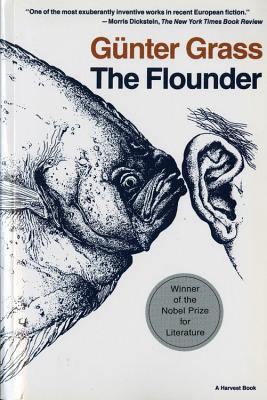
The Flounder by Günter Grass
My venture into the works of European Nobel Laureates in Literature resumed with yet another German literary titan, Must-read lists first introduced to Günter Grass, who I later learned was a Nobel laureate in Literature. His magnum opus, The Tin Drum, was a prominent presence on such lists, and I was able to read it in 2019. However, I was unable to secure any of Grass’s other works and thus could not further explore his oeuvre. Thankfully, I was able to acquire a copy of The Flounder in late 2024. It is the second novel by Grass that I have read. Originally published in 1977 as Der Butt, The Flounder was inspired by the Grimms’ fairy tale “The Fisherman and His Wife.” In the present, it introduces Edek, who, along with his female companion, Ilsebill, has undergone nine or more reincarnations since the Stone Age. His present-day partner is pregnant, and to entertain her, Edek recounts stories of their previous incarnations. The catalyst is the capture of a flounder by a primitive fisherman during the Neolithic period. However, the flounder was a magical entity that bargained with the fisherman. In exchange for its life, it promised to mentor him, imparting a wealth of knowledge. It taught the fisherman how to count on his fingers and how to explore beyond his local domain. The flounder’s most provocative lesson involved the subjugation of the women in the fisherman’s clan. The prehistoric fisherman lives in a matriarchal society. Following its overthrow, women began to transform from three-breasted beings into two-breasted ones; the transmutation was a result of the accommodation of men’s desires. This sets the tone for the rest of the narrative, which becomes an extensive rumination on age-old gender divides. Under various guises and occupations, the narrator moves through significant historical events, while the flounder remains his spiritual adviser. A central theme is how the patriarchy has allowed men to reconstruct history. Men portray their own gender in a more flattering light, often erasing the contributions of women to elevate themselves. Another intriguing element in the novel is the presence of nine female cooks who cater to Edek and serve as a tribunal to whom he turns for judgment. These cooks belong to different epochs and are representatives of their eras, their stories capturing how men have muted them. Still, Grass astutely dismantles this male-centered narrative. He depicts women as nurturers and sustainers of humankind. Men, by contrast, are portrayed as bloodthirsty and innately destructive, driven by a compulsion toward war. Grass also references female deities from other cultures. These elements create a rich and intriguing literary experience, which makes The Flounder equally fascinating as The Tin Drum, even though they are starkly different. Both books provide distinct reading experiences. This contrast adds another dimension through which to appreciate Grass’s oeuvre.
Goodreads Rating:

Peter Camenzind by Hermann Hesse
From one German writer to another. Like Grass, I first encountered his countryman Hermann Hesse through must-read lists. His works regularly appeared on such lists, including 1,001 Books You Must Read Before You Die. In particular, Siddhartha has maintained a prominent presence on these lists, and it was also the first of his novels that I read. I later learned that he was a Nobel laureate in Literature. Nearly a decade after reading Siddhartha, I am now reading my fifth Hesse novel, Peter Camenzind. Originally published in 1904, Peter Camenzind was actually Hesse’s debut novel. The novel transports us to late nineteenth-century Switzerland, where the eponymous character grows up in a small village surrounded by mountains and hemmed in by lake and rock. This majestic landscape shapes his personality, blending strength, melancholy, and poetic yearning. However, Peter grew up embraced by solitude, surrounded by silent forests and whispering winds. This solitude is further magnified by an apparent lack of parental affection. His father is passive toward his son, while his mother reserves her strength for necessity rather than tenderness. Peter’s world is narrow, dictated by tradition and stubborn villagers—forces that stand in opposition to his yearnings. Lacking parental guidance, Peter finds companionship in his misfit uncle Konrad, a dreamer whose schemes and projects fail because of their eccentricity. Still, his connection with the natural world is essential to him. However, as he grows older, Peter begins to yearn for a deeper understanding of himself and for a stronger connection with the world around him. Upon coming of age, he left the mountain village for the city in search of freedom. While studying at the university, he fell in love with Erminia Aglietti and befriended a young pianist named Richard, who introduced Peter to the seductive warmth of music and the ease of companionship. This is a recurring theme in Hesse’s body of work: a restless young man encountering another young man who introduces him to a world beyond his imagination. Richard’s friendship makes Peter feel less isolated. Peter Camenzind is then the quintessential Hesse novel. Introducing several themes that would become prevalent in his succeeding works, it set the tone for his oeuvre. Peter is a compelling and complex character—ambitious and driven, yet tempered by a sensible nature. Hesse’s poetic and descriptive prose also complements the story beautifully. It is lush and brimming with symbolism. The intricate language brings out Peter’s reflective and eloquent voice. Beyond being a coming-of-age story, Peter Camenzind also brims with philosophy. Its existential melancholy and introspective reflections provide another layer to the narrative. Warm and reflective, with drizzles of existential melancholy, the novel is a testament to why Hesse has earned a devoted fan in me.
Goodreads Rating:
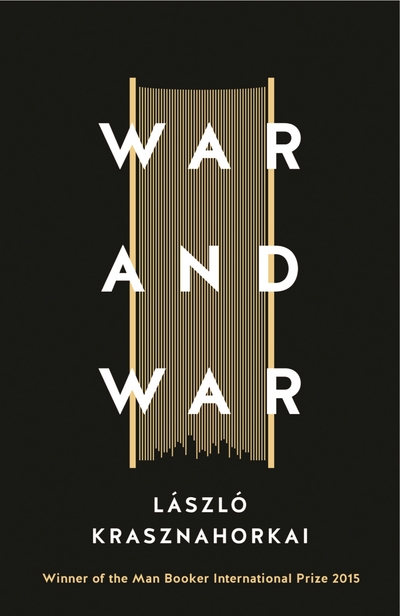
War and War by László Krasznahorkai
I concluded my mini-venture into the works of Nobel Laureates in Literature with another writer who has long commanded my attention. It was during the lead-up to the announcement of the 2018 Nobel Prize in Literature laureate that I first encountered László Krasznahorkai. Although he won neither the 2018 nor the 2019 Prize, the fact that his name was being floated for the award naturally piqued my interest. In 2025, Krasznahorkai finally earned the Swedish Academy’s nod, much to the delight of many readers, myself included. I actually opened my 2026 reading journey with his highly acclaimed novel, The Melancholy of Resistance. Meanwhile, War and War is part of my 2026 Top 26 Reading List. Originally published in 1999 as Háború és háború, War and War is the fifth book by Krasznahorkai that I have read. It is also the 1,400th novel I have read. The novel charts the fortunes of Korin, a middle-aged Hungarian man consumed by a profound sense of despair and fear. While on a railway bridge, he was surrounded by seven boys who planned to rob him. Believing they intend to kill him, Korin started to deliver a soliloquy. He rambled about his life, his chaotic thoughts, and his fears, drawing the interest of the boys. He has lost touch with both friends and family. When he turned forty-four, he realized that life’s absurdities had begun to weigh heavily on him, starting with the collapse of his marriage, followed by a traumatic love affair. When the boys slowly lost interest in him and turned their attention toward the arriving train, Korin was provided an opportunity to escape. The crux of the story, however, was his journey from Hungary to New York City. He was initially detained; his arrival raised several questions. He then moved in with Sárváry, the interpreter who assisted him at the airport. He confessed to him that he moved to New York to end his old life. He has brought with him a manuscript discovered in a records office in Hungary. The manuscript recounts the struggles of soldiers attempting to return home from a catastrophic war, an account Korin believes must be preserved. He does everything within his means to immortalize it, including typing the manuscript and uploading it to the Internet. His drive to preserve and share the text stands in stark contrast to his desire to end his own life. A subtle sense of chaos reverberates throughout the novel. At its core, the novel is an exploration of loneliness and existential dread. Layered onto this is Korin’s search for meaning in a chaotic world. Ironically, the manuscript becomes the catalyst for Korin’s descent into madness. It is integral to the structure of the novel itself. Like Krasznahorkai’s other works, reading War and War requires utmost attention, with the titular war evolving into different forms of conflict throughout the narrative. Ultimately, the novel is an extensive exploration of the human condition, with Korin’s complex emotional journey providing a profound reading experience.
Goodreads Rating:

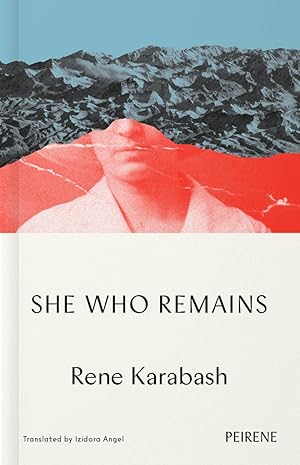
She Who Remains by Rene Karabash
The conclusion of my Nobel Prize in Literature reading binge marks the commencement of a new journey. From a series of familiar writers, my next read took me to an unfamiliar name and literary territory. It was only recently that I encountered Rene Karabash. Her novel She Who Remains was longlisted for the International Booker Prize, which naturally piqued my interest. She Who Remains is actually the second book from the longlist that I have read; I have already read Women Without Men by Shahrnush Parsipur. Originally published in 2018 as Остайница (Ostaynitsa), She Who Remains is Karabash’s debut novel. It is also only the second novel by a Bulgarian writer that I have read. The first was Time Shelter by Georgi Gospodinov, which won the International Booker Prize. However, Karabash’s debut novel transports readers to a different Balkan country: Albania. Interestingly, Karabash drew inspiration from Ismail Kadare’s Broken April. The novel takes place in a rural Albanian village in the Accursed Mountains, where seventeen-year-old Bekija lives with her parents and younger brother, Sále. Her father, Murash, is a pigeon keeper and a hypermasculine bully devoted to a primitive rural legal code known as the Kanun of Lekë Dukagjini. Lekë Dukagjini was a fifteenth-century Albanian prince who codified the Kanun at a time when there was no effective government in the region. Bekija was one half of a pair of twins—a boy and a girl—carried by her mother. However, as the birth approached, the male fetus mysteriously disappeared. Murash desperately wanted a son and was disappointed; he barely acknowledged his daughter. To earn her father’s approval, Bekija acted like a tomboy. As an adolescent, Bekija fell in love with Dahna, the visiting granddaughter of a neighbor. At the same time, her father arranged her marriage to Nemanja, another neighbor’s son, without his daughter’s knowledge. The betrothal was essentially a death sentence, prompting Bekija to invoke her right to become a “sworn virgin,” a role sanctioned by the Kanun. A sworn virgin undergoes a legal gender transformation that allows women to claim the rights and responsibilities of men. The sworn virgin must live as a man for the rest of her life. Bekija thus became Matija. However, the breach of the marriage contract also violated the Kanun. Bekija’s story underscores a familiar reality for women in patriarchal societies: submission to the whims of men, while their voices are often muted. Tradition forms an integral part of the story, just as the search for identity does, particularly in how trauma shapes our understanding of ourselves. Karabash’s writing also stands out. As she addresses the harsh realities faced by women in deeply patriarchal societies, she employs a poetic and hypnotic stream-of-consciousness style that draws readers in. She Who Remains is a quick yet memorable read about love, loss, identity, and the weight of societal expectations.
Goodreads Rating:
The Ogre by Michel Tournier
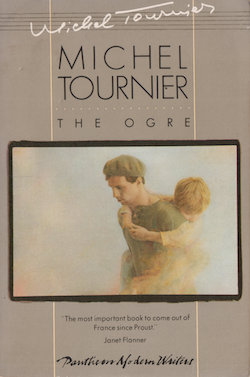
Interestingly, in 2025, I have not read any book originally written in French, to my surprise. To make up for this, I included several works by French writers in my ongoing reading challenges. Among the books in these challenges is The Ogre by Michel Tournier. It was through an online bookseller that I first encountered Tournier during the height of the COVID-19 pandemic. His novel, The Ogre, immediately piqued my interest. I would later learn that it is listed as one of the 1,001 Books You Must Read Before You Die. I also later learned that it was Tournier’s sophomore novel. Originally published in 1972 as Le Roi des aulnes, The Ogre charts the fortunes of Abel Tiffauges, a very tall and myopic man. The book opens with the “Sinister Writings” of the protagonist. This section is written in a first-person narration, almost in the form of diary entries. He opens his accounts on January 3, 1938: You’re an ogre, Rachel used to say to me sometimes. An ogre? A fabulous monster emerging from the mists of time? Well, yes, I do think there’s something magical about me, I do think there’s a secret collusion, deep down, connecting what happens to me with what happens in general, and enabling my particular history to bend the course of things in its own direction. He then delves into the past, starting with his entry into an all-boys religious school, St. Christopher. There, he met Nestor, a privileged student who took him under his wing. Despite their glaring differences, they became close friends. Their friendship was cut short when tragedy struck. Abel’s reflections on the past alternate with events in the present. As an adult, he owns a Parisian garage, spending his free time haunting school playgrounds to photograph children and record their voices. One day, a girl accused him of molestation, resulting in his arrest. Fortunately for him, his arrest coincided with the outbreak of World War II. Instead of serving prison time, he was drafted into the army. Ironically, his freedom increased amid the constrictions of army life. He was later taken prisoner by the Germans and dispatched to a Prussian labor camp. After catching the attention of Hermann Göring’s forester, he was transferred to the Kaltenborn fortress, a Napola institution for boys selected to become the elite of the future Lebensraum. The Ogre is a book that is difficult to describe. On the surface, it is a novel about the horrors of the Second World War. On the other hand, Abel is an unusual protagonist. Even the novel’s title points to him as a kind of monster, who sees signs in everything, all of which carry mystical significance for him. What sets the novel apart, however, is its sympathetic portrayal of the Second World War experience on German soil. Because of this, the novel has drawn controversy. Some critics called it pro-Nazi for allegedly glorifying certain aspects of Nazism. Still, The Ogre is an interesting literary experience, one that deserves at least a second glance.
Goodreads Rating:
The Remembered Soldier by Anjet Daanje
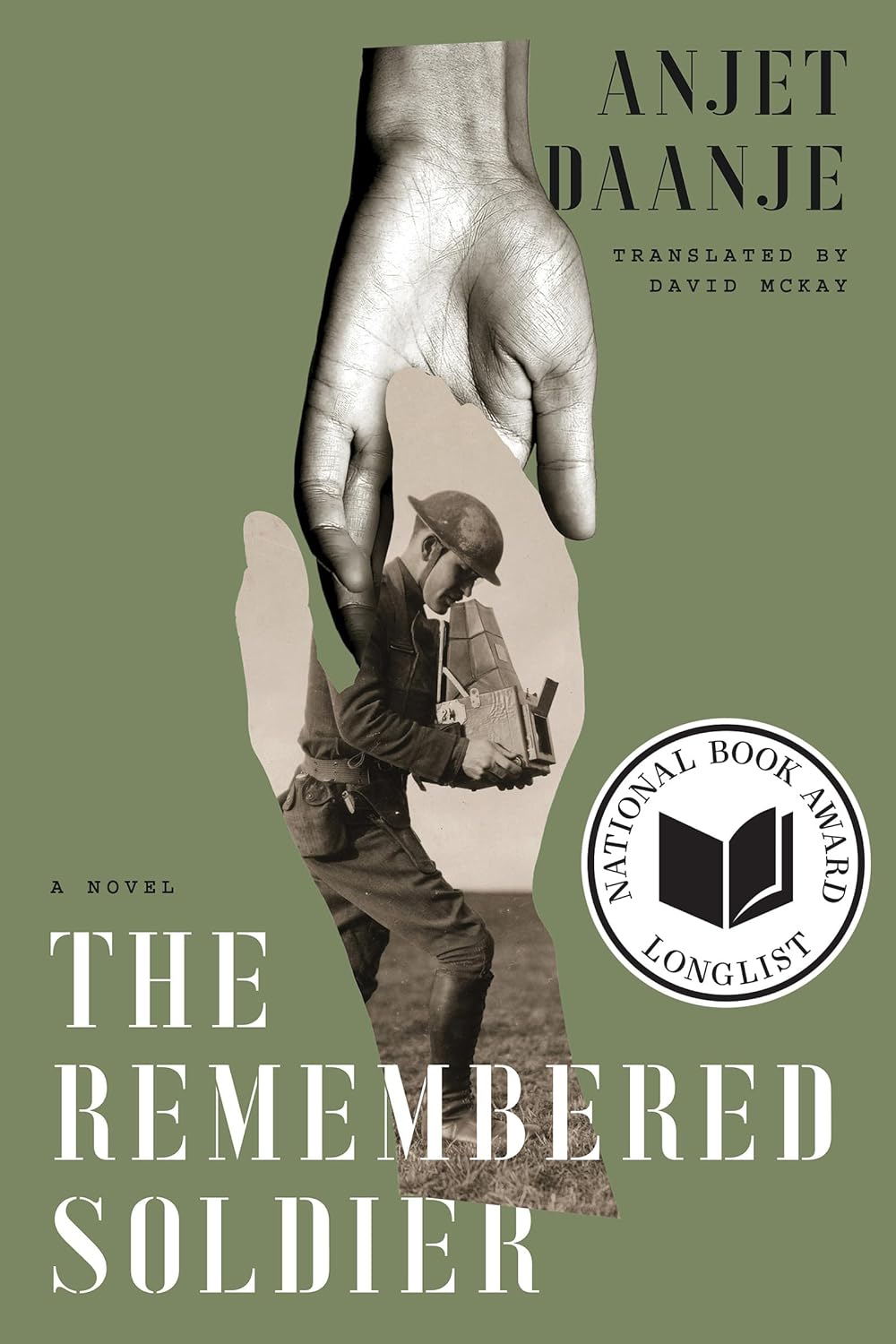
I admit that my foray into Dutch literature is rather limited. In fact, the only book I have read that I could associate with the Netherlands is The Safekeep by Yael van der Wouden. On top of this, I have yet to read a book originally written in Dutch. This places The Remembered Soldier in a unique position. Had it not been for the International Booker Prize, I would not have encountered Anjet Daanje, the pseudonym of Anjet den Boer. Her most renowned work is De herinnerde soldaat, which was published in 2019. In 2025, it was made available to Anglophone readers as The Remembered Soldier. As the title suggests, The Remembered Soldier grapples with the legacy of war, particularly the Great War. The story commences at the Guislain Asylum, a psychiatric institution in Ghent, Belgium, in 1922. There, we meet Noon Merckem, a veteran of the First World War, patiently waiting to be introduced to several women searching for their husbands. Four years earlier, he had been discovered wandering in a field in Flanders, with his memory wiped clean. He had no recollections of his former life or even fighting in the war. The name given to him refers to the time and place where he was found. Following the conclusion of the First World War, he was visited by a succession of war widows, all searching for their lost husbands. As the women went home disappointed, he had also lost hope of ever regaining his past. Until one day, a Flemish Belgian woman named Julienne appeared and swore that Noon was her missing husband, Amand Coppens, and the father of her two young children. Amand, a photographer, had been missing and was already presumed dead. Julienne, however, relentlessly searched for her husband. Finally meeting Noon is a cathartic moment—a reward for her refusal to give up. Against medical advice, she whisked him home to the Belgian city of Kortrijk. Despite finding comfort with Julienne and their children, Gus and Rosa, he still cannot remember anything. Julienne, on the other hand, is determined to make the reunion work. Amand, however, remains unconvinced that he is who she claims he is. Is Amand really who Julienne claims he is? This mystery haunts Noon/Amand. Naturally, it also piques the readers’ curiosity. Apparently, the novel was inspired by the true story of Anthelme Mangin, a French soldier who suffered from amnesia after the First World War. As is common in war-related literature, The Remembered Soldier captures the cost of war and the trauma it leaves behind. The sentences are long and flowing, marked by repeated use of the word “and.” The broad scope of the story also allows Daanje to take things slowly. Memory and the psychological toll of war are the novel’s primary themes, with romantic overtones enriching the story. The Remembered Soldier may not have won the International Booker Prize, but it certainly captured the attention of many readers, including mine.
Goodreads Rating:
The Last Days by Raymond Queneau
Another French book I listed on my reading challenges is The Last Days by Raymond Queneau. It was through an online bookseller that I first encountered Queneau during the height of the COVID-19 pandemic. However, the book suffered the same fate as most of my books: it was left to gather dust on my bookshelf. To redress this—and partly because I learned that Queneau is an influential name in French literary circles—I included the book in my 2026 Top 26 Reading List. Originally published in 1936 as Les Derniers Jours, the novel transports us to 1920s Paris. At the heart of the novel is Vincent Tuquedenne. He was from the countryside and moved to Paris to study philosophy at the Sorbonne. Despite his intellect, he was not entirely comfortable in the big city. He drifted through life aimlessly and was bereft of any clear ambition. Technically, he did have an ambition: he wanted to learn languages and read even more books. He studied not just to earn a degree but to gain wisdom. He was guided by the belief that he could read and study his way through his difficulties and into life itself. Paris, however, has shown him that it was more challenging than he had initially thought. Ironically, despite studying religiously, his grades remained poor. Being socially inept, he merely tagged along with his fellow students to the cafés of Paris. In one café was a trio of older men and a waiter named Alfred. One of the older men is one of their teachers. The older men seemed to have discovered the secret to reversing aging: celebrate the passing of time. Time is spent through small crimes, small games, withdrawal, and inner retribution for the past. Still, they have learned to embrace their fate. Death is also inevitable. This heightened awareness of endings animates the characters as they weave through each other’s lives. For Tuquedenne and his peers, this realization makes them want to avoid studying and instead pursue a hedonistic life. Interestingly, one of the trio is a crook who devised schemes to fleece people and acquire money. Meanwhile, one of the young men is tender yet envious of his more explosive companions. Another disappears overseas in an attempt to build a new life for himself. Another prepares to enter the army, while another tries to secure a job as an assistant to the crook. The Last Days is told through short, episodic chapters that span several years. It is a novel about generations occupying the same space, capturing the concerns of each generation and what they contribute to one another. Time plays a seminal role. As the dreams and schemes of the characters run parallel to and intersect across generations, it adds depth to the novel, imbuing it with existential and philosophical layers. Because of its fragmented structure, the story can occasionally feel disjointed. Still, The Last Days fascinates through its vivid portrait of Paris in the 1920s, particularly its depiction of Parisian student and café life, making it a riveting read. And yes, it is partly autobiographical.
Smilla’s Sense of Snow by Peter Høeg
My foray into Danish literature is also limited, with the only book I have read by a Danish writer being Tove Ditlevsen’s The Copenhagen Trilogy, a memoir. This gives Peter Høeg’s Smilla’s Sense of Snow a unique position in my literary journey. It is the first novel I have read that was originally written in Danish. It was must-read lists that first introduced me to the Danish writer. However, I kept holding back from securing a copy of the book. This year, I finally acquired a copy of the novel. While I had no plans to read it immediately, I eventually changed my mind. After all, it is also listed among the 1,001 Books You Must Read Before You Die. Originally published in 1992 as Frøken Smillas fornemmelse for sne, Smilla’s Sense of Snow catapulted Høeg to global literary recognition. The titular Smilla is Smilla Qaaviqaaq Jaspersen, a thirty-seven-year-old woman born to an Inuk hunter mother and a Danish anesthesiologist father. She was raised in Greenland but was now residing alone in Copenhagen, working as a scientist. Feeling out of place in the city, she befriended six-year-old Isaiah, the neglected son of her alcoholic neighbor. Like Smilla, Isaiah is Inuit and originally from Greenland. Her life unraveled one day following a shocking event. Before Christmastime, she arrived home to find Isaiah lying face down in the snow, lifeless. His death was ruled by the police to be an accidental fall from the roof of an adjacent warehouse while playing. However, Smilla was unconvinced. Isaiah suffered from acrophobia. Also, the tracks he left on the snowy roof convinced her that it was not an accident. Smilla, after all, is a leading authority on snow and ice, who has published highly esteemed scholarly articles on glaciology. Smilla approached the authorities to raise her suspicions, but was turned down. Smilla then commenced her own investigation. Browsing through the files belonging to Isaiah’s mother, Juliane, Smilla discovered a connection between the family and the Cryolite Corporation, a Danish company mining natural resources in Greenland. This discovery draws Smilla into a complex web of lies and sinister secrets. Suspense reverberated throughout the narrative as Smilla raced against time to uncover what truly happened to Isaiah. Her investigation also exposed the dark shared history of Denmark and Greenland. There were also overtones of romance as Smilla enlists Føjl’s help. Her scientific expertise is complemented by his practical skills. However, the more they scour corporate documents, the more powerful enemies emerge, intent on preventing them from uncovering deeply buried secrets. With each revelation, she drew closer to the heart of the conspiracy. The mystery and suspense belie the deeper themes the novel explores. Colonial repression and identity loss echo throughout the narrative. Smilla’s Sense of Snow, then, does not reduce itself to a mere murder mystery. It is a nuanced exploration of identity, oppression, and resilience, juxtaposed with societal neglect. Smilla’s Sense of Snow is a lush novel, worthy of its recognition.

The Remembered Soldier by Anjet Daanje
Concluding my May reading journey is a familiar name. Interestingly, I was not planning to read Karl Ove Knausgård’s The Morning Star this year. However, I felt that my venture into European literature was not diversified enough; it has been dominated by French and English writers. As such, I decided to include The Morning Star in my ongoing reading adventure. It was through various must-read lists that I first encountered the Norwegian writer, particularly his autobiographical series Min Kamp (My Struggle). However, the first novel of his that I read was The Wolves of Eternity (2022), the sequel to The Morning Star. Originally published in 2020 as Morgenstjernen, The Morning Star is Knausgård’s first major novel since Min Kamp. The novel is primarily set in Bergen and unfolds over two days in late August. Its chapters are narrated by different characters who are introduced as the story progresses. Apart from living in the same city, they appear to have very few connections. Nevertheless, their lives are linked by the appearance of a new star in the sky. The novel opens with Arne, a university literature professor married to Tove, an artist. They are spending the final days of summer at a coastal resort with their children. Tove has been grappling with manic episodes, and her condition has been worsening for days. A note Arne discovers hidden in her studio reads, “I want to fuck Egil.” Egil, a former documentary filmmaker, is their neighbor. He later narrates his own story, particularly on the second day, and the novel ultimately concludes with his perspective. Kathrine is a priest in the Church of Norway. Returning home after attending a seminar in Oslo, she was seized by a sudden moment of clarity: she wanted to separate from her husband, Gaute, and their children. He accused her of being unfaithful, which she neither confirmed nor denied. Emil, on the other hand, is a young nursery school worker and aspiring musician. After band practice, he sees a terrified man crash out of the woods behind his house, only for the stranger to disappear after they stare at each other. Nineteen-year-old Iselin, a university dropout working at a supermarket checkout, also encountered a mysterious man who declared, “I am the Lord.” Solveig is a nurse managing a hospital ward while also caring for her mother, who has Parkinson’s disease. As the day unfolded, each of the characters experienced strange and unsettling events. Three members of the band Kvitekrist are found murdered at the Svartediket reservoir. The band members have been skinned and mutilated. The band’s fourth member, drummer Jesper, is missing; he is the son of Iselin’s landlord. Vibeke, meanwhile, is a museum curator married to the renowned architect Helge Bråthen. While preparing for his surprise sixtieth birthday party, she witnessed thousands of ladybugs swarming their terrace. Strange events permeate the novel, and the recurring appearance of animals at the most inopportune moments underscores the growing unease. This was compounded by the sudden appearance of the new star. Every chapter concluded with a reference to the “new” star, as if to remind us that it serves as the thread connecting everything together. At the same time, we witness the characters’ personal struggles. The novel’s exploration of the nature of existence is also reinforced by the appearance of the star. With strong philosophical undertones, the novel engages with questions of free will, destiny, and faith. Overall, The Morning Star is precisely the kind of novel I have come to expect from Knausgård: unusual, insightful, and deeply thought-provoking.
Goodreads Rating:
Reading Challenge Recaps
- 2026 Top 26 Reading List: 14/26
- 2026 Beat The Backlist: 8/20; 45/60
- 2026 Books I Look Forward To List: 0/10
- Goodreads 2026 Reading Challenge: 45/100
- 1,001 Books You Must Read Before You Die: 6/20
- New Books Challenge: 0/15
- Translated Literature: 35/50
Book Reviews Published in May
- Book Review # 647: The Garden of Departed Cats
- Book Review # 648: Crying Mountain
- Book Review # 649: Madonna in a Fur Coat
- Book Review # 650: Kafka on the Shore
- Book Review # 651: Beasts of a Little Land
- Book Review # 652: Butter: A Novel of Food and Murder
- Book Review # 653: I Went to See My Father
Finally! After having quite a very bad book reviewing month in April—I managed to publish only two book reviews—I was able to regain badly needed writing momentum in May. My April output was measly, my least output since January 2025. I guess this has been a pattern. A prolific writing month is often followed by a very bad one. Anyway, I am just glad I was able to find my mojo back and pick up the pen. I was able to finish seven book reviews, and just this week, I published another one. With my review of The Garden of Departed Cats and Crying Mountain, I have completed all my pending book reviews from July 2023. With this victory, I also started to reduce my 2024 and 2025 pending book reviews; three are from 2024. I also published my review of Haruki Murakami’s Kafka on the Shore, a book I have been wanting to review for quite some time, even though I read it over a decade ago.
It was a big victory in May, in terms of regaining writing momentum. Still, my pending list continues to grow, as my writing is unable to cope with my reading pace. I am reading way more than I am reviewing. I hope I get to sustain the writing momentum I built in the previous month. I hope that my writing momentum will extend to the rest of the year. For now, my primary focus is to complete my pending 2023 reviews while trying to work on those from 2024 and 2025. With less than 15book reviews, I am on track to complete my 2023 backlog. Occasionally, I might also publish reviews of books I read before I began publishing reviews—such as Haruki Murakami’s Norwegian Wood, Salman Rushdie’s The Ground Beneath Her Feet, and Ian McEwan’s Atonement. I am about to work on my review of Naguib Mahfouz’s Miramar. These books hold special significance for me as they were the first works I read by these authors.
My venture into the vast European literary landscape continues into June. Yes, I planned to conclude this reading journey in May. However, I still have quite a lot of works of European writers in my ongoing reading challenges. As I mentioned, it is rather ironic that I was able to focus on my non-reading challenge books. I guess I have a long list of European literary works I wanted to read, hence pushing back those on my reading challenges. I am currently reading Pierre Lemaitre’s The Great Swindle, a book that is part of my 2026 Top 26 Reading List. I have also lined up Vassilis Vassilikos’s Z, Pierre Lemaitre’s The Great Swindle, M.M. Kaye’s The Far Pavilions, Thomas Hardy’s The Mayor of Casterbridge, and Joseph Conrad’s Nostromo, which are all part of my ongoing reading challenges. The only book that is not part of these challenges is Olga Ravn’s The Wax Child, a book longlisted for the 2026 International Booker Prize.
How about you, fellow reader? How is your own reading journey going? I hope you enjoyed the books you have read. For now, have a great day. As always, do keep safe, and happy reading, everyone!

