
Just like that, October has drawn its curtain. This means we are now just two months away from welcoming a new year. That was rather quick. How time flies! As the year moves toward its inevitable close, I hope everyone is right on track with their goals and aspirations. The stifling heat is back, and the sun is shining brilliantly. An ominous sign is also emerging on the horizon. Weather forecasters across the world have been warning about the threats posed by the super El Niño phenomenon. The Philippines is among the countries expected to bear its full brunt, despite the late-season breeze. Still, I fervently hope and pray that its impact on the country will not be as devastating as forecast. Meanwhile, the arrival of the “-ber” months also marks the beginning of the long holiday season. Christmas songs have started playing in malls and filling the airwaves. The Philippines, after all, is renowned for having the longest Christmas season.
As the year draws to a close, I hope the remaining months will be kinder to everyone. I hope you are rewarded for all the hard work you have put in over the past ten months. May November and December be filled with answered prayers and blessings. Above all, I hope everyone stays healthy—in mind, body, and spirit. Before I bid October goodbye, let me look back at how my reading adventure unfolded. In September, I embarked on a literary journey across the vast American literary landscape. American literature has always been a staple of my reading adventures, and I had several American works lined up in my ongoing reading challenges. Thankfully, by mid-October, I had completed these books, allowing me to venture into other literary territories. As always, it was a literary feast, filled with memorable reads. Without further ado, here is how I concluded my October literary journey.
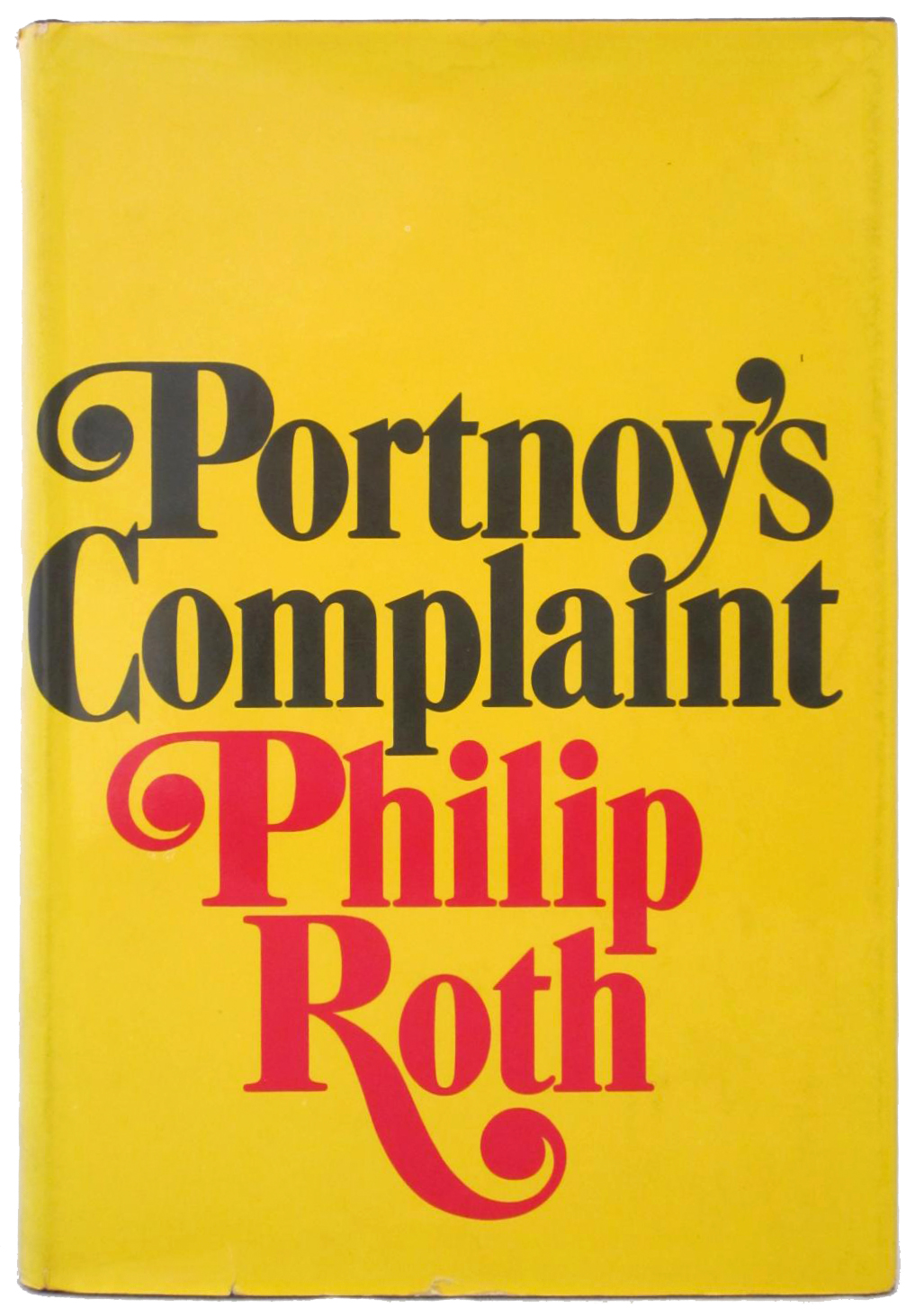
Portnoy’s Complaint by Philip Roth
I resumed my venture into American literature with a writer whose oeuvre I had long wanted to explore. It was must-read lists that first introduced me to Philip Roth, whose name and works are familiar presences on such lists. Among his books is Portnoy’s Complaint, a copy of which I acquired during the pandemic. However, it suffered the same fate as many of my other books: it sat on my bookshelf, gathering dust. At the start of the year, I included it in both my 2026 Top 26 Reading List and 2026 Beat the Backlist Challenge. It is also featured in 1,001 Books You Must Read Before You Die, allowing me to hit three birds with one stone. Reading at least 20 books from the list annually remains one of my goals.
Originally published in 1969, Portnoy’s Complaint is structurally framed as a continuous monologue by its titular protagonist, Alexander Portnoy, a deeply neurotic young Jewish man. During a therapy session, he confesses to his psychiatrist, Dr. Spielvogel, that he blames his overbearing mother, Sophie, for his sexual digressions, misgivings, and obsessions. He also holds his perpetually constipated father, Jack, responsible for his failure to intervene. Alexander then proceeds to elaborate on his “complaint”: an ongoing internal struggle between his powerful sexual urges and the moral codes instilled by his Jewish upbringing. This conflict can be traced back to his childhood in Newark, New Jersey, where he grows up feeling trapped by his parents’ expectations and the constant scrutiny of his family and community.
\The central motif of Alexander’s complaint, however, is sex. From a young age, he develops a compulsive urge to masturbate, which he conceals so thoroughly that his mother suspects he suffers from diarrhea. His mother’s peculiar punishments do little to deter him from satisfying his sexual urges. As he grows older, these impulses become increasingly pronounced, and he recounts his various “perversities” to Dr. Spielvogel. Ironically, his fantasies often involve non-Jewish women. His burgeoning sexuality remains in constant conflict with the strict moral code his parents have instilled in him. His mother’s influence is pervasive, a suffocating presence that continues to haunt him well into adulthood, leaving him burdened with guilt over his desires. Even as an adult, his sexual exploits show little sign of abating. His recollections of various women serve as important narrative anchors amid the stream of emotions, confessions, and memories.
Owing to its explicit content, Portnoy’s Complaint was subjected to widespread controversy and censorship shortly after its publication. Over time, however, it attained the status of a modern literary classic, compelling readers to confront the intersections of humor, sexuality, and cultural identity. At its core, Portnoy’s Complaint is a coming-of-age story that captures Alexander’s quest for identity, or rather, his struggle against an identity imposed upon him. His sexual exploits become a means of rebelling against the expectations and cultural constraints of his upbringing. However, this rebellion is also fueled by self-loathing, guilt, and shame. Alexander’s story further explores sexual repression, bodily autonomy, and liberation. His repression stems from the strict values of his upbringing and the moral codes of his community. His pursuit of sexual encounters with non-Jewish women can thus be interpreted as an attempt to break free from these constraints and assert his independence. Ultimately, Portnoy’s Complaint offers a provocative and often humorous examination of the struggle for personal autonomy through sexuality.
Goodreads Rating:


Less Than Zero by Bret Easton Ellis
Another name I kept encountering on must-read lists was Bret Easton Ellis. Several of his works were frequently recommended, including Less Than Zero, which is also featured in 1,001 Books You Must Read Before You Die. I acquired a copy during the pandemic, but it remained on my bookshelf, gathering dust. This prompted me to reconsider including it in my 2026 Top 26 Reading List. Originally published in 1985, Less Than Zero is Ellis’s debut novel and transports readers to 1980s Los Angeles. Clay, a freshman liberal arts student, returns to his hometown for the holidays, with the narrative following his four-week winter break. His girlfriend, Blair, picks him up from the airport. Clay comes from a wealthy family, as evidenced by their residence in an affluent neighborhood. However, no one is home when he arrives, prompting him to retreat to his bedroom, which has remained virtually unchanged since he left for college. He immediately tries to get in touch with his friends, but his longtime friend Julian does not respond to his calls.
A brief lunch with his mother, marked by shallow conversation, is followed by Christmas shopping with his sisters at high-end stores. He also visits a psychiatrist who seems more interested in talking about himself than attending to his patient. The novel, however, unfolds through a series of fragmented vignettes depicting lavish parties, sordid encounters, and rampant drug use. One of the first parties Clay attends is at his friend Kim’s house, where he looks for a drug dealer named Rip. As he moves from one party to another, details of his strained family relationships gradually emerge. His mother is distant and visibly unhappy, expressing herself through material possessions. His father, an influential figure in the Los Angeles film industry, is conspicuously absent. During their only encounter, Clay notices the extensive plastic surgery his father has undergone in an apparent attempt to preserve his youth.
Throughout his vacation, Clay continues trying to reconnect with Julian. When they eventually meet, however, Julian is a shadow of his former self. He has become addicted to heroin and turned to male prostitution to settle his drug debts to Rip. Although Clay is disturbed by his friend’s desperate circumstances, he proves incapable of offering meaningful help. Meanwhile, a growing rift develops between him and Blair. As the narrative progresses, it becomes increasingly apparent that Clay and his contemporaries belong to a generation of disillusioned drifters leading hedonistic lives. Immersed in cocaine, alcohol, and endless parties, they seem to have lost their sense of direction. Aptly marketed as the “shocking novel of the new lost generation,” Less Than Zero captures the disaffection of affluent young people who appear to have everything yet find little meaning in their existence. Their lives revolve around parties, casual encounters, and superficial conversations, exposing the hollowness beneath their apparent privilege. Disconnected from reality and from one another, they share an emptiness that they desperately attempt to fill with drugs, alcohol, and fleeting relationships.
Less Than Zero also explores the complexities of family relationships. Clay’s family, like those of his friends, is far from harmonious. Emotional distance and dysfunction permeate these households, while some characters are even uncertain about their parentage. These fractured family ties further underscore the characters’ sense of alienation and displacement, reinforcing the pervasive emptiness that defines their lives. Ultimately, Less Than Zero offers an unsettling yet insightful portrait of the young and affluent in Los Angeles, exposing the disillusionment and emotional desolation lurking beneath their seemingly glamorous existence.
Goodreads Rating:

Underworld by Don DeLillo
I completed my set of American works in my ongoing reading challenges with Don DeLillo’s Underworld. Like Roth and Ellis, DeLillo was first brought to my attention through must-read lists. Several of his works have also been featured in 1,001 Books You Must Read Before You Die. During the pandemic, I read my first DeLillo novel, Cosmopolis, making Underworld the second of his works I have explored. It is also featured on the 1,001 Books You Must Read Before You Die list. Originally published in 1997, Underworld opens with a prologue recounting the experience of a young Black boy, Cotter Martin, who attends a baseball game between the New York Giants and the Brooklyn Dodgers. A fictionalized account of the “Shot Heard ‘Round the World”—the home run Bobby Thomson hit on October 3, 1951—the sequence captures Cotter catching the game-winning ball and running home with it as a prized memento. His father, Manx, however, takes the baseball without his son’s permission, intending to sell it to help make ends meet.
The narrative then shifts to the early 1990s, focusing on Nick Shay, who eventually comes into possession of the baseball. In 1992, Nick lives in Arizona, where he works as a waste-management executive. He is married to Marian, although their marriage is far from happy. At the beginning of the novel, Nick drives across the desert in search of Klara Sax, an artist renowned for repainting abandoned military aircraft. Nick’s past is marked by several traumatic experiences. As a teenager, he accidentally shot a man, while his father’s abandonment of the family left a lasting impression on him. Nick and his brother Matt, who grew up in the Bronx, preferred to imagine that their father had been killed by the Mafia rather than accept that he had simply walked away.
During the 1980s and early 1990s, Marian begins an affair with Brian Glassic, one of Nick’s colleagues. Nick, too, contributes to the deterioration of their marriage through his own infidelity. In the late 1970s, he acquires the baseball from Marvin Lundy, an avid collector of baseball memorabilia. Meanwhile, Klara Sax establishes herself as an artist, while Matt serves in Vietnam before pursuing a career as a weapons scientist. Although he played chess during his youth, he eventually becomes disillusioned with both the game and his work in the weapons industry. In the 1960s, Nick also had a brief affair with Klara, who was then married to Bronzini, Matt’s former chess teacher. Throughout these interconnected narratives, Nick becomes increasingly entangled in the criminal underworld.
During the 1980s and early 1990s, Marian begins an affair with Brian Glassic, one of Nick’s colleagues. Nick, too, contributes to the deterioration of their marriage through his own infidelity. In the late 1970s, he acquires the baseball from Marvin Lundy, an avid collector of baseball memorabilia. Meanwhile, Klara Sax establishes herself as an artist, while Matt serves in Vietnam before pursuing a career as a weapons scientist. Although he played chess during his youth, he eventually becomes disillusioned with both the game and his work in the weapons industry. In the 1960s, Nick also had a brief affair with Klara, who was then married to Bronzini, Matt’s former chess teacher. Throughout these interconnected narratives, Nick becomes increasingly entangled in the criminal underworld. Underworld is undoubtedly a hefty read, yet DeLillo rarely loses the reader’s attention. Although it follows the life of one man and the history of one family, the novel ultimately transcends their personal experiences. Above all, it is a sweeping portrait of a country grappling with the historical forces and global events shaping its collective identity.
Goodreads Rating:

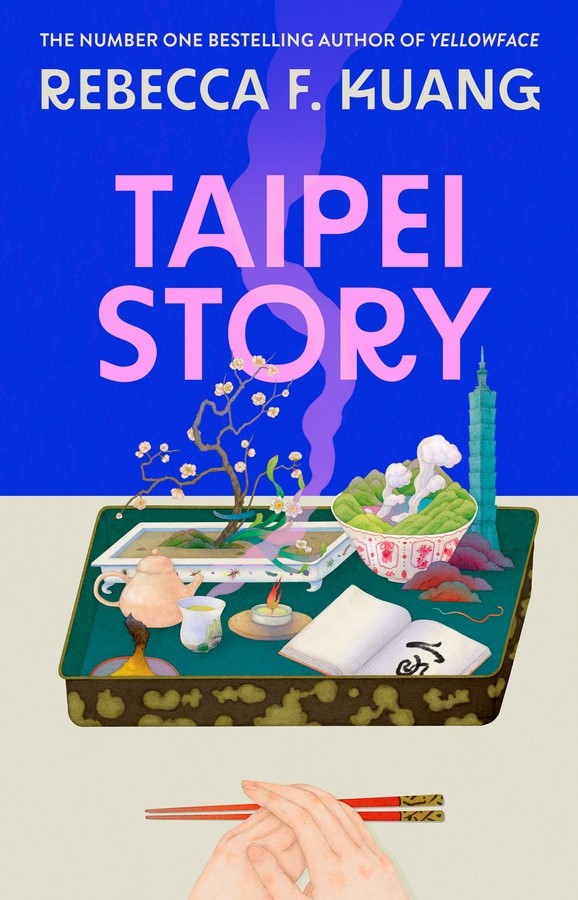
Taipei Story by Rebecca F. Kuang
With all the works by American writers included in my reading challenges completed, I am now free to explore literary works beyond American literature. My next read, however, technically still falls within this literary landscape, as Rebecca F. Kuang is an Asian American writer. More commonly known as R. F. Kuang, she has gained recognition for her historical fantasy novels. I first ventured into her oeuvre in 2023 with Yellowface, which happens to be her first novel outside the historical fantasy genre. The book inspired me to explore her other works. This year, I learned that she was releasing a new novel, Taipei Story, making it the first newly published book I read this year.
At the heart of Taipei Story is Lily Chen, a Chinese American sophomore at Yale University majoring in East Asian Studies. The story begins with Lily preparing to board a flight from Boston to Taipei. She is enrolled in a ten-week, government-funded intensive Mandarin program at National Taiwan University. Having grown up speaking Chinese at home, Lily gradually lost much of her fluency over the years. The summer program thus presents an opportunity to reconnect not only with her language but also with her cultural heritage. In Taipei, Lily reunites with Anna, a fellow Yale student from her Chinese language class and her designated roommate. Before classes begin, Lily sets out to explore the city and familiarize herself with her surroundings. She also meets other Yale students, including John Cahan-Song, better known as JC. Lily is troubled by her own complicity, recognizing that she has no ancestral roots in Taiwan and chose the program partly for convenience. Nevertheless, she persists in her studies, although her teacher, Sun, recognizes the paradox of her position as a heritage speaker. She has an intuitive grasp of tones and grammar but tends to be lazy and inconsistent because certain aspects of the language come naturally to her.
Meanwhile, Lily and JC gradually develop a quiet attraction. However, Anna eventually confesses that she has a crush on him, creating tension between the two roommates. Their relationship becomes increasingly strained when Anna discovers Lily’s text messages with JC. An urgent call from her mother brings news of the death of her maternal grandfather, Gonggong, in Guangzhou. Unable to attend his funeral because she lacks a valid visa, Lily grieves in her own way. Ironically, her relationship with Gonggong consists largely of awkward video calls, during which they exchange scripted greetings in halting Chinese. She had always wanted to visit her grandparents but hoped to do so only after becoming fluent, believing that they could finally have meaningful conversations once she overcame the language barrier.
Lily is often unforgiving of herself, reflecting one of the challenges of growing up in an Asian household, where children are frequently burdened with expectations from an early age. In many ways, Taipei Story is a coming-of-age novel that follows Lily’s journey toward self-discovery. As she attempts to understand her heritage, she also begins to gain a better understanding of herself. However, Lily comes across as somewhat underdeveloped, and her character arc lacks the depth and progression that could have made her personal journey more compelling. Nevertheless, her story offers an insightful examination of the intricacies of language and how it can serve as both a bridge and a barrier. The novel explores the diasporic experience and the expectations placed on second-generation immigrants who inherit a culture and language that do not always feel entirely their own. It also captures the emotional distance that can emerge when language becomes an obstacle to familial intimacy. Taipei Story may not be without its shortcomings, but it remains an insightful rumination on memory, cross-cultural identity, silence, and grief.
Goodreads Rating:
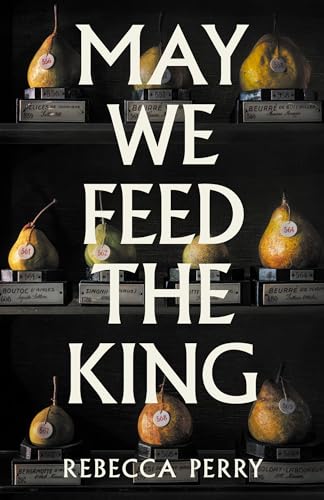
May We Feed the King by Rebecca Perry
It was only this year that I came across British writer Rebecca Perry. Perry began her literary career as a poet, with her debut poetry pamphlet, Little Armoured (2011), winning the 2011 Poetry Wales Purple Moose Poetry Prize. Her debut poetry collection, Beauty / Beauty (2015), was also critically acclaimed. In 2026, she made a significant career shift with the publication of her debut novel, May We Feed the King. This much-anticipated debut gained international attention after being shortlisted for the Booker Prize. In fact, it is the first book from this year’s Booker Prize longlist that I have read. Alternating between two narrative threads, May We Feed the King opens in the present, when an unnamed curator receives a commission to create six scenes inside a former palace preparing to celebrate its 750th anniversary. The palace also houses an extensive archive. The curator arranges historically accurate replicas in the medieval rooms, guided by the principle that every scene must appear as though its occupants have only just stepped away. Her work has become a source of personal sustenance.
At the palace, she maps the building and wanders its corridors alone. She eventually meets the archivist and discovers ledgers spanning five centuries, containing recipes, feast accounts, remedies, letters, and poems. On her fifth day, the curator discovers the King, whose story forms the novel’s second narrative thread. A single page is devoted to his reign, cluttered with marginalia, footnotes, and strikethroughs accumulated over the centuries. The discovery moves her deeply, as she sees the page as a reduction of an entire human life. The King’s story begins when he reluctantly ascends to the throne following the deaths of his two elder brothers. His reluctance to assume the crown eventually defines his reign. He is a passive and pacifist ruler in an era when kingdoms and empires expect their monarchs to lead armies into battle, bring glory to their nations, suppress rebellions, and execute dissenters. His advisors are at their wits’ end over how to manage him. They would gladly rule in his name, but the King refuses to relinquish his authority. Instead, he repeatedly thwarts their schemes because he wants his country to live in peace.
The arrival of his cousin’s wife transforms the court. The King and Queen develop a marriage founded on mutual respect rather than passion. Nevertheless, their actions and interactions remain under constant scrutiny, with every gesture observed, interpreted, and discussed by those around them. May We Feed the King offers a vivid depiction of medieval court life while challenging conventional notions of royal authority. The King’s reluctance to rule raises questions about the nature of power and the responsibilities of leadership. A monarch’s legitimacy, after all, is not determined solely by the crown he wears but is also shaped by the perceptions, ambitions, and expectations of those around him. Food likewise emerges as a symbol of control and power. The title subtly invokes the idea of nourishment, raising questions about who receives it, who provides it, and what it signifies within the hierarchy of a royal court.
Meanwhile, the novel explores the delicate boundary between fact and fiction through the curator’s attempts to reconstruct the past. Ironically, historical records are often incomplete, fragmented, and open to interpretation. Memory, erasure, and mortality also figure prominently in Perry’s exploration of history and the lives it preserves. The curator’s discoveries underscore how the traces people leave behind can never fully capture the complexity of the lives they once lived. Overall, May We Feed the King is a searing and thought-provoking debut, beautifully written by Perry. Through its interwoven narratives, the novel offers a compelling meditation on power, history, memory, and the fragile relationship between the past and the present.
Goodreads Rating:
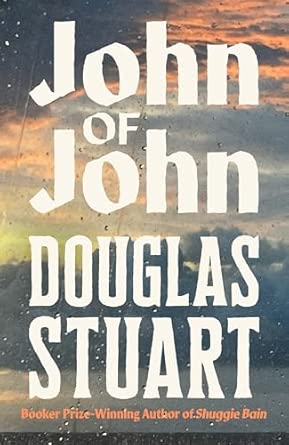
John of John by Douglas Stuart
Like May We Feed the King, Douglas Stuart’s latest novel, John of John, has been shortlisted for the Booker Prize. Interestingly, it was also the Booker Prize that first introduced me to the Scottish writer when his debut novel, Shuggie Bain, won the prestigious award in 2020. I have since read his sophomore novel, Young Mungo. Reading his latest work was therefore imperative. John of John transports readers to the remote Isle of Harris in Scotland’s Outer Hebrides. At the heart of the story is John-Calum “Cal” Macleod, a recent art school graduate living in Edinburgh, where he struggles to find permanent accommodation and stable employment. He maintains contact with his home through weekly phone calls with his father, John, a sheep farmer and weaver. During one of their conversations, his father informs him that his maternal grandmother, Ella Morrison, is unwell and persuades him to return to Falabay to look after her. Cal reluctantly agrees.
His reunion with his father is immediately strained, with John criticizing his son’s bleached ginger hair and second-hand clothes. John also serves as a deacon in the local Presbyterian church, a strict Calvinist congregation. Cal, however, refuses to embrace his father’s faith. As it turns out, Ella is not as ill as John initially suggested. Burdened by student debt and unable to find a way back to Edinburgh, Cal is forced to remain at home. He also finds himself evading his father’s pressure to work secretly at the family loom, an arrangement that violates the village’s unwritten code. He subsequently tries to find alternative employment at the local inn, but his efforts prove futile. Cal eventually reconnects with his childhood friend, Doll Macdonald. Their interactions reveal a bitter and resentful young man struggling with alcohol addiction and the feeling that life has left him behind. Meanwhile, tensions within the Macleod household culminate in a vicious argument at the dinner table. John berates Ella for never having learned Gaelic, while Ella, a Glaswegian, remains attached to her profanity-laced English. The confrontation prompts Cal to storm out in search of an escape. As the narrative unfolds, his sexuality gradually comes to light when he responds to a lonely-hearts advertisement placed by a man.
Queerness has been a recurring subject in Stuart’s works, but there is more to John of John than Cal’s concealed sexuality. As the story progresses, it becomes apparent that he is not the only member of the family harboring secrets. Resentments and unspoken truths permeate the Macleod household. John’s devoutness, it seems, serves partly to shield his private life from public scrutiny. He invokes religious dogma as a means of deflecting social judgment. After all, life in a close-knit rural community can be stifling, where secrets and rumors spread quickly, and individual lives are constantly subjected to communal scrutiny. Tradition also figures prominently in the novel, with John representing conservatism and attachment to the past, while Cal embodies a more liberal and contemporary outlook. Their differences reflect the generational tensions within the family and the wider community. Through their experiences, Stuart examines the complexities of sexuality, identity, faith, and family dynamics. John of John also explores how economic decline can expose the fractures concealed beneath the appearance of communal solidarity. The Outer Hebrides, whose economy once relied heavily on its weaving industry, provides a compelling setting for examining the erosion of traditional livelihoods and the uncertainties confronting rural communities.
John of John is an engaging and thought-provoking read. Stuart deftly examines a range of timely subjects while bringing the remote island setting to life through his atmospheric prose. His evocative writing also evokes a sense of nostalgia for small-town life and the more laid-back atmosphere of the 1990s. It is another wonderful literary offering from a writer whose works are steadily growing on me.
Goodreads Rating:
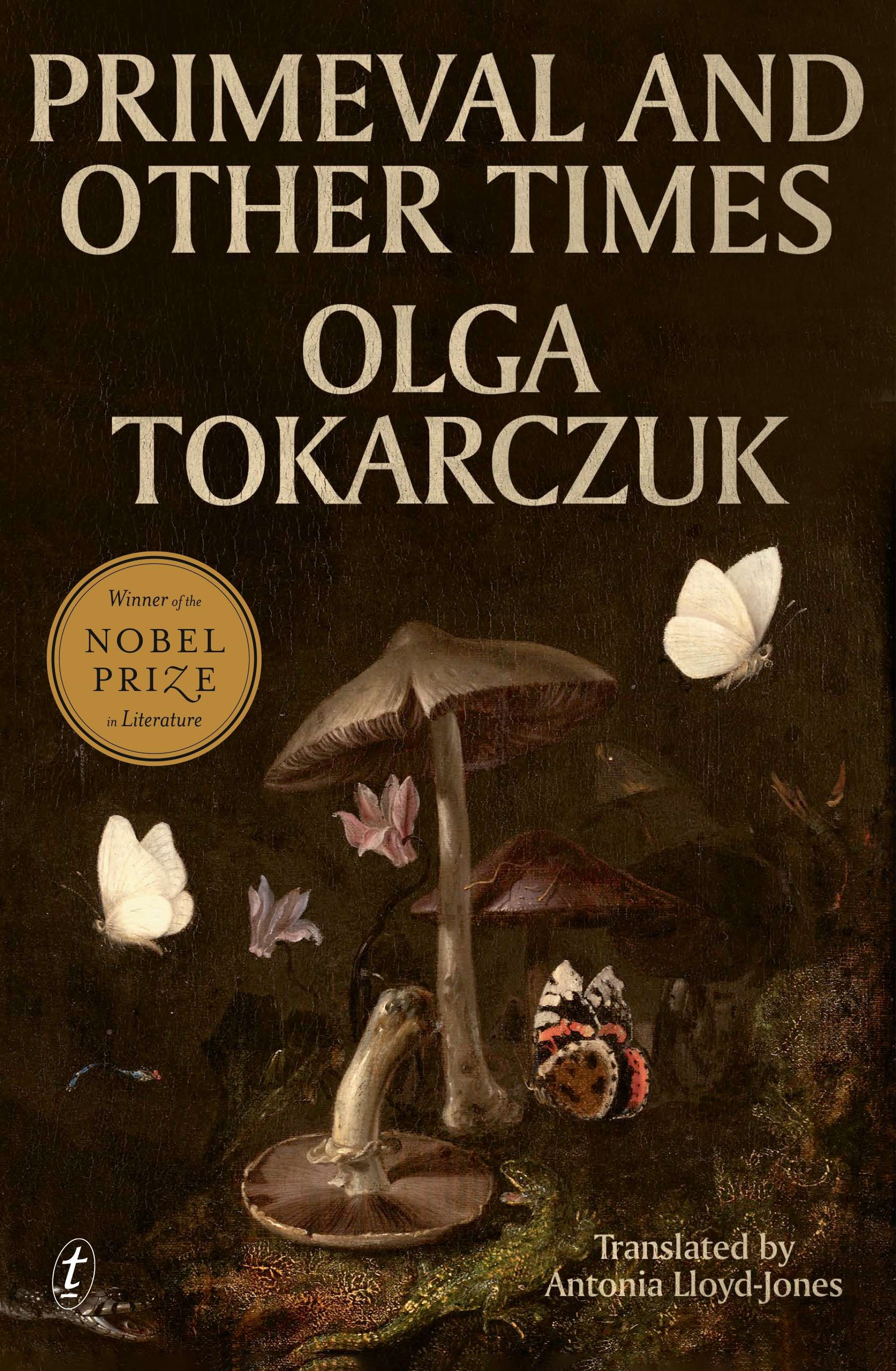
Primeval and Other Times by Olga Tokarczuk
I have concluded my October reading journey with yet another 2026 release. More precisely, Olga Tokarczuk’s Primeval and Other Times was reissued in English in late 2026, having first appeared in English in 2010. The Polish writer has earned a devoted fan in me ever since I first encountered her in 2019, when she was awarded the Nobel Prize in Literature. Before then, I had never heard of her, but I have since explored several of her works, including The Books of Jacob, for which she was also recognized by the Swedish Academy. Primeval and Other Times is now the sixth book by Tokarczuk that I have read.
Initially, I thought it was a collection of short stories, which made me somewhat apprehensive about reading it. When I learned that it was actually a novel, however, reading it became imperative. Originally published in Polish in 1996 as Prawiek i inne czasy, it was Tokarczuk’s third novel. Like several of her other works, it transports readers to the Polish countryside, specifically to the fictional town of Primeval. The town is believed to have been inspired by the village of Zagrody in the Kielce region, where Tokarczuk spent her childhood holidays. She described the village as “the place at the centre of the universe,” bounded by two rivers. The narrative unfolds through a series of short episodes called “Times,” a structural device reminiscent of Tokarczuk’s other works. The novel chronicles the fortunes and misfortunes of the Niebieski family, beginning in the early twentieth century. At its heart is Genowefa, the miller’s wife, whose husband, Michał, is conscripted into the Tsar’s army while she is pregnant with their first child, Misia. The narrative subsequently follows the family’s experiences across three generations. As an adult, Misia marries Paweł Boski, the ambitious son of a roofer who dreams of shaping the future. Together, they have four children. Meanwhile, her brother Izydor is portrayed as a kind of idiot savant.
The family lives through a tumultuous period marked by wars, occupations, and political upheavals. Each of the novel’s sixty “Times” focuses on a different character, place, or aspect of existence, encompassing the human, animal, vegetable, mineral, and spiritual worlds. Although the narrative is fragmented, many of these episodes are interconnected, with some connections more apparent than others. Among the memorable characters are Cornspike, a witch and healer who can tame snakes and predict the future but cannot save her daughter, Ruta; Florentynka, a madwoman who curses at the moon; and Squire Popielski, the local landowner who loses himself in a mysterious board game.
Meanwhile, four archangels guard the village, yet even their presence cannot protect it from the invading forces and upheavals of history, including the world wars, the collapse of empires, the Nazi occupation, and the Soviet takeover. The novel’s folkloric quality is unsurprising, as it bears many of the hallmarks of Tokarczuk’s distinctive prose. Her blending of magical realism and profound philosophical themes captures the resilience of the human spirit amid periods of extraordinary upheaval. The characters endure physical and emotional trauma, yet somehow find ways to survive. The sixty “Times” also capture how the passage of time shapes individual lives and reverberates across generations. The forest inhabited by Cornspike becomes both a refuge and a haunting presence, illustrating the tension between the beauty of nature and its indifference to human suffering. Ultimately, Primeval and Other Times is a thought-provoking exploration of the transience of life, the persistence of memory, and humanity’s place within the vastness of existence.
Goodreads Rating:
Reading Challenge Recaps
- 2026 Top 26 Reading List: 24/26
- 2026 Beat The Backlist: 19/20; 60/60
- 2026 Books I Look Forward To List: 0/10
- Goodreads 2026 Reading Challenge: 85/100
- 1,001 Books You Must Read Before You Die: 16/20
- New Books Challenge: 3/15
- Translated Literature: 49/50
Book Reviews Published in October
- Book Review # 672: She Who Remains
- Book Review # 673: The Day of the Owl
- Book Review # 674: The Wax Child
- Book Review # 675: The Notebooks of Malte Laurids Brigge
- Book Review # 676: The Leopard
- Book Review # 677: The Guermantes Way
- Book Review # 678: The Wolves of Eternity
After a slow writing month in September, when I managed to complete a measly four book reviews, I was able to bounce back and regain some much-needed writing momentum in October. Ironically, October was quite a hectic month at work, yet I nearly doubled my September output. At the beginning of September, I was occupied with transferring my responsibilities from my previous job. The remainder of the month was spent learning the ropes at my new one. There is no rest for the weary! Nevertheless, I am grateful that I managed to find time to write. I still have a considerable backlog, although I have finally completed all my pending November 2023 book reviews. I am now left with just three more reviews from 2023. Meanwhile, I was also able to complete reviews of two books I read this year, both of which were nominated for the International Booker Prize.
My review of The Wolves of Eternity, on the other hand, reminds me that I still have quite several outstanding reviews from 2024. It also marks my gradual transition toward addressing that year’s backlog. With only three reviews remaining from 2023, I am close to clearing that particular backlog. I certainly hope to finish them all this month. I am keeping my fingers crossed, especially as my backlog continues to grow because my writing simply cannot keep pace with my reading. I hope to sustain the writing momentum I regained in October. My goal is to complete the remaining 2023 reviews in November while steadily working through those from 2024 and 2025. From time to time, I may also publish reviews of books I read before I started writing book reviews, including Haruki Murakami’s Norwegian Wood, Salman Rushdie’s The Ground Beneath Her Feet, and Ian McEwan’s Atonement. These novels hold special significance for me because they were the first works I read by each of these authors.
As for my reading, November promises to be a literary smorgasbord, as I have no fixed literary motif for the month. My primary goal, however, is to complete all the books remaining in my ongoing reading challenges. Interestingly, the remaining titles are works by African writers. Tayeb Salih’s Season of Migration to the North and Yasmina Khadra’s The Sirens of Baghdad are the final two books on my 2026 Top 26 Reading List. Meanwhile, Nobel Laureate J. M. Coetzee’s Youth is the last book in my 2026 Beat the Backlist Challenge. I am also considering reading Mia Couto’s Confessions of the Lioness, Meryem Alaoui’s Straight from the Horse’s Mouth, and Eloghosa Osunde’s Necessary Fiction. Beyond these, I am lining up Yasunari Kawabata’s The Dancing Girl of Izu and Eka Kurniawan’s The Dog Meows, The Cat Barks.
How about you, fellow reader? How is your own reading journey going? I hope you enjoyed the books you have read. For now, have a great day. As always, do keep safe, and happy reading, everyone!

